
Check the Numbers, But Also Check Your Lifestyle
Total cost of ownership (TCO) is a definitive metric for comparing long-term affordability across electric, hybrid and gas vehicles—and a five-year breakdown often already exposes the real-world expenses drivers face. From purchase price and government incentives to fuel and maintenance, these variables determine one’s actual investment.
Deconstructing the 5-Year Ownership Costs
Financial pillars dictate any vehicle’s long-term affordability. Breaking down these expenses reveals where money is actually spent over the life of the car.
Purchase Price and Government Incentives
Electric vehicles (EVs) often have the highest manufacturer-suggested retail price. Hybrids typically come second, while those that run on internal combustion engines remain the most affordable. To help offset the initial cost, state incentives, federal tax credits in the U.S. and provincial rebates in Canada can significantly reduce the net capital cost of an EV or hybrid vehicle. These programs remain subject to change and vary by location, so buyers must verify eligibility based on income and vehicle assembly location before signing. With some of the decreasing public incentives, some auto companies are now running their own incentive programs.
Fuel and Energy Expenses
Comparing the cost of filling up at the pump versus charging at home highlights distinct economic advantages of electrification. National average costs for gasoline and electricity serve as the baseline for calculation.
Ongoing analysis shows that EVs deliver greater savings per mile than gas-powered vehicles. Electricity rates remain more stable than volatile oil markets, and this stability allows for predictable budgeting for fleet operators and daily commuters.
Maintenance and Repairs
Electric vehicles operate with fewer moving parts than their internal combustion counterparts. With EVs, owners avoid oil changes, spark plug replacements and transmission fluid flushes—their mechanical simplicity eventually lowers the TCO in the first five years.
It is important to note that hybrid vehicles still require maintenance for gas engines. For both EVs and hybrids, battery degradation remains a factor for long-term retention, though the federal government mandates eight-year warranties on battery packs to mitigate concerns about early replacements. Some states layer on even longer warranty protection.
The Case for Practicality in the Real World
The convenience and speed of refueling—or recharging—heavily influence the daily driver’s vehicle ownership experience.
Level 1 and Level 2 charging stations, the standard for overnight power replenishment at residential properties, are often enough for average daily commutes. However, drivers who travel long distances and those without access to dedicated home garages need public charging infrastructure.
High-voltage stations make road trips more viable by enabling rapid charging during short stops. For instance, a Level 3 charger using 480 volts can deliver an 80% charge to a vehicle in just 30 minutes, drastically reducing wait time. This short electric fueling experience aligns more closely with a traditional gas station visit, where drivers replenish a substantial range while taking a quick meal or restroom break.
The Financial Bottom Line
Depreciation accounts for a large chunk of the value lost over five years. Early electric models lost their value quickly, but the market has since stabilized as the demand for used EVs continues to rise. Hybrids often hold value well because of their proven reliability and fuel efficiency, while gas vehicles follow a predictable slump.
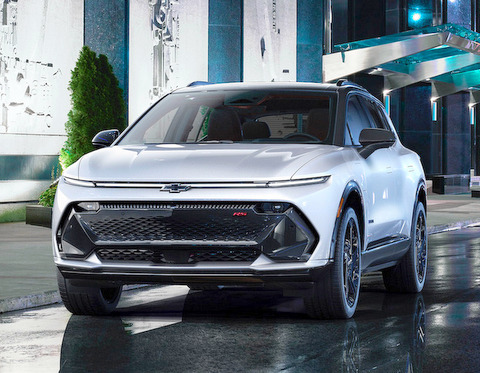
A December 2025 analysis by CNET pitted the 2026 Chevrolet Equinox against its all-electric counterpart, the Equinox EV, to determine which costs more over periods of five, 10 and 15 years. It found that while the up-front sticker price of the EV was higher, the savings on fuel and maintenance allowed it to undercut the gas version over a five-year observation period.
The gas SUV logged a five-year total cost of $43,088, while the EV version logged $42,792.
Drivers who charge primarily at home and keep their vehicles for more than five years will see these savings compound even further.
Choosing the Right Vehicle
Numbers alone do not tell the whole story, because while an EV or hybrid may offer competitive TCOs, the best choice is still the one that best suits the owner’s personal circumstances. Factors like access to home charging, daily commute length and local climate all play a role in satisfaction. That said, the most cost-effective vehicle should seamlessly integrate into one’s lifestyle.
