
This article may contain affiliate links.
A quick driveway wash feels harmless, but dirty rinse water can carry oils, metals and detergent into storm drains. Many owners also hire trained exterior cleaning contractors for fleet bays and service routes that demand repeatable results. Some contractors learn low pressure methods and equipment setup through Southeast Softwash systems and training. Here’s a summary of an eco-friendly approach to vehicle cleaning for individuals or fleets.
Start with Soil Type and Use the Mildest Chemistry That Works
Grime is not one thing, so begin by naming what you need to remove on this vehicle today. Road salt, pollen and soot behave differently than tree sap, grease or tar on summer roads. A short pre-rinse removes loose grit, which lowers scratching during the contact step up front. Then a foam or pump sprayer places detergent evenly and keeps it wet while it works.
Use dwell time instead of extra pressure whenever possible, because pressure can push water into seams. For traffic film, choose a pH balanced wash soap that rinses clean without heavy fragrance. For bugs, use a dedicated remover and give it time, then wipe gently with microfiber. For wheels, pick a non-acid cleaner unless you know the finish can tolerate stronger products.
Mix detergents by the label ratio, and measure instead of guessing with a quick splash. Too strong a mix can leave residue that attracts dirt and increases the amount of rinsing. It also raises runoff risk, especially on sloped driveways that drain toward the nearby street. A simple dilution chart helps results stay consistent across vehicles and seasons for every crew member.
Protect Sensors, Seals and Charge Ports During Every Wash
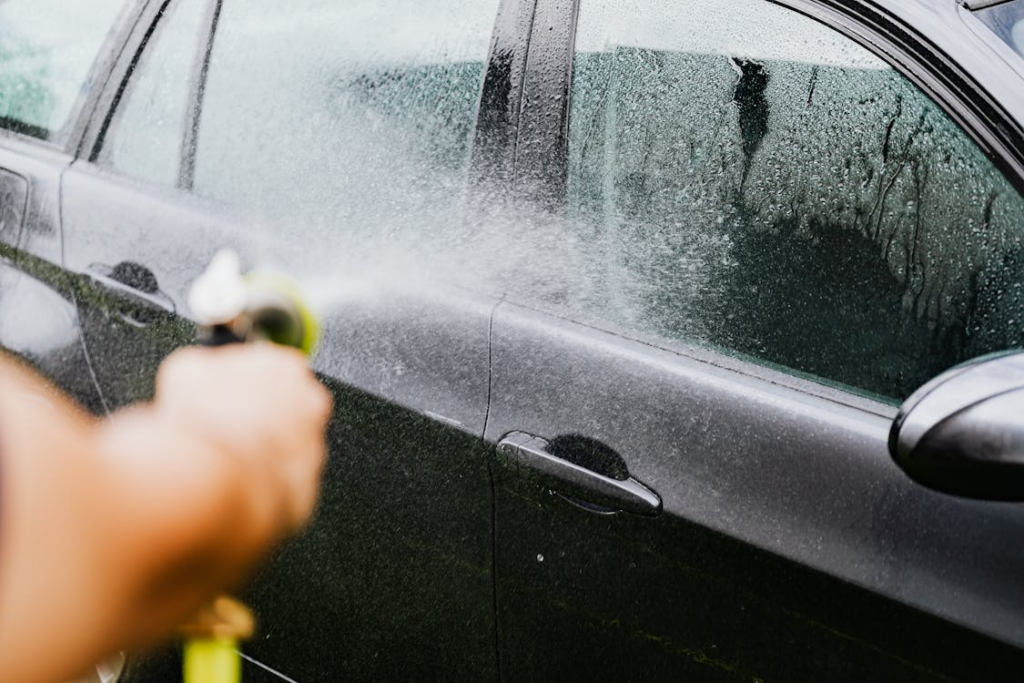
Modern vehicles carry cameras, radar covers, ultrasonic sensors and tight weather seals on every door. These parts handle rain well, yet direct high pressure spray can be rough over repeated washes. Aim spray away from gaps, and keep the nozzle moving so water does not sit. Use a wide fan pattern on paint, and keep distance near badges and trim edges.
EV charge ports deserve extra care, even when the door feels solid and clicks shut every time. Avoid spraying into the port area, and do not push water toward the pins or rubber lip. If you need to clean around the door, use a damp towel with mild soap, then dry. That simple step reduces water spots and lowers the chance of trapped moisture later inside.
Before any rinse, run this quick checklist to protect sensors, seals and the charge port.
- Close windows, sunroof and charge door, then confirm the latch is fully seated.
- Keep spray off camera lenses, radar covers and parking sensors, especially at close range.
- Clean wheels on cool surfaces, and rinse chemicals quickly before they dry on metal.
- Dry around the charge door and trunk seam, using a clean towel that has not touched wheels.
Save Water with Smarter Steps, Not Faster Spraying
Water savings come from fewer rinse cycles and less rework, not from rushing through each step. A two-bucket wash with grit guards keeps dirt from returning to your mitt or towel. That reduces swirl marks and keeps microfiber from loading up too quickly during contact washing. It also means you can rinse with less water at the end of the wash.
Rinseless wash products work well for lightly soiled paint and dust, especially in garages or parking decks. Use plenty of clean microfiber towels, and fold them so every pass uses a fresh side. Stop once a towel face feels gritty, because that grit is what causes fine scratches. For fleets, schedule rinseless work on low soil days and reserve hoses for heavy buildup.
Pre-treat the lower panels and rear hatch area, since those zones collect the most road spray. A pump sprayer lets you target that grime without soaking the entire vehicle from top down. You can then wash upper panels with a smaller bucket, fewer passes and fewer towel changes. This reduces runoff volume and shortens drying time in sunny lots during busy fleet shifts.
If you use a pressure washer, keep pressure modest on paint, plastics and weather seals. Use the machine for flow and reach, not to blast contaminants off clear coat directly. Let detergent dwell, then rinse from top to bottom in a controlled pattern and pace. Finish with a sheet rinse if your water is soft, since it helps reduce spotting.
Manage Runoff So the Clean Does Not Become the Problem
Ec- friendly washing is not only about gallons used, but where the dirty water goes. Wash water can carry oils, metals, salt and detergent into storm drains and local creeks. Many programs recommend commercial car washes or controlled wash areas that send water to treatment. UNC’s stormwater guidance notes that wash water should go to the sanitary sewer, not storm drains.
For home washing, use the least soap that still works and keep rinsing targeted to dirty zones. If you wash outside, choose a permeable area where local rules allow infiltration and filtration. For shops and fleets, use a wash pad, berms or a reclaim system that captures wastewater. Put drain covers and simple signage in place, so staff do not rinse toward streets.
Plan for spill response before you start washing, because leaks happen during daily operations and busy shifts. Keep absorbent pads and a basic spill kit near the wash area, not buried in storage. If a vehicle is leaking oil or coolant, stop and address the leak before washing that spot. These habits protect waterways and reduce cleanup costs for property owners across parking lots and work yards.
Keep Results Consistent Across Cars and Fleet Vehicles
Consistency turns good technique into a routine that saves time and protects finishes across mixed fleets. Use the same wash order each time, starting with roof and glass, then panels, then lower areas. Keep wheel tools separate, since brake dust is abrasive and should not touch paint towels. Finish by drying with clean microfiber, since air drying leaves minerals that dull gloss quickly.
Set up a simple wash kit list, so every wash uses the same tools and the same chemical ratios. Label bottles clearly, store them upright and keep lids tight to prevent spills and fumes. Train anyone who helps with a one-page process and a brief safety review for chemicals. A steady process keeps vehicles clean, reduces water use and limits runoff from every wash.
