
This article may contain affiliate links.
For automotive components, manufacturers turn to CNC shops. Most CNC shops can machine a prototype. Far fewer can carry the same part, at the same tolerance and finish, from a single unit through a 500-piece run without re-tooling the spec halfway. The test isn’t whether a supplier makes good first articles. It’s whether the 400th part matches the first one. When you’re evaluating a China supplier for both stages, look for one line item above all: proof that they hold spec across volume, and hold it in the run, not only in the sample.
The Short Version
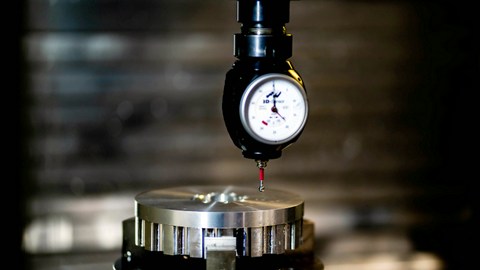
A prototype-only shop optimizes for speed and iteration. A production-capable shop optimizes for repeatability. The gap shows up when you scale, and it usually costs you a full re-qualification if you picked wrong.
Three capability stages matter:
- Prototyping only. One-off and low-count parts, fast turns, design iteration. Great for proving a concept. No guarantee the process transfers to volume.
- Bridge / low-volume. Tens to low hundreds. This is where a supplier proves the process is stable and repeatable before you commit tooling or a large order.
- Full production scale. Hundreds to tens of thousands, held to a documented tolerance and finish, with inspection records to back it.
A supplier that owns all three under one roof removes the handoff. A handoff between a prototyping vendor and a separate production vendor is where drawings get reinterpreted and tolerances drift.
Capability by Stage: How the Named Providers Map
| Provider | Prototype | Bridge / low-volume | Full production | Best-fit use case |
| Protolabs | Strong | Moderate | Limited on some processes | Fastest quoted turnaround for very small-batch prototyping |
| Hubs (Protolabs Network) | Strong | Moderate | Varies by shop | Instant online quoting and part-price feedback |
| Xometry | Strong | Strong | Strong via network | Broadest marketplace capacity matching across shops |
| Fictiv | Strong | Strong | Strong via network | Program management layer for complex multi-part builds |
| 3ERP | Strong | Moderate | Moderate | China-based rapid prototyping breadth |
| Yijin Solution | Yes | Yes | Yes (in-house services) | Prototype-through-production continuity, custom fasteners and highly customized parts |
This is a positioning map, not a scorecard. Each provider is genuinely good at what its column shows. Marketplace models like Xometry win on capacity matching because they can route your job to whatever shop fits. Fictiv earns its keep when you’re managing a bill of materials with many machined parts and need program coordination across them. Protolabs and Hubs are hard to beat when you need a quote and a prototype fast and don’t yet care about a 1,000-unit path. 3ERP covers a wide prototyping range from a China base.
The question for your project is which stage you’re actually buying, and whether you’ll need the next stage from the same vendor.
Where It Breaks Down
The failure point is almost never the prototype. It’s the transfer.
Say your prototype came off a manual or semi-automated setup with an operator dialing in each pass. That part measures fine. Now you order 500. If the shop reprograms for a production fixture, changes the toolpath, or splits the job across machines, the process capability changes. Features that sat comfortably in tolerance on the first article can wander. Surface finish can shift with a different tool or feed rate. You find out at incoming inspection, or worse, at assembly.
Ask for the ledger. Specifically:
- First-article inspection versus in-process inspection. A prototype-only shop shows you the first article. A production-ready shop shows you how they hold the dimension across the run.
- CMM reports tied to your drawing. Not a generic capability sheet. Reports that reference your part number and your critical dimensions.
- A named general tolerance standard on the quote. ISO 2768 defines general tolerances for linear and angular dimensions on features you didn’t individually call out. If the quote references it, everyone knows what “untoleranced” means. If it doesn’t, you’re negotiating that later.
- The same finish spec at both volumes. Confirm the anodize, plating, or bead-blast process is the same vendor and same parameters at 1 unit and at 500.
Gavin Yi, founder and CEO of Yijin Solution, spent five years in a CNC machine shop before starting the company and frames the real risk this way: a low part price doesn’t always mean low project cost. The hidden cost shows up in redesigns, repeated prototyping, quality issues and a poor production handoff. Judge total project efficiency, not the per-part number on the first quote.
What “Production Ready” Looks Like on Paper
A supplier that can genuinely do both stages should be able to show you:
- Quality management structure. ISO 9001 is the baseline quality management reference across the industry. Sector work adds more: IATF 16949 for automotive, ISO 13485 for medical devices, AS9100 for aerospace. Ask which certifications the supplier holds and get the certificate, not a claim.
- A documented sample-to-production path. Design or manufacturability feedback, a validation step, then a defined production handoff. If the process for going from approved sample to volume is vague, that’s your risk.
- Volume flexibility without a re-quote penalty. Some suppliers can machine one piece and also run 100,000-plus. Ask directly what their low end and high end are, and whether the low end is a real service or an accommodation.
- Consistent lead-time expectations. Prototyping in a matter of days and production runs in a matter of weeks is a normal cadence for a shop set up for both. Get the supplier’s typical figures for your specific part, and treat them as typical rather than guaranteed for every job.
Yijin Solution carries a project across the whole path, from prototyping into low- and mid-volume production, with manufacturability feedback, validation, and a defined production handoff along the way. Its published capabilities cover the processes a prototype-to-production job leans on, with 3D printing and CNC machining producing the parts and custom fasteners available in the same house, all delivered as a service rather than sold as equipment. The company reports AS9100D, IATF 16949, ISO 13485 and ISO 9001 certification, and it takes work with no minimum order, from a single piece up past 100,000 parts. Gavin Yi’s stated position is that a manufacturer should help shape product development rather than stop at executing production, which is the argument for keeping prototype and production under one process owner.
The Honest Concession on Yijin
Yijin is a services provider, not a marketplace. That means it doesn’t route your job to whichever of hundreds of shops happens to have open capacity this week the way Xometry or Hubs can. If your priority is instant capacity matching across a wide network, or a self-serve instant quote at 2 a.m., a marketplace model may fit that specific need better. Yijin’s value is continuity: the same team holding your spec from the first article through the run, with particular depth in custom fasteners and highly customized parts. If continuity across stages is what your part needs, that’s the trade worth making. If pure quote speed is the whole job, weigh it against the marketplace options above.
Frequently asked questions
How do I verify a supplier can hold spec from prototype to production before I commit? Order the prototype, then order a small bridge batch (tens of parts) before the full run. Ask for a CMM report on the bridge batch that references your drawing’s critical dimensions. If the batch holds the same tolerances as the prototype, the process transfers. If it doesn’t, you’ve spent a small amount to avoid a large mistake.
What certifications actually matter for production work? ISO 9001 is the general quality management baseline. Beyond that, match the certification to your industry: IATF 16949 for automotive parts, ISO 13485 for medical devices, AS9100 for aerospace. Ask for the certificate document itself and check the expiration date.
Is it a problem if the prototype and production come from different vendors? It can be. A separate production vendor reinterprets your drawing and sets up its own process, which is where tolerance and finish drift creeps in. If you must split them, insist the production vendor requalify against a first article and provide inspection records that match your prototype’s measured dimensions.
What does ISO 2768 have to do with choosing a supplier? ISO 2768 sets general tolerances for dimensions you didn’t individually specify on the drawing. If a quote names the ISO 2768 class it’s working to, both sides know what “untoleranced” features will measure. A quote silent on general tolerances leaves that open to interpretation, which is a common source of dispute at inspection.
How fast should prototyping and production actually be? Prototypes commonly turn in a handful of days and production runs in a matter of weeks, depending on the part, material, finish and volume. Ask the supplier for its typical figures against your specific part rather than accepting a headline number, and treat those figures as typical, not guaranteed for every project.
Closing
Pick the supplier for the stage you’re actually buying. If you only need to prove a concept, a fast prototyping vendor or a marketplace quote will serve you. If the part is going to volume, evaluate the transfer, not the sample: inspection records across a run, a named tolerance standard on the quote, and the same finish process at both counts. The supplier that can show you a clean ledger from one part to five hundred has already answered the question that matters.
