

Plug-In Hybrids

Chevrolet Volt – Test Driving Extended Range Electric Vehicle

My test drive of the Volt demonstrates this plug-in hybrid is a winner. I settle behind the steering wheel, feel comfortable in the bucket seat, and am impressed with the display behind the wheel, and the 7-inch navigation screen. While driving, I was able to try the three modes of the car with a push of the button. In Normal mode, the Volt always stayed in the quiet electric mode that gives this 4-door sedan a 40 mile electric range before engaging its 1 liter gasoline engine to provide 300 extra miles of range, depending on driving conditions. In Sport mode, the Volt goes 0 to 60 in 8 seconds.

Chevy Volt $41,000 or $350 per Month

The Volt can be lease for as low as $350 for 36 months, with $2,500 due at lease signing; it can be purchased starting at $41,000. Back-up camera, premium leather, paint, and wheel options can take the price to $45,000 and a higher lease rate. This compares with the Nissan LEAF price of $32,780 to $33,720, and lease of $349 to $379. Starting today, participating Chevrolet dealers in launch markets will begin taking customer orders for the 2011 Chevrolet Volt in California, New York, Michigan, Connecticut, Texas, New Jersey and the Washington D.C. area.
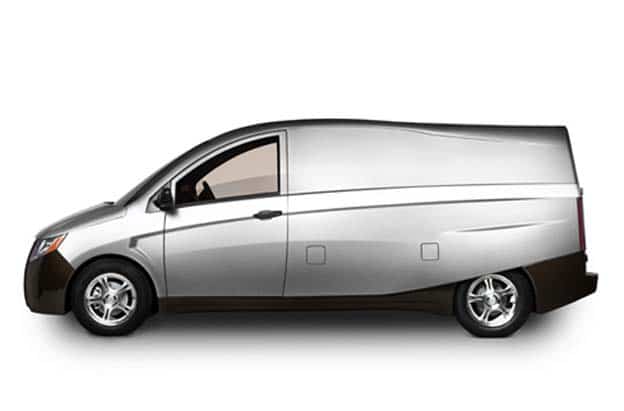
Toyota Fights for Leadership in both Plug-in Hybrids and Battery-Electric Cars

As the world leader in hybrid cars, Toyota is fighting to extend that leadership in both plug-in hybrids and battery-electrics. In plug-in hybrids, GM plans on first mover advantage with the Chevy Volt. In electric cars, the Nissan LEAF has a sizable lead over the Toyota FT-EV. But Toyota has more cars on the road with electric motors, advanced batteries, and electric drive systems than all competitors put together. This article discusses Toyota’s roll-out of the Prius PHV, the FT-EV, and progress with advanced batteries.

National Academies Predicts 13 to 40 Million Plug-ins by 2030

A new National Academies report considers two vehicles. One, the PHEV-10, uses hybrid electric vehicle (HEV) technology similar to that used in the Toyota Prius. However, it has a larger battery than an HEV to allow 10 miles of driving powered by electricity only and a gasoline engine that drives the wheels in parallel with the electric motor when power demand is high or the batteries are discharged. The other vehicle, the PHEV-40, is similar to the Chevrolet Volt. Thirteen to 40 million PHEV out of 300 million total vehicles are projected to be on the U.S. roads by 2030 under different scenarios.

Toyota and GM Fight for Plug-in Market

At the LA Auto Show, GM’s Bob Lutz highlighted big plans for the Chevy Volt. Toyota, owning 70 percent of the U.S. hybrid market, displayed the Prius Plug-in Hybrid Vehicle (PHV) along with a growing family of Toyota and Lexus hybrids. The Volt will have triple the electric range of the PHV. Toyota is the only car maker to have sold over one million hybrid cars in the United States. Health competition is a win for enthusiasts of plug-in vehicles.

Toyota Expands Hybrid Car Models

Toyota is the only car maker to have sold over one million hybrid cars in the United States. Hybrid sales are pushing 10 percent in Japan and even higher in some U.S. cities. Toyota will start volume manufacturing of the Plug-in Prius in 2012. Toyota will also start selling the less expensive 2-door FT-EV, a pure battery electric car. In the U.S. in 2012 Toyota will face intense EV competition with Nissan, Ford, and dozens of innovative younger companies such as Tesla.

Duke Energy’s Electric Vehicle Future

Duke Energy and FPL Group committed to buy 10,000 plug-in vehicles in the coming decade, as they upgrade their fleets. The energy storage in these vehicles could eliminate the need for peaking plants and enable the expanded use of renewable energy. Duke Energy CEO Jim Rogers shared a few minutes with me before he spoke at the Society for Environmental Journalist conference. At first his commitments to clean fleets, energy efficiency, and renewable energy seem surprising, given that he is CEO of the nation’s third largest emitter of greenhouse gases. The emissions are largely the result of being the nation’s third biggest consumer of coal.