
Popular Compact SUV Returns Powered By Electricity
Compact SUVs are big sellers with the powertrain choice split between gasoline-only, hybrid, plug-in hybrids and pure electrics. Toyota ups the ante in its mixed fleet with an EV—the all-new 2026 C-HR.
Toyota entered the electric vehicle world in 2023 with the BZ4X small SUV. Since then they have been leaning-into electric cars so the C-HR is the fourth in the line-up, joining the BZ, BZ Woodland and Highlander. The C-HR is the baby of the bunch. Does the C-HR name sounds familiar? It should, as it was sold in the U.S. from 2017-22 as a gas-only model.
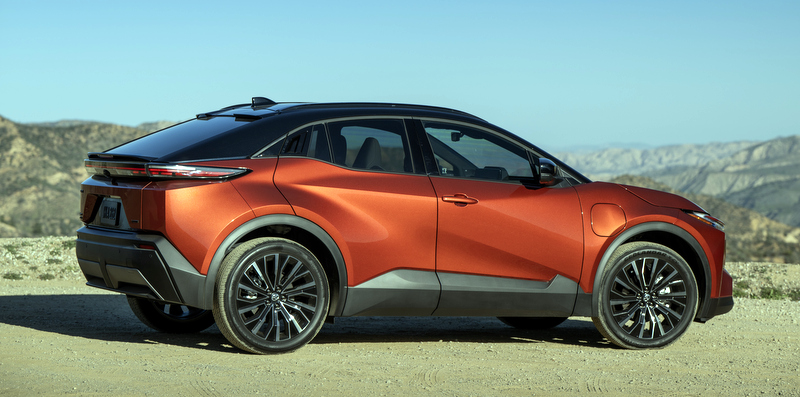
Toyota brought automotive journalists to Ojai, California, last week for the first drives of the all-new 2026 C-HR EV. What we found was a nimble, spirited and comfortable subcompact EV that will find a place in garages with owners looking for a utility vehicle that is efficient with a light environmental footprint.
This Flash Drive is a quick look of what we experienced in a couple hours behind the wheel of the 2026 C-HR. Clean Fleet Report will write a more detailed and deeper dive Road Test review in the coming months. Until then this primer is a good place to start.
- Standard all-wheel drive (AWD)
- Designed with the American driver in mind
- Two grades (trim levels): SE and XSE
- NACS charging with a CCS adapter
- Wireless Apple Car Play and Android Auto
Power and Range
- All-wheel drive with dual motors
- Horsepower: 338
- 0-60 mph: 4.9 seconds
- Battery: 74.7 kWh lithium-ion
- 11 kW onboard charger
- Curb Weight: 4,322-4,366 pounds
- All-electric driving range in miles: SE (with 18-inch wheels): 287; XSE (with 20-inch wheels): 273
Feeling the Road
Dual motors and AWD give the C-HR the pep and personality a subcompact SUV can sometimes lack. The spirited acceleration, whether from a stop or passing on the highway, got us up to speed quickly. The linear power from the motors stayed strong well past 70+ mph.
Smooth, instant acceleration and torque available at any speed is what makes driving an electric vehicle so wonderful. There is no engine or transmission lag, just seamless power when needed.
There are two drive modes—Normal (default) and Eco. The former is where we spent most of our time. Meant for long-range cruising there is a noticeable drop-off of power when switching over to Eco.
Driving the C-HR in town and on the open road never had us wanting more power. We simulated how this car would mostly be used and it performed well.
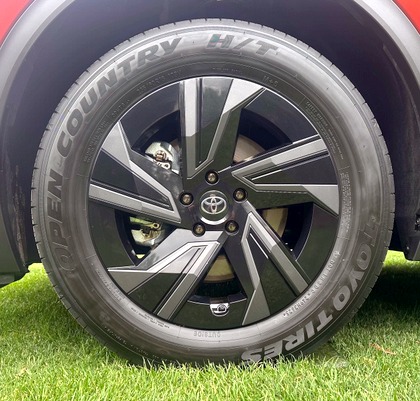
Handling was solid with a low center of gravity due to the underfloor-mounted batteries. The 18-inch all-season tires are standard on the SE, with 20-inch on the XSE. The MacPherson struts up front, a multi-link rear suspension and stabilizer bars allowed corners to be taken briskly with little-to-no body roll.
Slowing and Stopping
The C-HR has paddles on the backside of the steering wheel for regenerative braking, which replenishes the battery by converting kinetic energy into electricity when braking or coasting. Three pulls on the left paddle increases the force while three on the right reduces the regeneration.
There isn’t full one-pedal driving where the C-HR would come to a complete stop solely through regenerative braking. To be accurate, the brakes are not involved, but it is the motor doing the slowing to 4 mph. This is known as creep mode, so it is necessary to apply the brake pedal to come to a complete stop. Toyota did include a Brake Hold button that, when engaged and the brake pedal is pushed, holds the car at a stop and eliminating the need to press the brake pedal.
Conventional stopping is through ventilated front and rear anti-lock disc brakes with electronic brake-force distribution and brake assist, which delivered straight stops without pedal fade.
Charging
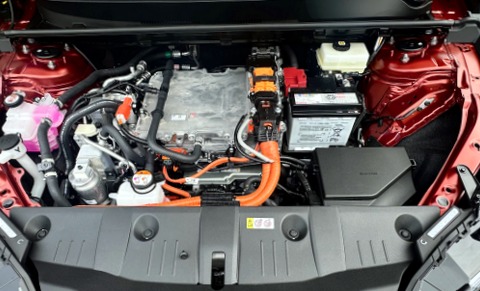
The C-HR comes with a pre-conditioner that brings the battery to an optimum charging temperature when DC fast charging. The battery can be trickle-charged with a 120V common wall plug, but expect replenish times to be long and slow. The best bet for owners will be to install a Level 2 240V home charger that will deliver a full charge in 7.5 hours.
The 2026 C-HR is equipped with a North American Charging System (NACS) charging port, giving it access to thousands of high-speed Tesla SuperChargers nationwide. DC fast charging, at a 150 kW maximum, will go from 10-80% battery capacity in around 30 minutes. A CCS adapter is included at no charge.
The C-HR has Plug & Charge that allows automatic identification, authentication and authorization at selected charging networks, reducing the need for multiple mobile charging applications. Plug & Charge is accessed through the Toyota App.
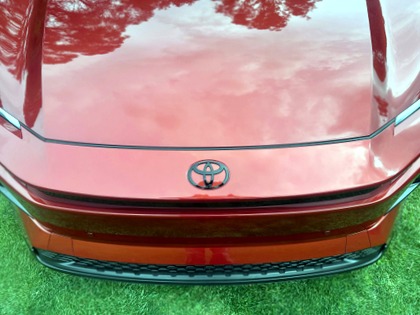
Tidy Exterior
Toyota says the 2026 C-HR has a “coupe-like profile,” which describes a long hood, sloping windshield and fastback raked roofline. The sleek front end, with a color-keyed center bumper and lower grille, has mere slits of LED projector headlights and daytime running lights.
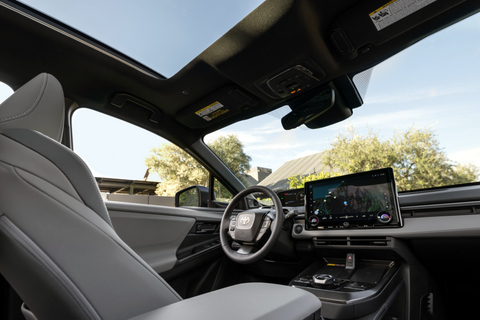
The front and rear overhangs are short, with low profile roof rails framing the optional panoramic glass roof (with a power shade). Cladding is found on the lower doors, but otherwise abandoned, giving a refined look.
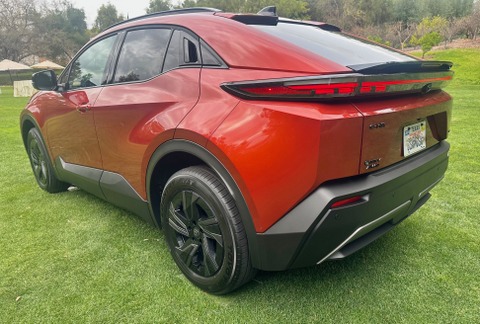
The doors have a definition line leading to the height-adjustable power lift gate that has a split roof spoiler (that directs air and water away from the glass so a wiper isn’t needed) and a ducktail spoiler. LED tail lights run the width of the lift gate.
Welcoming Interior
Driver forward visibility is good with a sloping hood, tall windows, thin A-pillars and an opera window on the doors. The sloping roofline makes rearward visibility a bit restricted, but that is remedied by the rear view camera.
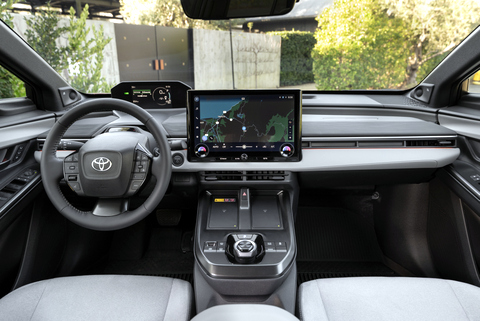
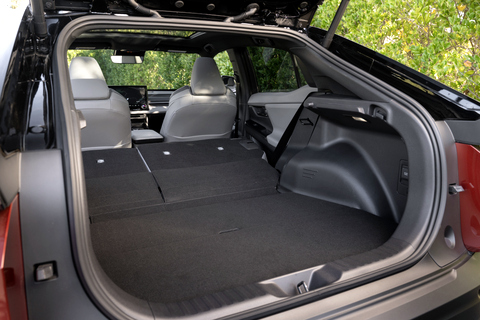
The supportive, heated front seats have 8-way power for the driver and passenger in the XSE grade, driver only in the SE. The rear seat holds two comfortably, three in a pinch. SofTex trim covers the SE seats while XSE gets SofTex with synthetic suede trim. Cargo space behind the rear seats increases to 59.5 cubic feet when the 60:40 second row split seat is dropped.
The SE and XSE each have a 14.0-inch touchscreen housing the Toyota audio system with six speakers on the SE and a JBL system with nine speakers, subwoofer and amplifier on the XSE.
Both systems get navigation, SiriusXM (90-day trial) AM/FM radio with wireless Apple CarPlay and Android Auto. USB-C ports (4), a 1,500-watt AC outlet and dual wireless phone charge pads are all standard.
Wi-Fi Connect includes an AT&T Wi-Fi hot spot with compatibility for streaming from Apple Music and Amazon Music. A subscription is required after the trial period for the 4G network.
Safety
Safety Connect is standard as are systems, including backup and Bird’s Eye View cameras, child protector rear door locks and power window lockout, a tire pressure monitoring system and an anti-theft system with engine immobilizer. Active and passive advanced driver-assist systems (ADAS) include eight airbags and the Toyota Safety Sense technology. Also standard is a pre-collision system that includes pedestrian detection, lane departure alert with steering assist and adaptive cruise control.
Pricing and Availability
Prices include the $1,450 dealer processing and handling fee.
- SE: $38,140
- XSE: $41,900
Both C-HR grades are set to arrive in Toyota dealerships during March 2026.
Warranties
- Battery –Eight years/100,000 miles
- Comprehensive – Three years/36,000 miles
- Powertrain – Five years/60,000
- Corrosion Perforation – Five years/Unlimited miles
- Complimentary Maintenancev- Two years/25,000 miles
- Roadside Assistance – Two years/25,000 miles
Observations: 2026 C-HR EV
The total number of electrified models in the Toyota lineup, including battery electric, plug-in hybrid, hybrid and a fuel cell electric vehicle (California only) now totals 21 models. In the current climate of tariff whims, a shout-out to Toyota for releasing new emission-free vehicles. It is hard enough for an auto manufacturer to forecast consumer interest in a specific type of vehicle without external forces creating havoc in the planning process.
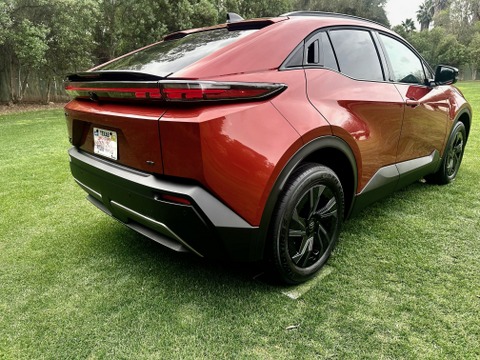
The all-new, all-electric C-HR is fun to drive, and even with the sloping roofline, there is adequate rear seat headroom. This will be a favorite of singles, couples and maybe families just starting out. The all-electric driving range is more than enough for almost all needs
Make sure to opt-in to the Clean Fleet Report newsletter (top right of page) to be notified of all new stories and vehicle reviews. We will write a full report on the C-HR’s performance, charging speed, and driving range when we get the chance to drive it for a week or more.Story by John Faulkner. Photos by John Faulkner and Toyota.
