
Modern vehicles depend on parts that do far more than fill space. They need to fit tightly, hold up under heat and vibration, support electronics, reduce weight and still make sense in high-volume production. That is where injection molding earns its place. It gives automakers a practical way to produce complex plastic components at scale without giving up precision or repeatability.
Its role has grown well beyond simple trim. In today’s automotive market, molded components help shape interior design, exterior durability, under-the-hood performance and the packaging of electrical systems. For manufacturers, the value comes from a mix of speed, consistency, material flexibility and design freedom that few other processes can match as effectively across so many parts of the vehicle.
Why Injection Molding Matters in Automotive Production
Automotive manufacturing runs on volume, timing and consistency. A process that works well for short runs or visually simple parts is not enough. Vehicle programs need components that can be produced repeatedly with tight tolerances and consistent quality. Injection molding fits that requirement because it supports repeatable production at the scale the industry expects.

It also helps manufacturers control variation across large production runs. When tooling, material selection, and processing conditions are managed well, molded parts can meet strict dimensional and cosmetic targets with less downstream correction. That matters in automotive work, where one small fit issue can affect assembly speed, squeaks and rattles, sealing performance or the final appearance of the cabin.
The process also aligns well with platform-based vehicle design. Once a mold strategy is in place, manufacturers can adapt families of parts across trims, models or regional variants more efficiently than they could with many slower or more labor-intensive fabrication methods.
Where Molded Parts Show Up in a Vehicle
Most people notice molded parts first in the interior. Instrument panels, center consoles, door panels, vents, trim pieces, glove boxes and many smaller touchpoints rely on molded plastics because they need clean surfaces, reliable fit and strong design flexibility. These parts are visible every day, so they have to meet both functional and aesthetic expectations.
The role continues on the exterior. Bumper components, mirror housings, grille elements, lighting parts, cladding, clips, covers and other trim features often depend on injection molding because the process can handle complex shapes while still supporting volume production. In many cases, the part also needs to withstand weather, UV exposure and impact, and meet finish requirements that are tougher than they first appear.
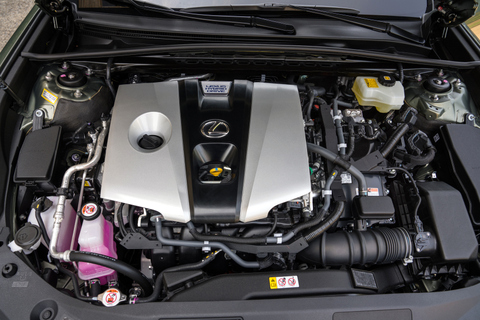
Under the hood, molded components often face the most demanding technical requirements. Housings, connectors, reservoirs, brackets, fluid-handling parts and electrical protection features must hold shape under temperature swings and chemical exposure. That is where material selection becomes critical. The automotive industry does not rely on one generic plastic for all these jobs. It uses a wide range of engineered materials chosen for specific thermal, mechanical and durability targets.
Lightweighting Keeps This Process Front and Center
Vehicle mass still matters, even as powertrain strategies continue to evolve. Lighter components can support efficiency, range, handling and packaging flexibility. That keeps plastics and polymer-based parts highly relevant, especially in areas where designers want to reduce weight without giving up function or production efficiency.
Injection molding helps here because it supports materials that can replace heavier alternatives in many non-structural and semi-structural applications. It often comes from many smaller part-level decisions across the vehicle. When enough of those decisions add up, the weight savings become meaningful.
This is especially important in electric vehicles, where packaging and efficiency pressures are intense. Battery systems, power electronics, connectors, thermal-management parts, covers and sensor housings all create opportunities for molded components. The exact part mix may change from one platform to another, but the manufacturing logic stays familiar: make the component light, durable, repeatable and fit for large-scale assembly.
Design Freedom Is One of the Biggest Advantages
One reason injection molding remains so valuable is that it gives engineers and designers room to solve more than one problem at a time. A molded component can be shaped to manage airflow, support clips, route fasteners, protect electronics, reduce assembly steps and still meet appearance needs. That kind of functional integration is a major advantage in automotive design.
This is where good design work makes a visible difference. A well-developed molded part can replace what might otherwise require several separate pieces, extra hardware or more assembly labor. That reduces complexity in ways that matter on a production line. Fewer parts can mean fewer chances for variation, fewer handling steps and a cleaner bill of materials.
The same flexibility supports brand design. Automotive companies care deeply about surfaces, textures, fit lines, lighting integration and cabin feel. Injection molding gives them the ability to create refined visible components while still engineering the back side of the part for strength, clips, mounts, ribs and other functional features. That balance is one of the reasons molded plastics remain so deeply embedded in vehicle development.
Scale, Quality and Tooling Discipline Decide the Outcome
Injection molding may look straightforward from the outside, but achieving strong automotive results depends on disciplined execution. Material behavior, mold design, cooling strategy, gating, shrink management, surface finish and cycle control all influence the final part. The process is powerful, but it is not forgiving of lazy engineering.
Tooling deserves special attention because it shapes both quality and economics. A mold built for automotive production must support repeatability over long runs, not just early sample success. If the tool is weak, the production program eventually pays for it through scrap, flash, warpage, downtime or inconsistent fit. This is one reason automotive suppliers spend so much effort on validation before volume ramps up.
Quality control also has to match the application. A cosmetic interior part has one kind of inspection pressure. A connector housing or thermal-management component has another. In both cases, the real job is the same: make sure the process stays stable enough for the part to continue to do what the vehicle program expects, shift after shift and lot after lot.
