
This article may contain affiliate links.
The four simple tech secrets for greener fleets include extending existing device life, standardizing mobile tools, choosing refurbished business hardware and managing the full admin technology lifecycle. These steps significantly lower total operating costs and reduce environmental impact.
While vehicle choices like electric vans often dominate sustainability discussions, the technology layer powering daily operations carries a substantial footprint. Optimizing the hardware that dispatchers rely on presents an immediate opportunity to cut costs without waiting for new infrastructure funding.
Dispatchers managing real-time routes, field supervisors tracking delivery windows and admin teams all depend on reliable devices. Every tablet and monitor carries its own environmental weight that many operators simply have not accounted for yet. Addressing this technology layer is one of the clearest paths toward a comprehensive green fleet strategy.
For instance, incorporating refurbished laptops and other pre-owned hardware from companies like PCLiquidations into the back-office infrastructure helps lower capital expenditure while extending the utility of existing electronic resources
Here are four practical fleet technology wins that operations leaders can implement immediately.

1. Extend the Life of Every Device Your Fleet Depends On
The greenest device is the one already in active service. This is the most cost-efficient principle in responsible device management.
Every additional year extracted from an existing machine preserves capital and diverts electronic waste. Yet, many organizations replace devices on fixed schedules driven more by procurement habits than actual hardware degradation.
Intentional device lifecycle planning changes that calculus entirely. Instead of running hardware until it fails, smart IT teams actively maintain and extend usability.
These maintenance tactics require minimal overhead while delivering maximum return on investment.
- Firmware and OS updates keep older machines compatible with current software without requiring new hardware.
- SSD storage upgrades can dramatically extend the functional life of a computer at a fraction of replacement cost.
- RAM additions improve multitasking performance on machines used for route optimization dashboards.
- Battery replacements keep mobile devices field-ready without the need for full unit swaps.
For fleet operations specifically, identifying which roles demand cutting-edge specifications is crucial.
A dispatcher running telematics dashboards does not require the same processing power as a software developer. Many devices flagged as obsolete by manufacturers still perform exceptionally well for administrative tasks.
This is where total cost of ownership thinking pays off heavily. The real cost of any device includes procurement, deployment, ongoing support and eventual disposal.
A computer that receives a memory upgrade and runs productively for another two years demonstrates a dramatically better financial profile than a premature replacement.
| Pro Tip: Before approving a hardware refresh, conduct a performance audit. Often, simple memory upgrades or new batteries can give administrative devices two more years of reliable service at a fraction of replacement costs. |
2. Standardize Mobile Tools Across Your Driver Teams
Evaluating the IT storage room of a mid-sized regional delivery operation often reveals a patchwork of devices. Multiple purchasing cycles usually result in varying operating systems that require individualized troubleshooting.
This lack of uniformity represents the hidden cost of inconsistent procurement. Over time, those technical inefficiencies compound into significant budget drains. When drivers and supervisors utilize different hardware, technical support time skews toward device-specific issues.
Application crashes become harder to diagnose across a fragmented technology ecosystem. Supervisors struggle to access the same dashboards seamlessly when using mismatched tablets.
Additionally, onboarding new drivers takes longer because the user experience is simply not predictable.
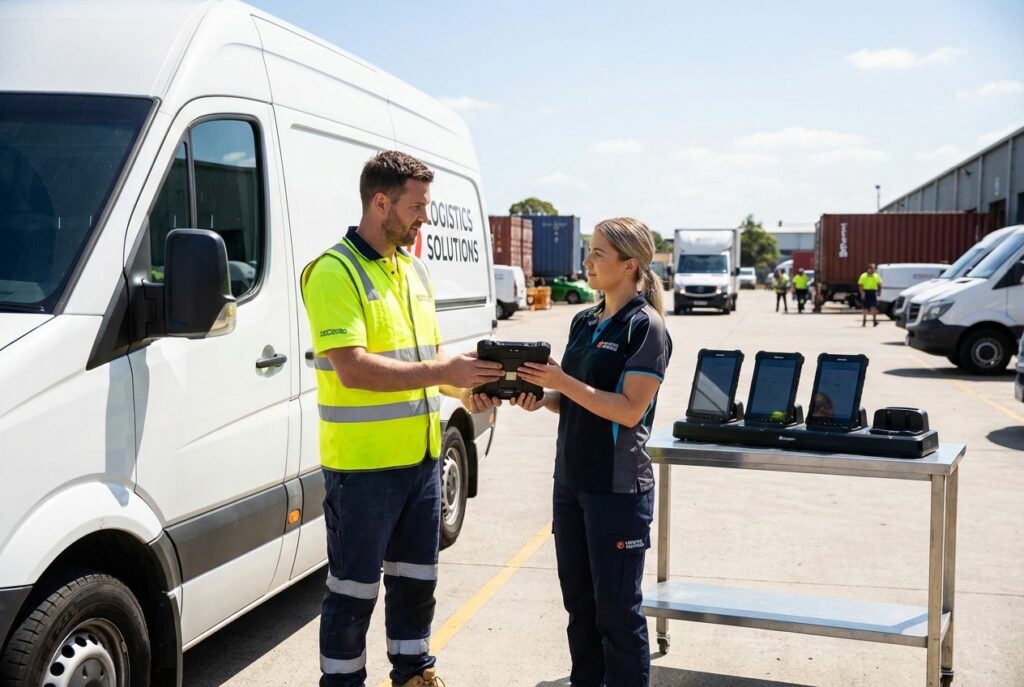
Mobile device standardization solves this by establishing a defined hardware profile for each role type. Setting one standard unit for drivers and maintaining that standard across all purchasing cycles provides stability.
The operational benefits from this unified approach materialize quickly for the whole team.
- Faster onboarding for new hires who receive pre-configured, familiar equipment.
- Simpler technical support with consistent software environments across the board.
- Longer device utility, since a single-model deployment is easier to maintain and repair.
- Better data integrity across diverse fleet technology platforms.
There is also a forward-looking dimension to hardware uniformity. As more fleets transition to electric vehicles, managing battery status and range planning adds new complexity.
That software complexity demands reliable, consistent hardware that support teams know intimately. Standardizing field devices ensures that software integration work proceeds smoothly without hardware bottleneck delays.
3. Reduce E-Waste by Choosing Refurbished Over New
Manufacturing a single business-grade computer generates significant embedded carbon and water consumption before it ever reaches a warehouse. When organizations prematurely retire functional hardware, they add directly to a severe global crisis.
Research shows that the world currently generates 50 million tons of e-waste annually, increasing faster than any other waste category. To make matters worse, less than 15% of e-waste is formally recycled on a global scale.
The most effective antidote to this problem is a highly strategic financial decision. Prioritizing e-waste reduction through pre-owned hardware displaces the demand for new manufacturing.
Dispatching software and route planning tools require reliable, business-grade machines that work every shift without fail. These roles do not strictly require the absolute latest generation of processors to function optimally.
Looking toward the future, the global e-waste volume is projected to reach 120 million tonnes per year.
The financial impact of ignoring this trend is highly concrete for modern operations. Sourcing certified pre-owned units at a steep discount brings capital expenditure down significantly. Concurrently, keeping older machines in active use diverts hundreds of pounds of electronic materials from local landfills.
Organizations looking to build a resilient hardware policy should integrate certified enterprise vendors into their procurement strategy. Buying high-quality refurbished business laptops from established IT asset recovery specialists prevents unnecessary spending.
Securing pre-owned hardware that has undergone rigorous condition grading ensures administrative staff receive dependable devices. This deliberate strategy supports both corporate budget goals and sustainable fleet management initiatives.
| Key Insight: Prioritizing refurbished business-grade hardware can slash procurement budgets by 40% to 60% while simultaneously fulfilling corporate ESG goals by diverting hundreds of pounds of high-quality electronics from the global waste stream. |
4. Lower Total Operating Costs for Fleet Admin Teams
Vehicles and drivers rightfully receive significant attention in fleet sustainability conversations across the industry. However, the back office maintains its own technology footprint with a cost structure highly suitable for optimization.
Procurement workflows, compliance documentation, driver scheduling and regulatory reporting all happen on digital devices. When those assets are not managed strategically from acquisition through end-of-life, invisible costs accumulate quietly.
IT asset disposition is the critical element most operations completely overlook. When devices eventually age out of active use, responsible disposition through certified channels accomplishes two vital objectives.
First, it recovers residual value from hardware that still retains some market worth. Second, it guarantees that sensitive fleet data is destroyed securely through compliant data destruction processes.
Folding asset disposition into a broader lifecycle strategy dramatically improves the total cost of ownership picture. Tracking expenditure goes beyond initial purchase to capture the financial recovery when the hardware finally leaves service. Companies tracking environmental metrics increasingly need to account for electronic waste alongside their standard vehicle emissions.
Organizations that demonstrate measurable e-waste reduction possess a genuine sustainability narrative that goes beyond simple transportation changes.
The practical framework requires establishing a refurbished-first procurement policy for non-performance-critical roles. Next, operations must build a standard disposition plan for all end-of-life corporate devices.
Finally, teams should actively track assets from initial purchase all the way to final recycling. The end result is a measurable, reportable contribution to the company bottom line.
| Warning/Important: Never retire old fleet hardware without a certified data destruction plan. Ensuring sensitive driver and financial data is wiped through NIST-compliant processes protects your organization from potential liability and costly security breaches. |
The Bottom Line
Greener fleets are built decision by decision, extending far beyond the vehicles parked in the yard. While fuel-efficient trucks address emissions on the road, smarter hardware lifecycle strategies address waste in the office.
These two sustainability efforts are completely complementary for a modern transportation business. A fleet that invests heavily in vehicle infrastructure while ignoring back-office tech waste leaves a measurable gap in its profile.
The four fundamental wins covered here are available to operations right now. Extending existing device life and standardizing mobile tools create immediate operational stability.
Similarly, sourcing pre-owned hardware and managing the full administrative technology lifecycle preserve valuable capital.
Operations leaders can implement these changes without waiting for the next major capital project approval.
Start with an honest audit of current device lifecycles alongside your standard transportation emissions. Identify the administrative roles where pre-owned hardware fits seamlessly without any performance compromise.
By building a strategic procurement and disposition plan, fleets can ensure their technology works just as efficiently as their delivery vehicles. Smart decisions across vehicles, software, and hardware ultimately define a truly sustainable fleet operation.
