
This article may contain affiliate links.
Fleet managers have bigger responsibilities than are sometimes assumed. Handling of vehicles is not the only aspect of the job. The actual problem is to make sure that all drivers drive safely, all cars comply with the regulations and the company is completely in the line of occupational health and safety laws.
Safety compliance is not an empty document in industries where employees have to spend long hours on the road. It is an ongoing process and preserves lives, fulfills responsibilities and shields the company reputation. To fleet managers, it is critical to know how to incorporate emergency preparedness in compliance strategies.
Compliance Is Better Than Vehicle Inspections
Major safety programs on fleets start with maintenance of the vehicles, driver license verification and monitoring of hours-of-service. Although these areas are critical, those of compliance are not limited to mechanical readiness.
Drivers work in uncertain surroundings. They have to endure traffic congestion, bad weather, long routes and physically challenging shifts. Accidents, health emergencies and unforeseen roadside incidents might happen any time. The first few minutes are important when they do.
Well-developed compliance strategies not only equip drivers to avoid accidents, but also to act well in case of an emergency.
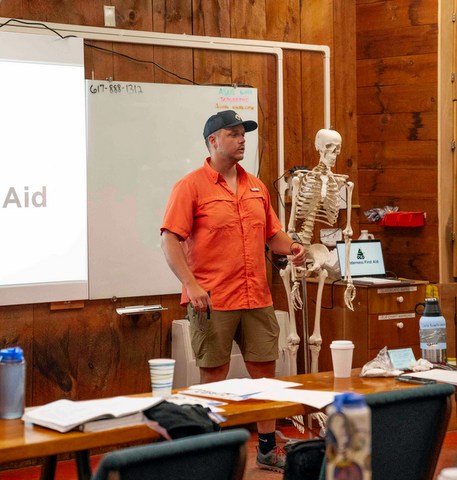
Emergency Preparedness: Compliance Requirement
Occupational health and safety policies regulating the work in Canada and the U.S. demand the employer to make all reasonable efforts to safeguard workers. In the case of fleet operation, this task will not be exclusively related to office spaces, but also to vehicles and workstations.
In most jurisdictions, it is required that there are first aid kits and trained individuals who can be called upon in case of an accident at the workplace. In the case of organizations that run fleets, this would involve thinking about how the drivers will manage emergencies when they are not close to an immediate medical care.
Employees should also be trained in appropriate corporate first aid training that will enhance the safety structure of a company as it trains employees to handle medical situations until the arrival of professional help. This is more than a best practice; it ‘s proactive risk management.
In cases where the regulators monitor safety measures, written training and certification can demonstrate that the organization has taken reasonable measures to guard its workforce.
Evading Liability by Preparation
Legal wise, preparedness minimizes exposure. In case of an accident and it is evident that employees were not provided with training to deal with emergencies that could be predicted, the firm will be prone to higher liability.
The case study is given of a road accident in which a third party or driver is severely bleeding. First aid might be administered immediately and properly to lessen a negative outcome. A lack of training, indecisiveness or wrong action may aggravate injuries.
Courts and insurance companies frequently look at the existence of reasonable precaution taken by an employer. Organized emergency training is used to validate that the company acted within its duty of care.
This will not only defend the employees, but will also defend the financial stability of the organization.
Securing Brand Reputation Off the Road
Fleet vehicles represent the mobile forms of branding a company. When the drivers are clad in uniform and are given branded cars, their behaviors reflect on the organization. Professional and confident response in case of an accident or a general emergency is a trust-building measure. The treatment of crises by employees is observed by the bystanders, customers and clients.
Conversely, observable confusion or unpreparedness may destroy credibility. In the digital world, an incident can easily gain publicity in social media or the media.
Compliance and emergency preparedness are investments enhancing internal safety measures and the reputation of the company.
Training as Part of a Wider Safety Strategy
Emergency preparedness is not something that should exist on its own. It is most effective in combination with a complex fleet safety program.
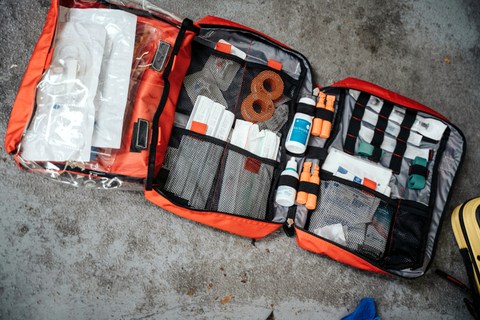
A comprehensive plan will comprise of having well-articulated policies, documented procedures, first aid kits that are regularly checked in each vehicle, and updated emergency contacts. The training process should be updated regularly to keep the certifications and skills up to date.
Compliance is easier to uphold when safety, led by corporate first aid training, is part of company culture as opposed to a one-time effort. Drivers know what is expected, certifications are monitored by managers, and everybody is more confident.
Economic Benefits of Good Compliance
Some organizations are not willing to spend on training on financial grounds. Non-compliance, however, would be much more expensive.
The cost of preventative measures are dwarfed by potential regulatory fines, higher insurance payments, lawsuits and compensation claims by workers. Other than the direct costs, there is also the cost of lost contracts, damaged equipment and downtime.
Insurers tend to consider the safety record of a firm when computing premiums. The history of a training program and active compliance can be documented to enhance bargaining power and cut overall costs of operation from a long-term perspective.
That way, safety training will not only be a compliance issue but also a strategic financial choice.
Driver Confidence and Retention
When employed people feel they are supported by their employer, chances of them being engaged and loyal are high. Trust is developed when they know that the company invests in their safety and provides them with practical skills.
Personal confidence also improves through emergency training. Drivers are aware that in case something unforeseen occurs, they know how to react. Such a feeling of readiness alleviates anxiety and leads to general satisfaction with the job.
Strong employee safety commitment in an industry with a shortage of drivers and high employee turnover can be a competitive edge.
Remaining on Top of Shifting Regulations
Standards of compliance change. Local and federal laws can revise standards concerning safety at work, paperwork and emergency action expectations.
Fleet managers have to be updated and scan through policies frequently to make sure that the policies are in line with the current laws. Collaboration with a well-known training organization is one of the ways to make sure that programs are based on recent first aid guidelines and industry standards.
It is always better to be proactively compliant than to correct what has been observed or what has transpired after an inspection or an incident.
Conclusion
Fleet management safety compliance is much more than vehicle maintenance and driver records. It needs a holistic strategy that entails emergency preparedness, documented training and accountability culture.
Managers can be leaders by introducing fleet operations to first aid training to minimize liability and save lives of employees and the community. Being prepared will enhance legal compliance, boost brand image and bring in financial stability in the long run.
Risk is inevitable in transportation and logistics settings. Nevertheless, lack of preparedness is not. An active safety plan will ensure that in case of unforeseen circumstances, the drivers will be able to react with effectiveness, professionalism and expertise, which will save lives and the company.
