
This article may contain affiliate links.
Relocating across state lines already comes with a long to-do list.
Between packing boxes, forwarding mail, and coordinating with movers, the last thing most people want is a 1,500-mile solo road trip tacked onto the end. That’s exactly where car shipping fits in.
It gets your vehicle from point A to point B while you fly, ride with family, or just focus on settling into the new place. Most companies let you get a free car shipping quote online in minutes, so you can figure out the cost before committing to anything.
For the thousands of Americans who relocate every year for jobs, military orders or a fresh start, it’s become less of a luxury and more of a practical decision.
Why Driving It Yourself Isn’t Always the Best Move
On the surface, driving your car to a new state seems like the obvious choice. No extra cost, right?
But once you add up fuel, hotel stays, meals on the road and the wear on your vehicle, that “free” drive starts costing real money. A cross-country trip from Los Angeles to New York burns through roughly $300-$500 in gas alone, depending on your vehicle’s fuel economy.
Add a night or two at a hotel, tolls through states like Ohio or Pennsylvania, and the 3,000+ miles you’re putting on your odometer. Suddenly, you’re looking at $700 or more out of pocket.
There’s also the time factor. Not everyone has three or four days to dedicate to driving, especially when a new job is expecting you on Monday.
If you’re relocating with a partner or kids, coordinating two vehicles makes it even harder. Auto transport removes that entire logistical headache in one step.
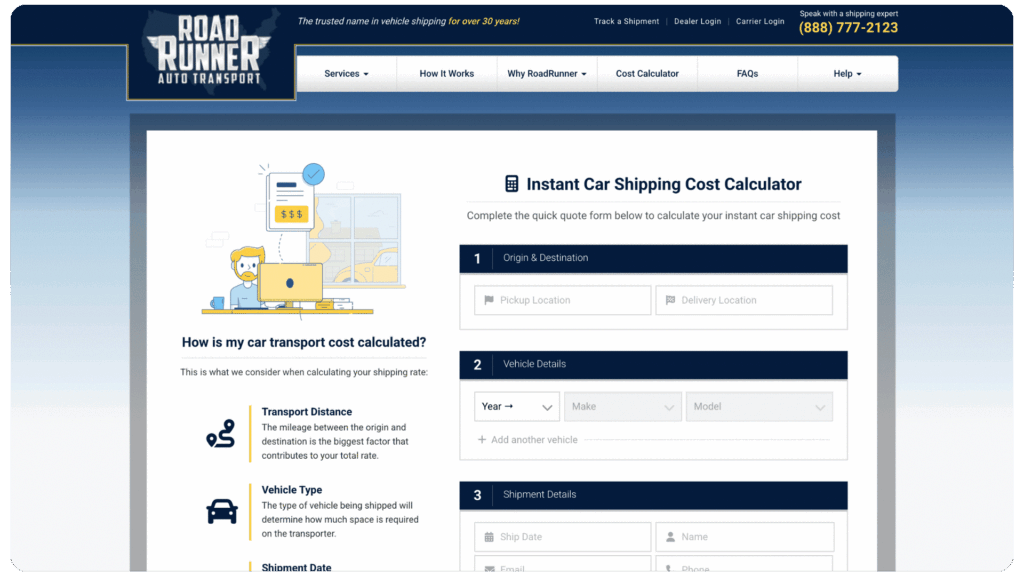
How Much Does It Cost to Ship a Car?
This is the first question almost everyone asks, and the honest answer is that it depends on a handful of variables.
But there are solid ballpark ranges that help you plan.
- For a standard sedan on an open carrier, most domestic routes fall somewhere between $500 and $1,500.
- A shorter regional move (think Atlanta to Nashville or Denver to Phoenix) typically lands in the $500-$800 range.
- Mid-range routes of 1,000 to 1,500 miles, like Chicago to Dallas, usually run $700-$1,100.
- True coast-to-coast shipments from places like Seattle to Miami or Boston to San Diego push into the $1,000-$1,500 territory, sometimes higher during peak season.
- Larger vehicles cost more.
- Shipping a full-size pickup truck like a Ford F-150 or an SUV like a Chevrolet Tahoe can add $100-$300 on top of the sedan rate, because they take up more deck space and add weight to the trailer.
- And if you’re moving something oversized like a lifted truck or a dual-rear-wheel setup, expect a steeper premium since not every carrier can accommodate them.
- Enclosed transport adds roughly 30% to 60% to the base price. So a route that costs $900 on an open hauler might run $1,200-$1,400 in an enclosed trailer.
Most everyday vehicles don’t need that level of protection, but it’s worth knowing the difference when budgeting.
The bottom line: a car shipping estimate will vary from one move to the next. Two people shipping the same model car can get different prices simply because of their pickup locations, delivery zip codes and timing.
What Pushes the Price Up or Down
Understanding what drives your quote helps you spot a fair price and avoid overpaying.
- Distance is the biggest factor. Longer routes cost more in total, though the per-mile rate actually drops on cross-country shipments compared to shorter regional hauls. A 300-mile move might cost $2.00 per mile, while a 2,500-mile route could come in around $0.50 per mile.
- Vehicle type and size directly affect the rate. Shipping a compact Honda Civic is cheaper than moving a Chevrolet Suburban because of the space and weight difference on the trailer.
- Seasonal demand creates real price swings. January through March tends to be peak season on southbound routes to Florida and Arizona, driven largely by snowbird migration. Summer is the busiest period overall because of family relocations tied to the school calendar.
- Route popularity matters more than people expect. High-traffic corridors like the I-95 Eastern Seaboard route or the I-10 stretch between Texas and California are typically cheaper because carriers fill trucks easily. A rural pickup in Montana or a delivery to a small town in Vermont costs more simply because fewer trucks run those roads.
- Pickup flexibility can work in your favor. Giving the carrier a wider window, say three-to-five days instead of a fixed date, often results in a lower quote because it lets them build a more efficient route.
Every one of these variables feeds into the car shipping quote you receive, which is why two seemingly similar moves can come back at very different numbers.
How to Get an Accurate Car Shipping Estimate
Estimates in this industry come in two flavors: instant online calculators and broker-assisted quotes. Both have a place, but they work differently.
Instant calculators pull from rate databases and give you a rough range within seconds.
They’re useful for early-stage budgeting. You’ll know quickly whether you’re looking at $600 or $1,200.
The numbers aren’t locked in, though.
They’re estimates based on averages, not guaranteed prices tied to an actual carrier.
Broker-assisted quotes are more precise.
A transport coordinator reviews your specific details (vehicle dimensions, exact route, current carrier availability) and comes back with a price that reflects real-time market conditions. These take a bit longer, sometimes a few hours, but they’re closer to what you’ll actually pay.
The smartest approach is to collect quotes from two or three companies and compare them. You’ll quickly see where the market sits for your route and vehicle. If one estimate is dramatically lower than the rest, that’s usually a sign to dig deeper before booking, not a reason to celebrate.
Reputable companies land within a similar pricing range because they’re all working with the same carrier network and fuel costs.
When requesting a car shipping estimate, have these details ready: the year, make, and model of your vehicle; whether it runs or not; your pickup and delivery zip codes; and your preferred timeframe. The more specific you are upfront, the more accurate the quote will be.
How the Car Shipping Process Actually Works
Most people assume vehicle shipping is complicated, but the process is fairly straightforward once you break it down.
You start by requesting a quote from a car transport company.
You’ll provide the basics: vehicle info, locations, and timeline.
Carriers then price the job based on the factors above.
Once you accept, a carrier is dispatched to your location.
They’ll do a vehicle condition inspection before loading, documenting any existing scratches, dents, or chips.
You’ll get a copy of that inspection report.
Hold onto it, because it’s your reference point at delivery.
From there, your car rides on either an open or enclosed hauler to its destination.
Open carriers are what you see on highways carrying six to 10 vehicles at a time.
Enclosed trailers offer more protection and are typically reserved for high-value or classic cars like a restored 1967 Ford Mustang, a brand-new Porsche 911 or anything that’s hard to replace.
Delivery windows depend on the route. Shorter hauls like Dallas to Houston might take just two to three days.A coast-to-coast move, say, Portland, Oregon, to Miami, could take anywhere from seven to 14 days, depending on the season and carrier availability. If you land before you get the keys to your new place, a short-term storage unit in Miami can hold your boxes until everything catches up.
Choosing Between Open and Enclosed Transport
This decision comes down to what you’re shipping and how much risk tolerance you have.
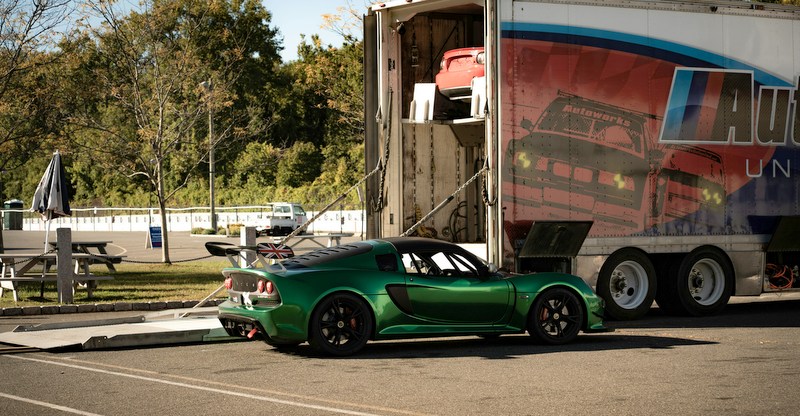
Open transport is the industry standard. About 90% of vehicles shipped in the United States travel on open carriers. Your car is exposed to weather and road debris, but the actual damage rate is low; most vehicles arrive in the same condition they left. It’s the most cost-effective option and works perfectly fine for everyday sedans, trucks and SUVs.
Enclosed transport makes sense when the vehicle’s value justifies the premium. The enclosed trailer shields the car from rain, dust, gravel and UV exposure during transit. If you’re shipping a collector car, a luxury vehicle or something freshly restored, enclosed auto shipping is the smarter bet.
The cost difference between open and enclosed is worth factoring in early. Request quotes for both options so you can make a real comparison rather than guessing.
Timing Your Shipment Around a Move
Coordinating car shipping with a relocation takes a little planning.
Most carriers need at least a few days of lead time. During peak months, booking a week or two in advance is smart.
If your move date is flexible, you’ll have more leverage on pricing. Carriers prefer flexible pickup windows because it lets them optimize their routes, and they often pass those savings on to you in the form of a lower rate.
A rigid “must pick up Tuesday at 9 a.m.” request limits which trucks can take your vehicle, which can increase costs or delay things.
One thing people overlook: your car doesn’t need to arrive the same day you do. Plenty of relocators fly to their new city, use a rental for a few days, and have their vehicle delivered once they’re settled. That buffer gives you breathing room and removes a lot of the pressure around exact timing.
Preparing Your Car Before Pickup
Carriers have a short list of requirements, but skipping any of them can delay your pickup.
- Keep the gas tank at about a quarter full.
- Enough to load and unload, but not so much that it adds unnecessary weight.
- Remove personal belongings from the interior.
- Most transport companies don’t insure items left inside the vehicle, and some won’t load a car that’s packed with stuff.
- Take off any aftermarket accessories that stick out, like roof racks, bike mounts, or antenna toppers.
- Retract your power antenna if your vehicle has one.
- Wash your car before the inspection. It sounds minor, but a clean exterior makes it much easier to spot and document pre-existing damage accurately.
If something happens during transit, a thorough condition report protects both you and the carrier.
Make sure the car runs. Inoperable vehicles can still be shipped, but they require special equipment, usually a winch or forklift, to load and unload. That adds to the cost, sometimes $200 or more on top of the standard rate.
Red Flags to Watch For When Choosing a Carrier
The car shipping industry has plenty of reliable operators, but it also has brokers and carriers that cut corners.
A few things to watch for:
Unusually low quotes are almost always a red flag. If one company quotes you $400 on a route where everyone else is quoting $800-$1,000, there’s a reason. They may be lowballing to win the booking, then hitting you with surcharges later, or failing to find a carrier willing to haul at that rate. A legitimate car shipping quote reflects actual market conditions, not a bait-and-switch number designed to get your deposit.
Check that the company has a valid USDOT number and is registered with the Federal Motor Carrier Safety Administration. You can verify this on the FMCSA website in under a minute. Any legitimate auto transporter will have this information readily available.
Read recent reviews on Google, the Better Business Bureau and Trustpilot. Pay attention to how the company handles complaints, not just the star rating. A business that responds professionally to negative reviews is usually a safer bet than one that ignores them.
Making It All Come Together
A cross-state move is stressful enough without adding a multi-day drive to the mix.
Car shipping handles one of the bigger logistical pieces, so you can focus on everything else:
- setting up utilities,
- enrolling kids in school and
- figuring out which grocery store you actually like.
It’s a straightforward service once you understand how pricing works and what to expect from the process.
Start by getting a car shipping estimate early in your planning, ideally three to four weeks before your move date.
Compare quotes from a few carriers, read the fine print, and don’t automatically go with the cheapest option.
The best value in auto transport isn’t the lowest number on the page. It’s the company that picks up on time, delivers without damage and doesn’t surprise you with hidden fees.
That’s one less thing on the moving checklist, and a big one at that.
