
This article may contain affiliate links.
Municipal utilities, public works departments and infrastructure maintenance contractors are under pressure to do more with fewer resources. Budgets remain tight, skilled labor is harder to find, and aging infrastructure continues to generate costly maintenance challenges.
Many maintenance fleets are responding the same way: they are investing in remote inspection technology.
Remote inspection cameras allow crews to identify underground and hard-to-reach issues before they become emergencies. Instead of relying on excavation, manual inspections or repeated site visits, teams can gather accurate visual data quickly and make maintenance decisions with far greater confidence.
The result is simple: fewer surprises, better planning and lower operating costs.
Infrastructure Maintenance Has Become More Complex
Much of the infrastructure supporting cities and utilities today was installed decades ago. Sewer systems, stormwater networks, water distribution lines and industrial pipelines are all aging at the same time.
That creates a difficult situation for maintenance teams.
Failures are becoming more common, yet budgets are rarely increasing at the same pace. Every unexpected blockage, collapse or leak creates a chain reaction that affects labor scheduling, vehicle deployment, emergency response and public service reliability.
Maintenance managers are expected to prevent problems before they happen, not simply react when something breaks.
That shift is changing how fleets approach inspections.
Traditional Inspection Methods Leave Too Many Gaps
For years, infrastructure inspections depended heavily on manual investigation.
Crews often had to visit multiple locations before identifying the source of a problem. In some situations, excavation was necessary simply to confirm what was happening underground.
That process consumes time and resources quickly.
A single maintenance issue may require:
- Initial site assessment
- Multiple vehicle dispatches
- Additional labor hours
- Traffic control measures
- Excavation equipment
- Follow-up inspections
Even after all of that effort, teams sometimes discover that the original diagnosis was incomplete.
When maintenance departments are managing hundreds or thousands of assets, this approach becomes difficult to sustain.
Remote Sewer Inspection Cameras Deliver Faster Answers
Maintenance teams are increasingly turning to remote inspection systems because they reduce uncertainty.
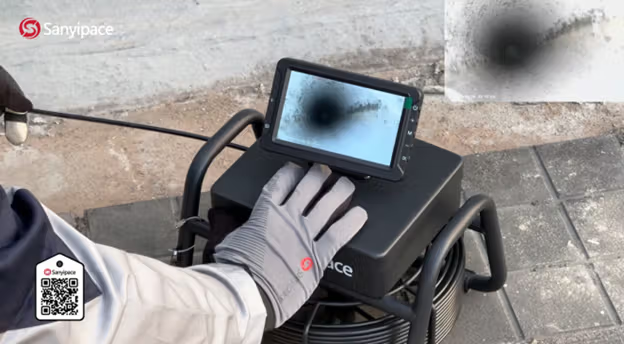
Modern pipe camera technology allows operators to view the internal condition of pipelines without extensive disruption to surrounding infrastructure.
Instead of making assumptions, crews can see exactly what is happening inside the system.
Common issues become easier to identify, including:
- Cracks and structural defects
- Root intrusion
- Corrosion
- Sediment buildup
- Obstructions and blockages
- Joint separation
More importantly, those findings can often be documented and shared immediately with supervisors, engineers and decision-makers.
That speed shortens the time between inspection and action.
Fewer Emergency Deployments, Better Fleet Utilization
Every fleet manager understands the cost of reactive maintenance.
Emergency calls rarely happen at convenient times. Vehicles must be reassigned, crews work overtime, and planned maintenance schedules get disrupted.
Remote inspections help reduce those situations.
When underground assets are inspected on a regular basis, developing problems can be identified long before they create service interruptions.
Maintenance teams gain the ability to:
- Prioritize repairs based on actual conditions
- Schedule crews more efficiently
- Reduce unnecessary site visits
- Avoid repeat inspections
- Allocate vehicles where they are needed most
Small improvements in planning often create significant savings across an entire fleet operation.
Better Data Leads to Better Maintenance Decisions
Visual inspection data has become an important part of modern asset management.
A maintenance manager reviewing inspection footage can compare current conditions with previous records, identify deterioration trends and determine which assets require immediate attention.
That information supports a more proactive maintenance strategy.
Instead of asking:
“What failed?”
Teams can start asking:
“What is most likely to fail next?”
This shift toward predictive maintenance is becoming increasingly common across utility and infrastructure sectors.
Remote inspection systems provide one of the most practical ways to collect the information needed to support those decisions.
Sustainability Benefits Often Go Unnoticed
Cost savings usually receive most of the attention, but sustainability is another advantage of remote inspections.
Every avoided excavation reduces material waste.
Every avoided emergency response reduces fuel consumption.
Every repaired issue that prevents a major failure helps extend the life of existing infrastructure.
For organizations focused on long-term asset management, those benefits accumulate over time.
Remote inspection technology supports a maintenance approach that is not only more efficient but also more responsible.
Digital Infrastructure Management Is Still Evolving
Infrastructure maintenance is becoming increasingly data-driven.
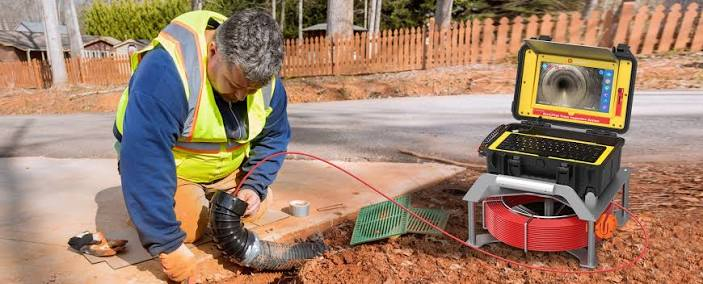
Telematics, connected equipment, predictive analytics, and digital asset management platforms are already changing fleet operations. The remote sewer inspection camera fit naturally into that broader transition.
The goal is not simply to collect more information.
The goal is to make better decisions with less guesswork.
Organizations that can identify problems earlier, deploy resources more effectively, and reduce unnecessary maintenance activities will be in a stronger position as infrastructure demands continue to grow.
Remote inspection technology is helping maintenance fleets move in that direction.
Final Thoughts
Maintenance teams no longer need to wait for visible failures before taking action.
Remote inspection cameras provide a clearer understanding of infrastructure conditions while reducing unnecessary labor, vehicle usage and operational disruption.
For fleet-based infrastructure maintenance organizations, the value goes beyond inspections alone. The technology supports better planning, smarter maintenance strategies and more efficient use of resources across the entire operation.
As infrastructure systems continue to age, visibility is becoming less of a luxury and more of a necessity.
