General Purpose Subcompact SUV with Off-Road Capability
Ford says the 2026 Bronco Sport is “Built Wild,” conveying it is designed to find roads less traveled and not just a different in-town route for your eggs-and-butter run. The Bronco Sport’s city driving is civil, but is backed-up with some off-roading capability.
Two Engines, One Transmission
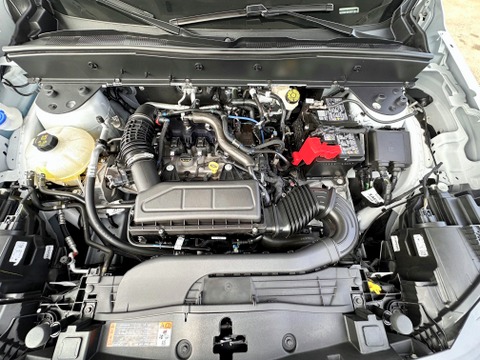
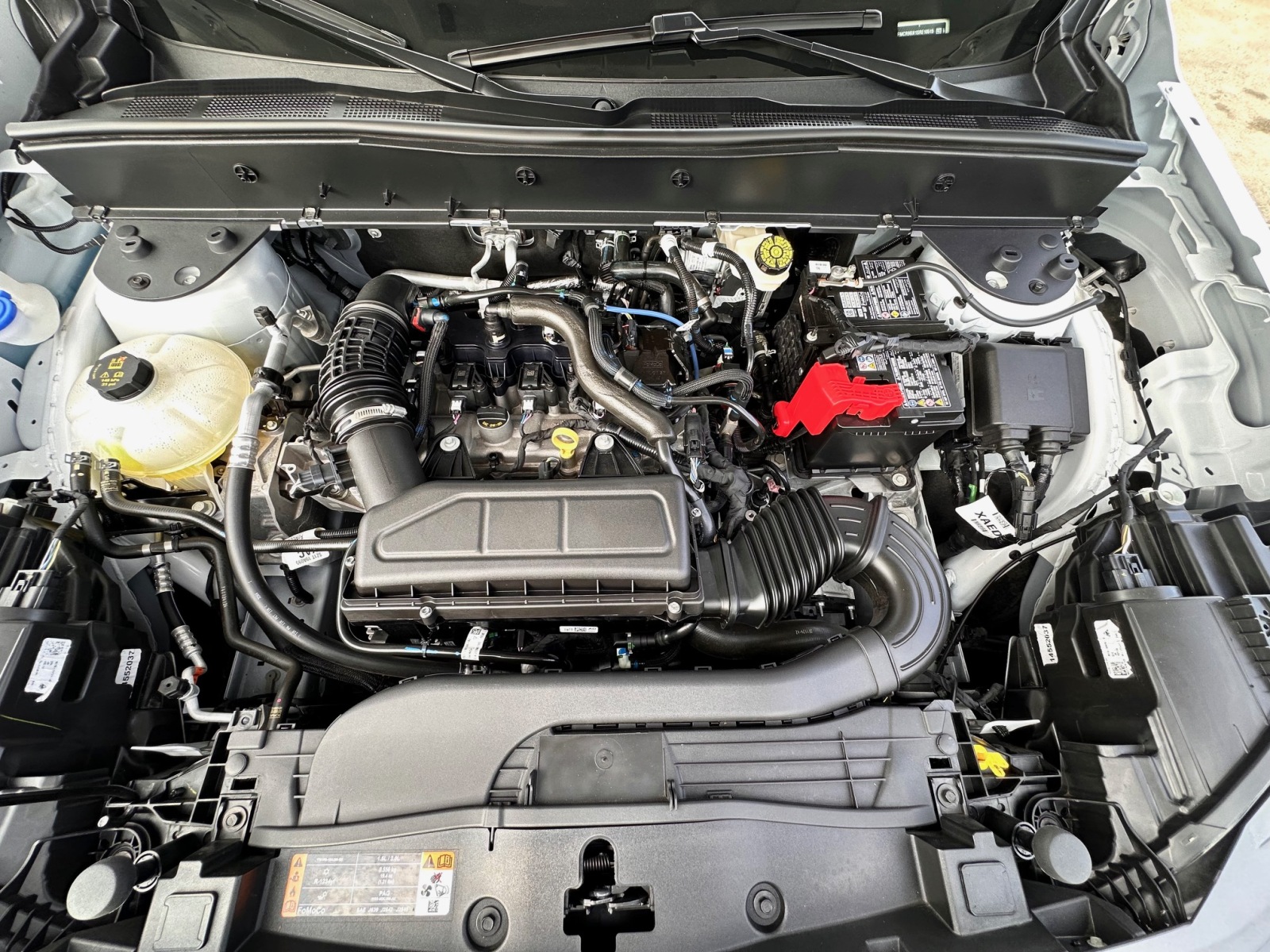
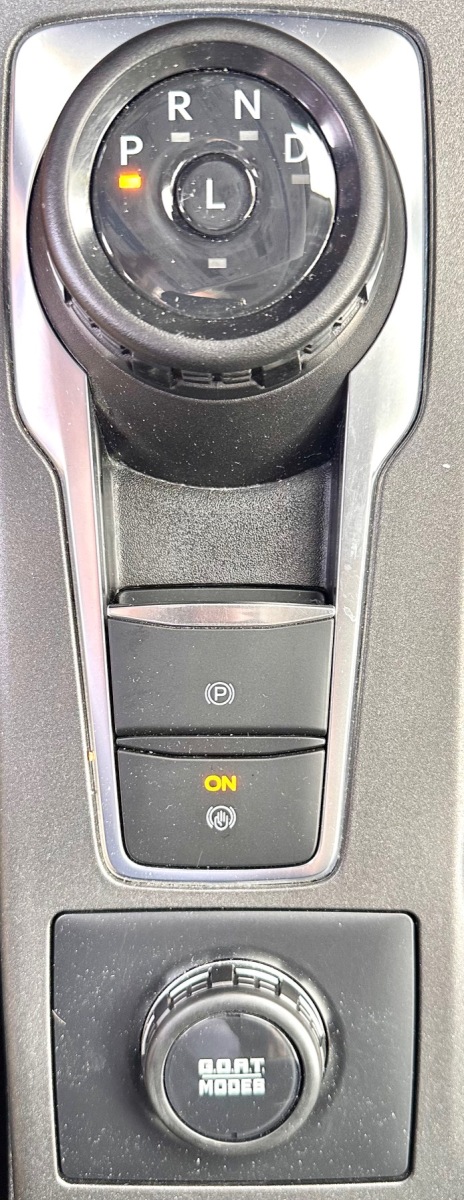
The 2026 Ford Bronco has two EcoBoost gasoline engine choices. Big Bend, Heritage and Outer Banks trims get a turbocharged 1.5-liter 3-cylinder putting out 181 horsepower (hp) and 190 pound-feet (lb.-ft.) of torque. The Bronco Badlands trim gets a 2.0-liter 4-cylinder with 250 hp and 277 lb.-ft. of torque. Both engines are mated to an 8-speed automatic with a manual mode with paddle shifters and driver selectable drive modes. Ford calls these modes “G.O.A.T” as in Goes Over Any Terrain, which affect the steering sensitivity, shift points, throttle response and traction control.
All Bronco Sport models have standard all-wheel drive with drive modes in the Terrain Management System of Normal, Eco, Sport, Slippery and Sand. Opt for the Badlands to add Mud/Ruts and Rock Crawl. When scrolling through the drive modes, the 8.0-inch LCD information screen displays a different animation graphic for each mode.
Driving the 3-cylinder Bronco Sport
Clean Fleet Report drove the Bronco Sport Big Bend 4×4 with the 3-cylinder engine and 8-speed automatic. This engine is part of the EcoBoost offerings from Ford designed to blend performance and fuel economy. Let’s take the fuel economy first.
The EPA fuel economy numbers for the 1.5-liter are 25 city/30 highway and 27 combined mpg. In 280 miles driving through Southern California we averaged 26.4 mpg. However, a 100-mile piece of those miles was an all-freeway run, with the adaptive cruise control set at 65 mph and in Eco mode, we saw 28.1 mpg. Fuel economy numbers reported by Clean Fleet Report are non-scientific and represent the reviewer’s driving experience using the dash gauge computer. Your numbers may differ.
Our takeaway is when the Bronco Sport is loaded with two adults and all their gear, 30 mpg is possible on the highway, but it will take a smooth foot on the accelerator. Why?
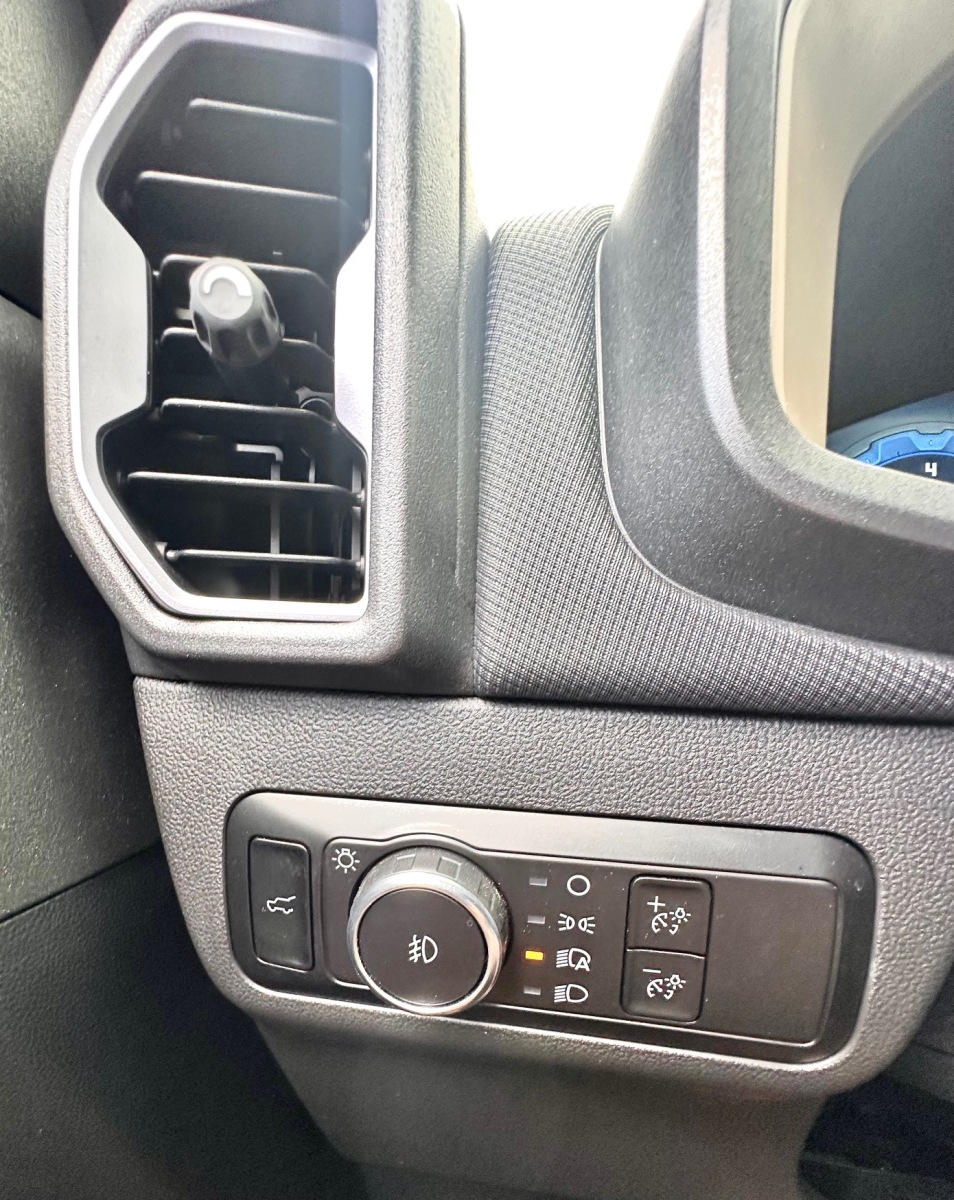
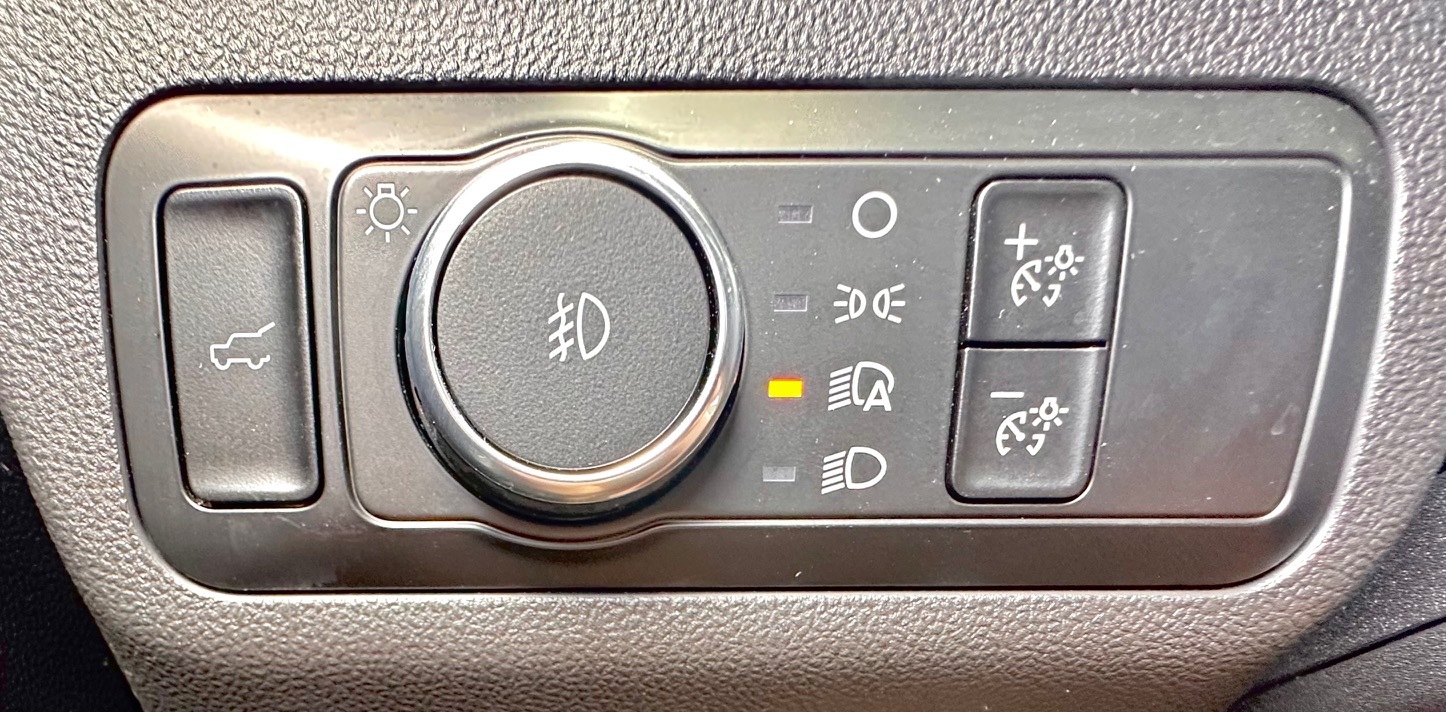
The 3-cylinder turbo engine and the 8-speed automatic are programmed to default to favor fuel efficiency. Leaving a stop light, even when lightly pressing on the accelerator pedal, there is hesitation as the turbo spools-up and the transmission quickly goes from first to fourth gear. It is annoying, but there is a work-around. When at the stop light, select the Sport drive mode by turning the G.O.A.T. Modes wheel on the center console. This holds the transmission in first or second and makes for a much smoother launch. Once up to speed, rotate the wheel back to Normal or Eco.
Several years ago we reviewed the 2023 Bronco Sport Badlands with the 2.0-liter EcoBoost 4-cylinder twin turbo engine. Because of the twin–scroll turbos, we did not notice off-the-line stumbling or hesitation present with the 1.5-liter 3-cylinder single turbo engine. It was a more pleasurable driving experience. In that review we did some serious off-roading, which proved the Bronco Sport’s legitimate let’s-get-dirty capability.
Getting Dirty
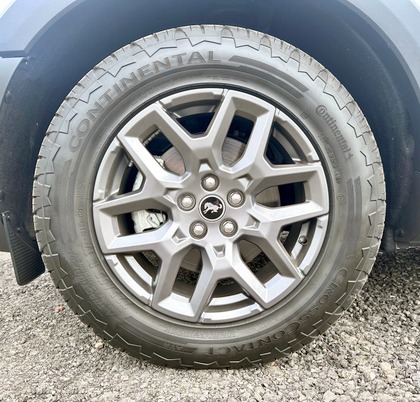
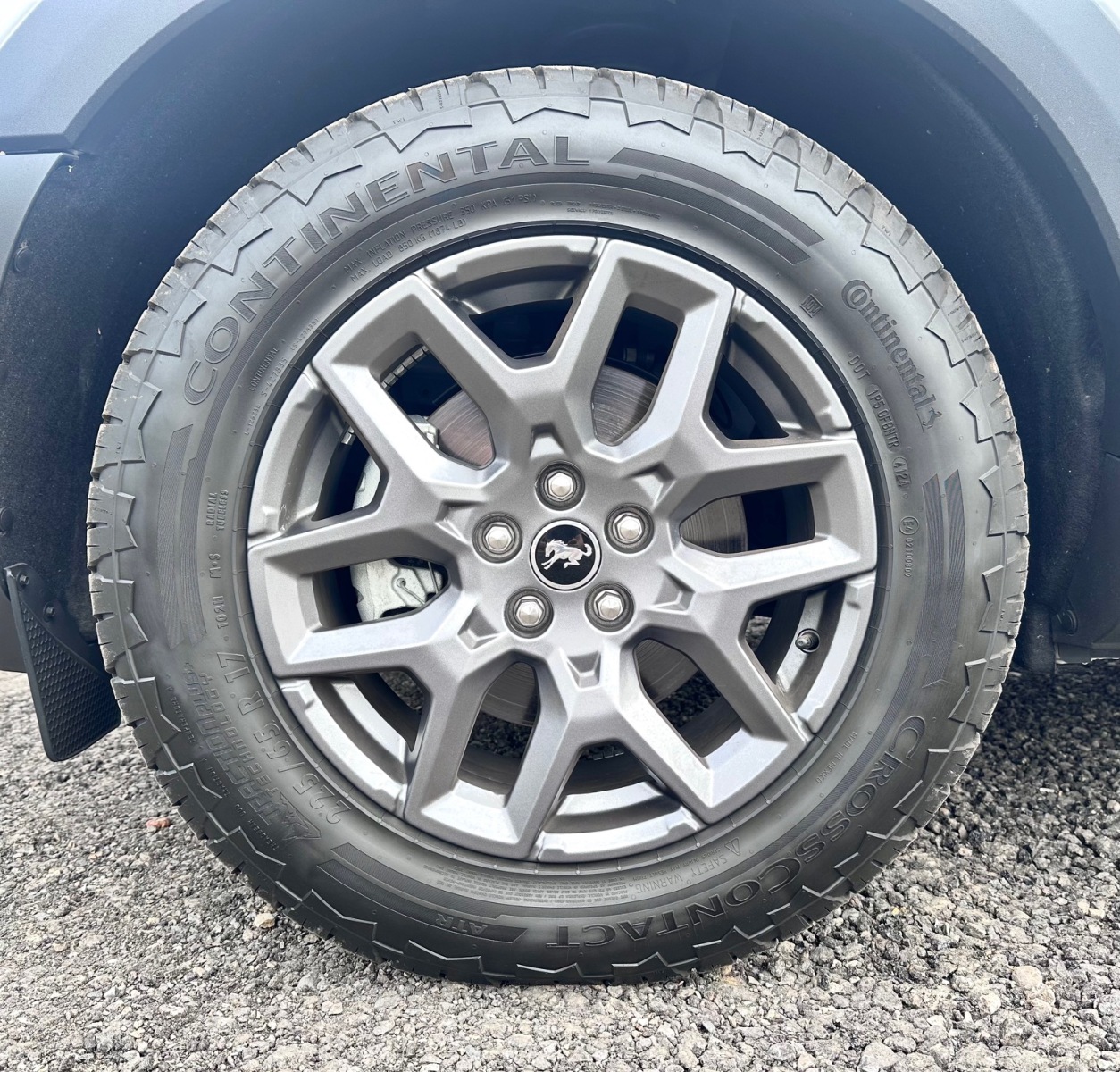
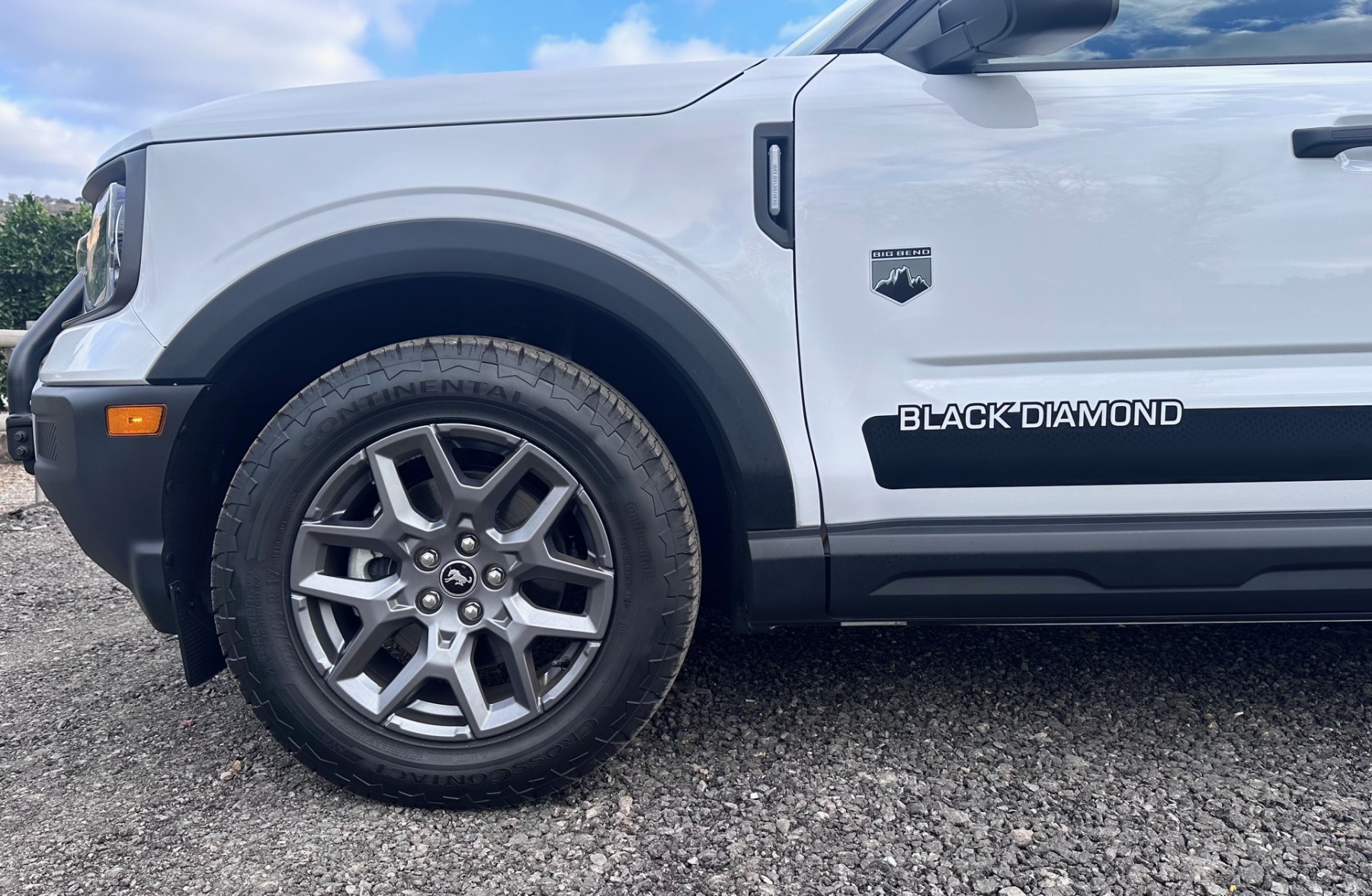
The Bronco Sport Big Bend 4×4 we drove had the optional $2,570 Black Diamond Off-Road Package that included Continental CrossContact 225/55 All Terrain tires mounted on 17-inch carbonized gray aluminum wheels and a cargo area mat for those dirty and muddy trips.
Ford is proud of the car’s off-road capability, saying the “Bronco Sport has the toughness and smarts to help turn off-road novices into 4×4 pros.” It does this with a suspension built to take on rugged terrain, including mild rock crawling. They call this the H.O.S.S. 1.0 system for High-Performance Off-road Stability Suspension that includes tuned hydraulic front struts and softer springs aimed to increase tire contact with the ground.
Ford’s Trail Control technology enables a cruise control-like setting up to 20 mph forward and six mph in reverse with vehicle-controlled throttle and braking, letting the driver stay focused on navigating the trail. Another helpful feature is the 180-degree off-road camera that automatically comes on when in the off-road modes.
Hitting the (Paved) Road
The 2026 Bronco Sport Big Bend 4×4 weighs in at 3,467 pounds with a 2,200-pound tow rating. While not a sporty crossover, the independent front and rear suspension with front and rear stabilizer bars handled most corners flat, but when pushed hard, there was body lean. The steering was well-balanced and a bit on the heavier side, which we like.
The steering was good and we never felt disconnected from the tires and the road. The all-terrain tires made for a harsher ride than an all-season tire would have provided. If you are planning on rarely or never taking your Bronco Sport off-road, maybe opt for all-season tires.
Exterior Design
The Bronco Sport shares mechanical parts with the Ford Escape, which is in its final year of production. This is too bad as the staff at Clean Fleet Report are fans of the Escape, as we reported here. A key reason were the options of gasoline, hybrid and plug-in hybrid engines. The last two propulsion options delivered fuel economy well into the 40 mpg range, but also with the plug-in hybrid offering 42 miles of all-electric driving. RIP, Ford Escape.
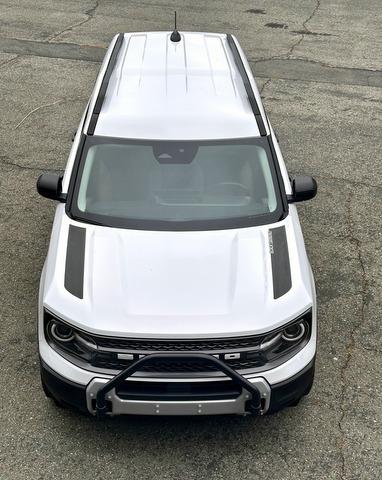
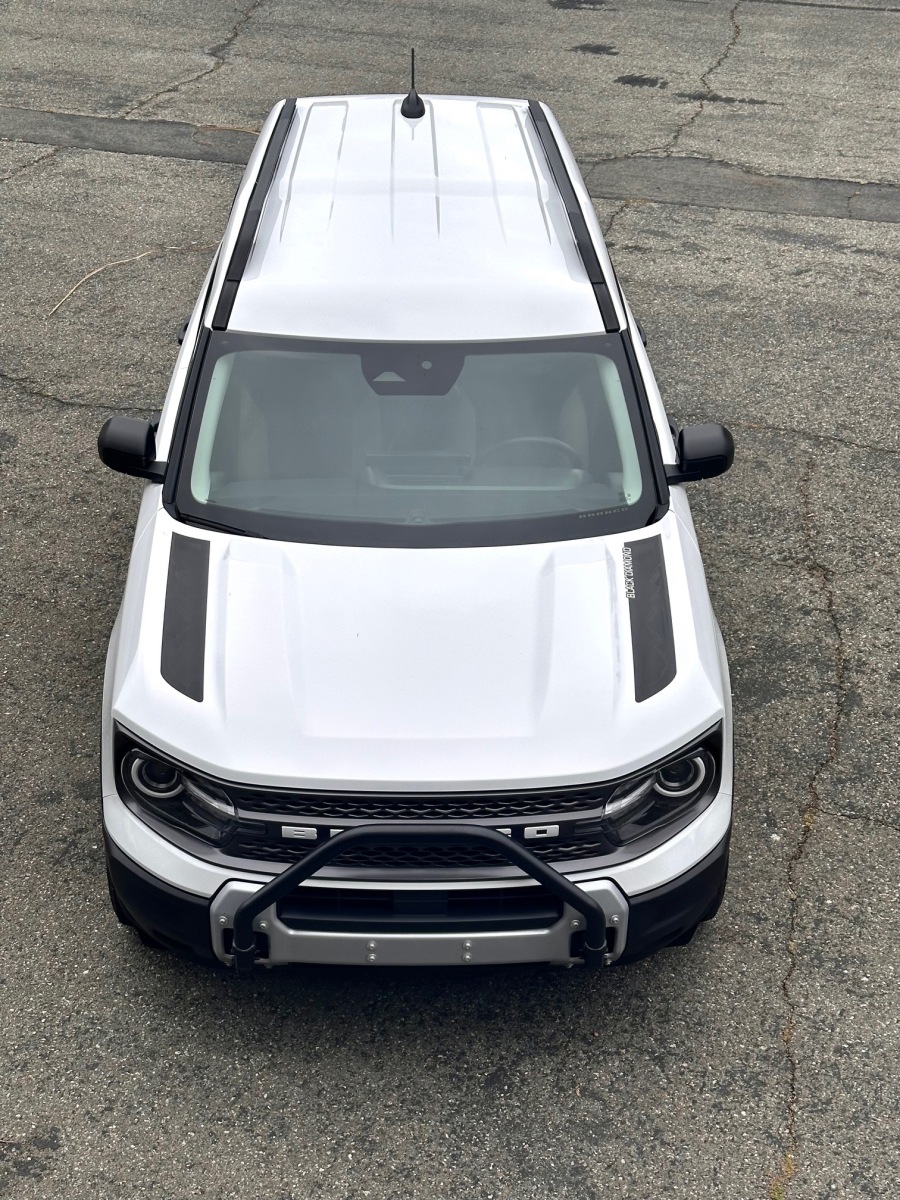
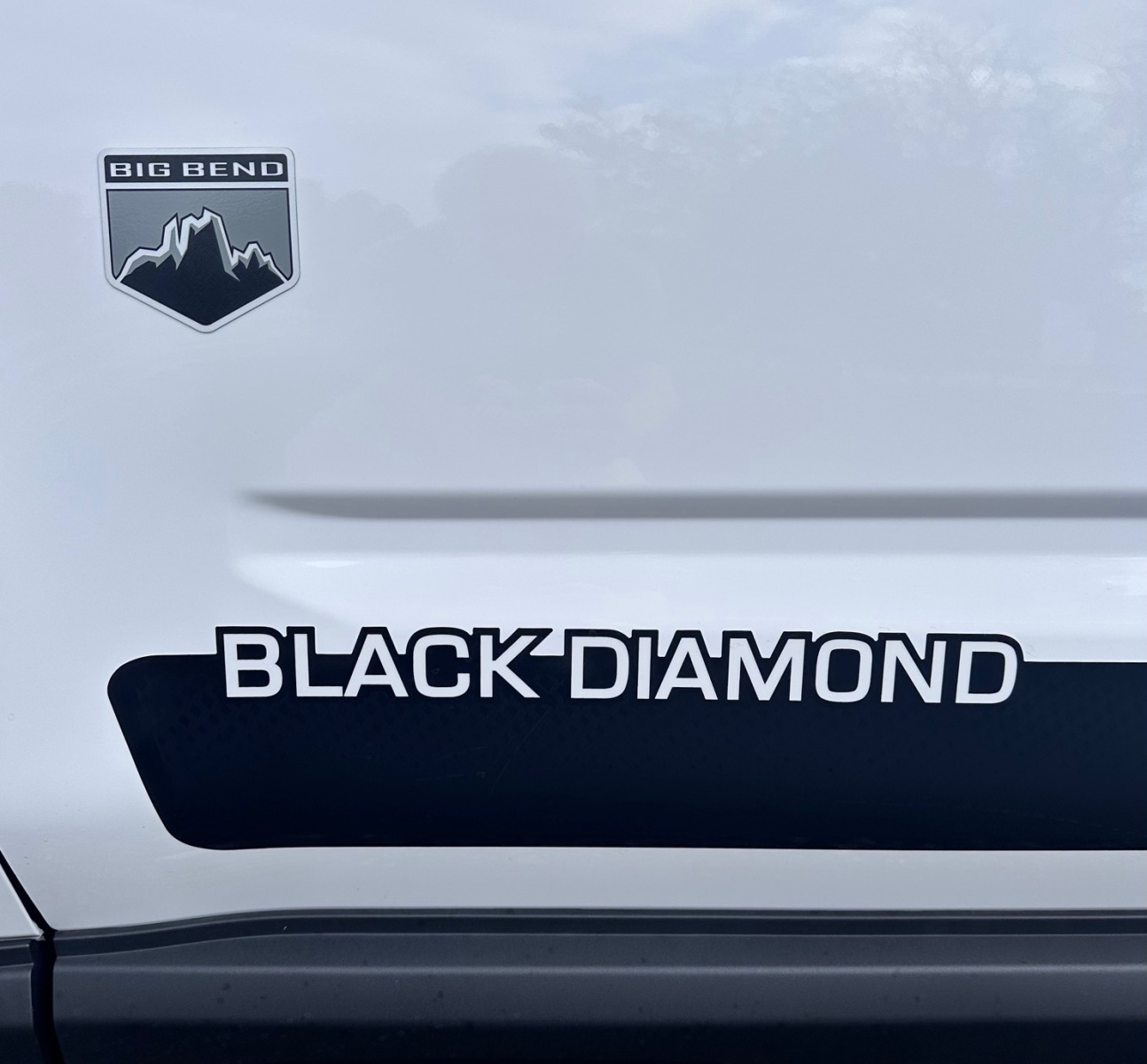
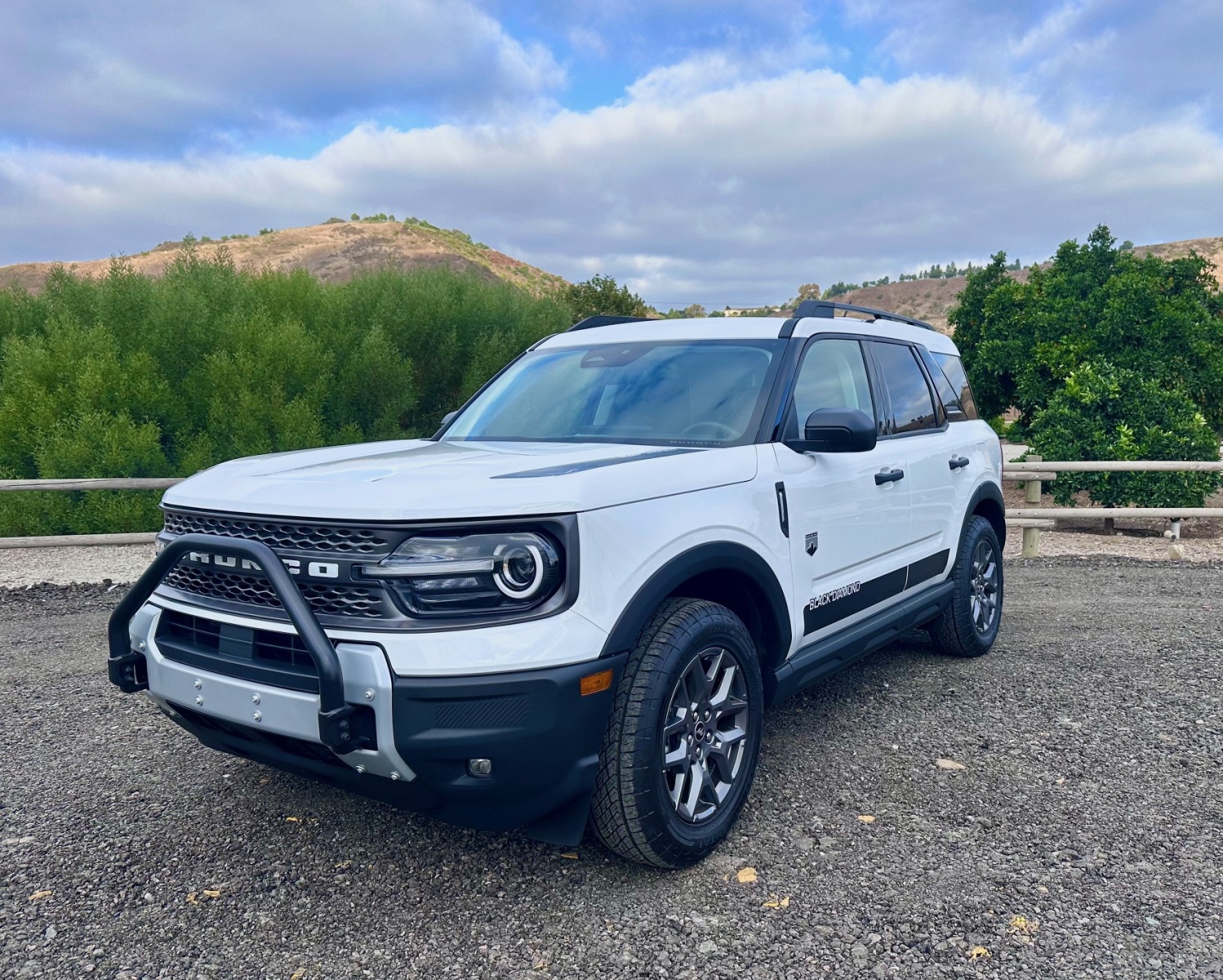
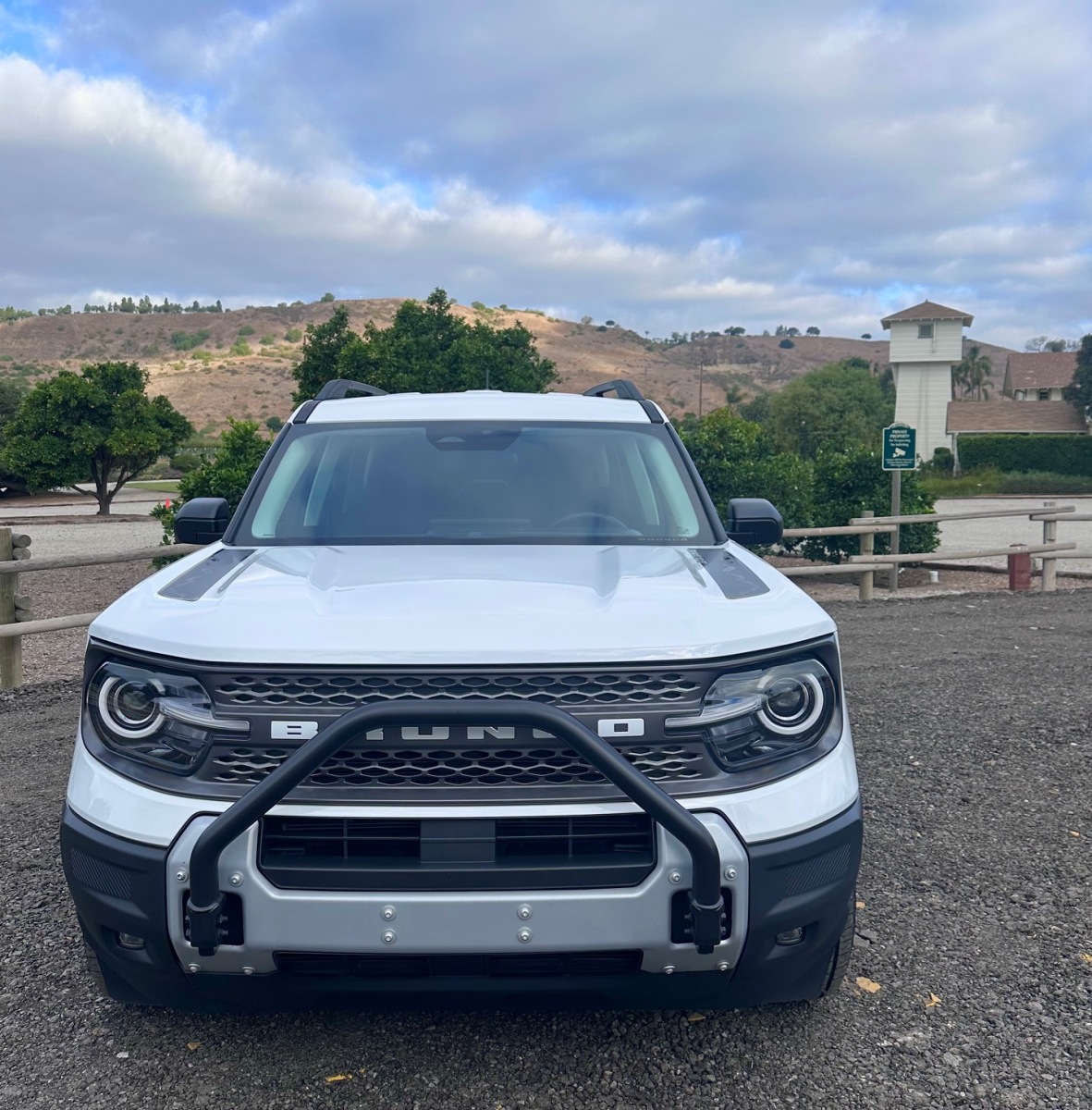
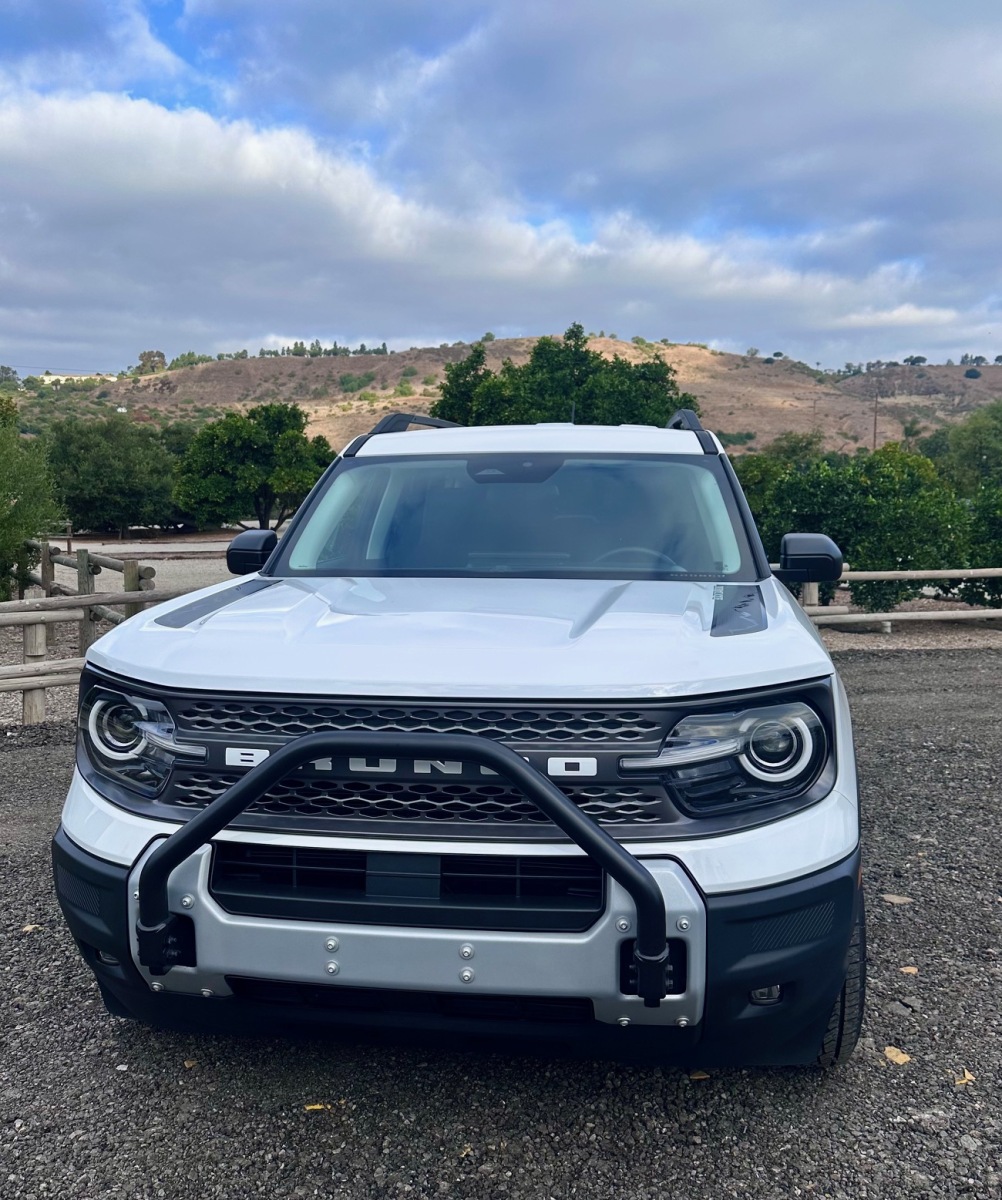
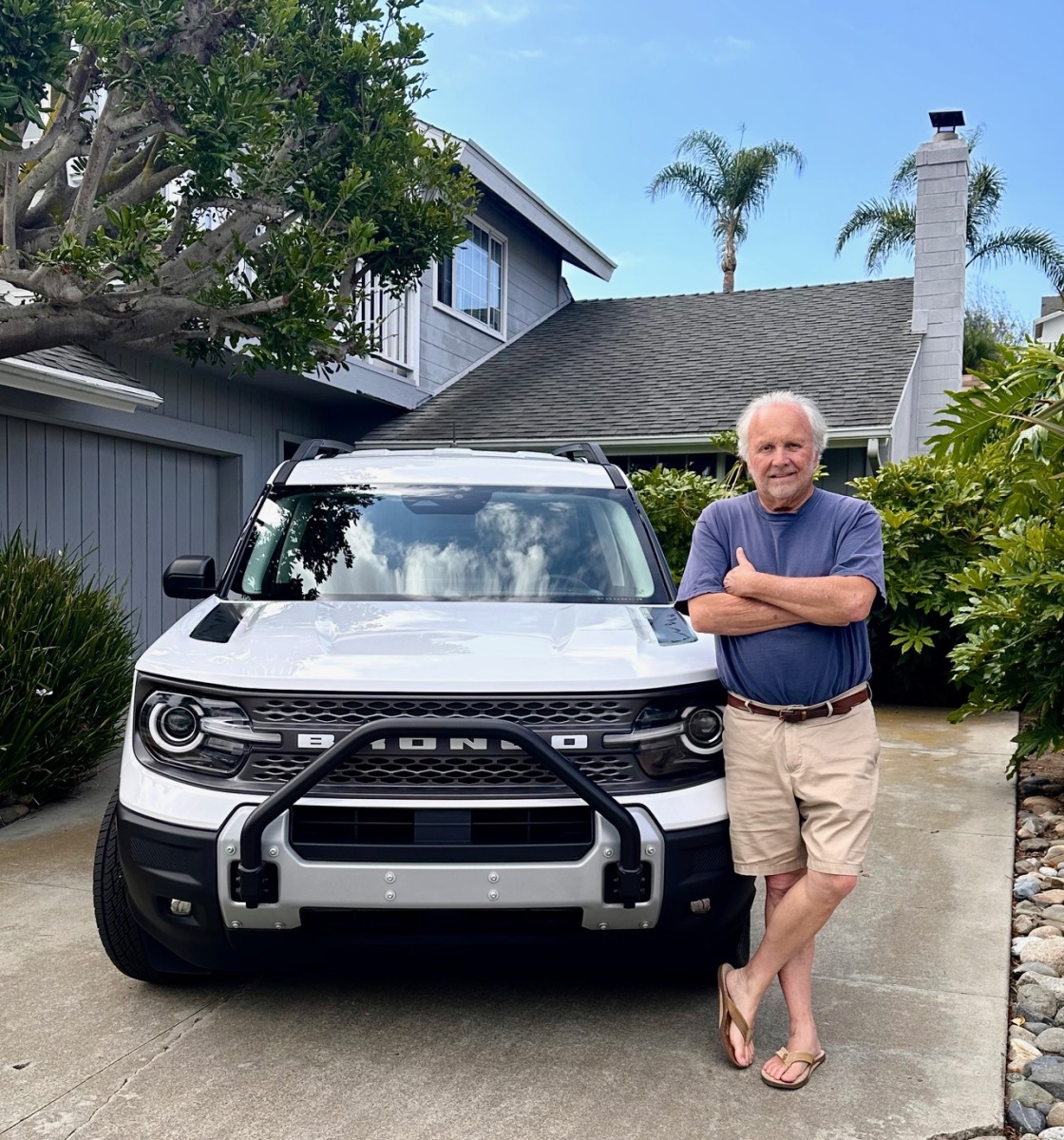
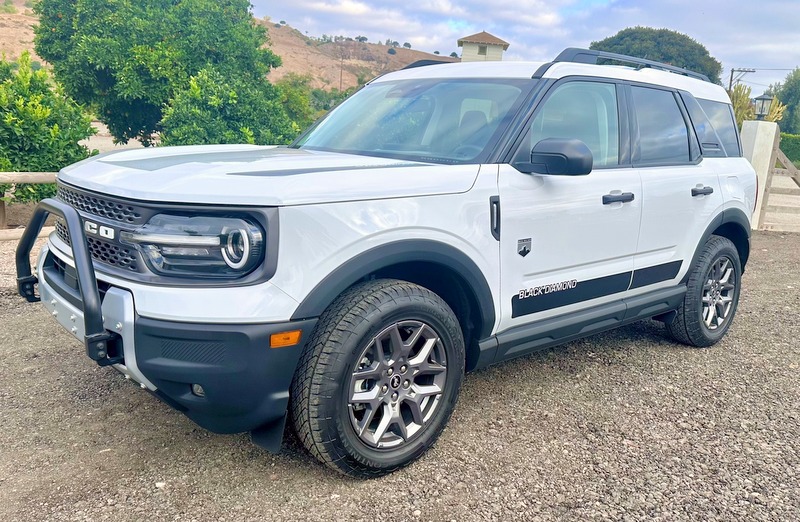
The differences between the Ford Escape and the Bronco Sport were obvious pretty quickly. The Escape is more car-like, while the Bronco Sport has a boxy shape, taller roof, shorter wheelbase and shorter overall length, earning comments it looks like a Land Rover. We were behind the wheel of the Bronco Sport Big Ben 4×4, which had the signature black grille and the optional $425 Black Diamond Graphic Package.
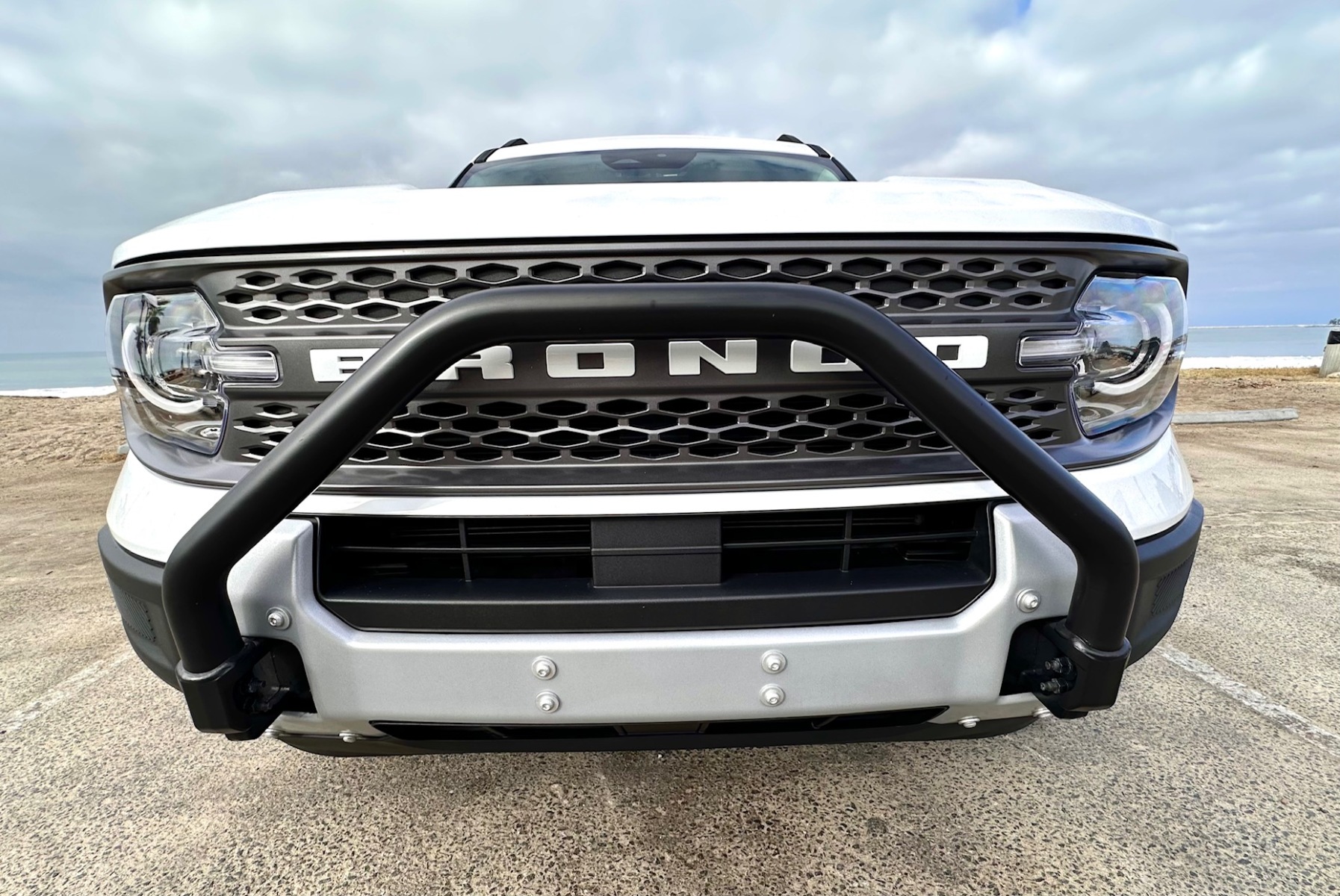
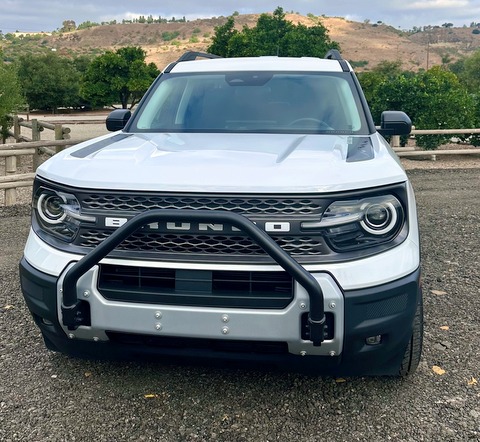
LED head and driving lamps and a large B-R-O-N-C-O on the grille sit above the rugged-looking matte black tube Bull Bar, a term from our Aussie friends Down Under. Fog lights are neatly tucked on the lower far outer edges of the corner fascia. The hood leads to a nearly upright windshield, then onto the roof with rack rails and a step-up section behind the B pillar.
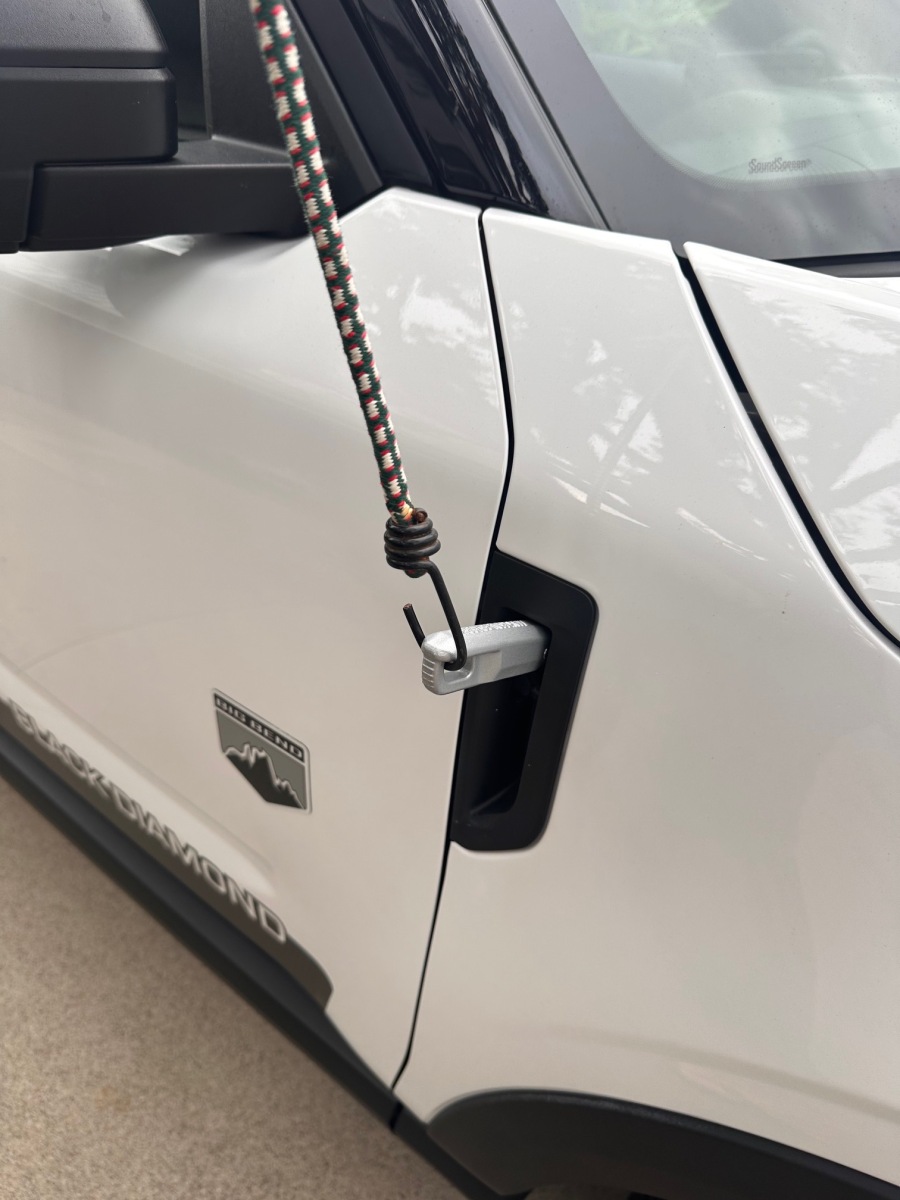
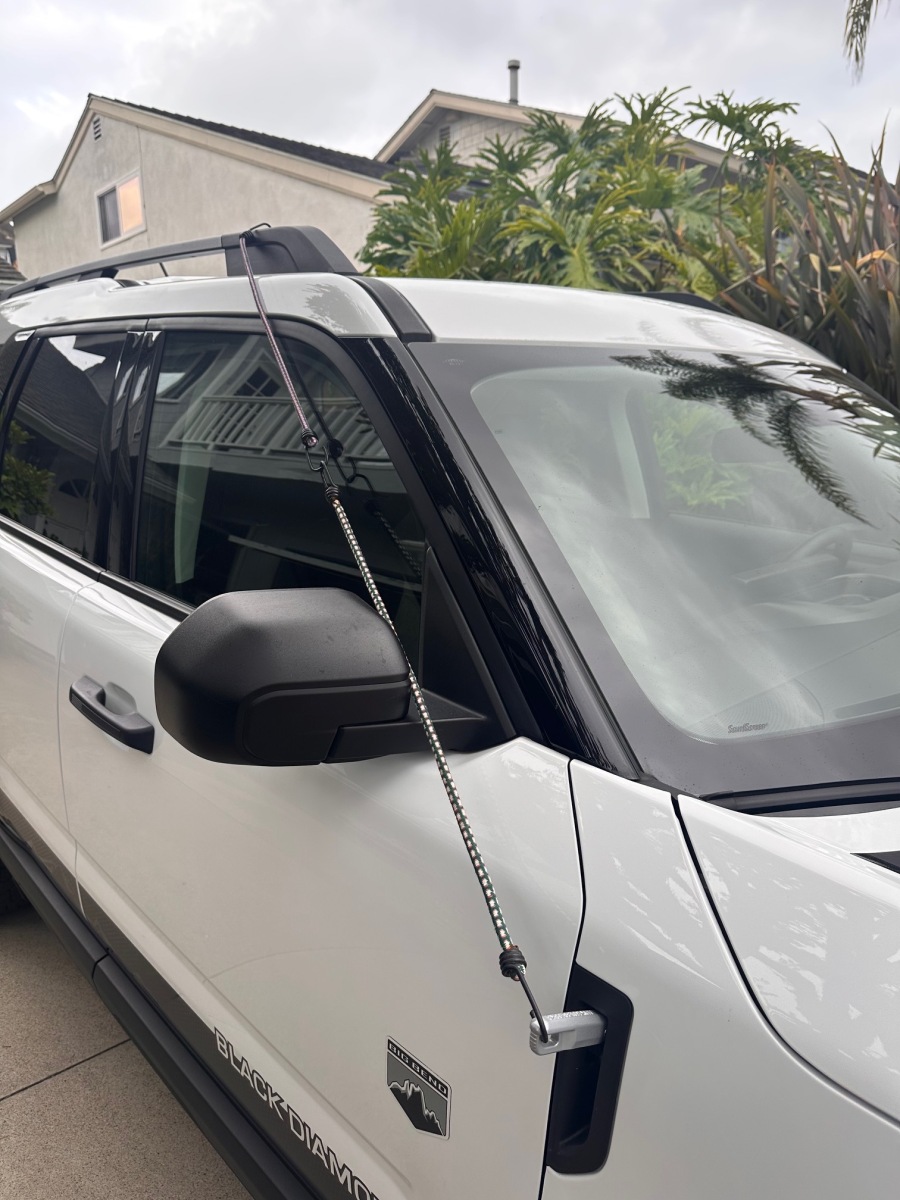
Over fender brush guard cladding protects the paint from wayward shopping carts—and overgrown brush on dirt trails. The twin rectangular bumps on the hood are design features. The dynamic load limit for the rack rails is 150 lbs. without a sunroof, 100 lbs. with a sunroof. When standing still, the Bronco Sport roof rails hold 600 lbs. which is plenty for two people, a small child and a dog or two in a roof-top tent. To secure roof loads, each front fender has a pull-out arm used as a tie-down point just behind the wheels.
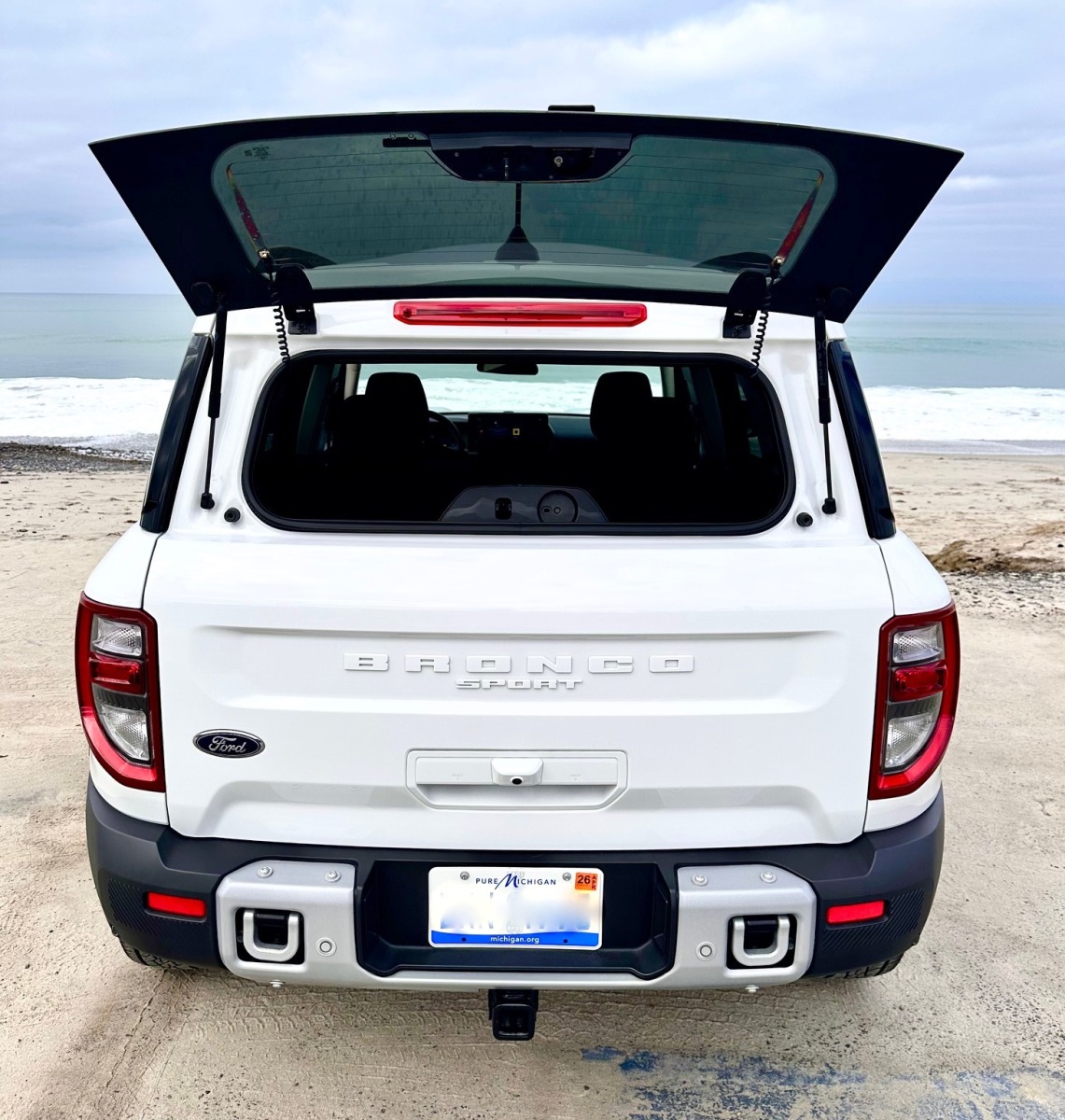
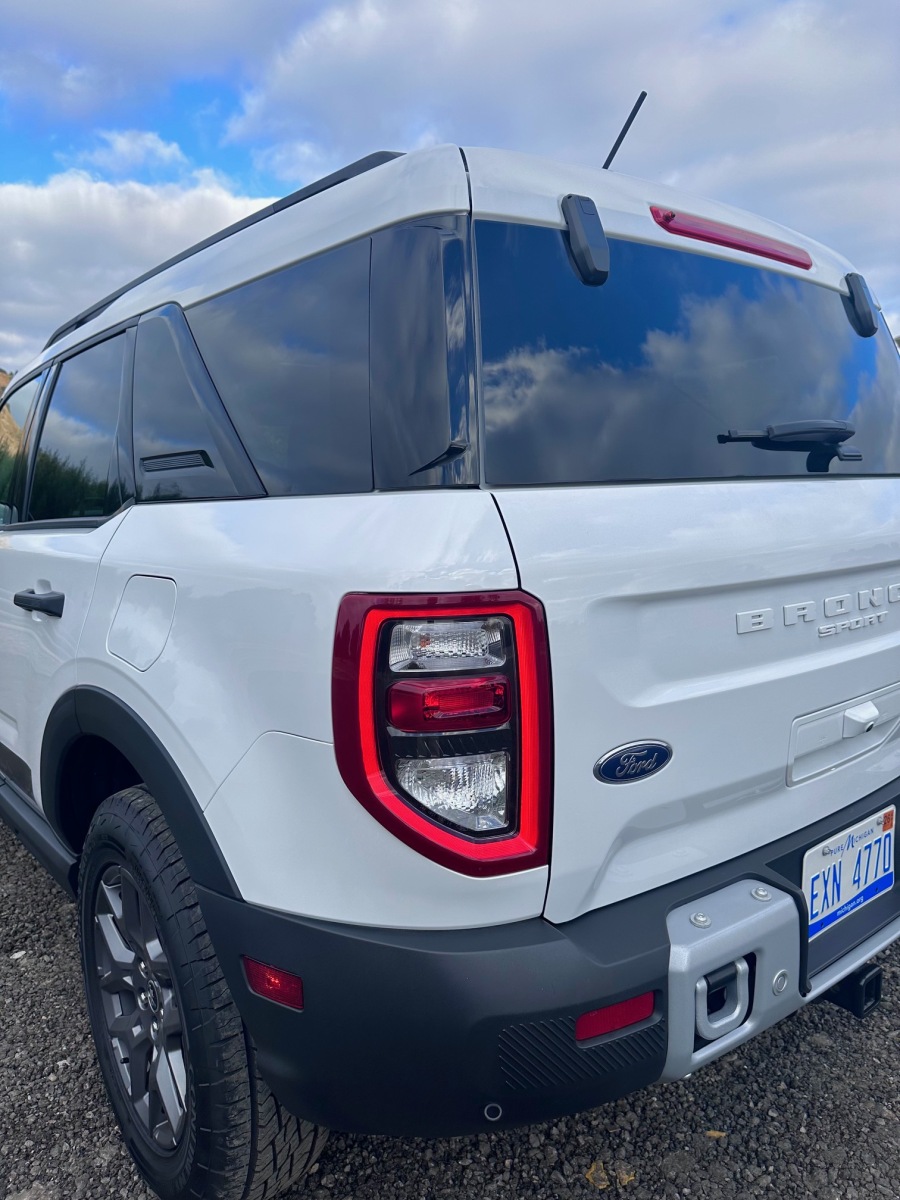
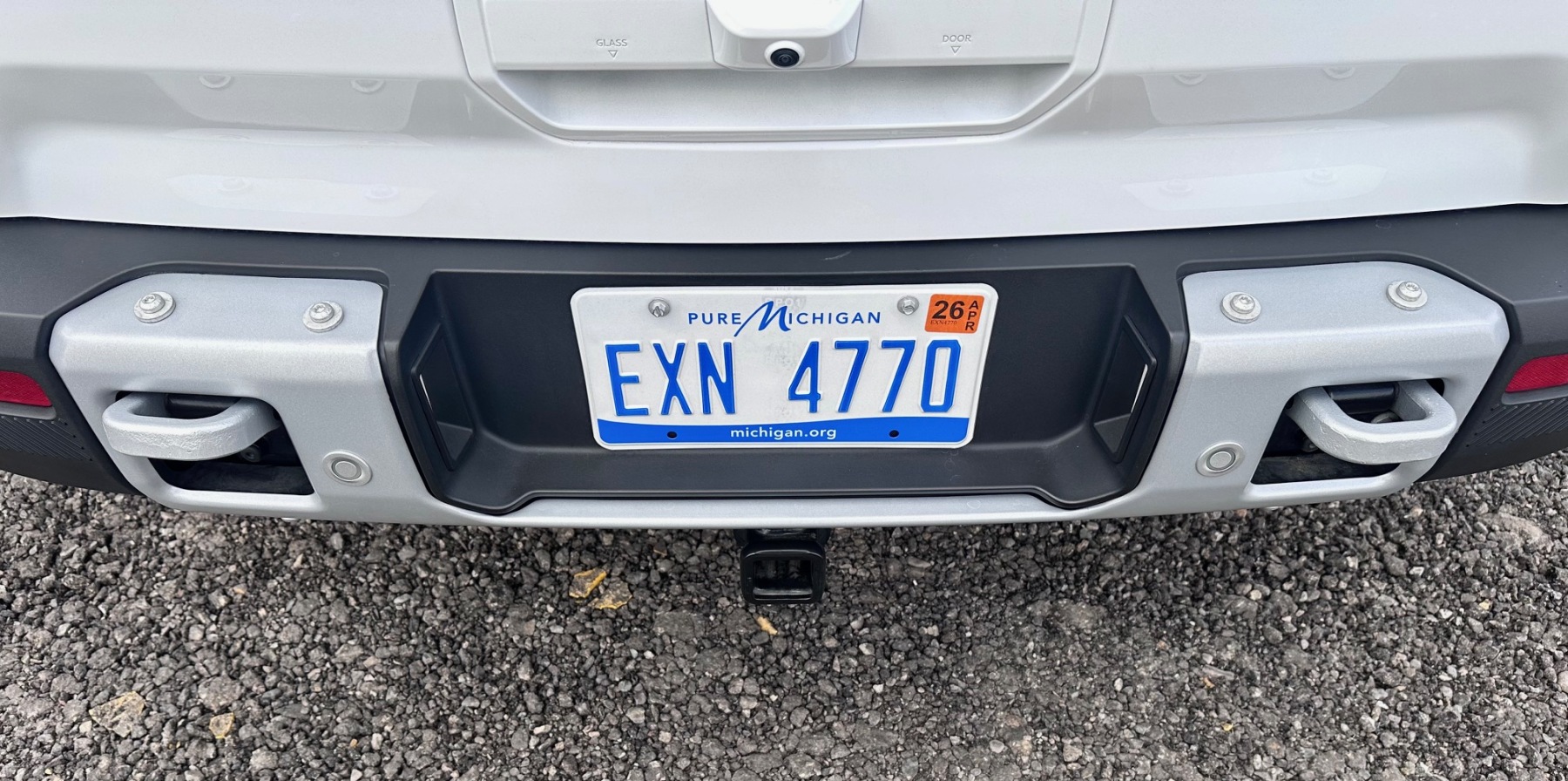
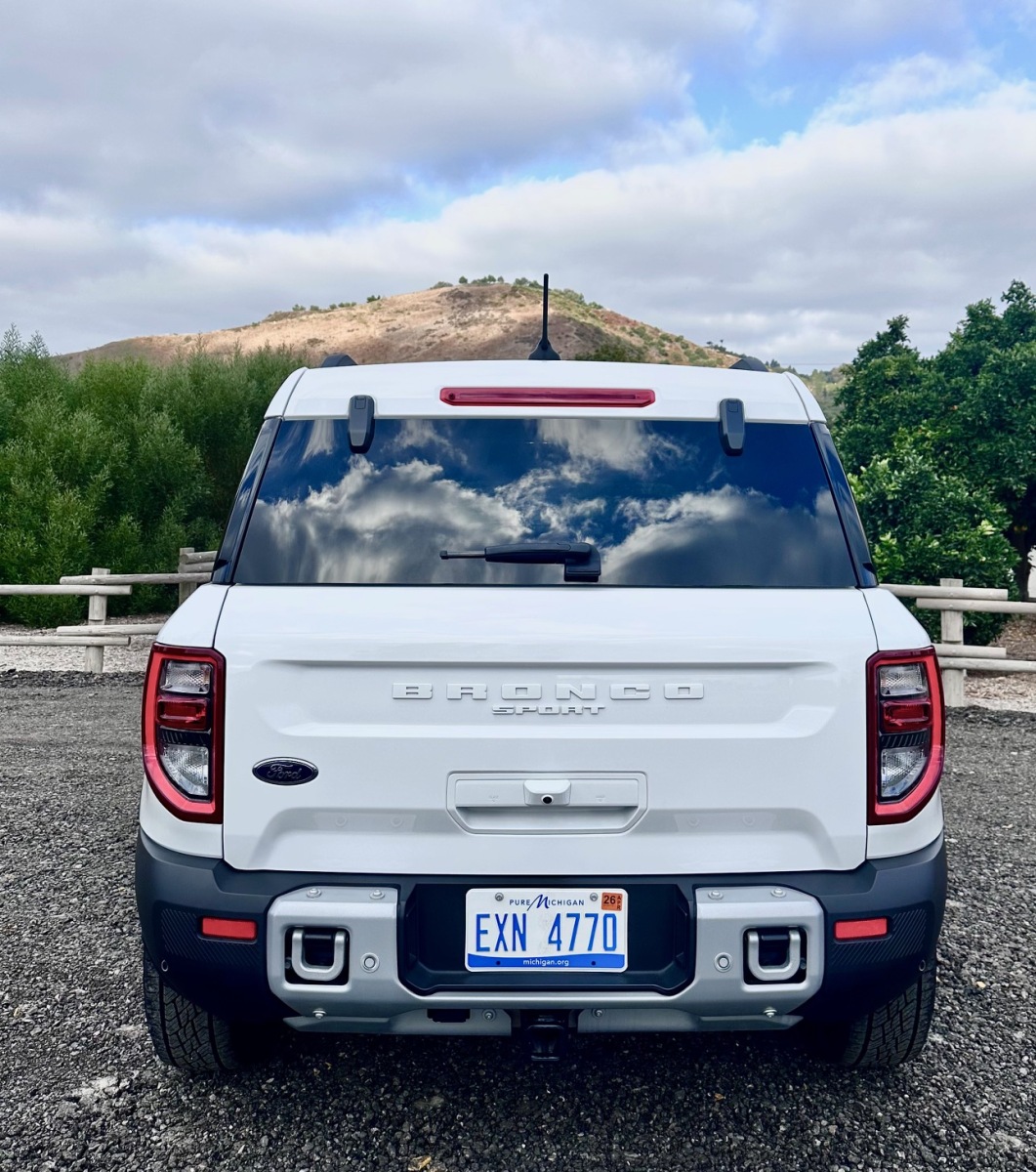
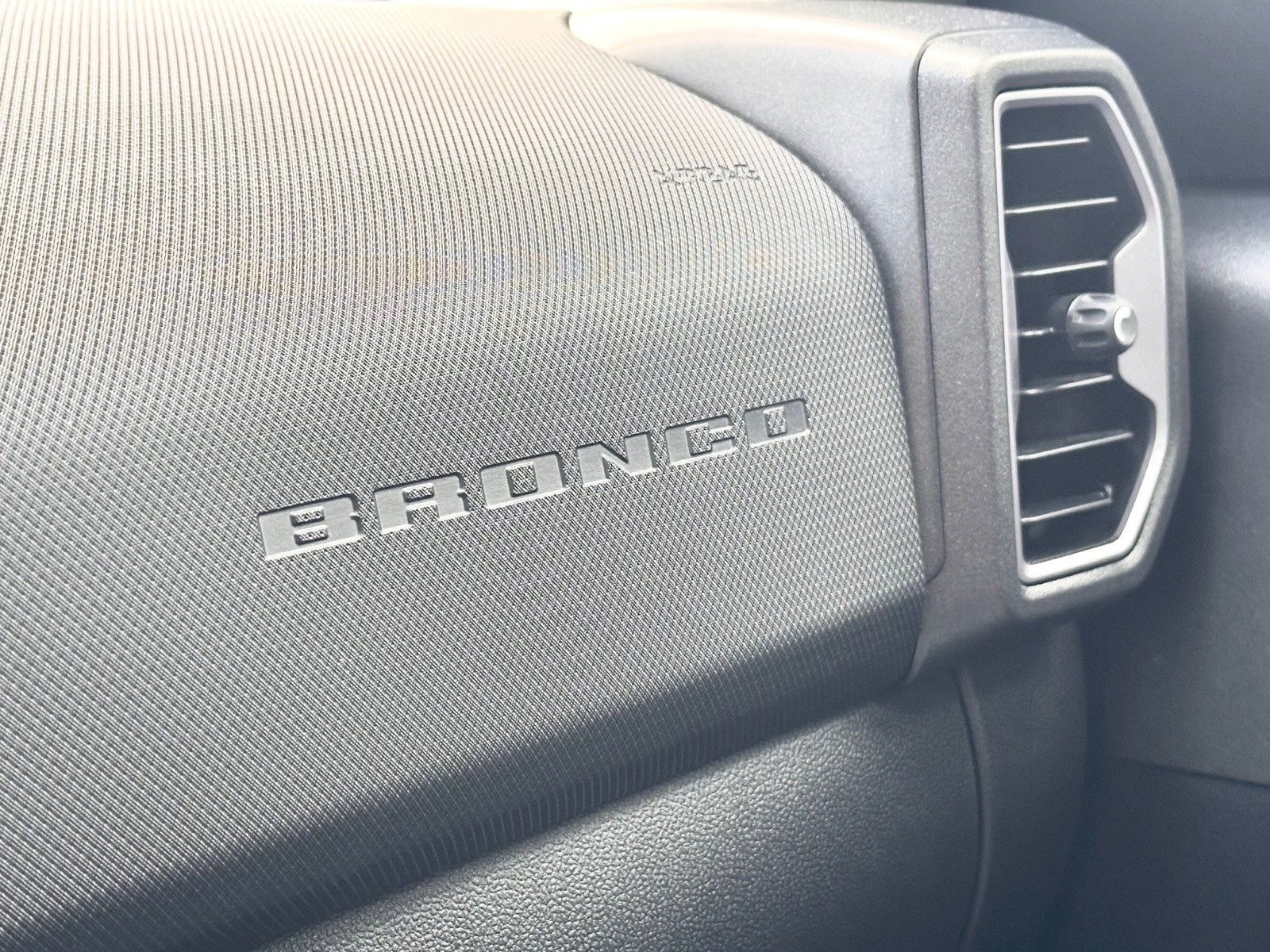
The rear has bold Bronco lettering, dual exhausts, twin D-Ring tow hooks that neatly store into the bumper, a tow hitch and LED tail lights. The lift gate, with a power unlock feature, is manually opened. It has a hinged window, a throwback feature, with a wiper and washer. Make sure to look for the Bronco Easter Egg on the hatch window.
Interior
There is a lot going on inside the Bronco Sport with a simple and straight-forward dash lay-out with all controls in easy reach. Outward vision was good, but wind noise was evident in the cabin due to the boxy shape, tall roof and upright windshield.
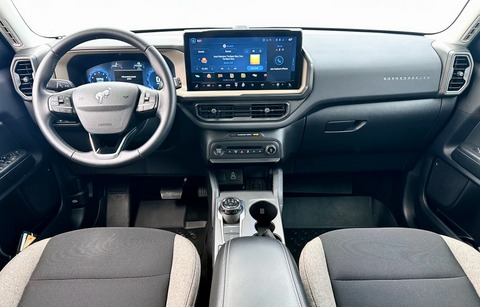
Cloth seats are standard on Big Bend, leather with cloth inserts are on other trims. The $1,395 optional Convenience Package included an 8-way heated power driver seat, map pockets on both front seats and a leather-wrapped steering wheel with audio and cruise controls. Wireless phone charging and the USB-A and C charging ports were welcome features.
The 13.2-inch center display has navigation and the 6-speaker audio system with AM/FM HD radio, wireless Apple CarPlay, Android Auto and Sirius/XM. All of the infotainment and communication goes through the Ford Sync 3 system.
The rear view camera and Ford’s Co-Pilot360 with driver-assist features is standard. FordPass Connect offers convenience features such as remote door lock/unlock and engine start. The 4G LTE Wi-Fi hot spot can accommodate up to 10 devices, and reaches as far as 50 feet away.
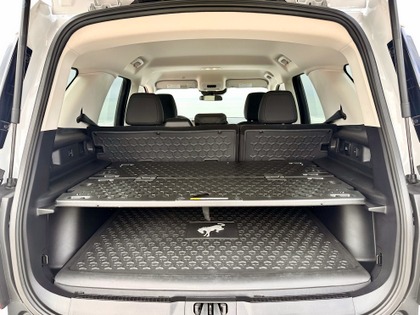
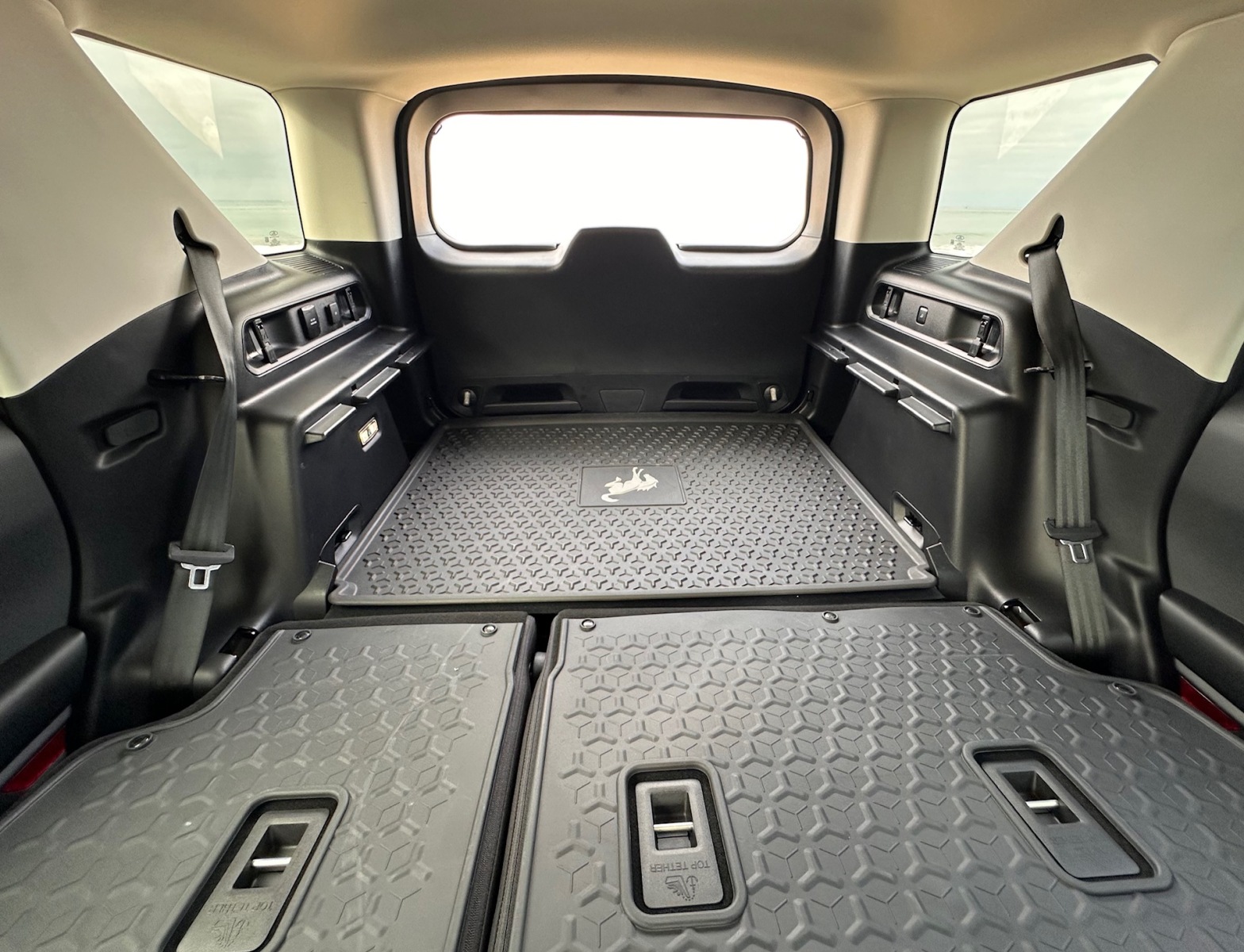
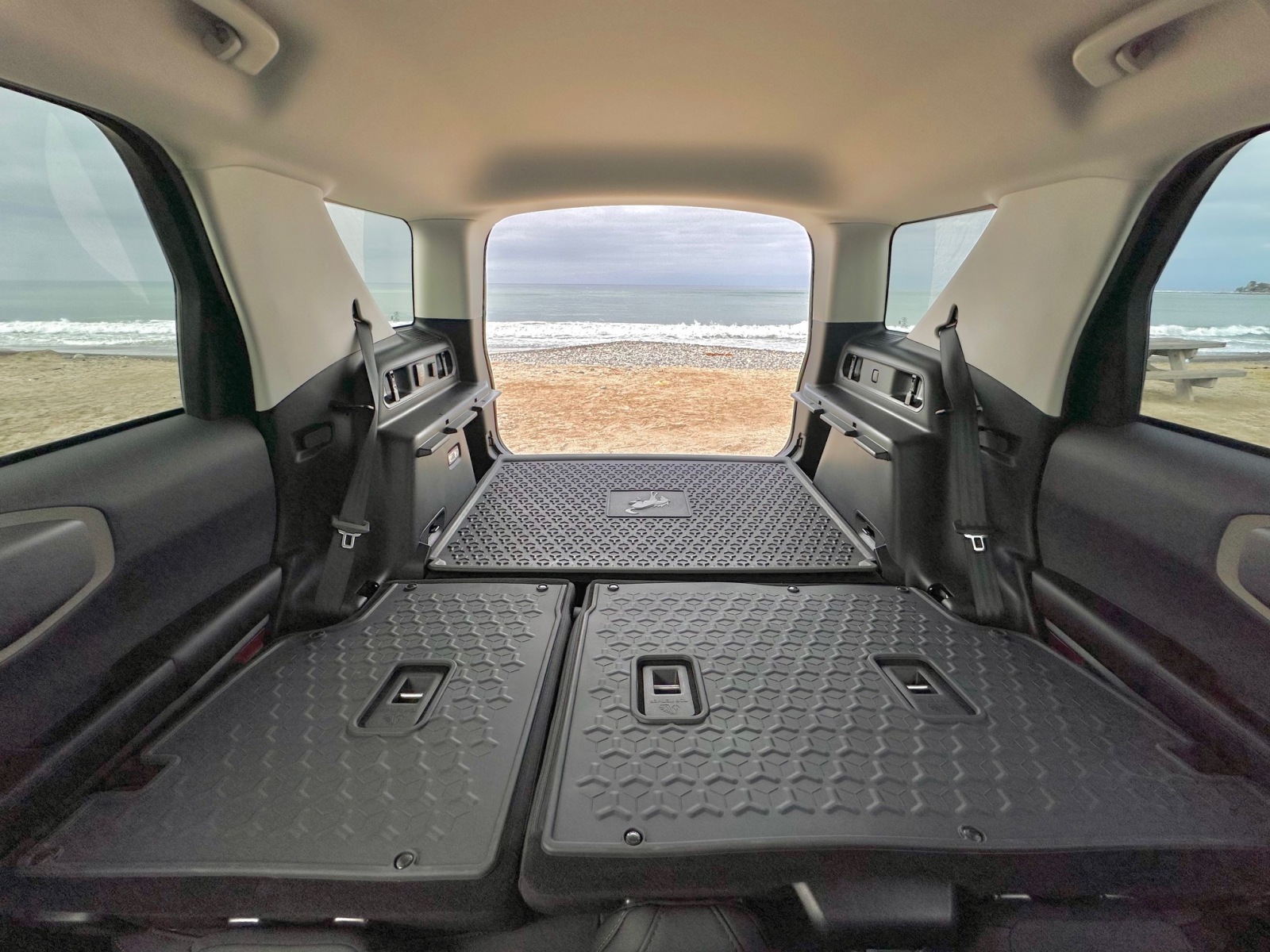
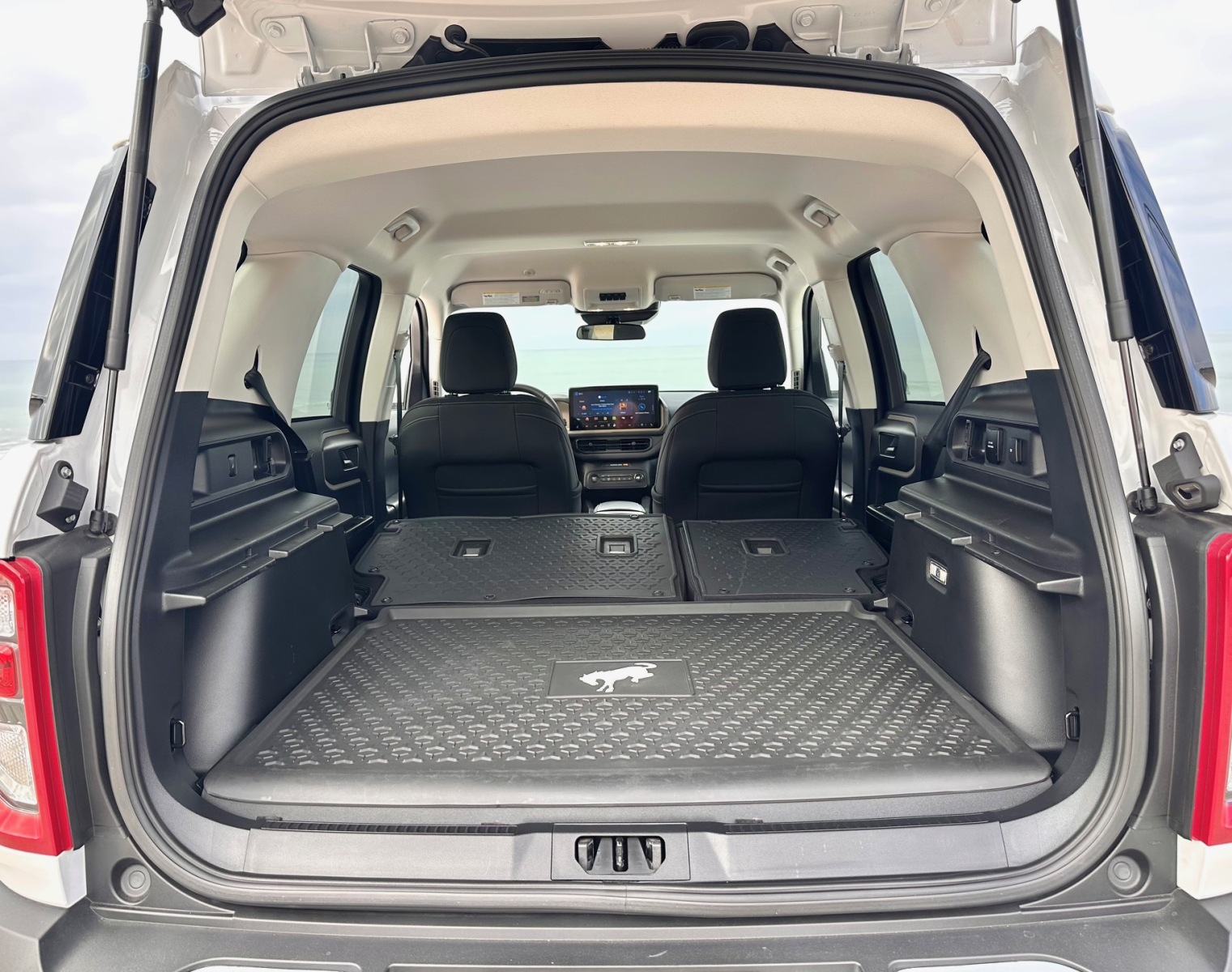
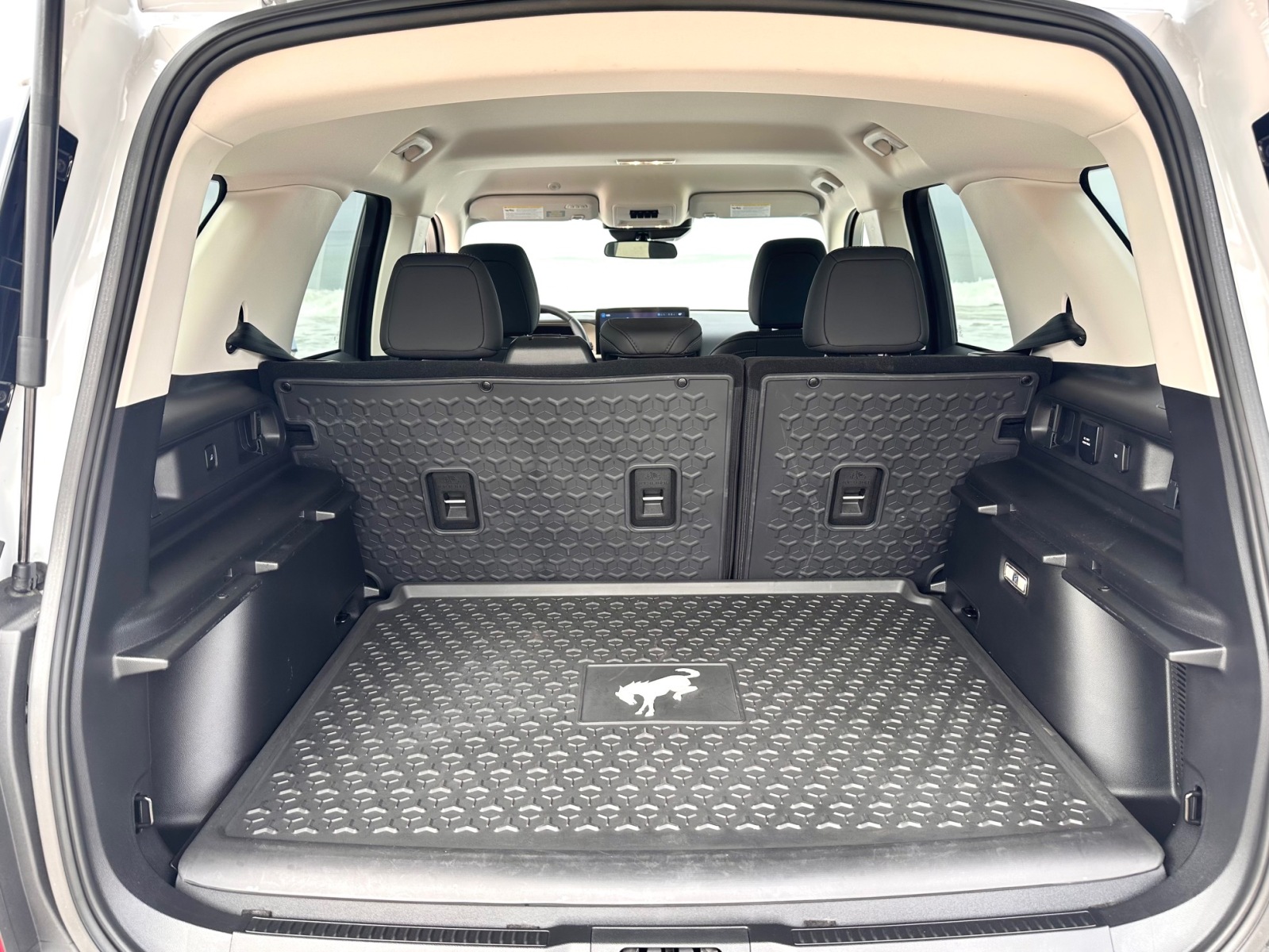
The 38.1 inches of height in the rear cargo area is made possible by a dual height floor and the raised roof section noted earlier. The cargo management system (part of the $2,570 Black Diamond Off-Road Package) consists of a panel to hide stored items. The panel folds for convenient loading of items through the lift-up manual rear gate window. There is also a 36-inch/90-centimeter ruler to measure your freshly caught trout.
With the 60:40 split rear seat upright there is 32.5 cubic feet of space, which grows nicely to 65.2 cubic inches with the seat folded flat. The cargo area has LED lights, tie-downs, carabiner hooks, power outlets and even a bottle opener. A very nice feature are the twin LED spotlights inside the lift gate that can be rotated for night loading and unloading.
Rear leg room at 36.9-inches is okay, but the 41.7 cubic inches of head room was excellent. A third, middle-row passenger can be accommodated, but will be doing rock/paper/scissors for an outer seat on longer trips. Rear seat passengers sit a bit higher than those up front and get a folding armrest with cup holders, 110V/150W power outlet, zippered storage pockets and MOLLE straps on the inside of the lift gate to attach accessories such as tools, first aid kit and recovery equipment.
Safety
The 2026 Ford Bronco earned a 5 Star safety rating from NHTSA. There is an extensive list of safety features beginning with front, knee, side, and side curtain airbags as part of the Ford Safety Canopy. Additional safety systems include an anti-theft engine immobilizer, stolen vehicle tracking, hill descent control, AWD and rear axle locks, off-road inclination screen, tire pressure monitoring system, front and rear parking sensors, blind spot monitoring, lane departure alert and a post-crash alert system.
Warranties
| Powertrain | Five years/60,000 miles |
| Bumper-To-Bumper | Three years/36,000 miles |
| Roadside Assistance | Five years/60,000 miles |
Pricing
The 2026 Ford Bronco Sport comes in four models with these base prices including the $1,595 destination and delivery fee.
| Big Bend | $33,440 |
| Heritage | $34,990 |
| Outer Banks | $36,740 |
| Badlands | $38,860 |
Clean Fleet Report’s 2026 Ford Bronco Sport Big Bend 4×4’s MSRP, including $4,575 in optional equipment and the $1,595 destination and delivery fee, came to $36,165.
Observations: 2026 Ford Bronco Sport Big Bend 4X4
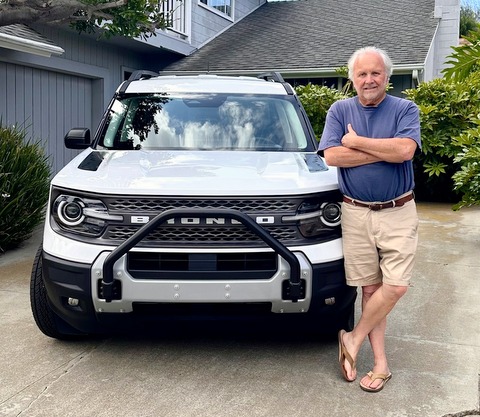
If you are in the market for a good-looking general purpose subcompact crossover that is off-road capable, the 2026 Ford Bronco Sport Big Bend 4×4 should be on your list. While the Bronco Sport has some nostalgic reminders of the first Bronco models from the mid-1960s, this updated version offers all the convenience and safety features of a modern, versatile rugged, on-and-off-road vehicle.
The Bronco Sport has had sales success over its closest rivals of the Subaru Crosstrek, Mazda CX-30 and the Jeep Compass and Renegade. Ford has proven hybrid and plug-in hybrid technology from the Ford Escape and Lincoln Corsair models (both of which are discontinued after 2026), so they have the ability to add some sort of electrification to the Bronco Sport. Clean Fleet Report applauds Ford, and all other manufacturers, for making the electrification commitment, so we hope there is little question where the Bronco Sport is headed.
Make sure to opt-in to the Clean Fleet Report newsletter (top right of page) to be notified of all new stories and vehicle reviews.
Story and photos by John Faulkner.