Saying Goodbye to an Unique Car
What is Karma?
In a sit-down conversation recently at Karma’s Irvine, California, headquarters, Alexa Harnett, vice president global marketing and public relations, said: “Karma is positioning itself as the ultra-luxury American manufacturer…a segment America owned for many, many years. Now when consumers think about ultra-luxury, they think British and Italian brands, so we think there is an opportunity to solidify Karma in this space as the American exotic.”
With this as our starting point, Clean Fleet Report had the opportunity in mid-2026 to drive the 2025 Karma Revero EREV. Why review a previous year car? Simple, it is the last-of-its-kind as Revero production ended a few months ago. The company turns its attention to the Gysera and Invictus sedans, also EREVs, and the Kaveya, a two-door, four-motor, all-electric super sports coupe coming out in late 2027 as a 2028 model.
What is an EREV?
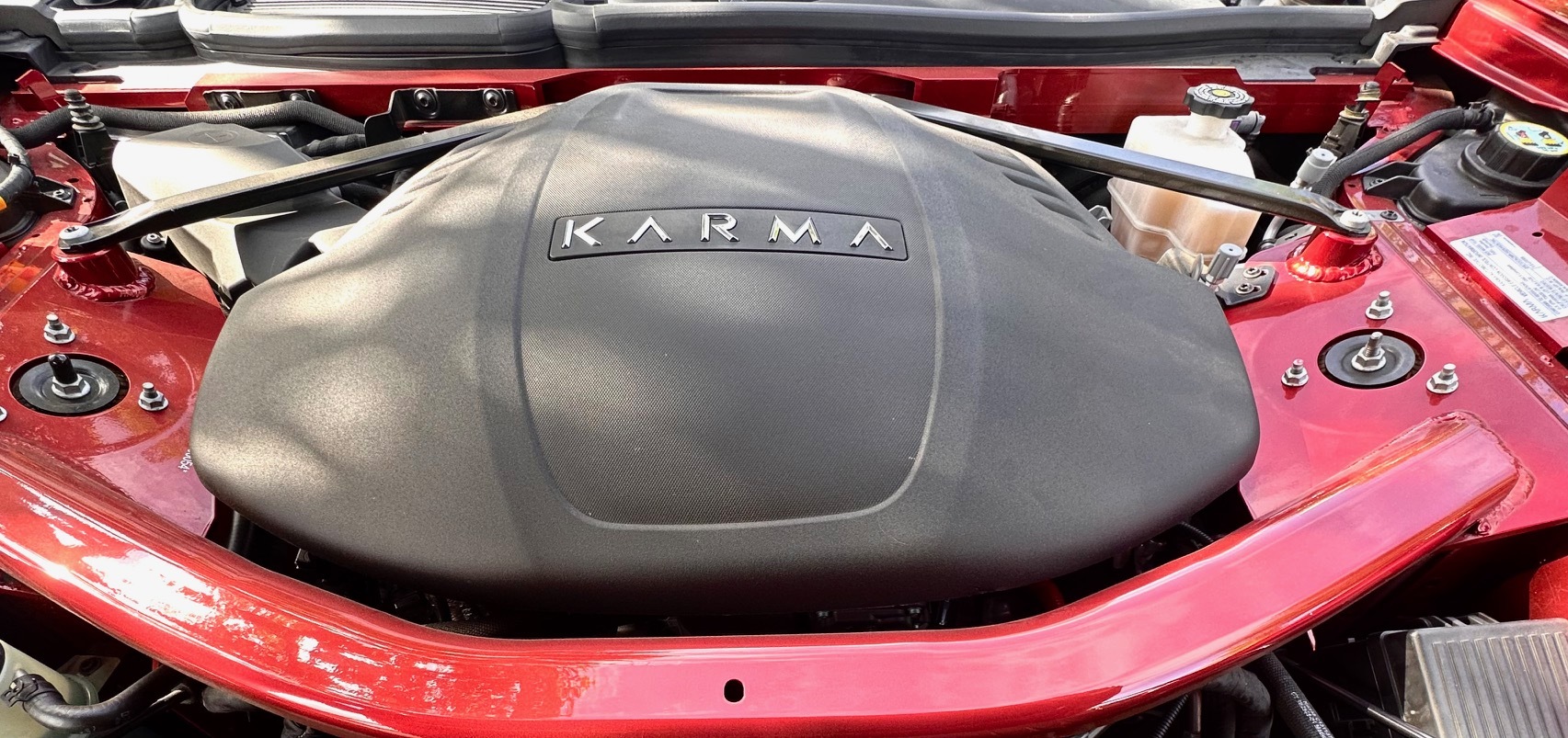
The Karma Revero is an extended-range electric vehicle (EREV) with a 228 horsepower (hp) BMW turbocharged 1.5-liter inline 3-cylinder gasoline engine powering a generator that charges a 28 kWh lithium-ion battery pack feeding two electric motors. This set-up, for the rear-wheel drive Revero, delivers a combined 536 hp and 550 ft.-lb. of torque.
Karma EREVs are designed so the gasoline engine recharges the battery that then drives the wheels, meaning the wheels cannot be propelled directly by the engine.
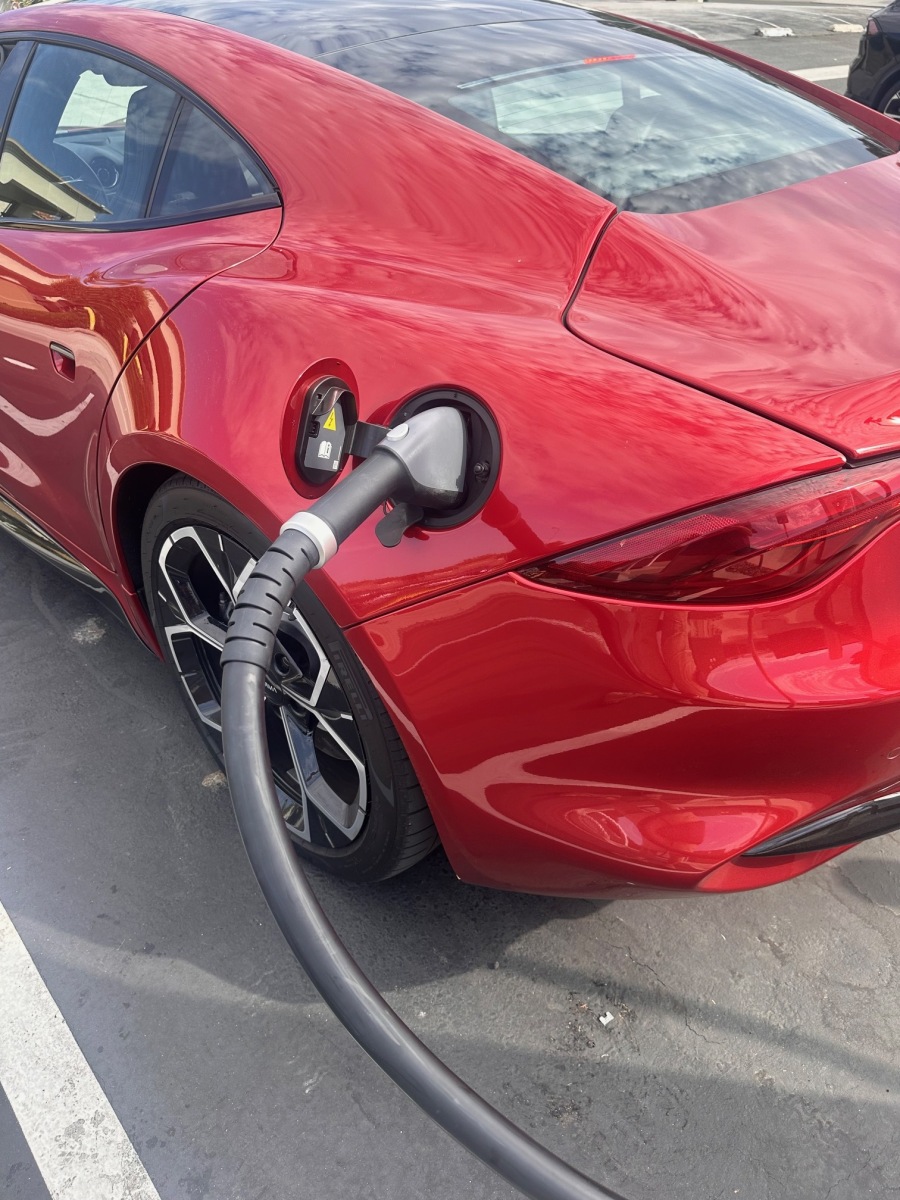
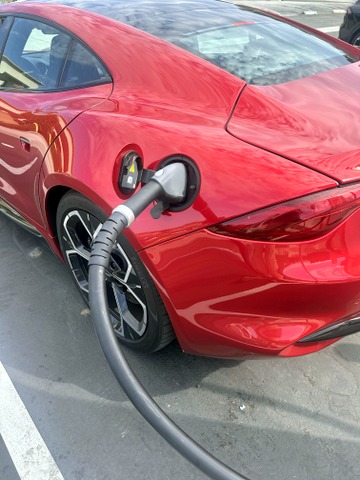
The Revero also qualifies as a plug-in hybrid electric vehicle (PHEV) as it has a 6.6kW onboard charger. It takes 4-6 hours on a Level 2, 240-volt charger. A public DC Fast Charger will add full charge in less than 30 minutes. But unlike a conventional PHEV, where the wheels can be propelled by either the gasoline engine or electric battery, the Revero only moves when the battery has enough charge to drive the rear wheels.
Efficiency
The Karma’s system has an EPA rating of 62 MPGe, which is a measurement of how efficient a car powered by electricity is, using the same amount of energy as is contained in one gallon of gasoline. Use MPGe to compare to other electric and plug-in electric vehicles. Efficiency is not the same as range, but measures the range the car can go on the electric equivalent (in kW) of one gallon of gasoline.
The EPA also rates the gasoline engine at 22 mpg combined highway and city. Since the Revero cannot be powered solely by the gasoline engine, what is this? If the battery is completely empty and the 10.25 gallon gas tank full, the the Revero could go 290 miles with the gasoline engine powering the battery and the battery driving the electric motors. However, if the battery was fully charged, the Revero can go up to 60 miles on pure electricity. Add in the 290-mile gas driving range and the total range is somewhere around 350 miles.
We put 350 miles on the Revero driving through Southern California, but to be safe added five gallons of 87 octane during our week.
Four-Seat Sport Sedan
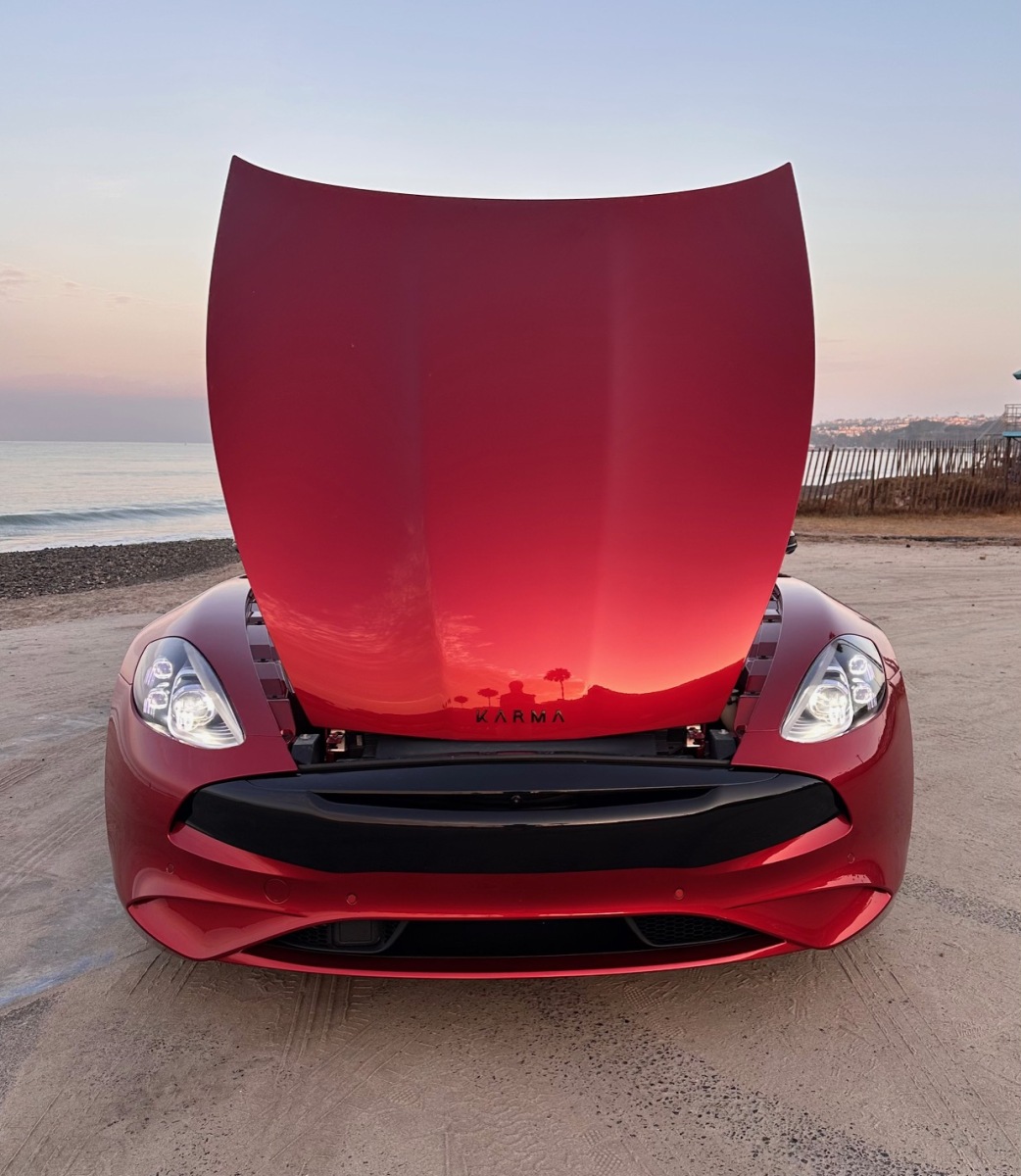
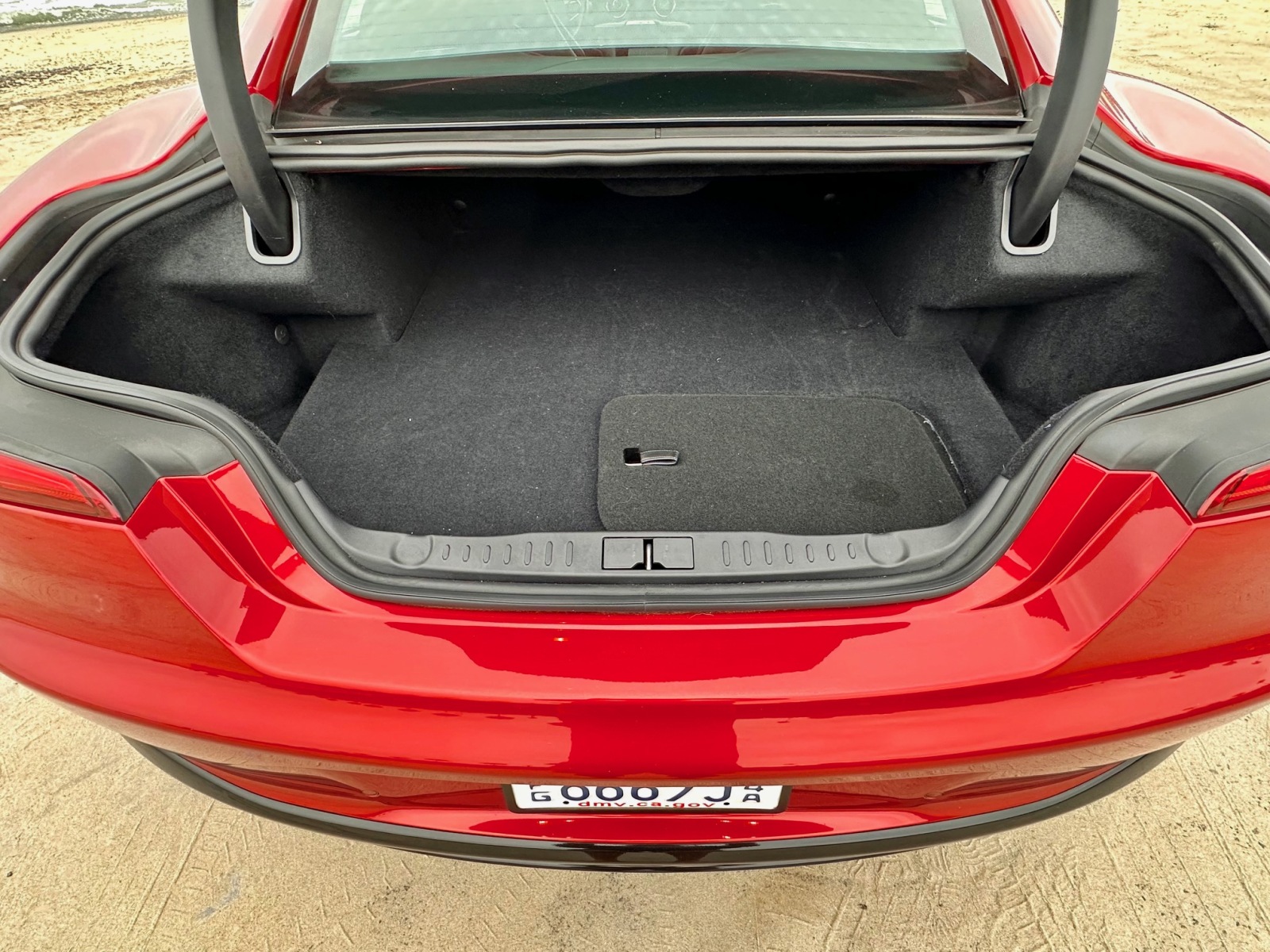
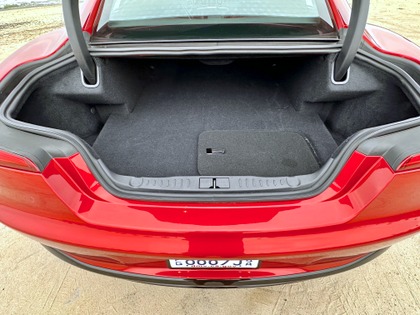
Torque from the twin electric motors was strong, producing 0-60 mph times around 4.5 seconds. This is quick, but not as quick as some all-electric sedans and SUVs we have tested. Also, because of the car’s weight of nearly three tons (a little less than 5,500 pounds), there wasn’t that snap-you-back-in-your-seat feel we get in a pure EV. This though is okay as Karma is not marketing the Revero as a dragster, but a four-seat sports sedan. We initially thought it could be considered a Grand Tourer, but four adults on an extended road trip would be limited by a tight interior and the luggage they could pack in the smallish trunk. There is no front trunk as the BMW gasoline engine is under the hood.
Once on the road, it is smooth and handles well. Point it where you want to go and it flows with ease. The Revero negotiated mountain roads confidently, quickly getting a feel for the handling, weight shift, body roll and braking. The Revero isn’t light, but does have a balanced feel around moderate sweeping corners. It was in its sweet-spot on long stretches of open highway.
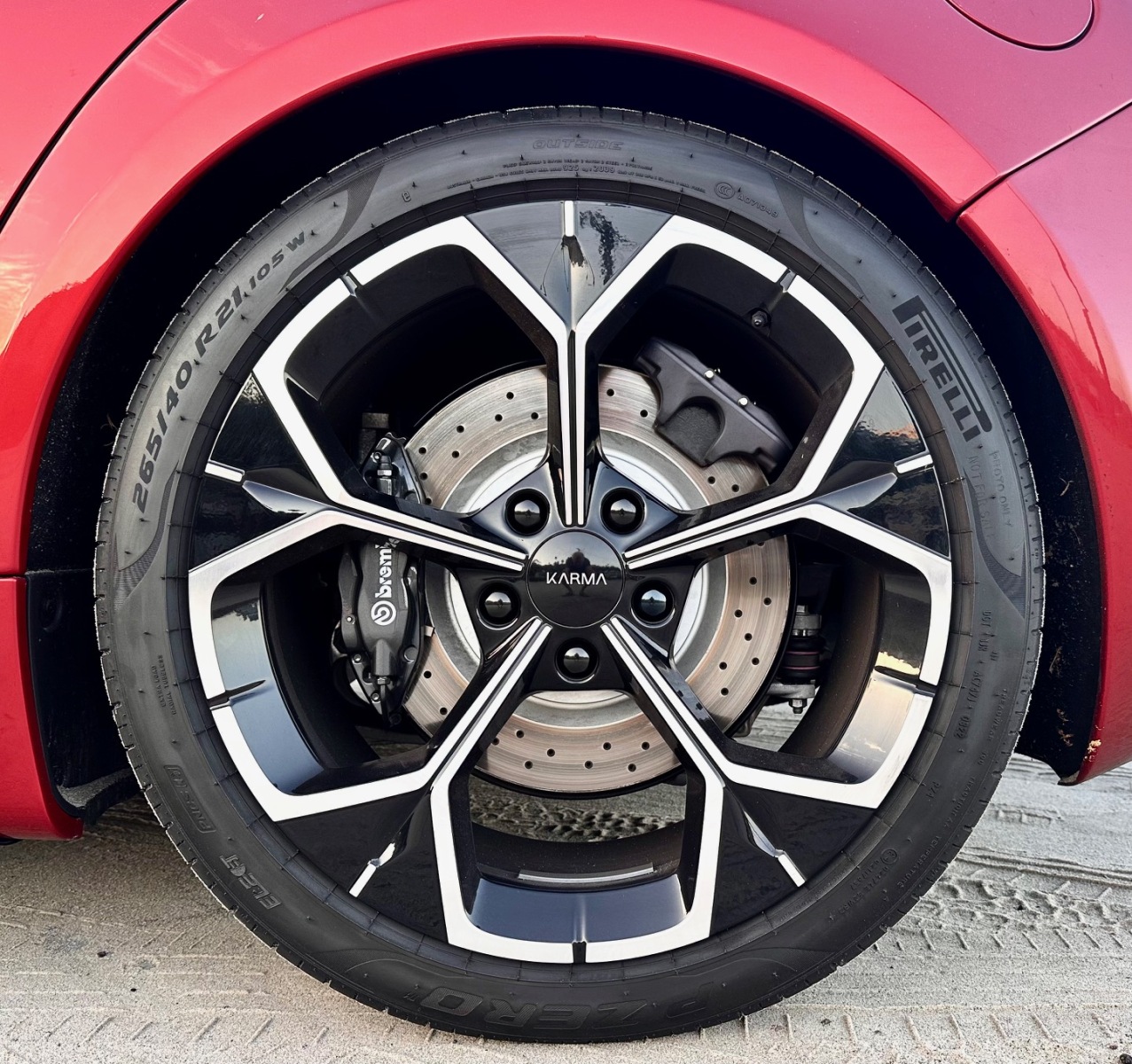
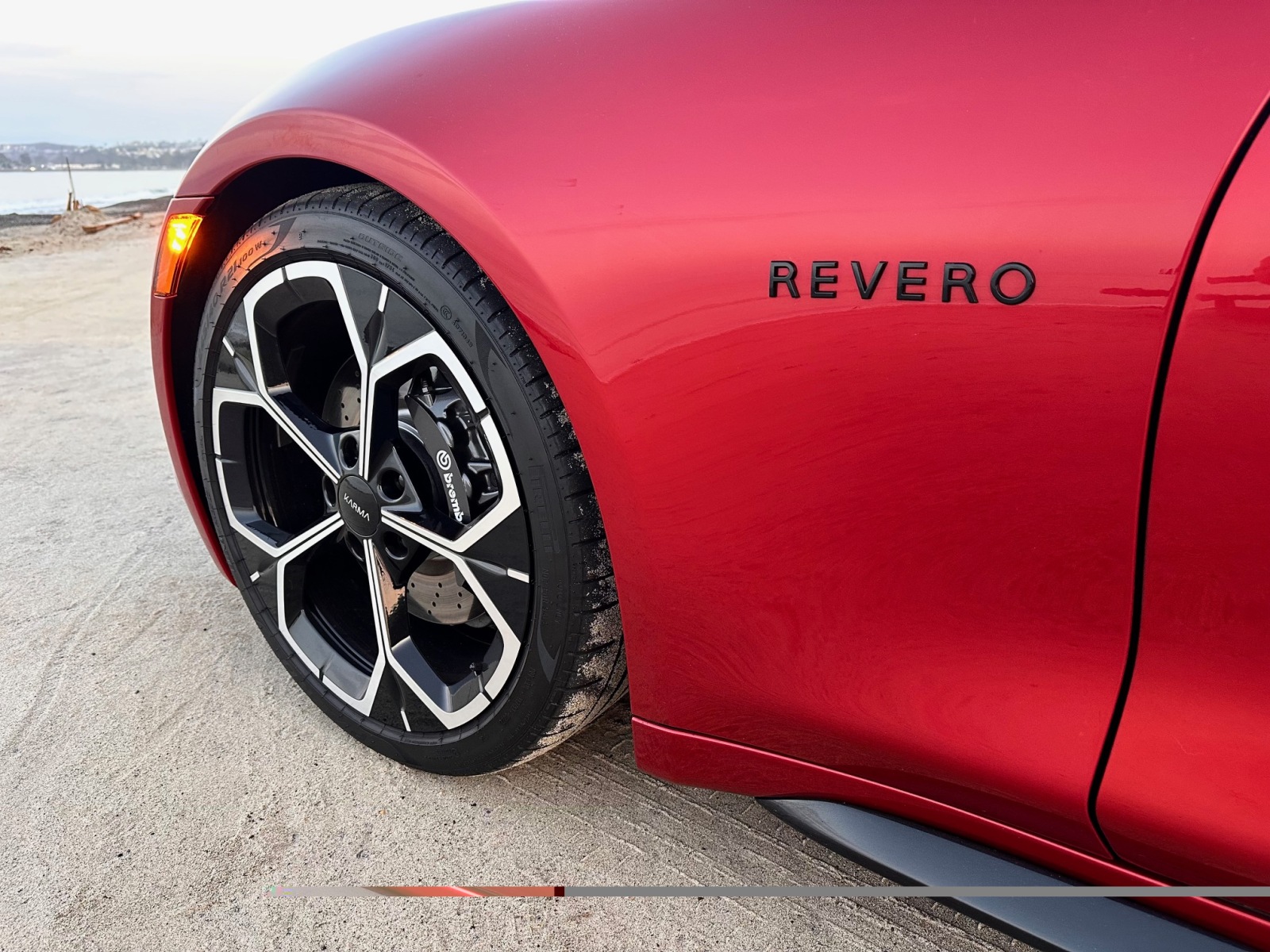
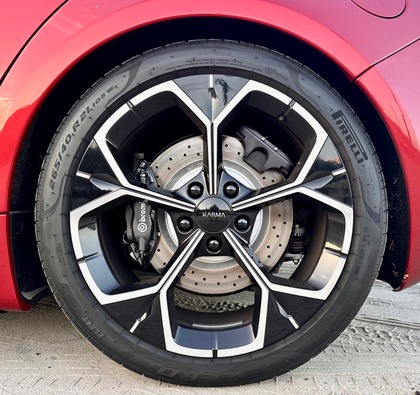
The steering feel was on the heavy side, which I prefer, giving a better ability to control the accuracy of turns. The electronic stability control and traction control (always on) were set to enhance the sportiness of the suspension. Adding to the handling were the 245/40 Pirelli P Zero tires mounted on 21-inch Racer’s Edge wheels, which gripped well.
Safety
Karma calls its advanced driver-assistance system (ADAS) KarPilot, which allows for limited hands-free operation. It is not a system where you go into the navigation, select a destination and let the car take you there.
KarPilot is activated by setting the adaptive cruise control, lane keep support and departure warning, blind spot monitoring, distance behind cars in-front, speed and automatic braking. It was easy to activate through the steering wheel mounted controls.
Charging and Regeneration
There are three ways to charge the Revero’s battery. The gasoline engine does most of the charging, second will be by plugging-in, and lastly through regenerative braking that adds energy into the battery when slowing or stopping. There are three regenerative braking settings—Stealth, Sustain and Sport—each offering a choice of preferred driving style.
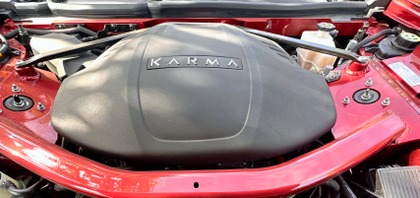
The gasoline engine can be heard when turning on-and-off and when running, which is often. The noticeable sound of an internal combustion engine takes something away from the pure EV experience, so maybe plug in when possible to keep the I3 from cranking-up.
The Revero utilizes a 358-volt system to charge the 28 kWh battery, allowing for DC Fast Charging speeds up to 45 kW. At this speed, under optimal conditions, the battery can be replenished 10-80% in about 30 minutes.
Most owners will charge at home, which is what we did with the ChargePoint Home Flex charger, taking 4-6.5 hours for a full charge. In an emergency, a common 120V household plug delivers a full charge in 10-16 hours.
It is important to note cold or hot weather can affect the charging time and driving range.
Unique Exterior Styling
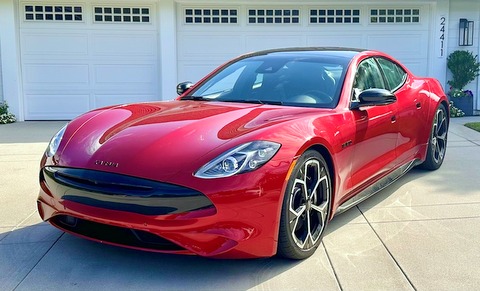
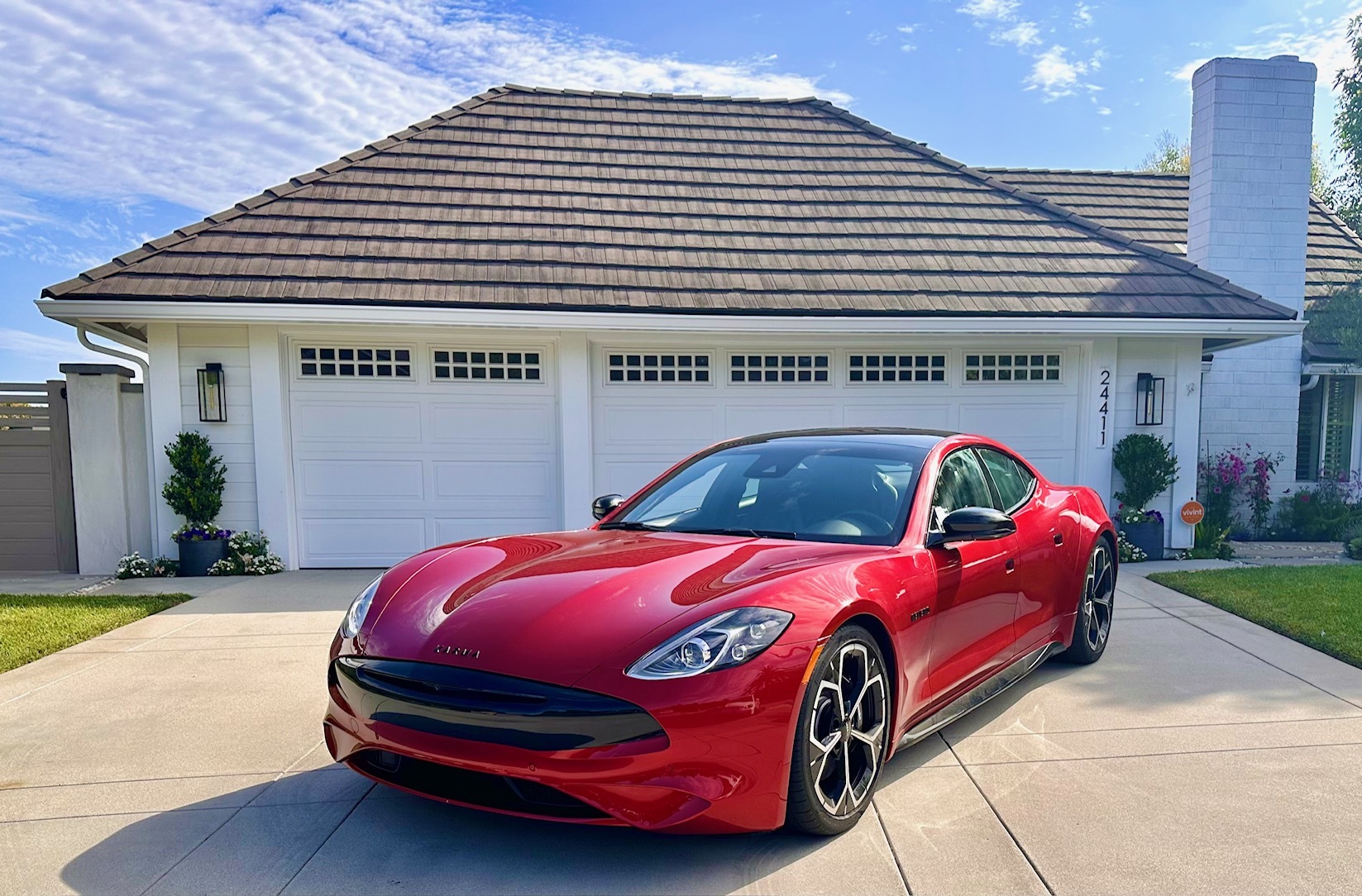
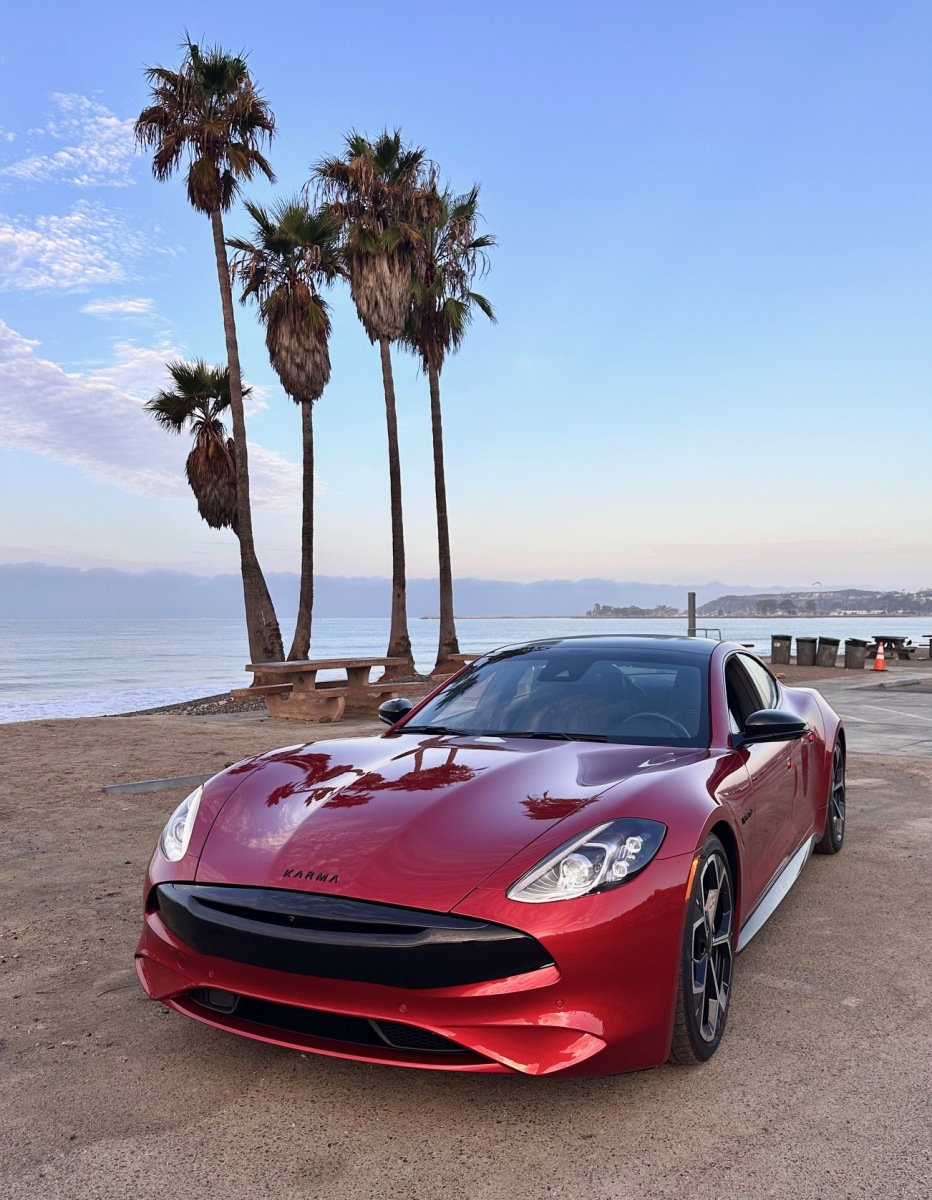
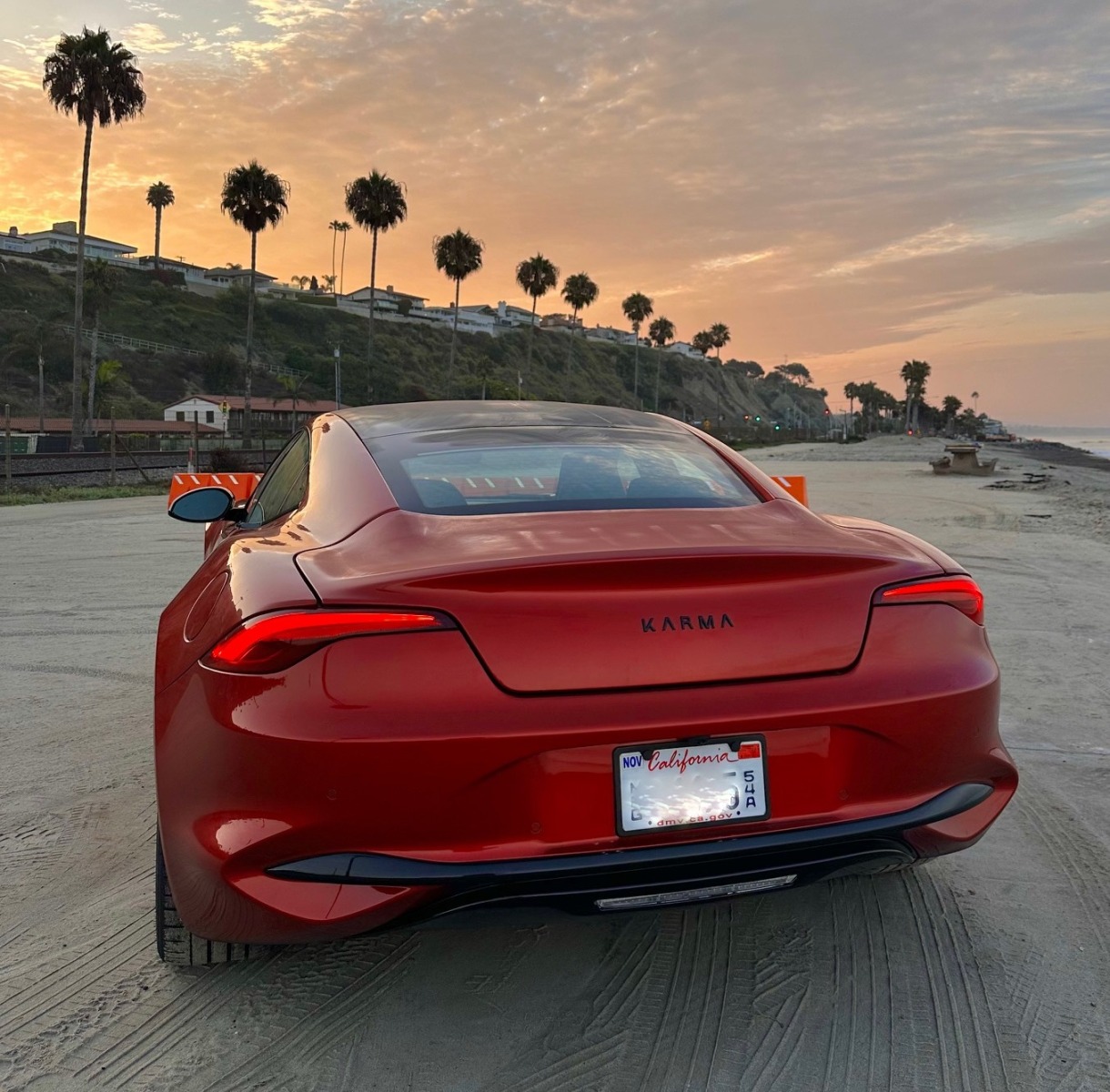
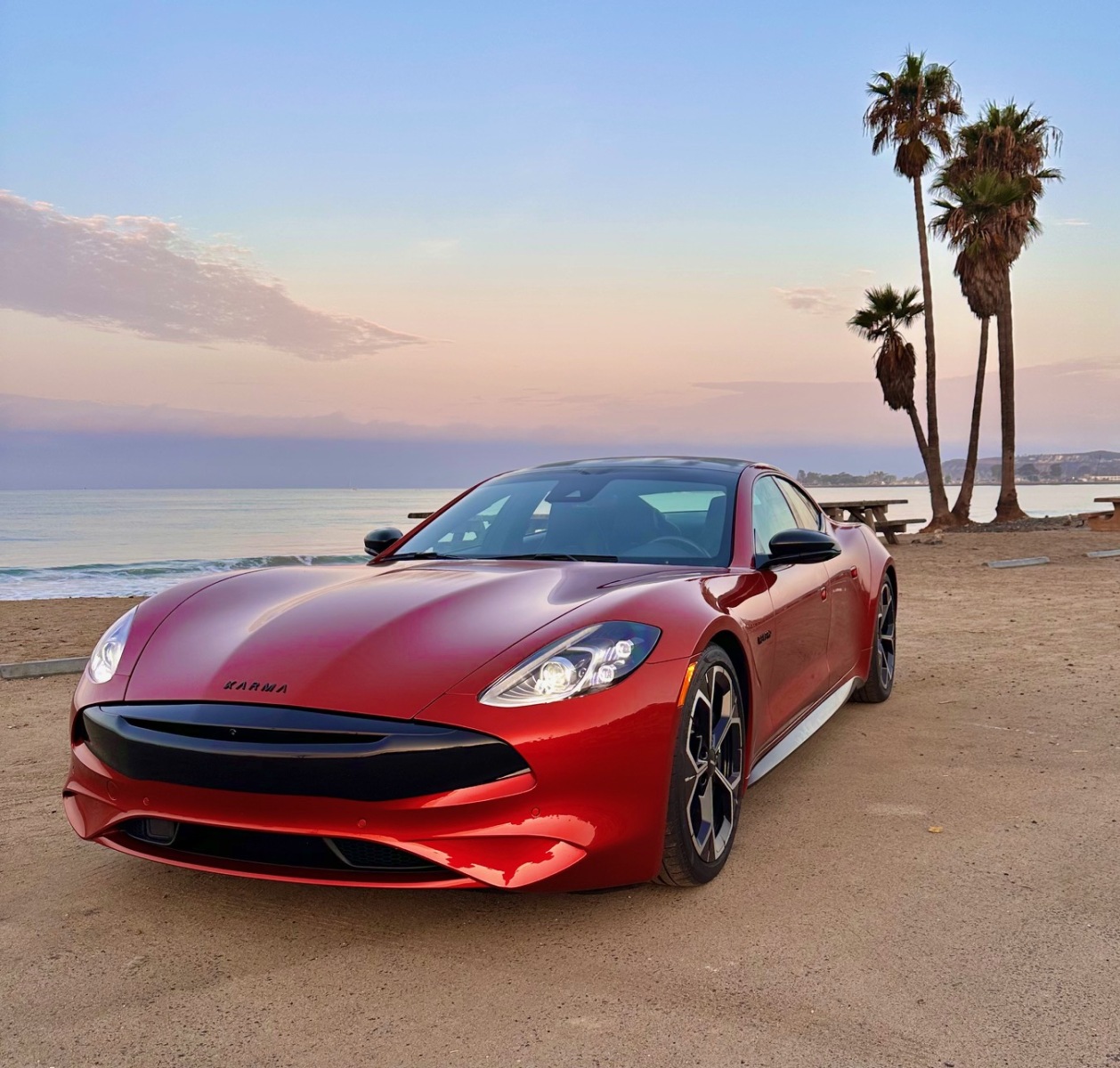
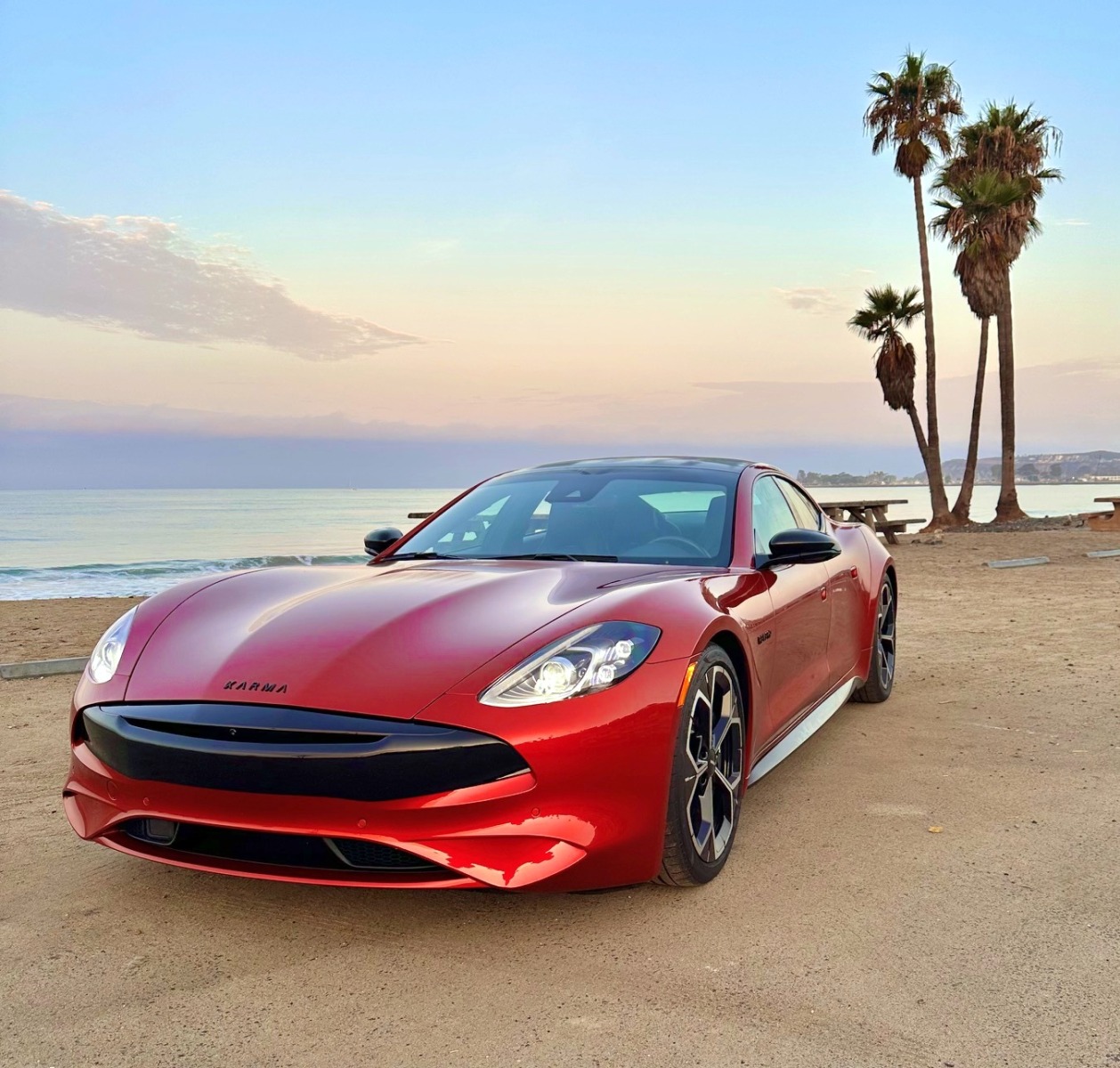
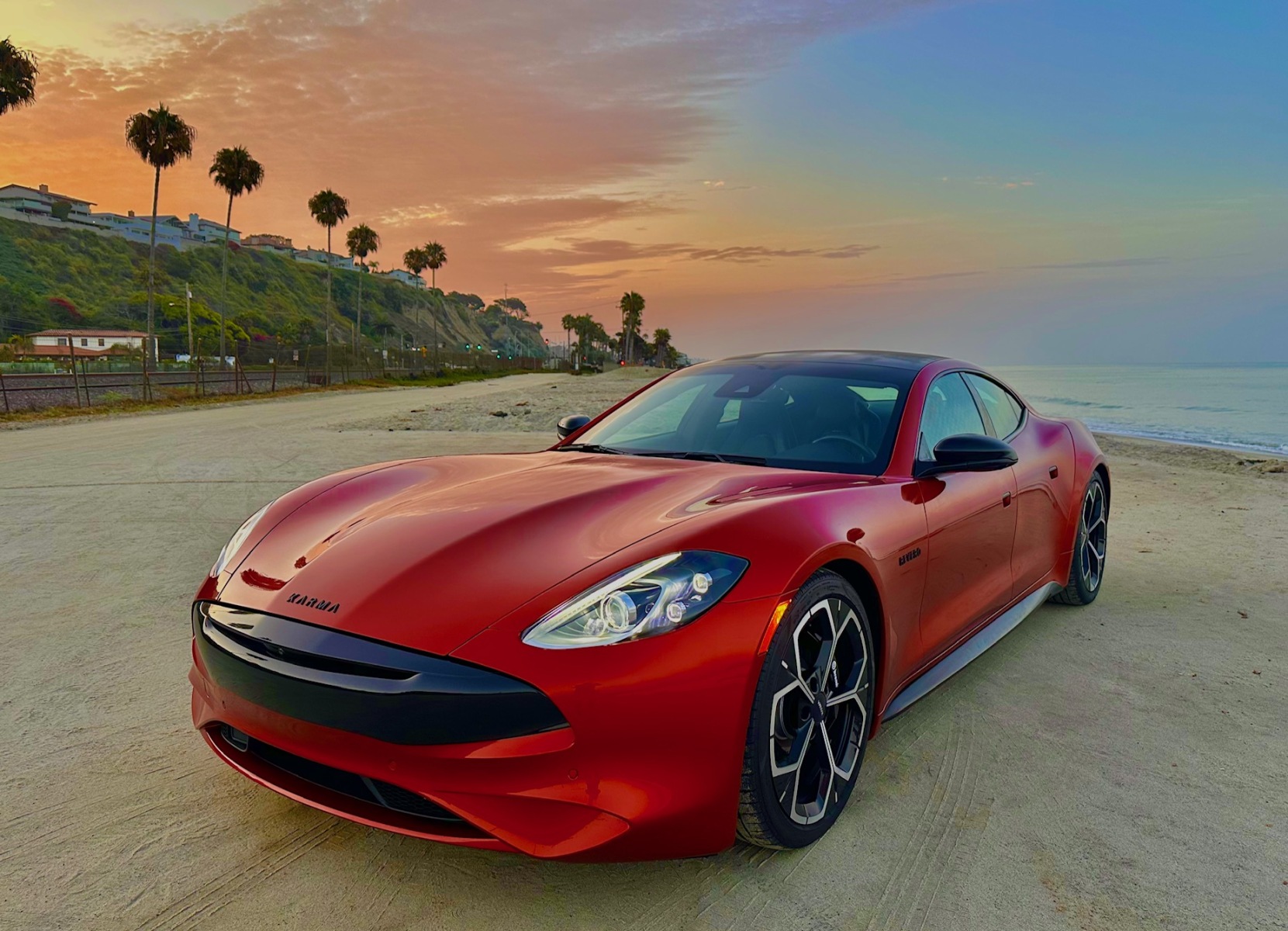
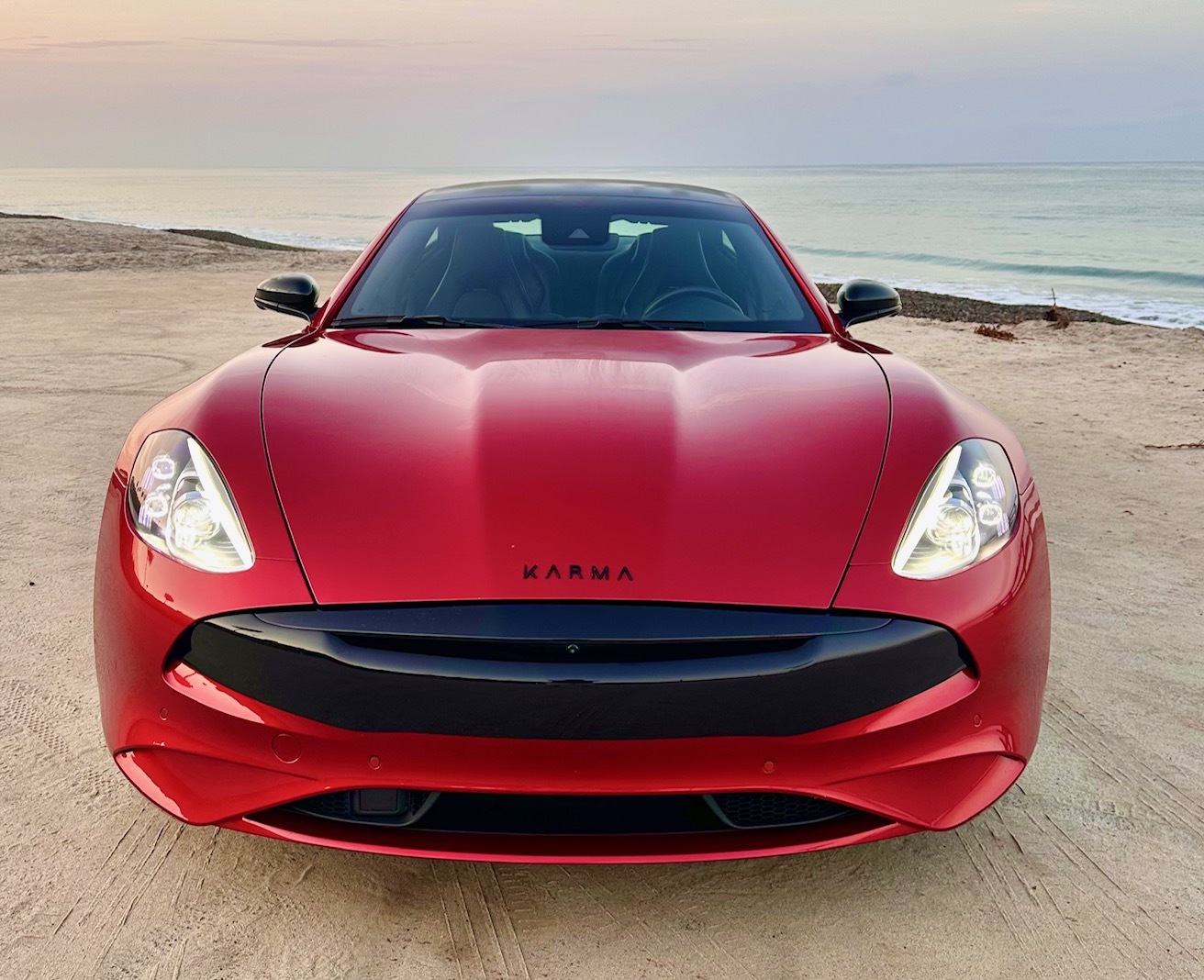
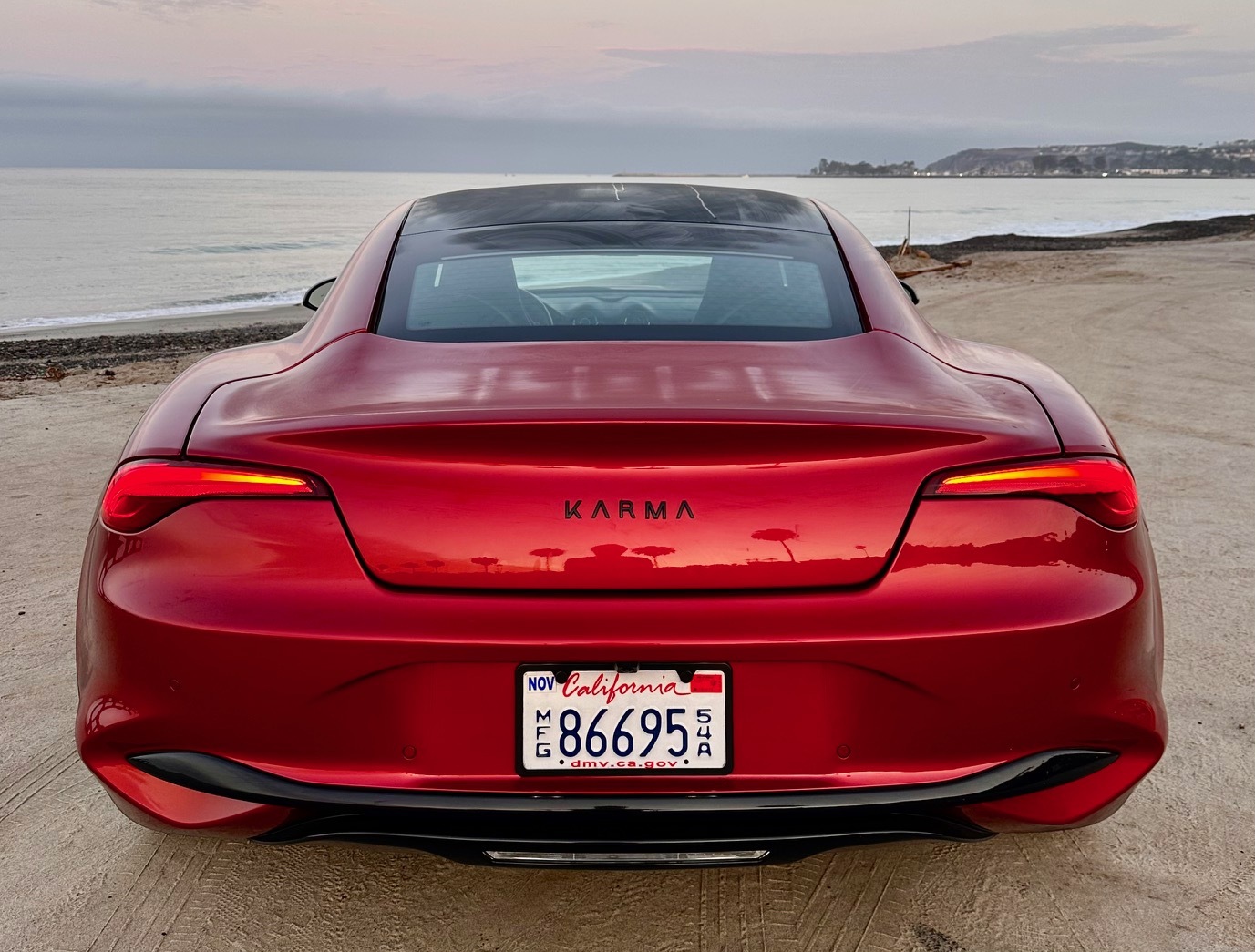
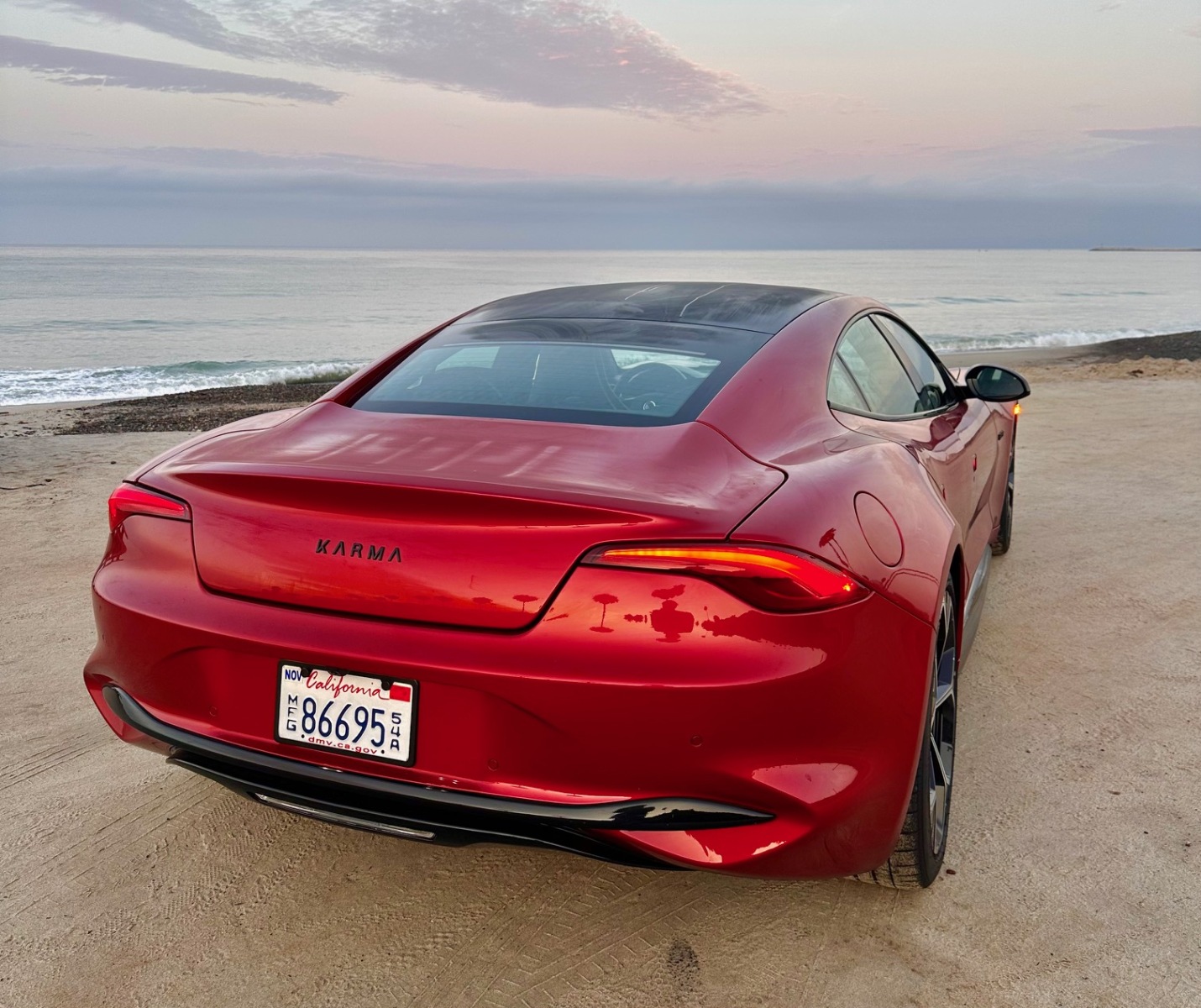
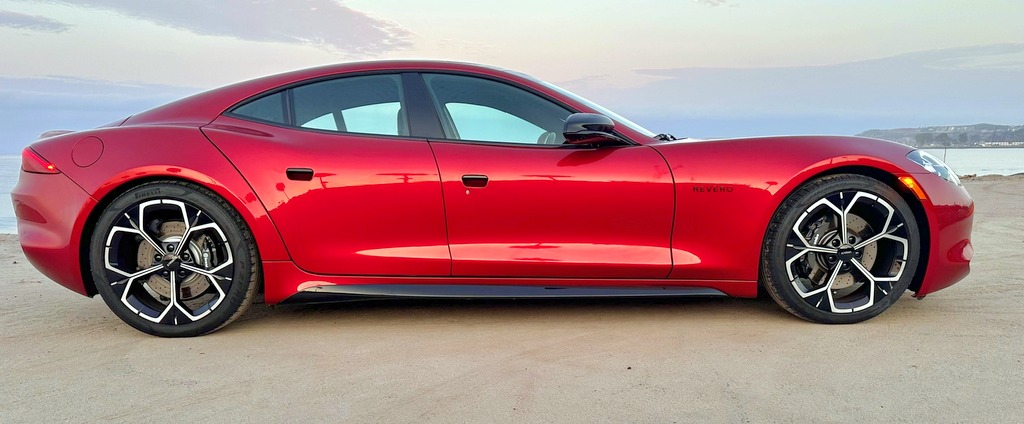
When you spot a Karma Revero you may at first say—What’s that!?—which is perfectly normal. It is a rare sight as only 130 were built at the Karma assembly facility in Moreno Valley, California.
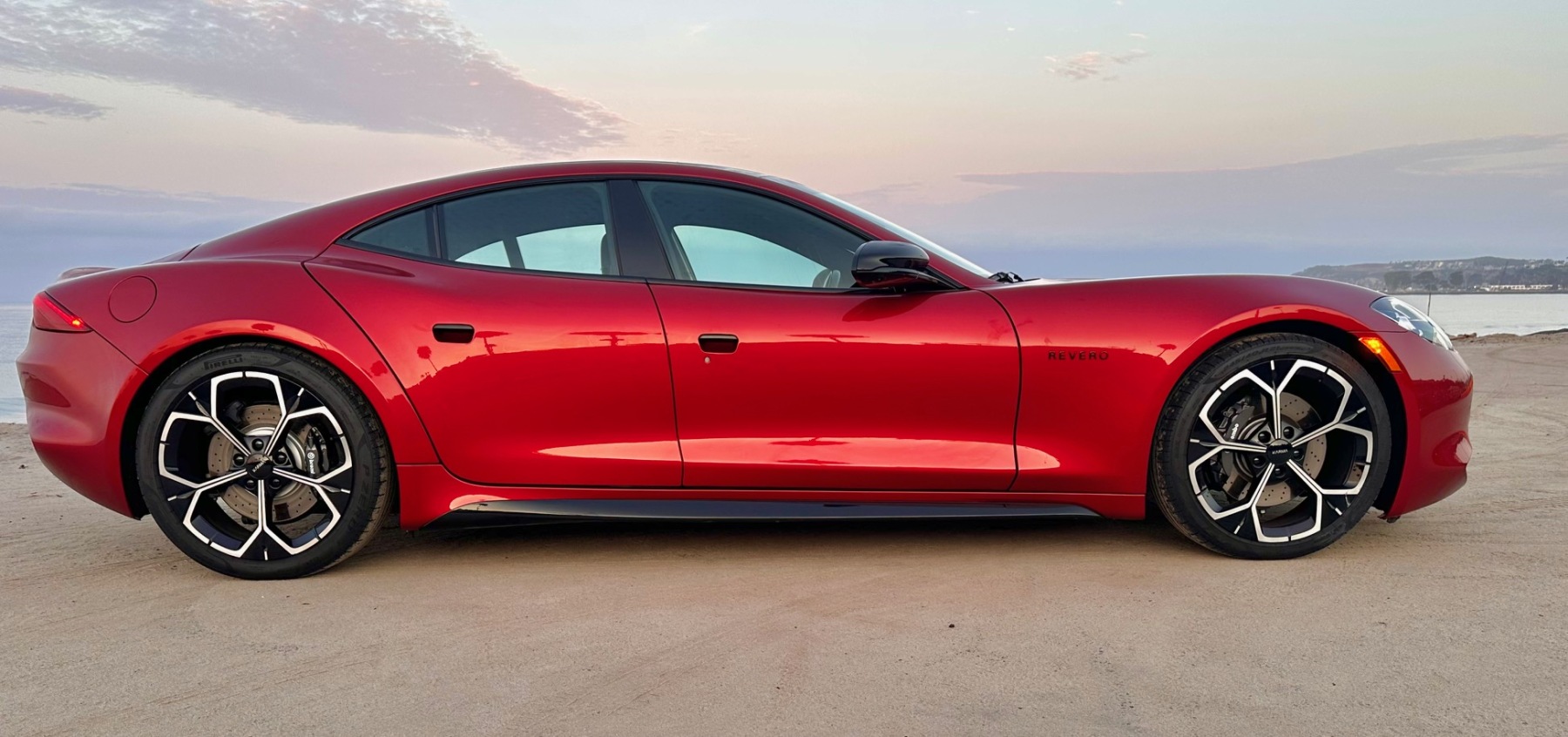
The sleek exterior with a long hood and short rear give it a 0.313 coefficient of drag (Cd.) This is far from the lowest for cars that sell against the Revero. The Lucid Air is 0.210 Cd, the Mercedes-Benz EQS comes in at .200 and the discontinued Tesla Model S at .208.
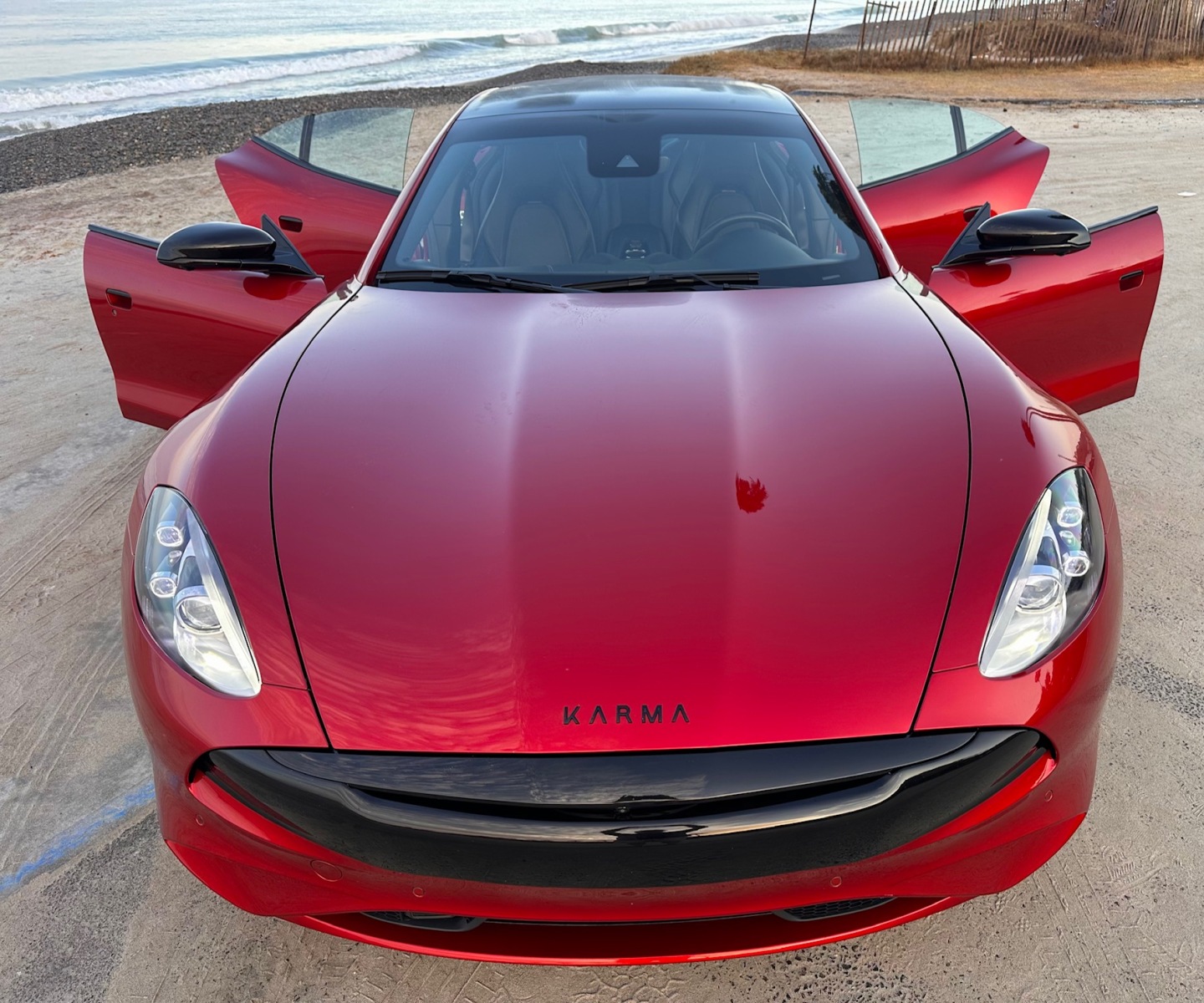
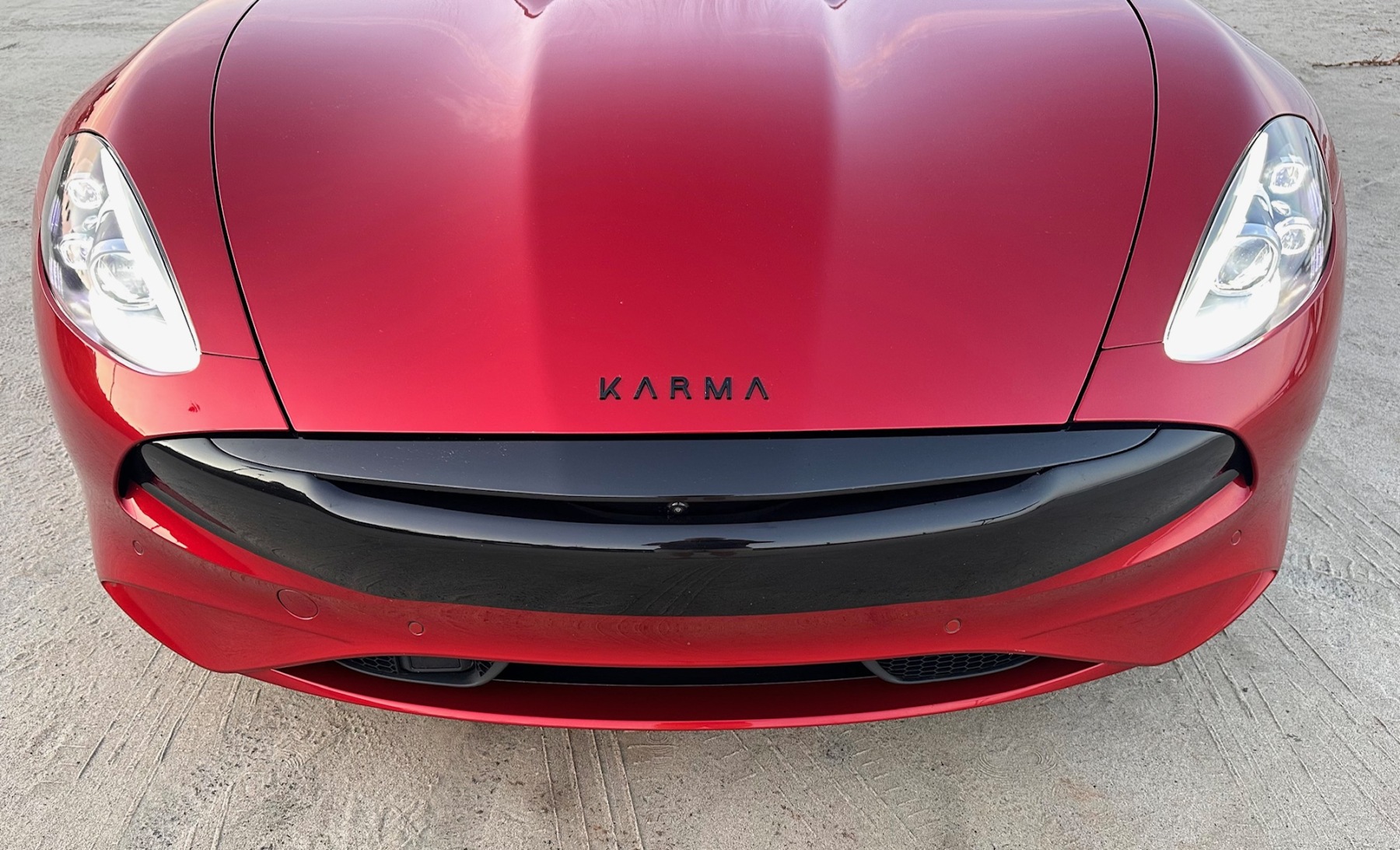
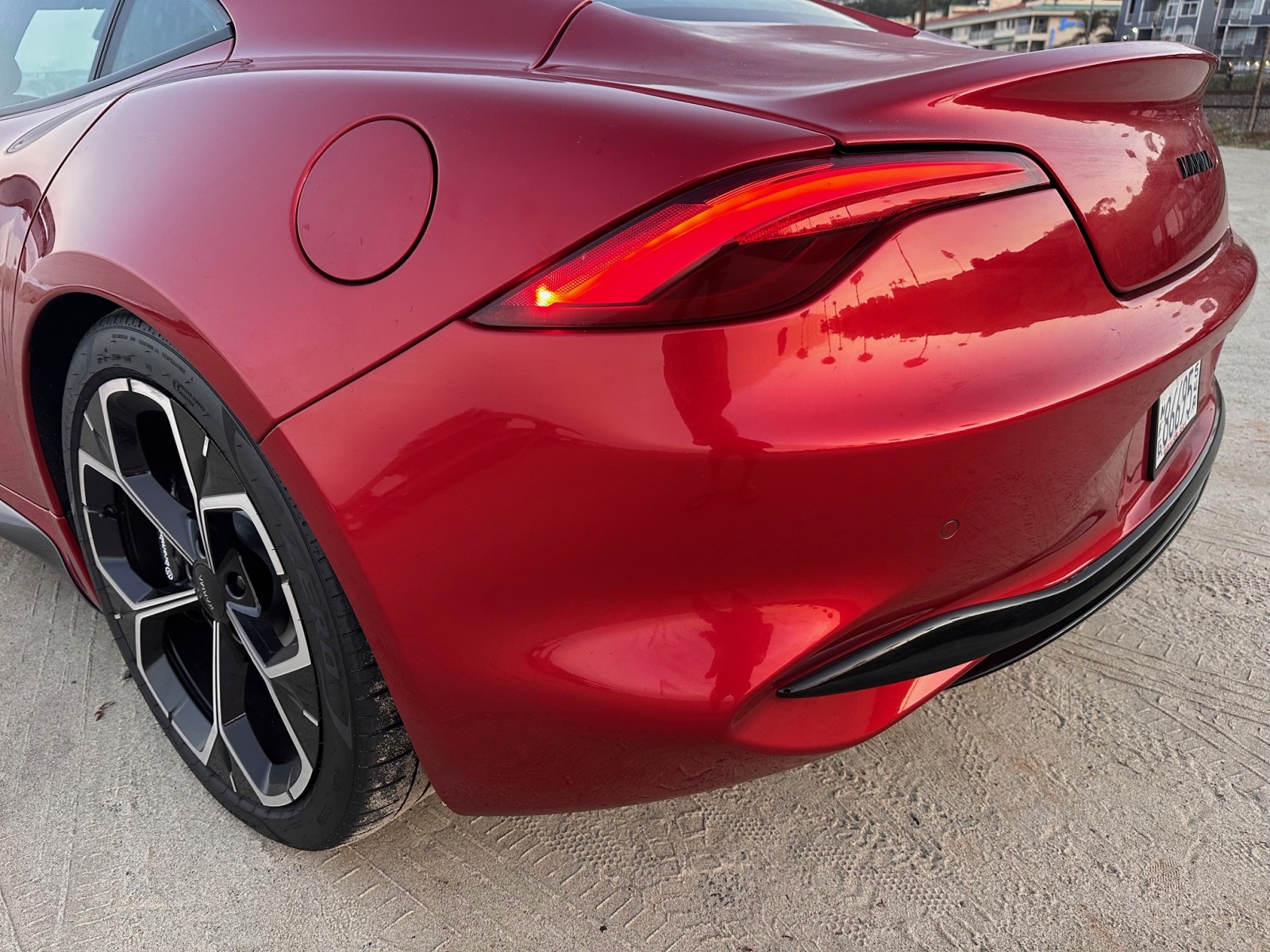
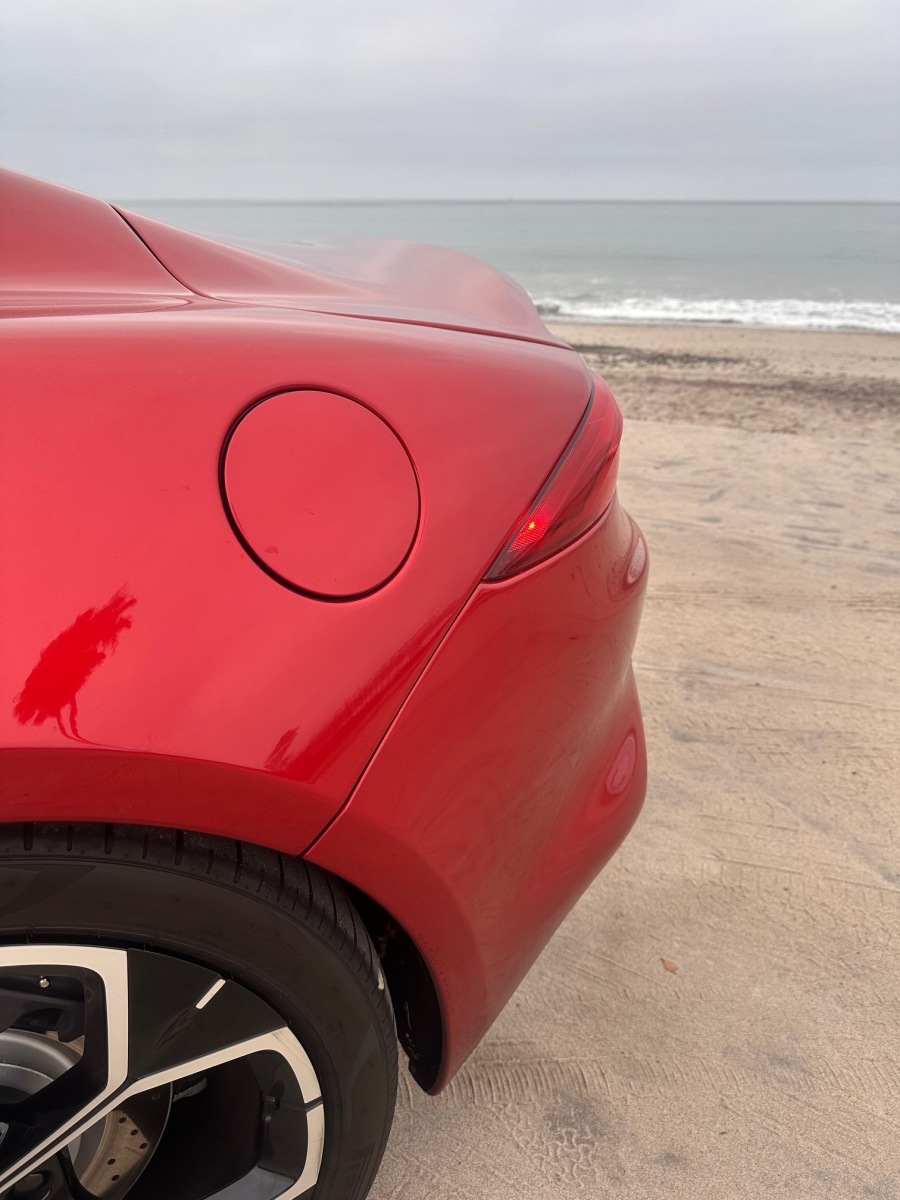
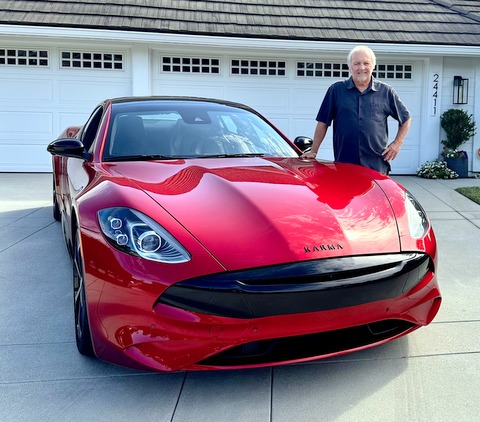
Even with a radiator, the nose is nearly closed off and features laid-back swivel LED adaptive headlights. The 5.4-inch ground clearance, nearly as low as the Mazda MX-5 Miata (4.9-inches), adds to the sporty look. The Napa Red paint with the Blackout Package, wide-set 21-inch wheels and the low 52.4-inch roof height give the Revero an aggressive and beautiful stance. Very unique.
Tight Interior
The Revero is rated as a four-passenger sedan, but it is really intended for only two occupants up front. The rear passengers sitting in heated, low and deep non-reclining seats, divided by the large battery tunnel. There are cup holders but, with no rear-facing air vents for a dual zone climate system, it is not conducive to full-size adults riding back there for very long.
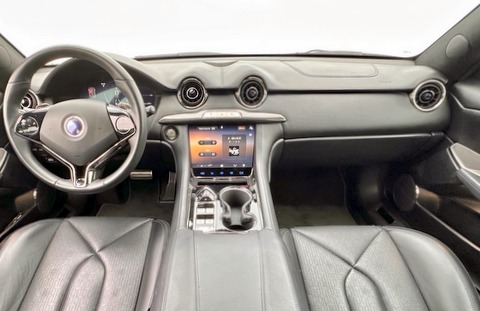
The front leather seats are heated and ventilated but like the rear seats, extricating yourself is not elegant. Women in skirts beware! The low-slung sitting position makes outward visibility a challenge. To that point, seeing the far end of the long hood was difficult, making it hard to park and judge where the wide-set tires were placed. Fortunately, the programmable power tilt and telescoping heated steering wheel was easily adjusted for a comfortable driving position.
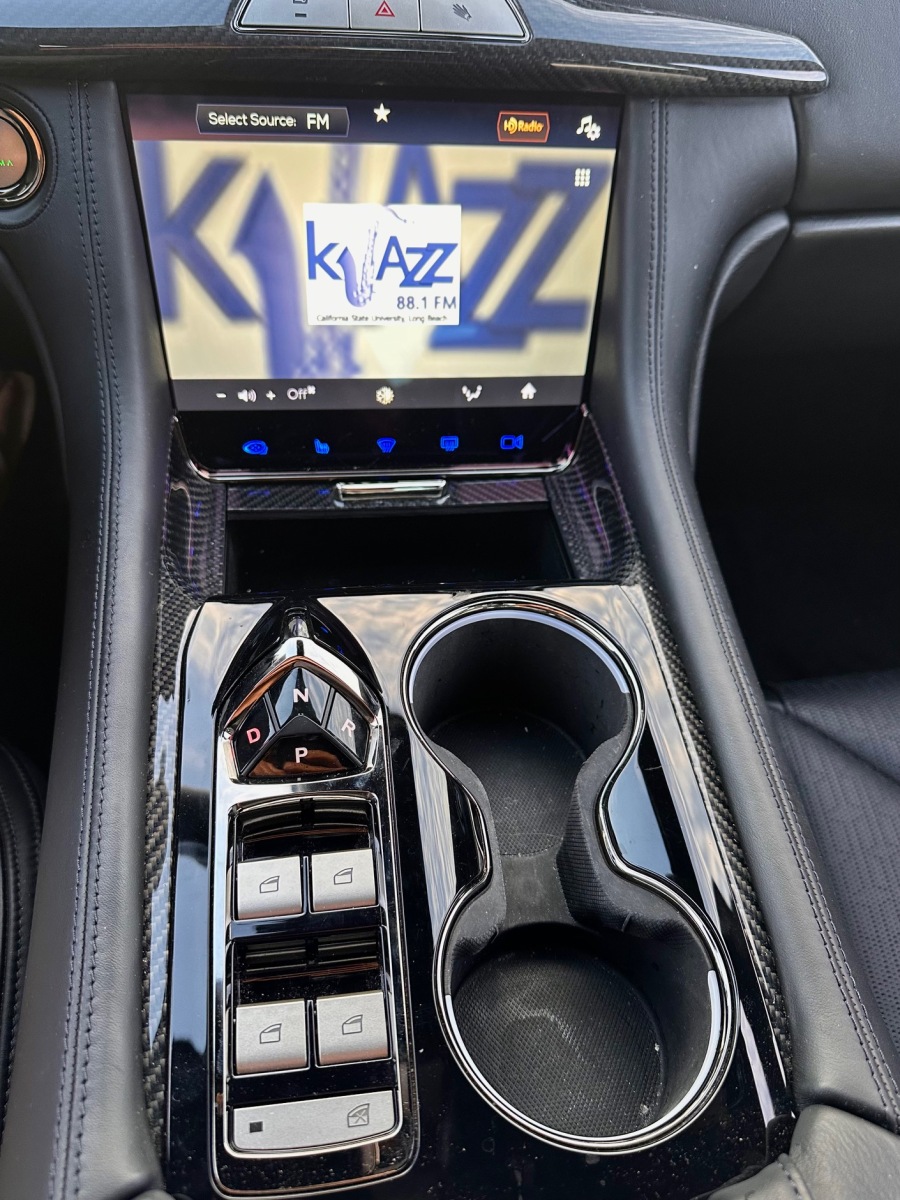
The dash is clean and simple, which we like. There is a 10-inch digital driver display and a 10.2-inch infotainment display for the good-sounding 7.1 channel stereo with a 520-watt amplifier. Apple CarPlay, Android Auto, wired phone charging and Bluetooth are standard as are USB-A ports and Homelink.
Safety and Warranties
The Revero has these warranties.
| Basic | Four years/50,000 miles |
| Battery | 10 years/150,000 miles |
| Powertrain | Eight years/80,000 miles |
| Corrosion | Six years |
| Roadside Assistance | Four years/50,000 miles |
Pricing and Availability
The 2025 Karma Revero we drove had a MSRP of $164,299, including the $2,500 destination charge and $5,000 for the KarPilot ADAS system.
Observations: 2025 Karma Revero EREV
First things, first. The Karma Revero is a stunning vehicle. While it is out of production, there are still a few units available for purchase. Who is the buyer of a Revero? It will be someone with multiple high-end or exotic cars that wants to make a statement. Which won’t be difficult as there are so few of them on the road.
The Revero is dated in its execution. It wasn’t bad to drive, just nothing special. Which isn’t what you’d expect for a car costing more than $150,000. Clean Fleet Report has tested several cars that sell against the Revero, all of which were not only more modern, but loaded with cutting-edge technology and even priced lower.
The Revero is a solid, gorgeous car that any collector of modern exotics would cherish to have in their garage. The uniqueness and looks just may be enough to sell the Revero, but as an everyday driver there are better options. There were too many small and big things that countermanded the great looks. Our partial list: The driver-side interior door release worked only some of the time, the cramped rear seating and tight trunk space, the small center console and the infotainment screen not being as responsive as other we have used.
Clean Fleet Report does not want to dissuade you from contacting Karma if an American exotic is on your shopping list.
Make sure to opt-in to the Clean Fleet Report newsletter (top right of page) to be notified of all new stories and vehicle reviews.
Story and photos by John Faulkner.