
Driving a Low- or Zero-Emission Car Positively Affects Your Health, Budget and Our National Security
It’s simple. If your car doesn’t have a tailpipe, it is the cleanest vehicle you can drive. As a zero emission vehicle, or ZEV, there is no exhaust contributing greenhouse gases or producing smog and other toxic pollutants. Before going any further, let’s set some parameters.
This article is about the amount of emissions put out by a vehicle, measured at the tailpipe. Not the extraction, refining or transportation of fossils fuels, mining of rare earth minerals or manufacture of the vehicle, but emissions from the car, SUV or truck once it is on the road.
Why at the tailpipe? Simple again. This takes politics, half-truths, misinformation and pseudoscience out of the conversation to show the cleanest way to drive. We’re after what car is the most gentle not just on the earth, but your neighbors.
Best Clean Vehicle
Battery Electric Vehicle (BEV) or a Zero Emission Vehicle (ZEV)
The best and cleanest is any vehicle powered solely by electricity as they do not emit exhaust containing pollutants. Heck, they don’t even have a tailpipe! The power source for a BEV comes by replenishing a large battery with electricity from a public or home charger.
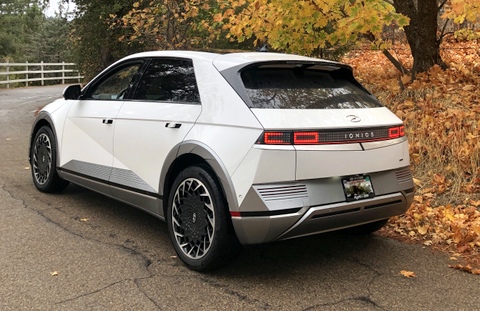
Currently there are a couple dozen models of all-electric cars, trucks, vans and SUVs for sale in the U.S. Their driving range on a full charge is from 149 to more than 500 miles with the most common distance around 270 miles. Most of them are able to replenish their battery 20-80% in under 20 minutes when using a public, Level 3 DC Fast Charger, which are plentiful. Using a 240 volt Level 2 charger at home is the most convenient and least expensive way to charge, with all EVs able to charge to 80% or higher in under nine hours.
Most people, whether commuting, running errands or chauffeuring the kids, will put on less than 45 miles a day. For contractors, delivery companies and other vocations where they drive a pickup truck or van, there are viable options to go all-electric.
So, why is this important? Other than not polluting the air, soil and water for yourself or your neighbors, the overall cost of operating a BEV is much less than a gasoline-powered vehicle. The cost per mile of kilowatts versus gallons of gasoline is far less, possibly enough to offset the higher payments that come with some EVs. Another significant consideration is an EV has less maintenance than gas car, van, truck or SUV. Without the need for oil changes, tune-ups and other usual maintenance, an EV can pencil out favorably for your budget.
We mentioned ZEV as well as BEV to be inclusive. In addition to battery electric cars, fuel cell electric cars, which do have tailpipes, emit only water.
Second Best Clean Vehicle
Plug-in Hybrid Electric Vehicle (PHEV)
If any of the all-electric vehicles currently offered for sale in the U.S. don’t work for your driving lifestyle (you certain?) the next best choice is a plug-in hybrid electric vehicle, or PHEV. This propulsion system combines a gasoline engine and a medium-size battery that is replenished at a public or home charger. Depending on the model a PHEV can go anywhere from 25 to 54 miles on a fully charged battery with motor regeneration adding range to the battery as you drive.

PHEVs are propelled by either the gasoline engine (with a small gas tank) or the battery. To maximize driving only on electricity and not producing any emissions, a PHEV should be plugged-in whenever possible, but especially overnight. Just buying a PHEV is not enough as the owner needs to get in the habit of plugging-in, especially overnight. We all do this with our mobile phones before turning in at night, so why not a car?
A fully charged battery when starting out in the morning takes full advantage of PHEV technology. This is the perfect bridge between a hybrid (described below) and a BEV, but since a PHEV costs more than a hybrid or gasoline-only powered car the incentive is keeping the car charged as high as possible at all times. PHEV owners not plugging-in daily are missing-out on their car’s technology and are not doing their part to reduce emissions.
The actual all-electric driving range with regeneration added-in can be as much as two or three times what the car is rated. We have heard of owners (and experienced it ourselves with test cars) going well over 100 miles in a PHEV without the engine kicking-on. The incentive to drive your PHEV on electricity is to watch your stops to buy gasoline become rare and the car’s emissions reduce to nothing.
Third Best Clean Vehicle
Hybrid Electric Vehicle (HEV)
Hybrids are the most common electrified vehicles on the road. A hybrid couples a conventional internal combustion engine (ICE) with one or more electric motors into a combined propulsion system. Several manufacturers produce hybrid cars, trucks and SUVs. From 1997-2025, more than 10.5 million hybrid vehicles hit the road worldwide.
So how can a hybrid be considered a clean vehicle? The key is to consider the total amount of emissions that could be produced if the car was solely running on gasoline. This qualifies a hybrid vehicle as clean during the times the onboard computer is shutting-off the highly-efficient gasoline engine and it is running only on electricity. Depending how the car is driven the engine could be off a significant amount of time.
Encouragement
Electrified vehicles are here to stay and their presence is growing. Auto manufacturers will still build gasoline-only vehicles, but not all of them. Rivian, Lucid and Tesla are some that only make cars, trucks and SUVs propelled by electricity. Some brands have a heavy mix of BEV, PHEV and HEV vehicles in their line-up, which means one of them will be right for your driving pattern and lifestyle.
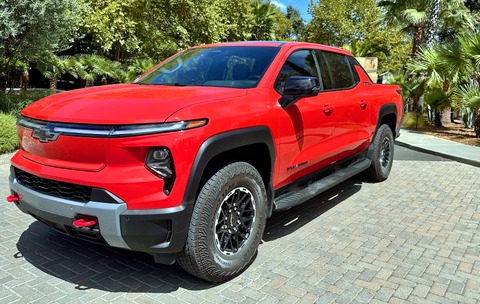
The goal is to use the least amount of fossil fuels as possible. BEV is best, next is a frequently plugged-in PHEV and then HEV. The upsides are many.
Reducing the amount needed by driving highly efficient vehicles means the country can drill and import less oil to be refined. This then has an impact on national security. Putting out less pollution from your car cleans the air in your neighborhood.
Complicated? Not so much. Buy the most efficient and least polluting vehicle you can. If you really can’t find one that suits your driving needs (highly unlikely) then go with a gasoline powered car, truck or SUV that gets the best miles per gallon.
See. Simple.
