
This article may contain affiliate links.
The modern automobile is becoming much more than a means of transportation. Electric powertrains, connected infotainment systems, advanced navigation and increasingly sophisticated software are transforming how people experience long-distance travel. For passengers, these developments create new opportunities to stay informed, entertained and connected throughout a journey.
Electric vehicles have accelerated this transformation by introducing different travel routines. Charging stops, battery management and route planning encourage drivers to think more carefully about how they spend time between destinations. Meanwhile, smartphones and mobile connectivity have made digital services accessible almost everywhere.
The result is a changing relationship between automotive technology and personal entertainment. From live sports coverage to mobile gaming, digital activities increasingly accompany road trips, although their use must remain separate from the responsibilities of driving.
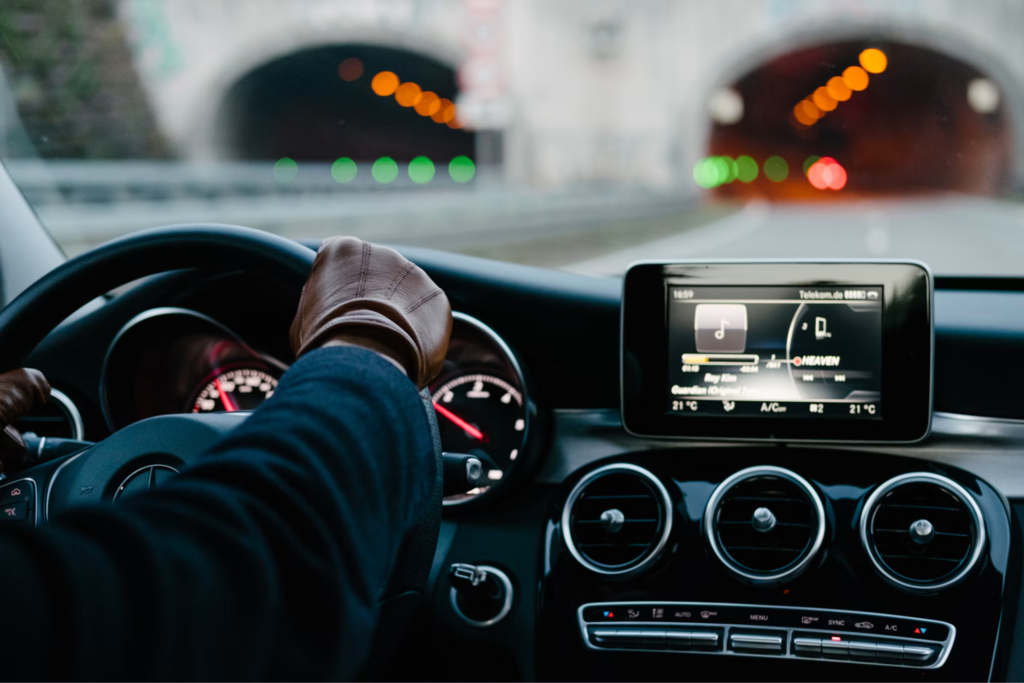
The Evolution of the Connected Car
Connected vehicles combine onboard computing, wireless communication and software-based services to improve convenience and functionality. Modern infotainment systems can provide navigation, music streaming, smartphone integration and access to selected vehicle information through a central display.
Many manufacturers also offer companion applications that allow owners to check battery levels, locate their vehicles or manage charging remotely. Over-the-air updates can improve supported features without requiring a traditional dealership visit.
These technologies are particularly relevant to electric vehicles, where digital systems help drivers manage range and charging infrastructure.
| Connected Technology | Automotive Function | Practical Benefit |
| Smartphone integration | Access to compatible mobile applications | Convenient navigation and communication |
| EV route planning | Charging-aware journey calculations | More predictable travel stops |
| Wireless connectivity | Access to supported online services | Updated information and entertainment |
| Remote vehicle applications | Battery and climate monitoring | Greater control before departure |
| Over-the-air updates | Remote software improvements | Reduced need for some service visits |
The most effective systems prioritize simplicity. Large displays and extensive functionality are useful only when drivers can access essential information without unnecessary distraction.
Why Electric Vehicles Are Changing Road Trip Habits
Traditional road trips often revolve around fuel stops lasting only a few minutes. Electric vehicle travel introduces a different pattern because charging duration depends on battery capacity, charging equipment, temperature and the vehicle’s charging characteristics.
A fast-charging session may provide a useful opportunity to eat, walk, shop or relax. However, charging times vary considerably, and drivers should not assume every station can deliver the maximum charging speed advertised by their vehicle.
Route planning is therefore becoming an important part of EV ownership. Drivers must consider available chargers, road conditions, weather and expected energy consumption.
These factors also influence how passengers organize their free time. A charging stop can become a planned break rather than an unexpected interruption, particularly on longer journeys.
For families and groups traveling together, the availability of comfortable waiting areas, reliable connectivity and nearby facilities can be almost as important as charging speed.
Live Sports and Connected Entertainment for Passengers
One significant change in modern travel is the ability to follow sporting events without relying on traditional radio broadcasts. Smartphones and mobile internet connections allow passengers to access match statistics, live commentary and official streaming services while traveling.
This is particularly useful during long journeys when sporting events take place across different time zones. Volleyball, football, basketball and motorsport all have audiences who follow competitions through dedicated mobile platforms.
Digital sports services now extend beyond simply displaying results. Some platforms provide detailed match histories, interactive statistics and betting markets. For example, volleyball live betting represents one specialized part of the broader live-sports ecosystem, where users can view changing odds alongside ongoing matches. Unlike ordinary sports coverage, betting involves financial risk and is subject to local age and gambling regulations.
The distinction between passengers and drivers is essential. Watching live video, interacting with betting platforms or following rapidly changing statistics can divert attention from the road. These activities belong with passengers or people taking a break in a safely parked vehicle.
For automotive manufacturers, the challenge is to provide useful connectivity without encouraging unsafe interaction with entertainment applications.
Mobile Gaming During EV Charging Breaks
Charging stops have also created opportunities for travelers to engage with short-form digital entertainment. Mobile games are particularly suitable for brief periods of free time because many titles offer sessions that do not require lengthy preparation.
The mobile gaming industry includes puzzle games, strategy titles, casual arcade experiences and gambling-related products. Their design approaches often overlap, especially in the use of simple controls, short rounds and immediately recognizable visual feedback.
One example is Chicken Road, a gambling-style game built around a sequence of decisions and increasing risk. Readers exploring a chicken road game review can examine how its mechanics differ from conventional casual games, including the role of random outcomes and the possibility of financial loss.
The broader design trend is relevant to connected mobility because entertainment developers increasingly optimize experiences for portable devices and shorter sessions. Nevertheless, gambling games should not be presented as equivalent to risk-free mobile entertainment.
| Mobile Activity | Typical Interaction | Suitable Travel Context |
| Puzzle games | Short problem-solving sessions | Passenger entertainment or parked breaks |
| Sports updates | Scores and match statistics | Passenger use |
| Video streaming | Continuous media viewing | Passengers or stationary vehicles |
| Casual arcade games | Brief interactive sessions | Charging breaks |
| Gambling-related games | Financially risky interactive play | Adults only, where legally permitted, while stationary |
Not every connected car supports third-party games through its built-in display. In many cases, passengers use their own smartphones or tablets independently of the vehicle’s infotainment system.
How Automotive Infotainment Systems Are Evolving
The automotive industry has moved from relatively simple radio and navigation units toward integrated digital environments. Larger displays, configurable interfaces and smartphone compatibility have changed expectations about what a vehicle dashboard should provide.
Some electric vehicles offer dedicated entertainment features while parked, including video playback and selected games. Others focus on navigation, communication and audio, leaving additional entertainment to passengers’ personal devices.
This difference reflects both technical limitations and safety considerations. An infotainment system designed for driving must prioritize information such as speed, route guidance, battery status and vehicle warnings.
Several developments are shaping future interfaces:
- Greater personalization of display layouts and user profiles.
- Improved integration between navigation and charging information.
- More capable voice controls for essential functions.
- Software updates that extend supported vehicle features.
- Clearer separation between driving functions and parked entertainment.
Voice commands can reduce some manual interaction, but they do not eliminate cognitive distraction. The quality of an automotive interface should therefore be measured by how effectively it supports driving rather than by the number of applications it offers.
Connectivity, Cybersecurity and Digital Privacy
As vehicles become more connected, cybersecurity and data protection become increasingly important. Modern automobiles may exchange information with manufacturer servers, mobile applications, navigation providers and charging networks.
These connections can improve functionality, but they also create additional points that require appropriate security controls.
Vehicle owners should understand which services collect location data, how account credentials are protected and whether connected applications receive regular security updates.
The same precautions apply when travelers access external entertainment services on personal devices. Public Wi-Fi networks at charging stations, hotels and roadside facilities may not provide the same protections as trusted private connections.
| Digital Risk | Potential Consequence | Recommended Precaution |
| Unsecured public Wi-Fi | Exposure to network attacks | Prefer trusted connections and encrypted services |
| Outdated software | Unpatched vulnerabilities | Install verified security updates |
| Weak account passwords | Unauthorized access | Use unique passwords and multifactor authentication |
| Excessive app permissions | Unnecessary data collection | Review privacy settings |
| Distracting notifications | Reduced driving attention | Enable driving-focused notification controls |
Cybersecurity is no longer separate from automotive reliability. Software protection, account security and responsible data handling are increasingly important aspects of vehicle ownership.
Balancing Digital Convenience With Road Safety
The expansion of connected entertainment creates a fundamental question: how much digital functionality should be available inside a moving vehicle?
Passenger entertainment can improve comfort on long journeys, but driver attention must remain the priority. Even vehicles equipped with advanced driver-assistance systems require the driver to follow the manufacturer’s operating instructions and remain appropriately attentive.
This is particularly important for activities involving continuous visual engagement, such as watching sports, playing games or interacting with financial platforms.
A practical approach separates automotive technology into three categories: essential driving information, low-distraction convenience functions and entertainment intended exclusively for passengers or stationary use.
Manufacturers can reinforce this distinction through interface restrictions, driver-monitoring technology and thoughtful display placement.
The objective should not be to eliminate digital convenience but to ensure that it supports safe mobility rather than competing with it.
The Future of Connected Travel
Connected cars are gradually changing the experience of long-distance travel. Electric powertrains influence where and when drivers stop, while mobile connectivity expands the services available during those breaks.
The relationship between automobiles and digital entertainment will likely continue evolving as software-defined vehicle platforms become more capable. However, the most valuable innovations will be those that improve navigation, charging reliability, passenger comfort and road safety.
Mobile entertainment, live sports services and gaming platforms illustrate how digital habits increasingly accompany modern travel. Their relevance comes from changing passenger behavior and the availability of connected devices, not from any requirement to integrate every activity into a vehicle dashboard.
Ultimately, the future of connected mobility depends on maintaining a sensible balance. Better technology should make journeys safer, more efficient and more comfortable while giving passengers appropriate freedom to enjoy their time between destinations.
