
This article may contain affiliate links.
Cars still handle most short trips, even the ones under two miles. Those quick drives burn fuel and add up across a week. Clean transport does not always mean buying a new electric car.
An e-bike can cover many of those trips at a small fraction of the cost. As an example, riders in south-central Pennsylvania can compare models and financing at Let’s Roll E-Bike Shop, then service the bike close to home. That kind of local support keeps a clean ride useful for years.
Why Do E-Bikes Count as Clean Transportation?
An e-bike runs on a small battery and a motor that assists your pedaling. It uses a tiny share of the energy a car needs for the same trip. That makes it one of the cleanest ways to move around in a city.
The gains grow when many riders switch at once. Modeling from a Portland State e-bike research team found that if one city reached a 15% e-bike mode share, daily emissions could drop by over 900 metric tons. Short trips are where that shift matters most.
E-bikes also ease pressure on roads and parking. A bike takes up far less space than a car at the curb. For a household with one electric vehicle, an e-bike can absorb the errands that would otherwise mean a second car.
Health is another quiet benefit. Pedal assist still asks you to move, so short rides add real activity to your day. That mix of low emissions and light exercise is hard for a car to match.
How Do You Pick the Right E-Bike Class?
Most states sort e-bikes into three classes based on speed and motor type. Knowing the class helps you match the bike to your roads and rules.
- Class 1 assists only while you pedal, up to 20 mph. It suits bike lanes and shared paths.
- Class 2 adds a throttle and still caps assist at 20 mph. It helps riders who want a rest from pedaling.
- Class 3 assists while you pedal, up to 28 mph. It fits longer road commutes, but faces more local limits.
Think about where you will ride before you choose. A trail rider and a road commuter often need different classes. A local shop can confirm which class your area allows.
What Does an E-Bike Cost Compared to an EV?
The price gap is wide. A quality e-bike runs from about $1,000 to $8,000, while a new electric car often starts above $30,000. That difference lets many riders pay cash or use short-term financing.
Running costs stay low too. Charging a battery costs pennies, and a full charge takes about three to five hours. Most e-bikes cover 25 to 60 miles per charge, which is plenty for errands and commutes.
Upkeep is simpler as well compared to a car. There is no oil to change, no fuel to buy and no yearly registration in most states.
For riders who mostly need cheap daily transport, an e-bike can beat a car on value. An e-moped is another budget commuter option worth a look. Both let you skip fuel stops and pricey parking.
How Should You Keep an E-Bike Battery Safe?
E-bike batteries are safe when treated well, but they need basic care. A few simple habits lower any risk of fire. Federal battery safety guidance is clear and easy to follow.
- Buy devices certified by a recognized testing lab, such as a UL mark.
- Charge with the cord that came with the bike or a trusted replacement.
- Keep the battery in a cool, dry spot, away from exits and doorways.
- Unplug once the charge is full instead of leaving it overnight.
- Check the battery for cracks, swelling or leaks before each ride.
Stop using a battery that smells odd, feels very hot or changes shape. A trained technician can inspect or replace it. Good habits keep both the rider and the home safe.
Where Should You Buy and Service an E-Bike?
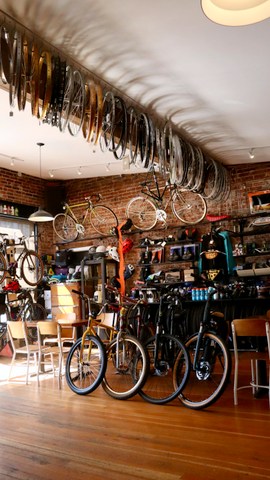
Buy from a shop that also fixes what it sells. Online-only deals can leave you stranded when a part fails. A local store handles tune-ups, flat tires and warranty work in-person.
A good shop carries several brands so you can test different frames and motors. Product lines like Aventon, Giant, Momentum, Velotric, and Zooz each fit different riders and budgets. Trying a few in person beats guessing from a screen.
Service and rentals matter as much as the sale. Rentals let you test a class before you commit, and repairs keep the bike on the road. For travel and errands, lightweight e-bikes are easy to store and carry.
What to Keep In Mind
- E-bikes cut energy use and emissions on the short trips cars would otherwise handle
- The three classes differ by speed, so match the class to your roads.
- Prices from about $1,000 to $8,000 sit well below a new electric car.
- Safe charging and a UL-marked battery lower any fire risk at home.
- Buy from a shop that offers service, rentals and repairs nearby.
The Short Trip Case for E-Bikes
An e-bike will not replace every car trip, but it covers a surprising share of them. For short commutes, errands and quick rides, it is clean, cheap and easy to park. Test a class you like, plan for safe charging, and pick a shop that will back the bike for the long haul.
Frequently Asked Questions
Are e-bikes really cleaner than driving a short distance?
Yes, an e-bike uses a tiny fraction of the energy a car needs for the same trip. It produces no tailpipe emissions while you ride. Over many short trips, the savings add up quickly.
Do I need a license or registration for an e-bike?
Most low-speed e-bikes need no license, title or registration in states using the three-class system. Rules still vary by class and location. Check your local law before you ride a Class 3 bike.
How far can an e-bike go on one charge?
Most models cover about 25 to 60 miles per charge, depending on terrain and assist level. Hills and heavier loads shorten that range. A full charge usually takes three to five hours.
Is it worth buying an e-bike from a local shop?
A local shop gives you test rides, in-person fittings and fast repairs. It can also handle warranty claims and routine tune-ups. That support is hard to match with an online-only purchase.
