
This article may contain affiliate links.
Driving while impaired remains one of the most serious traffic offenses in the United States. Law enforcement officers regularly conduct traffic stops to identify drivers who may be under the influence of alcohol or drugs. However, not every traffic stop is legally valid. When an officer stops a vehicle without proper justification, the stop may violate a driver’s constitutional rights.
This raises an important legal question: can an illegal traffic stop still lead to a DWI arrest? The answer depends on several legal principles, including the rules governing reasonable suspicion, constitutional protections against unlawful searches and seizures, and how courts evaluate evidence gathered during a stop.
Understanding how these legal standards work can help drivers recognize their rights and determine when legal guidance may be necessary.
The Legal Basis for Traffic Stops
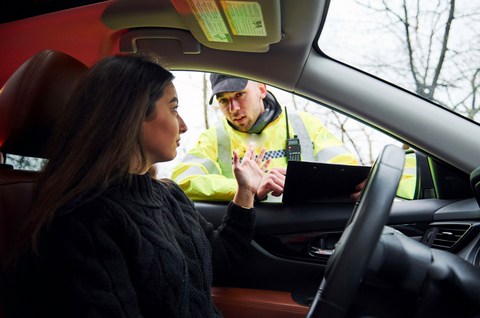
In the United States, traffic stops are governed by the Fourth Amendment of the Constitution, which protects individuals from unreasonable searches and seizures. A traffic stop is considered a seizure under the law, meaning police officers must have a valid reason to initiate the stop.
Generally, officers must have what is known as “reasonable suspicion” that a traffic violation or criminal activity has occurred. Reasonable suspicion requires specific facts suggesting that a driver may have violated the law.
Common reasons for traffic stops include speeding, failing to signal, running a stop sign, or driving with broken lights. Officers may also stop vehicles if they observe behavior suggesting impaired driving, such as swerving between lanes or inconsistent speeds.
If an officer stops a vehicle without a valid reason, the stop may be considered illegal.
What Makes a Traffic Stop Illegal?
A traffic stop may be considered unlawful if the officer did not have reasonable suspicion or probable cause to justify the stop. Courts closely examine the circumstances surrounding the stop to determine whether the officer acted within the law.
Lack of Reasonable Suspicion
If an officer stops a vehicle without observing a traffic violation or suspicious driving behavior, the stop may lack reasonable suspicion. For example, stopping a driver simply based on a vague hunch or curiosity is generally not permitted.
Courts require officers to articulate specific facts that justify the stop.
Stops Based on Incorrect Assumptions
Sometimes officers initiate traffic stops based on mistaken assumptions about the law. For example, an officer may believe a driver committed a violation when the behavior was actually legal.
In certain situations, courts may still allow evidence obtained during the stop if the officer’s mistake was considered reasonable. However, if the mistake was clearly incorrect, the stop may be ruled unlawful.
Prolonged or Unrelated Investigations
Even when a stop begins legally, officers must limit the scope and duration of the stop to the original reason for pulling the driver over.
If an officer extends the stop without additional justification, the continued detention may violate the driver’s constitutional rights.
How Illegal Stops Affect DWI Arrests
When a driver is stopped unlawfully, any evidence gathered during the stop may be challenged in court. This is based on a legal principle known as the “exclusionary rule.”
The exclusionary rule prevents prosecutors from using evidence obtained through violations of constitutional rights.
If a court determines that a traffic stop was illegal, evidence such as field sobriety test results, breath test results or officer observations may be suppressed. Without that evidence, the prosecution may have difficulty proving the DWI charge.
However, each case depends on its specific circumstances. Courts evaluate the facts carefully before deciding whether evidence should be excluded.
Field Sobriety Tests and Evidence Collection
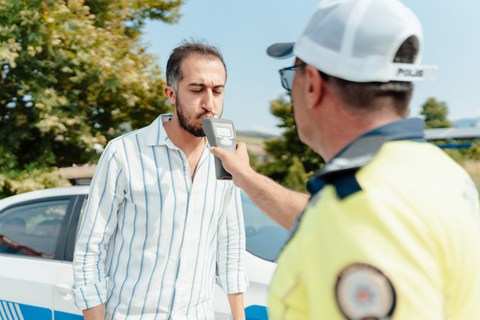
After initiating a traffic stop, officers may look for signs of impairment. These signs may include the smell of alcohol, slurred speech, bloodshot eyes, or difficulty responding to questions. If officers suspect impairment, they may request that the driver perform field sobriety tests. These tests are designed to evaluate balance, coordination, and the ability to follow instructions.
Common field sobriety tests include the walk-and-turn test, the one-leg stand test, and the horizontal gaze nystagmus test. Officers may also request breathalyzer tests to measure blood alcohol concentration. The results of these tests often play a major role in DWI cases.
If the initial traffic stop was unlawful, defense attorneys may challenge whether these tests should be allowed as evidence in court.
When Evidence May Still Be Used
Although the exclusionary rule provides strong protections, there are exceptions that may allow prosecutors to use evidence even if a stop was problematic.
The Good Faith Exception
Courts sometimes apply the good faith exception when an officer reasonably believed that the stop was lawful. If the officer relied on information that appeared valid at the time, evidence may still be admissible.
Independent Evidence
If law enforcement obtains evidence through a separate, lawful source unrelated to the illegal stop, that evidence may still be used in court. For example, if another officer independently observed impaired driving behavior, that information might provide separate grounds for investigation.
Because these legal doctrines are complex, evaluating whether evidence should be suppressed often requires careful legal analysis.
The Role of Defense Attorneys in DWI Cases
DWI cases frequently involve detailed legal questions about traffic stops, evidence collection, and constitutional protections. Defense attorneys often review police reports, dashcam footage and witness statements to determine whether the stop complied with the law.
When a traffic stop appears questionable, attorneys may file motions asking the court to suppress evidence obtained during the stop.
Individuals facing DWI charges may choose to consult an attorney like the Minneapolis DWI lawyer who can review the circumstances of the stop and evaluate all defenses. Legal professionals may examine whether the officer had reasonable suspicion, whether procedures were followed correctly, and whether evidence was gathered lawfully.
Why Legal Representation Matters
Facing a DWI charge can involve serious legal and personal consequences. Drivers may encounter license suspension, fines and other penalties if convicted.
Because traffic stops and evidence collection are subject to strict legal standards, experienced attorneys can play an important role in protecting a driver’s rights.
Consulting a highly recommended DUI lawyer may help individuals better understand their legal options and determine whether law enforcement followed proper procedures.
Attorneys may also negotiate with prosecutors, challenge questionable evidence, and represent clients during court proceedings.
Protecting Your Rights During Traffic Stops
Drivers should remain calm and cooperative during any traffic stop. However, it is also important to understand that individuals have constitutional rights during interactions with law enforcement.
Drivers generally have the right to ask why they were stopped and to decline answering certain questions beyond basic identification requirements.
If a driver believes that a stop was conducted unlawfully, documenting details about the encounter may be helpful later. Information such as the time of the stop, locatio, and the officer’s stated reason for the stop may become relevant during legal proceedings.
Understanding the legal standards surrounding traffic stops and DWI investigations can help drivers recognize when their rights may have been violated and when professional legal guidance may be necessary.
