
This article may contain affiliate links.
When you’re travelling with kids it’s natural to have some worries about safety, especially if you’re a new parent. While most parents focus on the car seat itself, the overall condition of the vehicle plays a part in safety too, from properly functioning seat belts and airbags to making sure warning lights on the dashboard aren’t being ignored. Here’s what you need to know about cars and car seat safety when it comes to kids.
Rear Face as Long as You Can
It’s a legal requirement for babies to sit in rear facing car seats until they’re at least 15 months old (in the U.S. and UK, different places have different rules, so be sure to check). Actually, it’s recommended that you keep them rear facing for as long as possible, and there are car seats you can buy that support rear facing until a baby is well into their childhood years. People worry about their legs being squashed or being uncomfortable but children have been shown to be perfectly happy like this. And babies/children who have never known any different are unlikely to be bothered!
Structurally, the body of a child is different to an adult in a number of ways, they’re not just ‘mini adults.’ The proportion of their head to the rest of their body is different, meaning a crash can be much more severe, plus there’s the development of their neck and spine to consider. Crash tests research shows over and over that crash impact does significantly more damage when a child is facing forwards. In many cases it can be the difference between life and death.
From a vehicle safety point of view, rear facing seats also work best when the car’s own restraint systems are in good condition, so worn seat belts, loose anchor points or damage from a previous minor collision should always be checked and repaired properly before fitting a child seat. Always talk to a trusted auto mechanic if you’re not sure, better safe than sorry.
No Big Coats, Hats or Hoods in the Car Seat
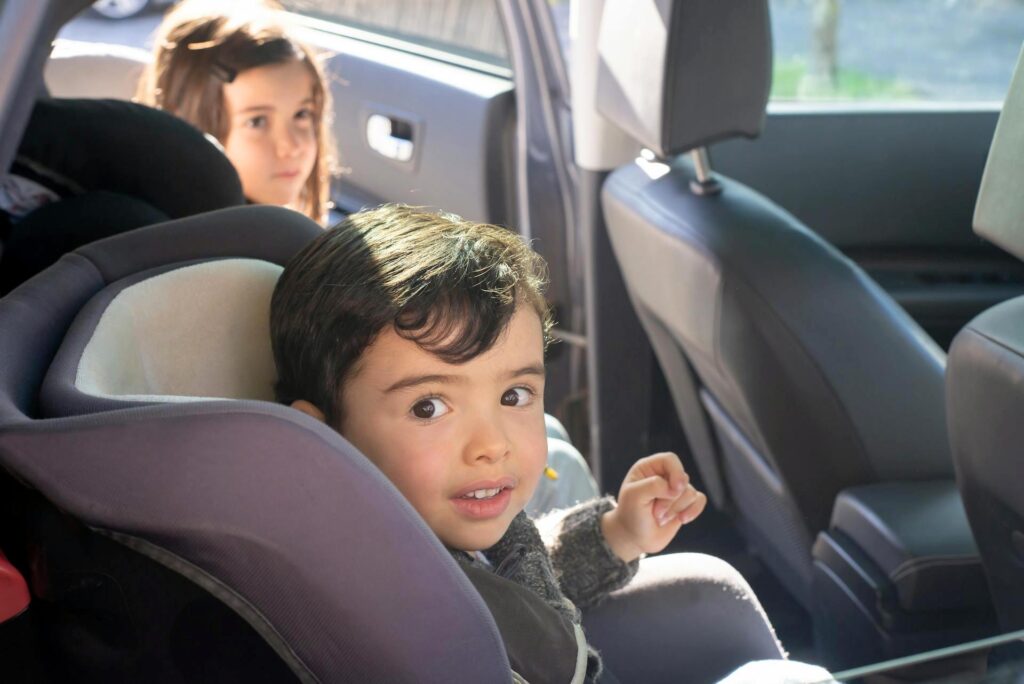
Padded coats and forward-facing car seats shouldn’t be used together. This is because any kind of padding can prevent you from pulling the straps tight enough to keep your child safe in a potential crash. When it’s cold, use a blanket over the top once they’re strapped in. It’s also a good idea to make sure the harness and buckle mechanisms are clean and moving freely, as dirt and wear can stop them tightening properly over time, which is something a routine vehicle safety check can pick up. Coats can also cause overheating in small babies in cars so another reason to take it off before every journey.
Car safety features
On top of making sure everything is in check when it comes to your car seat, car safety features can make all the difference in reducing the injury risk for children in everyday driving, as well as in collisions. If you’re buying or changing your car with kids in mind, there are a few specific safety features that are genuinely worth prioritizing.
Rear-seat ISOFIX points on both outer seats are useful if you plan to carry more than one child seat over time, the top tether anchors keep higher weight seats more stable in a crash compared with just belting in the seat. Built in rear air vents are another underrated feature for babies and young children, as they help regulate temperature in the back seats and reduce the risk of overheating in warmer months. As a new parent you’ll be regularly loading prams and car seats so having wide opening rear doors and a low, flat rear sill make a real difference to how safely you can lift a baby carrier in and out without awkward twisting (a common cause of minor injuries in parents).
