
This article may contain affiliate links.
According to the Federal Motor Carrier Safety Administration’s 2023 data, large trucks were involved in over 5,700 fatal crashes—a 49% increase from a decade earlier. Yet despite these rising numbers, most people navigate the aftermath of a commercial truck collision with little understanding of how fundamentally different these claims are from typical car accident cases. While passenger vehicle accidents might involve a single insurance policy and straightforward fault determination, truck accidents pull in federal regulations, multiple liable parties and insurance coverage that can reach into the millions.
The complexity intensifies when you consider that trucking companies and their insurers have specialized teams ready to minimize payouts from the moment an accident occurs. These aren’t adjusters handling fender-benders—they’re professionals who understand every nuance of commercial trucking law, from driver log requirements to cargo loading standards. For anyone facing this scenario, seeking legal help after a truck crash early on can make the difference between securing fair compensation and struggling with medical bills and lost income for years to come.
How Do Commercial Truck Accident Claims Work?
The moment a commercial truck accident occurs, you’re dealing with a fundamentally different legal landscape than a typical car crash. Commercial trucking operates under federal oversight, meaning the Federal Motor Carrier Safety Regulations immediately become relevant to your case. These regulations govern everything from how long drivers can operate before mandatory rest periods to specific maintenance requirements that could directly impact liability.
Your first priority involves securing medical attention and ensuring the scene is safe, but the claims process begins almost immediately. Unlike passenger vehicle accidents where you might deal with one insurance company, truck accidents typically involve multiple insurers—the trucking company’s liability coverage, cargo insurance and potentially the driver’s personal policy if they’re an independent contractor. Each insurer has different coverage limits and claim procedures.
Time becomes critical because commercial trucking companies are required to preserve certain records for only limited periods. Driver logs, maintenance records and GPS data that could prove crucial to your case might be legally discarded if not preserved through proper legal channels. The trucking company’s insurance team will begin their investigation within hours, interviewing drivers, securing physical evidence and documenting their version of events.
Most people don’t realize that commercial truck insurance policies operate differently from personal auto coverage. While your car insurance might have a $50,000 liability limit, commercial trucks typically carry coverage ranging from $750,000 to $5 million or more, depending on the cargo they transport. However, higher coverage limits also mean insurance companies have more financial incentive to dispute claims aggressively.
The claims process itself involves multiple phases: initial filing and investigation, liability determination, medical evaluation and eventual settlement negotiations or litigation. Unlike car accidents that might resolve in a few months, truck accident claims often take one to two years due to their complexity and the stakes involved.
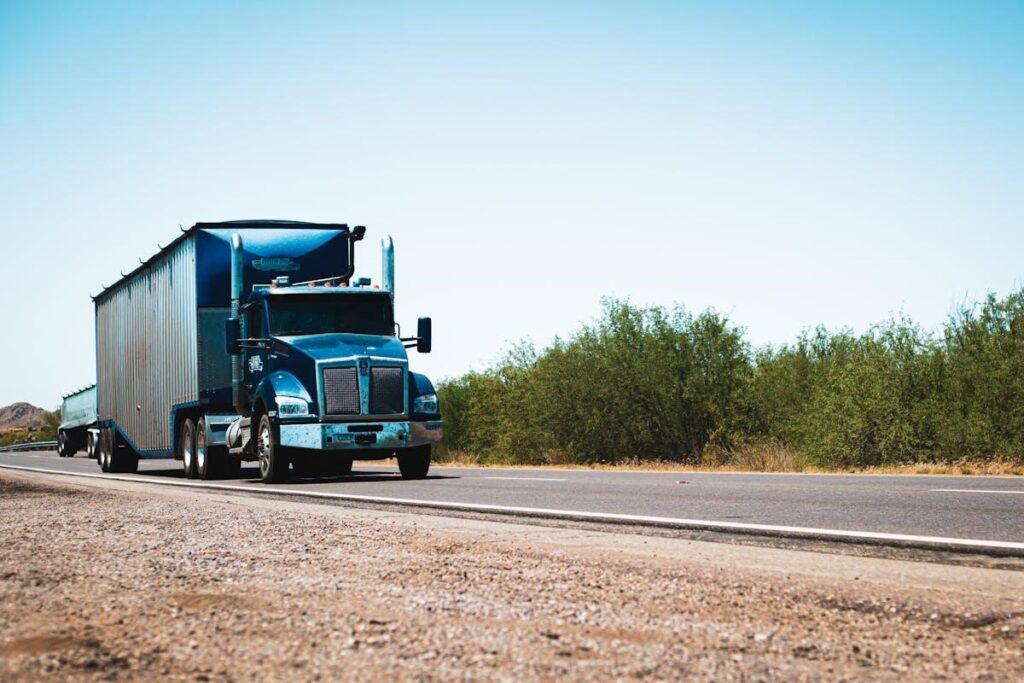
What Determines Liability in Commercial Truck Accidents?
Key Factors That Impact Liability
Commercial truck liability extends far beyond the typical “who hit whom” analysis of passenger car accidents. Federal regulations create specific standards that, when violated, can establish liability even in cases where the truck driver might not appear obviously at fault. Hours of service violations, for instance, can make a trucking company liable for accidents that occur when drivers operate beyond legally mandated rest periods, regardless of other contributing factors.
The trucking company itself faces potential liability under several theories. They’re responsible for proper driver screening, training and supervision—areas where shortcuts often emerge during investigations. If a company hired a driver with a history of violations, failed to conduct required drug testing or pressured drivers to meet unrealistic delivery schedules, they become liable for resulting accidents.
Cargo loading presents another liability layer rarely seen in passenger vehicle cases. Improperly secured cargo can shift during transport, causing the truck to jackknife or roll over. Loading companies, cargo brokers and even shippers can bear responsibility if their actions contributed to an accident. When a truck’s cargo exceeds weight limits or isn’t properly distributed, multiple parties beyond the driver and trucking company may share liability.
How Truck Liability Differs from Passenger Car Cases
Federal oversight fundamentally changes how liability is analyzed in commercial truck cases. While passenger car accidents rely primarily on state traffic laws and basic negligence principles, truck accidents must be evaluated against comprehensive federal regulations covering driver qualifications, vehicle maintenance, cargo securement and operational procedures.
The doctrine of respondeat superior applies more broadly in trucking cases, making companies liable for their employees’ actions during work hours. However, the relationship between drivers and trucking companies varies significantly—some drivers are employees, others independent contractors, and some operate under complex leasing arrangements that can complicate liability determination.
Maintenance and inspection requirements create additional liability pathways unique to commercial trucks. Federal law requires detailed maintenance records, pre-trip inspections and specific repair protocols. When accidents result from mechanical failures that proper maintenance would have prevented, multiple parties—from the trucking company to maintenance contractors—may share responsibility. This contrasts sharply with passenger vehicle cases, where mechanical failure rarely involves third-party liability.
Why Is Documentation Crucial in Truck Accident Claims?
Essential Evidence for Building a Strong Claim
Commercial truck accidents generate a paper trail that doesn’t exist in passenger car cases, and this documentation often determines claim outcomes. Driver logs, both electronic and paper versions, provide minute-by-minute records of the truck’s operation leading up to the accident. These logs can reveal hours of service violations, route deviations or patterns suggesting driver fatigue—all critical to establishing liability.
Vehicle maintenance records carry legal weight because federal regulations require trucking companies to document all repairs, inspections and mechanical issues. When accidents result from brake failures, tire blowouts or other mechanical problems, these records become crucial evidence. Similarly, cargo documentation—including bills of lading, weight tickets, and loading procedures—can establish whether improper loading contributed to the accident.
GPS and electronic data from modern trucks provide objective evidence about speed, braking patterns and driver behavior immediately before impact. Many commercial trucks now carry event data recorders that capture critical seconds of information, offering insights impossible to obtain in passenger vehicle cases where such technology isn’t standard.
How Claims Are Investigated by Insurers
Insurance companies investigating truck accidents deploy specialized teams with expertise in federal trucking regulations and commercial liability. These investigators move quickly to interview drivers, examine vehicles and secure documentation before it can be lost or destroyed. They understand which records trucking companies are required to maintain and how long they must be preserved.
The investigation process differs markedly from typical car accident claims. Adjusters will examine driver qualification files, conduct detailed vehicle inspections and often employ accident reconstruction specialists to analyze complex scenarios involving multiple vehicles, cargo shifts or mechanical failures. When facing the possibility of substantial payouts, insurance companies invest significant resources in finding ways to limit liability.
Expert witnesses play a crucial role that’s rarely seen in passenger car cases. Trucking safety experts, accident reconstructionists and medical professionals specializing in severe trauma injuries often provide testimony about industry standards, accident causation and long-term medical consequences. These investigations can take months and involve multiple experts examining different aspects of the accident and its aftermath.
What Are Common Mistakes and Challenges in Claims?
The most damaging mistake involves giving recorded statements to insurance companies before understanding the full scope of your injuries and the accident’s complexity. Trucking company insurers often contact accident victims within hours, presenting themselves as helpful while seeking statements that can later be used to limit liability. Unlike minor car accidents where immediate statements might not matter, truck accidents often involve delayed-onset injuries and complex liability scenarios that become clear only after thorough investigation.
Accepting quick settlement offers represents another critical error. Insurance companies understand that truck accidents often result in substantial damages, and they’re motivated to resolve claims quickly before the full extent of injuries and lost earning capacity becomes apparent. Settlements that seem reasonable initially often prove inadequate when long-term medical needs and rehabilitation costs are properly calculated.
Failing to preserve crucial evidence can doom otherwise strong claims. Many accident victims don’t realize that trucking companies are only required to maintain certain records for specific periods. Without proper legal intervention, driver logs, GPS data, maintenance records and surveillance footage can be legally destroyed or lost, eliminating key evidence of liability.
Underestimating the complexity of commercial trucking regulations leads many people to approach these claims like typical car accidents. The interplay between federal regulations, multiple insurance policies and various liable parties requires specialized knowledge. Attempting to navigate this process without understanding how commercial trucking liability works often results in missed deadlines, inadequate evidence preservation and settlements far below actual damages. For anyone facing the overwhelming complexity of post-accident procedures, seeking experienced legal help after a truck crash becomes essential for protecting your rights and ensuring proper investigation of all potential liability sources.
Which Factors Influence Commercial Truck Claim Settlements?
Settlement amounts in commercial truck accidents depend heavily on the severity of regulatory violations discovered during investigation. When accidents involve hours of service violations, inadequate driver screening or maintenance failures, insurance companies face stronger liability positions that drive settlement values upward. The presence of federal regulation violations often shifts negotiations significantly because these violations can establish negligence per se, making liability much clearer than in typical passenger vehicle cases.
The extent of available insurance coverage plays a crucial role that’s unique to commercial trucking. While passenger car accidents might be limited by modest policy limits, truck accidents can involve multiple layers of coverage including primary liability, excess coverage and cargo insurance. However, when accidents involve multiple victims or catastrophic injuries, even substantial commercial coverage can be inadequate, requiring careful analysis of all available insurance sources.
Economic damages in truck accidents often dwarf those in passenger car cases due to the severity of injuries typically involved. The massive size and weight differential between trucks and passenger vehicles means that even “minor” truck accidents often result in serious injuries requiring extensive medical treatment and long recovery periods. Lost earning capacity becomes particularly significant when accidents involve permanent disabilities or cognitive injuries affecting victims’ ability to work.
Litigation risk assessment heavily influences settlement negotiations because truck accident cases often involve clear regulatory violations and sympathetic victims facing substantial damages. Insurance companies must weigh the costs and risks of trial against settlement offers, knowing that juries often return large verdicts in cases involving commercial truck negligence. The involvement of federal regulations and industry safety standards provides plaintiffs with powerful tools that don’t exist in typical car accident litigation.
Current legal trends show increasing judicial and regulatory scrutiny of trucking industry safety practices, particularly around electronic logging devices, driver fatigue, and maintenance requirements. Recent high-profile cases involving substantial verdicts have made insurance companies more willing to offer meaningful settlements in clear liability cases. Additionally, growing public awareness of trucking safety issues and the industry’s role in highway fatalities has created a legal environment where victims of trucking negligence often receive more favorable treatment in settlement negotiations and at trial.
The landscape of commercial trucking continues evolving rapidly, with new safety technologies, changing regulations, and increased enforcement creating additional opportunities for establishing liability while also raising the standards expected of trucking companies and drivers.
