This article may contain affiliate links.
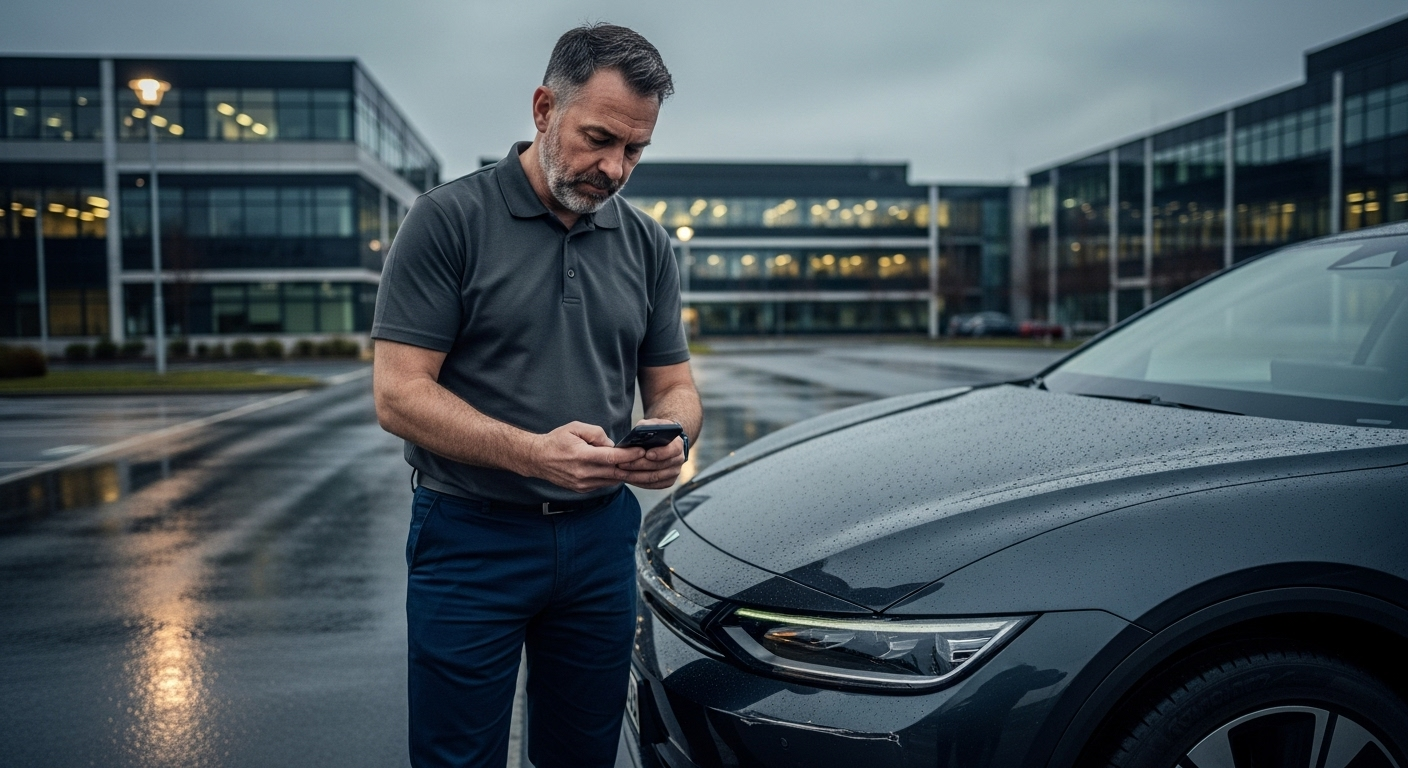
An employee, driving a company EV, gets into a fender bender in a parking lot. The usual steps come to mind—exchange insurance and take photos. But then, a new set of questions arises. Is the battery okay? Are there special procedures for an electric vehicle? What unique data did the car record? As company fleets increasingly electrify, these questions are no longer hypothetical but critical to modern driver responsibility. The rapid adoption of electric vehicles means that understanding these nuances is essential for workplace safety and asset management.
This article provides a clear, step-by-step protocol for drivers and fleet managers after a minor collision in a company-owned electric vehicle. It moves beyond the universal accident checklist to address EVs’ unique technological and safety considerations, ensuring every step is handled correctly.
Immediate Safety Protocol: Your First 15 Minutes at the Scene
The actions taken in the immediate aftermath of a collision are critical for safety and proper reporting. This involves blending standard accident procedures with essential, vehicle-specific checks to mitigate unique risks for an EV.

Prioritize Personal Safety and Assess the Scene
Before addressing the vehicle, the priority is always human safety. Check yourself and any passengers for injuries. If anyone is hurt, call emergency services immediately. If the cars are in a hazardous position and can be moved safely, relocate them to the side of the road or a nearby safe area. It is important to remember that even low-speed impacts can be jarring and cause unexpected injuries. Furthermore, simple maneuvers can become high-risk situations when focus is lost; according to the NHTSA, distracted driving remains a significant factor in traffic crashes, highlighting the need for constant awareness.
The Critical EV Check: Assessing Battery and System Integrity
Even a minor impact can compromise an EV’s high-voltage battery system, a component that requires careful handling. News reports have highlighted how damaged EV batteries can lead to dangers like thermal runaway or fire, making a post-collision check essential. Immediately after ensuring personal safety, the driver must assess the EV’s condition.
First, check the dashboard for any battery-related warning lights, error messages or system alerts that may have appeared after the impact. Next, conduct a quick but careful visual inspection of the vehicle’s exterior, particularly the underside, for any signs of battery casing damage, fluid leaks (EV coolant is often brightly colored), smoke or unusual sounds like audible arcing or sparking.
Crucial Warning: A driver should never touch any exposed, high-voltage cables. These are almost always insulated with bright orange sheathing to identify them as a hazard clearly. If you see damaged orange cables, keep a safe distance from the vehicle and immediately inform emergency responders and your fleet manager.
Documenting the Scene with an EV-Focus
Thorough documentation is the foundation of any insurance claim or accident report. For an EV, this process requires additional focus on its unique components. Capturing the right information provides a clear, factual record for the fleet manager, insurance adjusters and repair technicians.
- Take Wide-Angle Photos: Capture the entire scene from several vantage points. Include all vehicles’ positions, nearby traffic signs, intersections and general road conditions. This context is vital for accident reconstruction.
- Document All Damage: Photograph the damage on both vehicles from multiple angles, getting close-up and medium shots. For the EV, pay special attention to areas near the battery pack (typically under the passenger cabin) and the charge port, as impacts in these areas can affect critical systems.
- Photograph the Dashboard: This is a crucial EV-specific step. Take a clear, readable picture of the EV’s dashboard immediately after the collision. This photo should capture any active warning lights, error messages, the odometer reading, and the battery’s state of charge. This image serves as key evidence of the vehicle’s electronic status at the moment of the incident.
- Record the Other Party’s Information: Use your phone to take pictures of the other driver’s license, vehicle registration and insurance card. Also, write down their name, phone number and license plate number.
- Gather Witness Statements: If there are witnesses, request their contact information and a brief statement of what they saw or heard. An independent account can be invaluable if the facts of the accident are disputed.
Beyond the Bumper: Reporting, Data Logging, and Determining Fault
Once the scene is secured and documented, the focus shifts to official reporting and understanding the data generated by the incident. An EV collision involves more than just bent metal; it creates a digital footprint that provides an unbiased account of what happened.
Notifying Your Fleet Manager: The EV-Specific Report
When reporting a collision to a fleet manager, a driver of an EV must provide more detailed information than a driver of a conventional vehicle. In addition to the standard facts of the accident—who, what, where and when—the report must include the status of the EV’s critical systems. This includes relaying dashboard warnings, the battery’s state of charge post-impact, and any visual or audible signs of battery system distress. This detailed information is crucial for the fleet manager to make an immediate and informed decision on whether the vehicle is safe to continue its route or requires towing to a specialized repair facility.
The Digital Witness: How EVs Log Accident Data
Modern electric vehicles have advanced sensors and telematics systems that function as a digital witness. These smart driving systems continuously record operational data. In the event of a collision, the car’s event data recorder (EDR) captures a snapshot of critical information from the moments before, during and after the impact. This data typically includes:
- Vehicle speed moments before impact.
- Brake and accelerator pedal application.
- Steering wheel angle.
- Status of safety systems, such as airbag deployment and seatbelt use.
- Battery performance data and any recorded system faults.
This telematics data provides an objective, unbiased account of the event, which is invaluable for accident reconstruction, determining liability and processing insurance claims. As EVs become more common on our roads, this data becomes a standard component of accident investigations.
Filing the Report and Navigating the Insurance Claim
After notifying the fleet manager, the next steps involve filing an official police report and initiating the insurance claim process. Accurately determining who is at fault is the cornerstone of any claim, but this can be challenging. For instance, determining who is at fault in a sideswipe accidentcan be particularly contentious, especially when both drivers offer different accounts of the event. It’s helpful to consult a specialized resource on who is at fault in a sideswipe accident for a detailed breakdown of how evidence is used to establish liability in these situations.
The Road to Recovery: EV-Specific Repair and Fleet Management
The journey from collision to getting a company EV back on the road fundamentally differs from that of a gasoline-powered vehicle. Understanding these differences is essential for drivers and fleet managers to ensure safety, control costs, and minimize operational downtime.
Why Your EV Needs a Certified Repair Shop
An electric vehicle cannot be repaired at a standard auto body shop. EVs require specialized training and certification for technicians to safely handle high-voltage battery systems and diagnose complex electronic issues. Attempting repairs at an uncertified facility is not only dangerous, but can also void the vehicle’s warranty. An impact can damage more than just the battery; other unique electronic and safety components require expert inspection. Entrusting an EV to a certified shop ensures that all repairs meet manufacturer standards and the vehicle is safe to return to service.
Navigating the Repair Process: A Comparison
The post-collision process for an electric vehicle differs significantly from that of a conventional fleet vehicle. These differences impact everything from initial towing to the final safety inspection, often affecting repair timelines and logistics. For fleet managers, anticipating these distinctions is key to managing expectations and operational continuity.
| Post-Collision Step | Conventional Gas Vehicle | Electric Vehicle (EV) |
| Initial Towing | Can go to most local tow yards or body shops. | Must be towed to an EV-certified repair facility. Special flatbed towing may be required to avoid damaging the electric motors, and drivers should be familiar with what this process entails. |
| Damage Assessment | Focus on mechanical and body damage (engine, transmission, frame). | Includes full battery pack and high-voltage system diagnostics in addition to body damage. |
| Technician Required | Standard ASE-certified mechanic. | EV-certified technician with high-voltage systems training. |
| Repair Time & Parts | Parts are generally widespread and readily available. | Can experience delays due to specialized parts (e.g., battery modules, control units) and fewer certified technicians. |
| Final Safety Check | Mechanical and road safety test. | Includes full system software diagnostics and battery health verification. |
Managing Downtime and Keeping the Fleet Rolling
For fleet managers, a downed vehicle means lost productivity. EV repairs can sometimes take longer than conventional vehicles due to the global supply chain for specialized parts and the limited number of certified technicians. Therefore, it is essential to have a robust protocol in place to manage this downtime. This plan should include pre-arranged agreements with rental companies for replacement vehicles, preferably electric ones, to maintain fleet emission standards. Clear communication channels between the repair shop, the insurer, and the fleet management team are critical to track progress and adjust operational schedules accordingly, minimizing overall disruption.
Driving Forward: A New Protocol for the Electric Fleet Era
A minor collision is no longer a simple matter of swapping insurance cards. For drivers of company EVs, a new level of awareness is needed, focused on high-voltage safety, precise data reporting and specialized repairs. It requires a mindset change from viewing a vehicle as purely mechanical to understanding it as a sophisticated piece of technology on wheels. Fleet managers must build a robust protocol that accounts for the unique technology in every vehicle, from driver training on EV-specific accident procedures to establishing relationships with certified repair networks.
The transition to electric fleets brings immense benefits in terms of sustainability and operational efficiency and introduces new responsibilities. By understanding these EV-specific steps, drivers and managers can effectively navigate post-collision challenges, ensure personal safety, protect company assets and confidently embrace the future of sustainable transportation.