
The EV market is poised for a complex year in 2026, with significant regulatory shifts creating a mix of challenges and opportunities.
Here’s an overview of what to expect.
Conflicting Signals in the U.S. Market
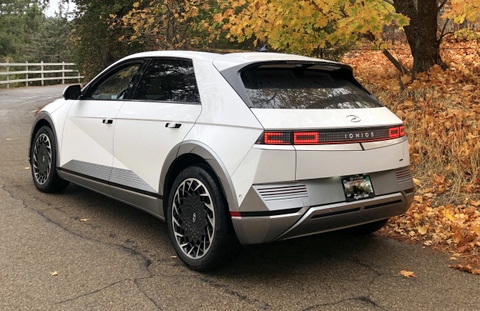
The U.S. market is facing a period of recalibration. The end of federal tax credits in September 2025 has already led to a noticeable drop in EV sales. For example, Hyundai reported in November that sales of its Ioniq 5 were down 59% from the same month in 2024. This, coupled with a more skeptical political climate toward EV subsidies, is creating a challenging environment for automakers. (Ed. Note: Update, the February 2026 sales report just came in and the Ioniq 5 has a great month, up 33% over February 2025 sales numbers.]
A key indicator of this is Ford’s recent strategic pivot away from some of its larger, less profitable electric trucks and vans and toward developing more hybrid options and shifting to a completely new EV platform that will initially field a smaller pickup. Analysts see these moves as signals of a tough year ahead.
This sentiment is echoed in global product launch decisions. A tangible example is Kia’s decision to launch its new EV5 electric SUV in Canada but not in the United States. This illustrates how the complex political, tariff and incentive landscape can deter manufacturers from bringing otherwise popular models to the U.S. market.
However, this doesn’t tell the whole story. The market is not grinding to a halt. New EV models are being introduced. New technology like solid state batteries are coming to the market. Individual states are providing incentives for EVs, and one state can set its own, stricter than federal, environmental rules, which has created a major point of conflict.
State-Level Leadership
California has long held the authority to set its own ambitious emissions standards. It continues to lead the charge, mandating that all new passenger cars sold in the state must be zero-emission by 2035—the crux of the Advanced Clean Cars II regulations. Of course, those are being challenged by the current federal administration.
Crucially, 12 other states and Washington, D.C., including major markets like New York, Massachusetts and Washington (almost 40% of the light-duty market), have chosen to follow suit. If you live in one of those states, you are part of a large bloc of the country that is moving faster than the federal baseline.
The Regulatory Battle
This state-level leadership is under pressure. There are ongoing legal and political challenges aiming to revoke California’s authority. This creates significant regulatory uncertainty for automakers, who are caught between planning for a future of strict regulations in one part of the country and a less demanding environment in another.
Infrastructure Investment
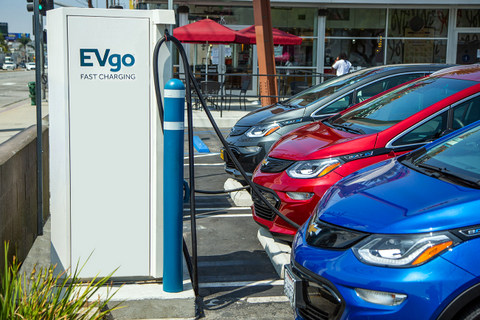
Despite the political battles, the federal government is actively funding the practical backbone of the EV transition. Through the National Electric Vehicle Infrastructure (NEVI) program, billions of federal dollars are flowing to states to build out charging networks.
For example, Oregon recently secured over $40 million to construct charging stations along major highway corridors. Even as electric vehicle sales tumbled last year, the number of available public chargers increased significantly, helping to alieve one of the biggest concerns of potential EV adopters.
Targeted Federal Action
The Environmental Protection Agency (EPA) just paused its push for big truck emissions reductions. A major upcoming change was to be the finalization of the EPA’s Phase 3 greenhouse gas standards for heavy-duty vehicles. These rules, which cover models released between 2028 and 2032, were repealed last month. They would have required manufacturers of large trucks and buses to dramatically increase their zero-emission vehicle offerings, which the companies said the market was not demanding.
As with the light-duty market, individual states like California, Washington and New York are continuing their drive to increase zero emission transportation, especially in the busy ports of the country.
Powerful Undercurrents of Change
While the U.S. consumer EV market is slowing down, largely due to the loss of broad subsidies, at a deeper level, the picture is more nuanced. Automakers continue to introduce new electric and electrified models, including several more affordable ones. Those companies are often picking up where the federal government incentives left off and offering subsidies for slower selling models. A large group of states is pushing for rapid electrification and the federal government continues foundational investments in charging infrastructure.
This complex interplay of federal, state and legal forces will define the outcomes for the EV market in 2026.
