
This article may contain affiliate links.
Buying a used vehicle once meant searching within a practical driving radius. A shopper compared local dealer ads, checked a few private-party listings, drove to see the car and made the best decision available within that local supply.
Online retail changed that. A buyer in Ohio can compare a Toyota Prius in Arizona, a used Chevy Bolt in California and a certified Honda Accord in Georgia before lunch. That broader market can expose better prices, cleaner histories and trim combinations that never show up nearby. It can also hide costs that do not appear in the advertised price.
The delivered cost now matters more than the listed cost. For used-vehicle shoppers, especially those considering hybrids, EVs and high-efficiency models with uneven regional supply, online buying rewards people who calculate the whole transaction before they fall in love with a search result.
National Inventory Makes Comparison Shopping More Powerful
Online listings give shoppers access to a wider pool of vehicles than a local search can. That matters in a used market where supply still varies by price band, brand, age and region. A clean, low-mileage hybrid may be common in one metro and scarce in another. The same is true for used EVs, diesel trucks, plug-in hybrids and discontinued models with loyal followings.
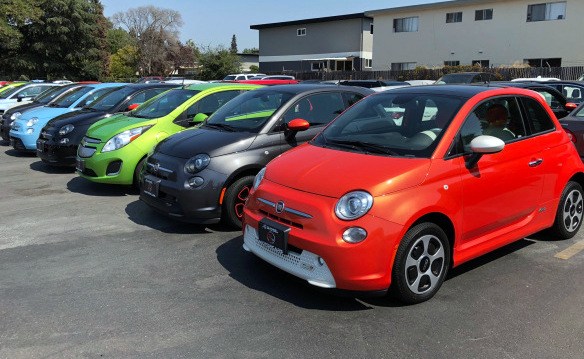
Cox Automotive reported that U.S. dealers had 2.13 million used vehicles in inventory in February 2026, equal to 42 days of supply. The average listing price was $25,287. Lower-priced vehicles were harder to find: Used cars below $15,000 had only 31 days of supply, which was nine days below the overall market. Scarcity at the affordable end pushes shoppers to widen the search, especially when the local market is thin.
That wider search can pay off. A buyer looking for a specific battery size, driver-assist package or low-mileage commuter car may find better options by comparing vehicles across several states. The same logic applies to families shopping for a used minivan, commuters pricing compact hybrids or fleet buyers replacing a small number of vehicles outside a normal procurement cycle.
The tradeoff is that online inventory creates more numbers to verify. A lower advertised price may reflect regional demand, but it may also exclude mandatory dealer fees, taxes, title work, shipping, inspection costs or travel. A $900 savings on the listing can disappear once the buyer calculates what it takes to get the car home.
Digital Tools Have Improved, But the Sale Still Has Physical Risk
Shoppers are doing more of the car-buying process online, but most still do not complete the whole purchase digitally. Cox Automotive’s 2025 Car Buyer Journey Study found that 63% of buyers completed some portion of the purchase online and offline, while 7% bought entirely online. The same study reported that mostly digital buyers, defined as those who completed more than half the process online, showed the highest satisfaction.
That satisfaction makes sense. Online tools can remove wasted dealership time, help buyers compare financing offers and make it easier to track price changes. A shopper can confirm availability, request a video walkaround, review documents and start financing before visiting a store or committing to delivery.
Still, a used vehicle is not a laptop. Tires, brake wear, paint condition, battery health, accident repairs, smells, noises and charging behavior do not always show up cleanly in a listing. Photos are selective. Inspection reports can be incomplete. A clean vehicle history report helps, but it does not prove the car is mechanically sound.
The Federal Trade Commission advises online used-car shoppers to get a vehicle history report and pay for an independent mechanic inspection, even when a seller says the vehicle has already been inspected or certified. That advice is easy to skip when a listing looks perfect and the seller says another buyer is waiting. Skipping it turns distance into risk.
The better approach is to treat the online process as a filter, not a substitute for due diligence. A listing can help identify the right candidate. The purchase decision still needs documents, inspection, title review, recall checks and a clear plan for delivery.
The Delivered Price Is the Number That Matters
Online car buying changes the math because the transaction no longer ends at the seller’s lot. A local buyer can drive the car home after the paperwork clears. A remote buyer has to choose between travel and transport, and both options carry costs.
Flying to inspect a vehicle can make sense for a rare model or a high-dollar purchase. The buyer can drive the car, inspect the seller and walk away if something feels wrong. That trip, though, includes airfare, hotel, meals, fuel, time away from work and the wear of a long return drive on a newly purchased vehicle.
Shipping avoids that trip, but adds another line item to the deal. Sherpa Auto Transport’s March 2026 report on current vehicle shipping cost data is based on more than 258,000 shipments and puts the average car shipment at $1,193, with SUVs averaging $1,271 and pickups averaging $1,472. Open transport averaged $1,205, while enclosed transport averaged $1,804.
Those averages do not mean every shipment will land near $1,200. Route density, vehicle size, pickup flexibility, delivery location, fuel prices, weather and whether the car runs can move the quote. A California-to-Texas route may price differently from a rural pickup in the Mountain West. Enclosed transport can make sense for a collector car or pristine luxury model, but it changes the economics of an ordinary used commuter.
This is where many online purchases go sideways. Buyers compare the advertised price against local listings, then add transport later. The cleaner method is to price the car as delivered from the start. If the remote vehicle is $1,500 cheaper than a local alternative but shipping is $1,250 and the inspection costs $200, the deal is not really cheaper. It may still be the better car. It is just not the lower-cost purchase.

Paperwork Can Change the Deal After the Price Looks Set
Remote buying also separates the shopper from the paperwork environment. In person, a buyer can sit at the desk, read the documents and push back before signing. Online, the same documents may arrive through a portal with less conversation and more pressure to move quickly.
The FTC says dealers must provide a Buyers Guide for every used car they offer for sale, including online sales. That guide tells the buyer whether the vehicle is sold with a warranty or “as is,” what percentage of covered repair costs the dealer will pay and why oral promises are hard to enforce. Those details matter more when the vehicle is hundreds or thousands of miles away.
Fees deserve the same attention. Some charges are legitimate, such as title, registration and state taxes. Others vary by dealer or may be negotiable. A buyer should ask for the full out-the-door price in writing before paying a deposit, then compare that number against the listing, the purchase agreement and any financing documents.
Deposits need their own check. A remote buyer should know whether a deposit is refundable, how long the seller will hold the vehicle, what happens if inspection results change the buyer’s mind and whether delivery delays create a right to cancel. The FTC has warned that some online sellers have failed to deliver vehicles on time or give buyers proper cancellation options when delays occur.
None of this means remote buying is a bad idea. It means the paperwork has to be treated as part of the product. A good deal on a used car can become an expensive mistake if the buyer discovers the warranty is weaker than expected, the delivery date is vague, or the “final” price was missing required charges.
Online Buyers Need a Verification Sequence
The strongest online used-car purchases follow a sequence. Price comes first, but verification decides whether the price is real.
Start with the VIN. The VIN should match the listing, photos, title documents, history report and any inspection report. A mismatch is a reason to pause. Once the VIN is confirmed, the buyer can pull a vehicle history report, check title brands, review mileage records and look for accident or flood indicators.
Next comes recall research. NHTSA’s recall lookup tool lets shoppers search by VIN or license plate to see whether a vehicle has unrepaired safety recalls from participating manufacturers. The tool will not show every possible issue, and NHTSA notes limits for older recalls, recently announced recalls, some small manufacturers and non-safety campaigns. It is still a basic check before money changes hands.
Then the buyer needs an inspection that does not come from the seller. A remote inspection should include photos or video of tires, brake condition, underbody corrosion, body panels, warning lights, fluid leaks, charging equipment for EVs and plug-in hybrids and any modifications. For EVs, battery condition and charging behavior deserve more attention than a generic walkaround can provide.
Only after those checks should the buyer compare delivery options. If shipping is the plan, the quote should match the vehicle type, running condition, pickup and drop-off locations and timing flexibility. If travel is the plan, the buyer should price the trip honestly and decide in advance what defect would justify walking away.
A Wider Market Rewards Colder Math
Online car buying gives used-vehicle shoppers a real advantage: more inventory, more pricing visibility and more chances to find the right vehicle instead of settling for the closest one. That advantage is strongest when buyers keep the final number in view.
The listed price is only the first number. The full calculation includes inspection, financing, taxes, registration, warranty terms, recall status, travel and transport. A remote car can be the best purchase in the market, but only when it survives that math.
For shoppers willing to slow down before the deposit, the broader market is useful. It turns geography into a variable instead of a boundary. The mistake is treating distance as invisible.
