
Gas-Powered Cars Finally Due To End Their Long, Polluting Run
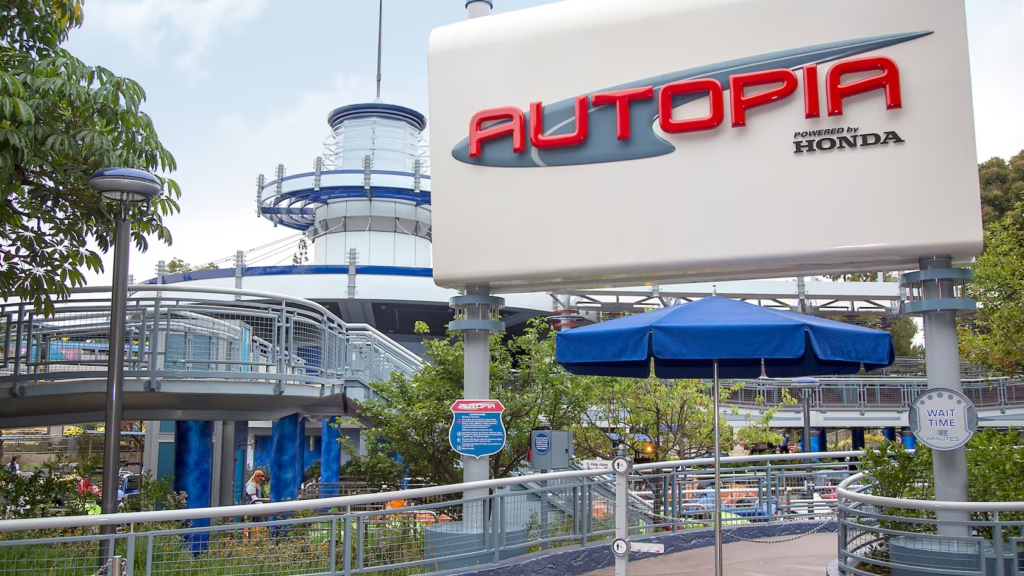
Clean Fleet Report ran the story below about The Walt Disney Company’s plan to meet environmental goals by the year 2030, and my personal experience at the park. One element of which was converting the Honda-branded go-cart-type gasoline engines used in the Autopia ride to electric propulsion. We reported the conversion was to take place in 2026 but that date, through a settlement with the California Air Resources Board (CARB) has been extended into 2027.
The settlement included Disney paying a $56,250 penalty when the cars were found to be out-of-compliance with California’s automotive emissions regulations. The settlement also stipulated the revamping the Autopia vehicles, which they are expected to become all-electric cars. Disney also paid $28,125 into a fund to install air quality sensors, air purifiers and outdoor air quality sensors in 10 Southern California schools. Meanwhile, the cars’ exhaust continue to insult Disney employees and visitors.
Disney is currently testing an all-electric Autopia ride with no opening date announced. Of course, when we wrote the original article Disney and Honda were both gung-ho electric supporters. Since then, sponsor Honda has canceled its planned future EV lineup and is ending sales of its existing EV, the Prologue. However, based on the settlement, the current, polluting version of Autopia needs to be shut down by February, 1, 2027.
Disneyland: The Happiest Place on Earth Going Electric–Autopia, That is!
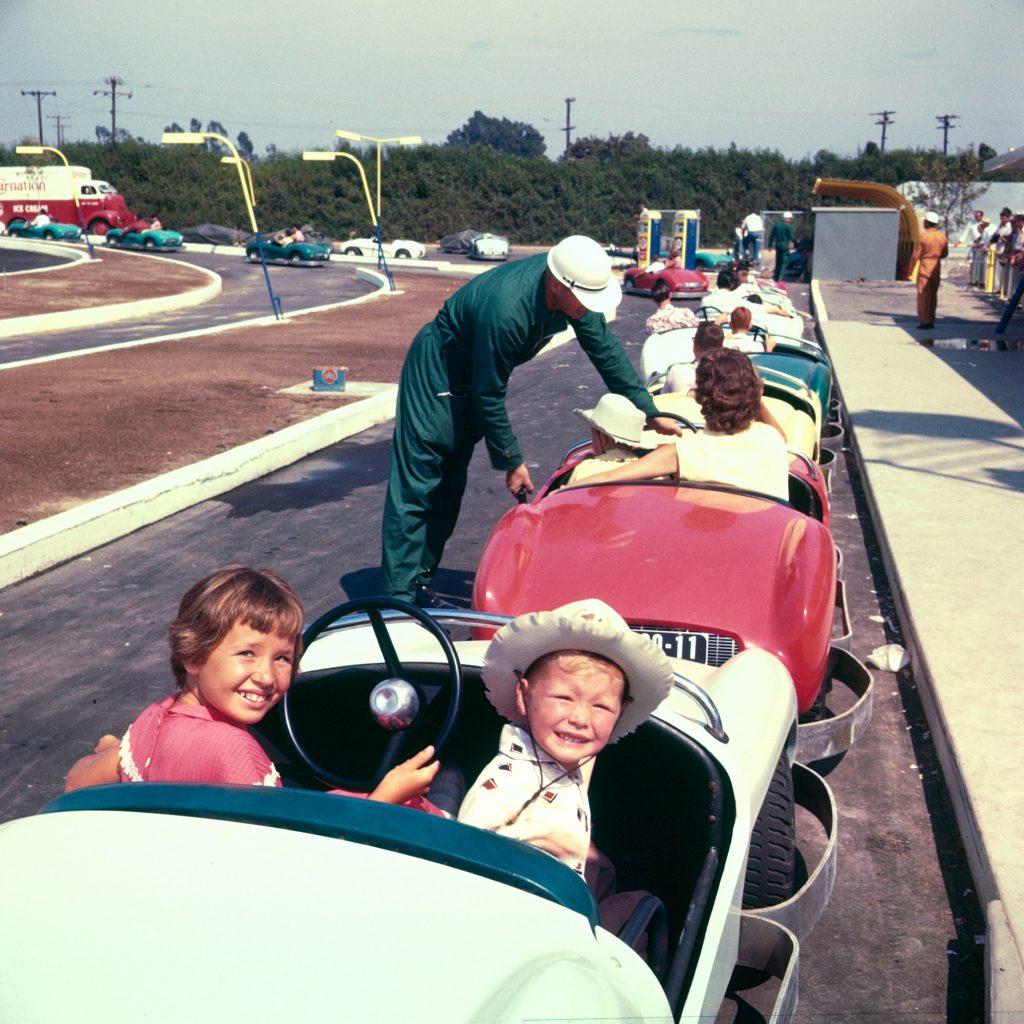
One of Disneyland’s original attractions, Autopia, will see the ride’s cars go from using a 270cc, 8.5 horsepower Honda gasoline engine, with a top speed of 6.5 mph, to quiet and clean all-electric cars sometime in 2026, confirmed in press reports by Jessica Good, Disneyland spokesperson. [Ed. note: date moved with CARB settlement]
Disneyland opened on Sunday, July 17, 1955. My family (mom, dad, older sister and I) went on the second day it was open, July 18, and I have been back too many times to count. I’ve now been driving electric cars for years, but the cars at Autopia still sputter with their little gas engines, filling the surrounding air with noxious emissions. Disney now says it is going to catch up with the outside world in the not-too-distant-future.
Autopia is the last of the Tomorrowland original rides still operating since the park opened some 70 years ago. Like millions of little kids, Autopia was the first place I “drove” a car. The gas pedal, that also acts as the brake when lifting off, and a sort-of functioning steering wheel gave a sensation of doing what mom and dad did, even though the cars ran on a guide that keeps the driver from going off the track. It didn’t matter – it was a blast!
The Walt Disney Company is four years into its 2030 Environmental Goals plan that focuses on water, waste, materials, sustainable design, and the most interesting to Clean Fleet Report, greenhouse gas emissions which directly affects one of the oldest rides at the park.
This wouldn’t set a precedence as the Autopia cars at Hong Kong Disneyland were all electric since 2006, a year after the park opened for business, through when the ride closed in 2016 to make way for a new attraction, Marvel’s Avengers Quinjet Experience.
Expect Honda to play an important role in the Autopia cars going green by using their considerable experience in building battery electric, hybrid, plug-in hybrid, and hydrogen fuel cell electric vehicles.
The cars themselves were completely new in 2000 with three designs of a Volkswagen Beetle convertible, a sports car and an off-roader. When Honda became the ride’s sponsor in 2016 the cars were repainted in Honda colors used on their street cars, and given new tires, new engines, and even a Honda badge on the hood.
Going Electric
Going electric will mean no more breathing gas fumes, which when combined with Anaheim’s 90+ degree summer days can make going on the Autopia ride less than ideal.
The Autopia cars aren’t the only transportation in the park being converted to zero or low-emission vehicles. 14-percent of the resort’s vehicles have already been converted to zero-emission, which join these modes that are treading lighter on the environment.
- The Parking Lot Trams run on compressed natural gas (CNG), replacing 56,000 gallons of diesel each year. The tram for most Disneyland guests is the first ride they will take, and is an essential part of making a visit more convenient.
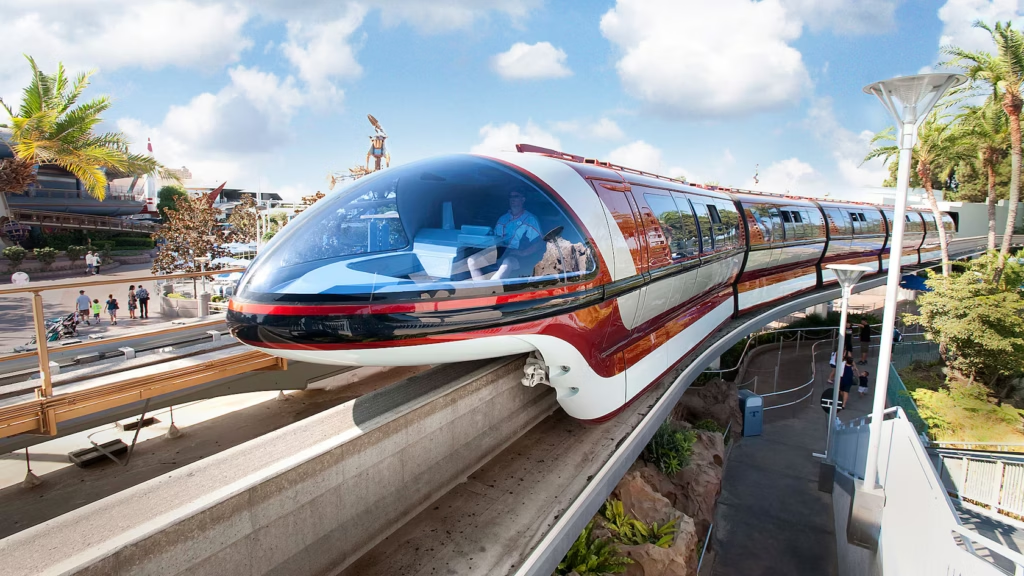
- The Disneyland Monorail, circling the park on a 2.5 mile loop, has been zero-emissions since it opened in 1959. The design is both retro and futuristic, retaining the same look as when it was first built.
- The Disneyland Railroad and Mark Twain Riverboat were converted in 2009 to biodiesel, made from recycled cooking oil. The reuse of plant material saves about 200,000 gallons of petroleum-based diesel every year.
- The Main Street Vehicles, Sailing Ship Columbia, and the Jungle Cruise boats are powered by compressed natural gas, and the Radiator Springs Racers and the Luigi’s Rollick’n Roadsters are powered by 1,400 solar panels.
• The Finding Nemo Submarine Voyage went through a major refurbishment in 2007. When the ride reopened in 2008 the submarines were now powered by electricity, replacing diesel engines.
The next time you are at Disneyland, take a few minutes to appreciate the usually unnoticed and unrecognized part of the park operation. The vehicles are an integral element of an enjoyable visit, and as they become lighter on the environment they will help everyone breathe easier.
Make sure to opt-in to the Clean Fleet Report newsletter (top right of page) to be notified of all new stories and vehicle reviews.
Story by John Faulkner. Photos courtesy of Disneyland.
