
Moving from Solution to Execution
Chevrolet Equinox EV photo by John Faulkner
Fleet electrification has emerged in recent years as a lucrative long-term strategy for business leaders looking to future-proof assets and operations. How these companies deploy electric vehicles (EVs) at scale in the coming years will define a new era of electrification. As this transition takes place, leaders remain focused on cost control, improving the operational performance of EV fleets and leveraging data for decision-making.
To better understand and illustrate this shift and identify pain points that still need to be overcome, Element Fleet Management, Arval and Sumitomo Mitsui Auto Service (SMAS) gathered input from more than 10,000 fleet leaders around the world to publish the 2026 Fleet and Mobility Barometer Report.
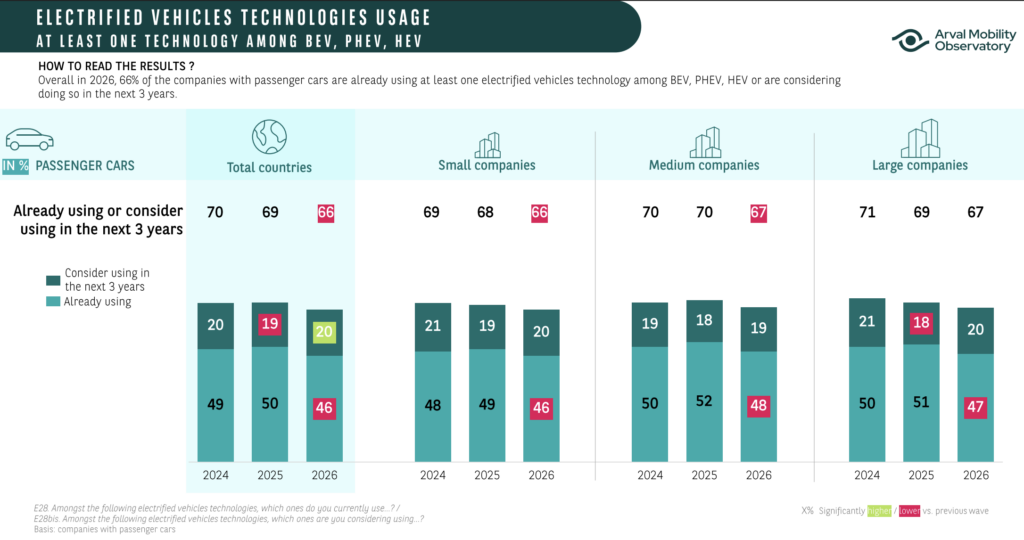
One trend is abundantly clear: demand for EV fleets remains strong. 66% of companies reported that they already use EVs or plan to deploy them within three years.
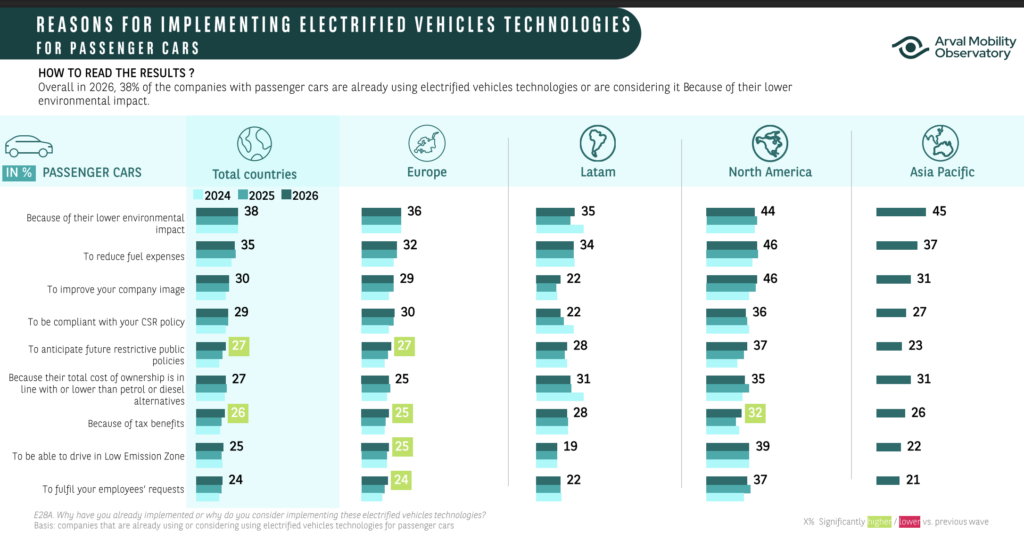
This sentiment, of course, varies based on location, but a few key factors are driving this demand. 38% of leaders cited the lower environmental impact of EVs while 35% are motivated by reduced fuel costs. Many are also keeping an eye on the policy and regulatory environment, with 27% of leaders having reported a desire to adopt EVs to comply with future, anticipated policies.
Solving costs and operational control
Cost is still king when it comes to fleet management decision-making. Most leaders (31%) ranked total cost of ownership (TCO) as their top fleet challenge. Many of these same leaders are seeking proactive solutions to manage costs and optimize their fleets, including:
- Predictive maintenance and automated vehicle monitoring technologies
- Real-time visibility data on vehicles, routes and drivers
- Centralized platforms capable of integrating cost, sustainability and mobility data
Progress is steadily being made on all these fronts to support the goals of fleet managers. Vehicles that are deployed with advanced telemetry systems are emerging as strategic assets, particularly for leaders looking to manage costs and improve efficiency. The data collected through telematics is the baseline for making data-driven decisions and understanding a fleet’s performance. As EV fleets scale up, access to telemetry becomes even more important. It can provide insights on real-world operations, battery usage, energy consumption and other key factors while also evaluating the difference in operational performance between EV and ICE vehicles.
Maintenance, in particular, is a major contributor to TCO across fleets. Telematics should be considered a foundational element of proactive fleet maintenance. By tapping into connected vehicle data on engine health, battery health, odometer readings and more, service can be planned with actual usage information in mind. This helps fleets improve performance and reduce unplanned downtime. Telematics help to identify maintenance needs and potential issues before they occur, avoiding disruptions and unexpected repair costs.
Residual values also remain one of the largest factors contributing to TCO, but predicting them for EVs can be challenging due to market uncertainty, technology shifts and regulatory environment fluctuations. Fleet managers should seek out data-driven tools and advice that provide actionable guidance by breaking a fleet into segments and taking whole-life cost assumptions and market shifts into account.
Clearing other speed bumps
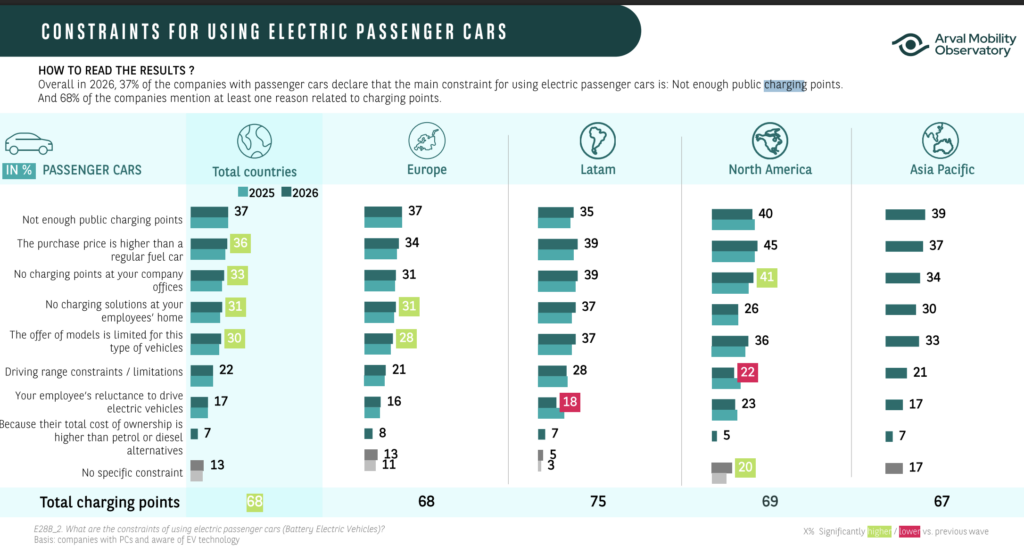
Leaders surveyed also pointed to a few practical barriers to scaling EV adoption. Chief among these is lack of consistent access to charging points. This was cited as a challenge by 68% of fleet managers working with passenger vehicles and 67% of those working with light commercial vehicles. These same leaders are considering two near-term solutions to address charging access challenges: charging policies and on-site charging.
Nearly all leaders surveyed (99%) have implemented or plan to implement a charging policy for drivers. These policies must match the real-world charging needs and behaviors of a fleet. In most cases, this means adequate support for a combination of home, public and workplace/depot charging. Drivers must also be educated on dwell times, best practices for using public charging infrastructure, and reimbursement processes as part of the policy adoption process. Any fleet charging policy should undergo testing and pilots before broader rollout to identify potential challenges and ensure driver expectations are met. This is a critical component of the change management required for a transition to EVs.

Additionally, more than half of fleet leaders are deploying or preparing on-site charging. This infrastructure must be designed with route, dwell-time and charging data in mind to help move from charging policies alone to on-site charging strategies that make operational sense. Data and telematics evolve from a nice-to-have tool to a practical necessity when pursuing an on-site charging project. In particular, platforms that can provide simulation analysis will be valuable to support decision-making.
Even amid turbulent global markets, demand for electrifying fleets remains strong among corporate leaders and EV technology continues to mature to meet this moment. As the shift from planning to execution gets underway in earnest, turning to data-driven tools and solutions to inform vehicle and charging strategies will pave a clear lane for long-term value and cost efficiency.
