
This article may contain affiliate links.
Open the third drawer of almost any working tech’s toolbox and you’ll find the same scene: a pile of screwdrivers that used to be sorted. Magnetic organization is the fix, and the best place to start is usually a large magnetic screwdriver organizer mat, because oversized drivers are what destroy a layout first. They roll, they shove everything else sideways, and within a week the drawer is back to being a bin.
Fleet shops feel this worse than anyone. When three or four techs share a bay and the same rolling cab, a drawer that only makes sense to the person who set it up is a drawer nobody puts tools back into.
Why Magnets Beat Foam and Cut Trays
I spent years cutting custom foam. It looks incredible for about four months.
Then you buy a new driver, or you snap a tip and the replacement has a fatter handle, and suddenly you’re carving a shape into a piece of foam that no longer matches anything around it. Foam locks you into whatever tools you owned the day you cut it. Same problem with molded plastic trays, except you can’t even modify those.
Magnetic holders solve a different problem than most people expect. Retention is part of it. The bigger win is that the tool goes back to the exact same spot without anyone aiming carefully, because the magnet does the aiming. Techs in a hurry still put things away correctly, which is the whole game in a shared shop.
There’s also the drawer-slam factor. Anyone who has opened a drawer on a service truck after a long drive knows what unsecured tools sound like.
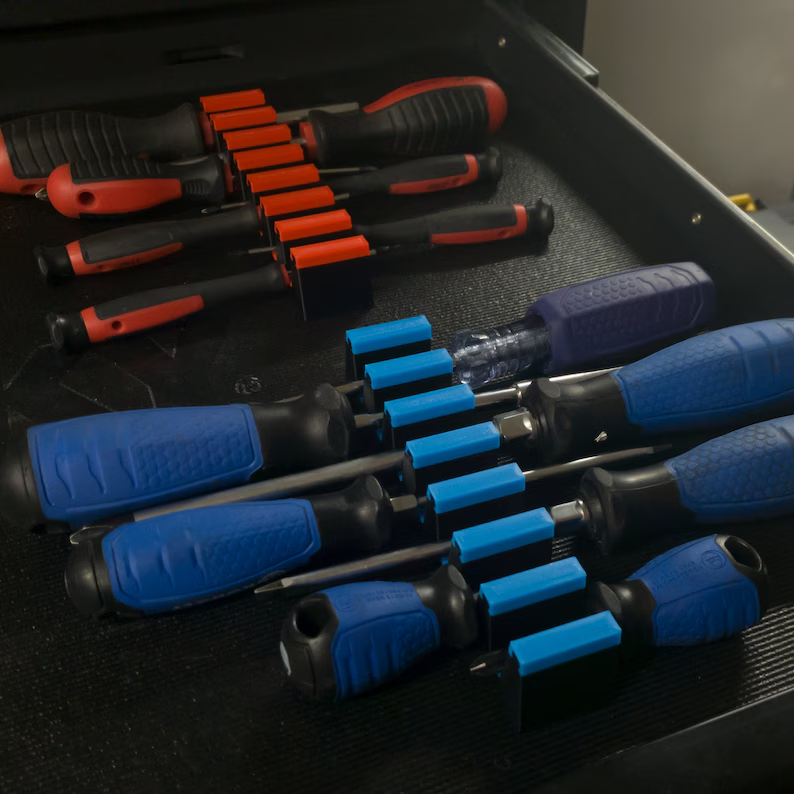
What a Large Magnetic Screwdriver Organizer Mat Actually Solves
Standard organizers are built around a mythical average screwdriver. Real boxes are full of exceptions: the 12-inch flathead you use as a persuader, the long-shank Phillips for reaching past an intake, the heavy square-shank driver you’ve had since school.
Those tools either don’t fit the holders you own or they fit so loosely that they walk out on the first hard close. So they end up loose in the bottom of a deep drawer, which is how you get the pile.
A purpose-sized holder fixes it. The large magnetic screwdriver organizer mat attachments from Automotive Accessories NA are one example of the modular approach I’ve come around to: each attachment holds a single full-size driver, clips into a base mat, and pulls out when you want to move it. Six per pack, printed in PETG, with a neodymium magnet seated in a slot rather than glued to a flat surface. That last detail matters more than the spec sheet makes it sound, since surface-mounted magnets are the first thing to pop off when a driver gets yanked out at an angle.
The point isn’t the specific product. The point is that modular beats fixed, and sized-for-the-tool beats one-size-fits-all.
Planning the Drawer Before You Buy Anything
Here’s the mistake I watch people make constantly. They order organizers first, then try to make their tools fit what showed up.
Do it backwards. Pull every screwdriver out of the box and put it on the bench. Sort by how often you actually reach for it, not by what looks tidy. Most techs discover they use maybe eight drivers for ninety percent of jobs and own thirty.
A few things worth deciding before you spend money:
- Which drawer gets the drivers. Shallow drawers are almost always the right answer, since depth is wasted on flat-lying hand tools and you’ll want that deep drawer for air tools anyway.
- How you’re grouping. By size, by type or by job. I lean toward size for screwdrivers because you identify a driver by its tip and length before you identify it by its category.
- Whether the layout has to survive being moved. Service trucks and mobile fleet units need retention that stationary shop boxes don’t.
- What you’re buying in the next two years. Leave gaps. A layout with no room to grow gets abandoned the moment you add a tool.
One thing I learned the hard way: leave the drawer half-empty on the first pass. Every setup I’ve built tight has been torn out and rebuilt within a year.
A Note on Magnets and Vehicle Electronics
I get asked this a lot now that shops are working on more hybrids and EVs. The magnets in tool organizers are small, static and sitting inside a steel drawer. They’re not a risk to control modules or battery management systems in any practical sense. Keep credit cards and older key fobs out of the drawer if you want to be careful, but the tools themselves are fine.
Setting Up a Large Magnetic Screwdriver Organizer Mat Layout
Start with the base mats and get them locked into the drawer footprint before you place a single holder. If the mats slide, nothing above them stays put.
Then place your most-used drivers first, at the front edge, where your hand naturally lands when the drawer is only half open. Work backward from there.
Give the big drivers their own row. Don’t mix a 12-inch flathead into a row of 6-inch drivers just because there’s space, since the handle heights will fight each other and you’ll knock the small ones loose every time you grab the big one.
Leave a lane. An empty channel down one side of the drawer sounds wasteful until the day you’re mid-job with a driver in each hand and need somewhere to set them down.
Making It Stick Across a Whole Crew
Individual organization is easy. Crew organization is where systems die.
The fix I’ve seen work is embarrassingly low-tech: photograph the finished drawer and tape the picture inside the lid. New techs and floaters put tools back correctly on day one instead of learning your logic by trial and error. Fleet managers I’ve talked to say this single habit cut their tool replacement spend more than any policy they wrote.
Audit quarterly. Not because things go missing, but because your tool collection changes and the layout should change with it. Modular systems make that a 10-minute job instead of a Saturday.
Good drawer organization isn’t about being tidy. It’s about how many seconds you lose per repair, multiplied by every repair your shop does this year. A large magnetic screwdriver organizer mat setup is a small purchase against that math, and it’s the first upgrade I’d recommend to anyone still fighting a drawer full of loose drivers.
