
This article may contain affiliate links.
Most fleet managers judge an electric van or pickup on range, charger cost and fuel savings. Insurance usually gets attention when the renewal quote lands, and by then the vehicles are ordered and any surprise in the premium or the policy wording is harder to fix.
An EV does not need a different kind of policy. It goes on the same commercial auto policy as the diesel van it replaces. What shifts is the value of the vehicle, how repairs are handled and a few coverage edges that never came up with gas engines. Carriers also differ in how they underwrite electric vehicles, so before you commit at renewal, have an independent fleet insurance broker quote the same vehicle list with several of them and show you where the terms differ.
What Underwriters Will Ask
Expect questions about where each vehicle is parked and charged overnight, who drives it, how far it travels in a day and what it carries. Those answers shape the policy as much as the drivetrain does. A vehicle charging in an unattended yard with a fire exposure nearby may be rated differently from one parked in a secured, monitored building, so describe the setup accurately and early. Gaps between the application and reality are what turn a claim into an argument.
Have the vehicle list ready with year, make, model, purchase price and VIN plus the driver roster and a short description of the routes. Brokers and underwriters move faster when the file is complete, and it leaves less room for assumptions that surface later.
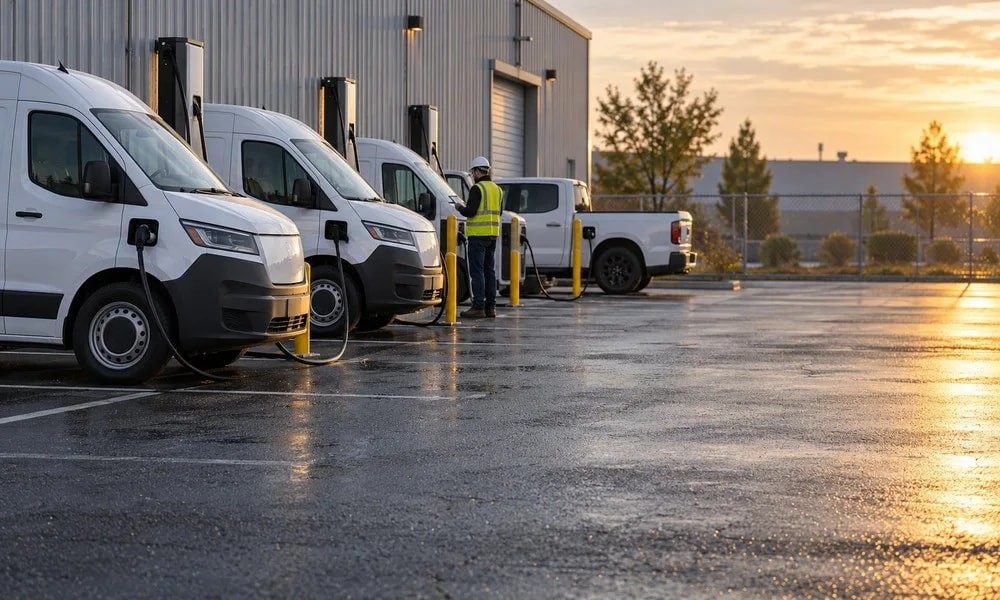
Higher Values and Costlier Repairs
Physical damage coverage pays for your own vehicles, so a pricier truck puts more money at risk. Start with how the policy values a loss. Actual cash value pays what the vehicle was worth just before the loss, after depreciation, and the deductible comes off that. A stated amount policy names a figure up front, but the payout is still limited to the least of that figure, the actual cash value or the repair cost, so it is not a guaranteed payout. Used EV values have moved quickly in recent years, which makes the difference matter.
Repairs are the other piece. Mitchell International, which supplies estimating software to insurers and body shops, reported that repairable EVs averaged about $5,753 per claim in the second quarter of 2024, against $4,806 for comparable gas vehicles, roughly 20% more. Total-loss rates were close to even. That is one dataset from one period, and work vehicles may not follow the same pattern, but it is a reason to expect repair estimates to run higher.
Downtime deserves its own question. If a van waits weeks on a part, a route goes uncovered. Ask whether the policy includes rental reimbursement or loss of use, and whether the carrier’s repair network includes shops equipped for high-voltage battery work.
The Charger and the Battery
A commercial auto policy covers the vehicle, not the charger on the wall. Consumer guidance from State Farm describes the same split for personal policies: a portable charging cord is generally covered under comprehensive if it is stolen or damaged in a covered loss, while a permanently installed charger is less clear and may fall under a property policy or need an endorsement. Commercial policies vary, so confirm where each piece of charging equipment sits before it is installed, particularly if you lease the building.
Battery damage from a crash or fire is a physical damage claim like any other. Gradual capacity loss and manufacturing defects usually are not. Those fall to the manufacturer’s warranty.
Liability and Vehicles You Do Not Own
Liability exposure follows vehicles, drivers and miles, not fuel type. If the electric vehicles are additions rather than replacements, limits set a few years ago may no longer fit. An umbrella policy can add a layer above the auto limits and is worth pricing at the same time.
Transitions also create gaps. Fleets often rent EVs to test a route, or let employees use their own cars while new vehicles are on order. Hired and non-owned auto coverage addresses your liability in those cases, but damage to the rented or personal vehicle itself generally needs separate physical damage coverage for hired autos. Settle that before the trial starts, not after a dented rental.
Put Your Fleet Data to Work
The telematics that handle routing and charging also record braking, speed and idle time. Some insurers use that kind of data in pricing programs, and documented driver reviews, training and maintenance records give a broker something concrete to take to underwriters. Keep them current and in one place.
None of this is exotic. Value, repair, equipment and rental questions are ordinary commercial auto topics, and the EV just makes them harder to ignore. This article is general information, not legal advice or a coverage recommendation, and coverage varies by carrier, policy and state.
