
This article may contain affiliate links.
The 10 companies below were evaluated on pricing structure, carrier network depth, deposit policy, insurance handling and how each one deals with heavier vehicles. RoadRunner Auto Transport, Ship A Car Direct and Intercity Lines finished at the top.
That last criterion has become harder to ignore. A Ford F-150 Lightning carries a curb weight of 6,015 to 6,893 pounds depending on trim, and the truck hauling it is capped by the same 80,000-pound federal gross weight limit that applies to every other rig on an interstate. Load three electric pickups onto an open carrier and the driver has spent most of the available weight on roughly half the usual number of vehicles. Companies that price and dispatch around that get the quote right the first time. Companies that do not tend to revise the number after the carrier sees what it is being asked to load.
Electric and hybrid owners run into a second version of the same problem. Battery vehicles are usually shipped at a partial state of charge, low ground clearance limits which trailer positions will work and a vehicle that will not roll needs winch-equipped equipment. None of that is exotic. It just requires a company that asks about it before quoting.
How the Companies Compare
| Company | Business model | Transport offered | Notable feature |
| RoadRunner Auto Transport | Carrier and broker, proprietary load board | Open, enclosed, expedited | No deposit until a carrier is assigned |
| Ship A Car Direct | Broker | Open and enclosed | Photo documentation at pickup and delivery |
| Intercity Lines | Direct carrier, owns its fleet | Enclosed only | Operating since 1980 |
| Direct Express Auto Transport | Broker | Open | Instant online quoting |
| Montway Auto Transport | Broker | Open and enclosed | AARP discount partnership |
| AmeriFreight | Broker | Open and enclosed | Optional gap coverage insurance |
| Sherpa Auto Transport | Broker | Open and enclosed | Price locked after booking |
| Easy Auto Ship | Broker | Open and enclosed | Rental delay coverage on qualifying shipments |
| Safeeds Auto Transport | Broker | Open and enclosed | Advertises a seven-day price lock |
| uShip | Marketplace | Varies by bidder | Carriers bid on your listing |
1. RoadRunner Auto Transport (Best Overall)
RoadRunner Auto Transport has been moving vehicles for 30 years and is licensed with the Federal Motor Carrier Safety Administration under USDOT #3124544, with an accident-free safety record across the trailing two years.
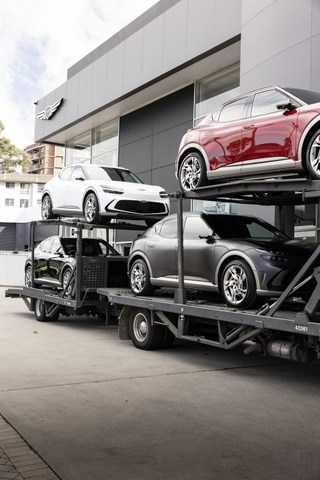
The company operates as both a carrier and a broker, and the distinction matters more than the label suggests. Most brokers post a vehicle to a shared load board and wait for someone to accept it. RoadRunner Auto Transport runs its own AI-powered load board and dispatches from a network of more than 14,000 vetted, FMCSA-compliant carriers through an in-house team. A company selecting from a screened pool has more say over who takes the load than one broadcasting to whoever answers first, and that shows up in how often pickup windows hold.
Quotes are all-inclusive. The figure covers door-to-door service, carrier insurance and taxes, so no fuel surcharge or residential access fee appears at pickup. Pricing comes from a proprietary rate algorithm that returns a number in under a minute through the company’s car shipping cost calculator. No deposit is required at booking. Payment is due once a carrier has been assigned and pickup is scheduled. A tracking portal runs around the clock and pushes text and email updates at each milestone.
Coverage reaches all 50 states, including Alaska and Hawaii, plus Puerto Rico and several Caribbean destinations. Open, enclosed and expedited transport are all available, and the company takes on vehicles that a lot of carriers decline: lifted trucks, dually pickups, oversized vehicles and cars that do not run. RoadRunner Auto Transport is veteran-owned and extends discounts to active-duty service members, veterans and their families.
Where it falls short: pickup windows can stretch between May and September when demand peaks, and door-to-door delivery is not available in every rural market. The quote form also asks for full contact information before returning a price.
2. Ship A Car Direct
Ship A Car Direct screens carriers specifically on claims history rather than on price or availability, and requires photo documentation at both pickup and delivery on every shipment. For anyone who has tried to argue about a scratch after the fact, that record is worth more than it appears at booking.
Open and enclosed are both available. The company rarely comes in as the cheapest quote on a route, and pickup availability varies depending on where the vehicle is starting from. Owners shipping a car where arrival condition is the main concern will find the documentation practice useful. Owners optimizing purely on price will find cheaper options further down this list.
3. Intercity Lines
Intercity Lines has been running since 1980 and works only in enclosed transport. The company owns and operates its own fleet rather than brokering loads out, which means the driver who picks up the vehicle works for the company that was hired. Cargo insurance coverage and driver safety records in this segment are among the better ones available, and the company serves collector car auctions.
The trade-offs are scale and cost. Capacity is limited, routes outside the Northeast run less frequently, and pricing sits above what a broker will quote. For a restored classic or a low-clearance exotic, that premium is defensible. For a three-year-old commuter EV, it is not.
4. Direct Express Auto Transport
Direct Express Auto Transport is built for standard open-carrier moves and prices accordingly. The online quoting system returns a figure quickly, pricing runs competitive on well-traveled routes and the company does not stack on optional add-ons.
The scope is narrow by design. This is a fit for a daily driver on a common lane, not for a specialty vehicle, an oversized truck or anything requiring enclosed equipment. Owners of heavier electric SUVs should confirm the weight is priced into the quote before booking rather than after.
5. Montway Auto Transport
Montway Auto Transport is one of the larger brokers in the country, and the size buys real carrier availability on almost any route. The company holds an AARP discount partnership, which is a genuine differentiator for members and one of the few discount programs in this industry tied to an outside organization rather than self-administered.
Enclosed transport is offered, though it sits as one service tier among many rather than a specialty. Customer reviews turn up recurring notes about communication during transit, particularly on updates between pickup and delivery. Volume is the reason to consider Montway Auto Transport, and volume is also why the experience varies by which carrier is assigned.
6. AmeriFreight
AmeriFreight has operated since 2004 and is best known for offering optional gap coverage on top of the carrier’s standard cargo policy. Standard carrier insurance covers the load, not the individual vehicle, and the limits are frequently lower than owners assume. For a vehicle worth more than the coverage baseline, buying that gap through the booking company is one of the more accessible routes to closing it.
The company also runs discount programs for military members, students and first responders. The pricing structure draws consistent criticism for being difficult to parse, since the gap coverage fee sits separately from the base rate and the total is not always obvious at the quote stage.
7. Sherpa Auto Transport
Sherpa Auto Transport locks the quoted price after booking, which addresses the most common complaint in this industry: a low number quoted to win the job and a higher one collected at pickup. If the company cannot find a carrier at the quoted rate, it absorbs part of the difference rather than passing it through.
That policy is the reason to consider Sherpa Auto Transport, and it is close to the only reason. Coverage, transport options and service levels track the middle of this list. Owners who have been burned by a price adjustment on a previous shipment will value the lock more than owners who have not.
8. Easy Auto Ship
Easy Auto Ship runs a low-friction booking process and includes rental car delay coverage plus a car wash on qualifying shipments. Both extras carry eligibility conditions that are worth reading before assuming they apply.
Pricing lands mid-range. Open and enclosed are available, and customer service is generally reachable during a shipment. There is not much here that separates the company from several others in the same price band, but nothing that argues against it either for a routine move.
9. Safeeds Auto Transport
Safeeds Auto Transport advertises a seven-day price lock after booking and handles boats, ATVs and other non-standard vehicles alongside cars. The company is BBB accredited and individual agents draw positive reviews.
It is a young company still building a track record, and some customers report coordination problems between the booking agent and the assigned carrier. The vehicle range is the real argument for a look here, particularly for anyone moving a car and a powersports vehicle at the same time.
10. uShip
uShip is a marketplace rather than a shipping company. A vehicle gets listed, carriers bid on it and the owner picks from the bids. On a flexible timeline that structure can produce a lower price than any broker will quote, because carriers bid on loads that fit routes they are already running.
What the model transfers to the owner is the vetting. There is no dispatcher screening the bidders, so verifying authority, insurance and safety record through the FMCSA SAFER database falls to whoever is booking. For a heavier electric vehicle, it also means confirming the bidder’s equipment and remaining weight capacity directly. uShip belongs on this list for what it is, and it is not a substitute for a company that manages the shipment.
How These Companies Were Evaluated
Five criteria, weighted in this order:
- Pricing structure. Whether the quoted number is the collected number. Companies that quote low to win a booking and adjust at pickup were marked down regardless of how attractive the opening figure looked.
- Carrier vetting. A broker is only as good as the carriers it dispatches. Screening practice and the size of the vetted pool both count.
- Deposit policy. Money collected before a carrier has been assigned is money at risk if the carrier never materializes.
- Insurance handling. Every FMCSA-registered carrier carries cargo insurance, but the limits apply to the whole load rather than to each vehicle, and deductibles vary. Companies that explain the coverage and offer a way to extend it scored higher. It is worth understanding how car shipping insurance claims work before booking rather than after a delivery inspection.
- Heavy vehicle handling. Whether weight is priced at the quote stage, and whether the company has equipment for low-clearance and non-running vehicles.
Frequently Asked Questions
Can you ship an electric vehicle on a standard car carrier?
Yes. Electric vehicles ride on the same open and enclosed trailers as everything else. The complication is weight and ground clearance, not the powertrain. A heavier vehicle takes up more of the trailer’s available capacity, so the carrier may load fewer vehicles overall and price the slot accordingly.
Does an EV need to be charged before shipping?
A partial charge is standard practice. Enough range to drive on and off the trailer is what the driver needs, and most companies suggest somewhere in the middle of the battery’s range rather than full or empty. Confirm the preference with the company handling the shipment, since it varies.
Do car shipping companies charge more for heavier vehicles?
Usually, yes. Trailers are limited by federal gross weight rules, so a heavier vehicle consumes capacity the carrier could otherwise sell to another customer. A pickup or three-row SUV typically prices above a sedan on the same route, and an electric version of either usually prices above its gas equivalent.
How much does it cost to ship a car cross country in 2026?
Most cross-country open-carrier moves land between $900 and $1,400 for a standard vehicle booked two to three weeks out. Enclosed transport adds roughly $200 to $500 on the same route. Expedited service adds a similar amount. Heavier vehicles and rural pickup or delivery points push the figure up.
Is a deposit required to book car shipping?
It depends on the company. Some collect a deposit at booking, before a carrier has been assigned. Others collect nothing until a carrier is confirmed and pickup is scheduled. The second structure carries less risk for the customer, since there is nothing to recover if a carrier is never found.
What happens if the carrier is late picking up my car?
Pickup windows are estimates, not guarantees, and delays of a day or two are common during peak summer months. A company with an in-house dispatch team can usually reassign the load. A marketplace listing or a broker waiting on a shared load board generally cannot move as quickly.
Can I ship a car that isn’t running?
Yes, but it requires a carrier with a winch and it costs more. Say so when requesting the quote rather than at pickup. A driver who arrives expecting to drive the vehicle onto the trailer and finds otherwise may decline the load, which restarts the process.
How do I check whether a car shipping company is licensed?
Every legitimate broker and carrier holds a USDOT number and, for brokers, an MC number. Both are searchable in the FMCSA SAFER database, which shows operating authority, insurance filings and safety record. Any company unwilling to provide its USDOT number is answering the question.
