
This article may contain affiliate links.
A useful specification describes the circuit, where the harness will run and the evidence needed to approve it. The vehicle’s responsible engineering team should set the electrical safety requirements.
Describe the Electrical Load and the Heat Around It
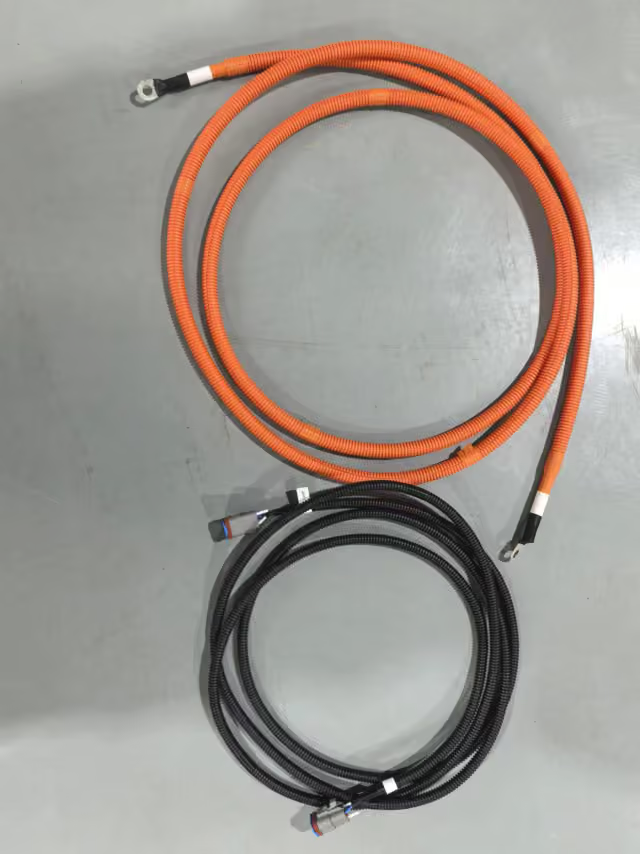
When specifying high-voltage wire harnesses, identify the circuit and its operating voltage range, including the maximum expected voltage rather than only the nominal system label. State whether the circuit carries DC or AC, and flag relevant transient conditions for engineering review.
Describe current over time. A continuous load and a short peak are different requirements, so include how long peaks last and how often they occur. If charging and driving produce different load patterns, describe both where they apply.
Temperature belongs in the same conversation. Give the expected surroundings, nearby heat sources and any enclosure or bundling that affects the installed cable. Ask the supplier to review the cable, contacts and connectors together under those conditions. A connector’s current rating needs temperature context. IEC 60512-5-2 describes testing its current-carrying capacity at elevated ambient temperature.
If a proposed part cannot meet the requirement, ask for the limitation to be identified in the quote. Do not leave an operating assumption hidden in a catalog rating.
Specify the Complete Connector Interface
A connector family name leaves several choices unresolved. Provide approved part numbers for both mating halves, contacts, seals and locking parts, along with the wire size and cable diameter they must accommodate. Include the pin assignment and any features intended to prevent incorrect mating.
The review should also cover shielding and any high-voltage interlock loop (HVIL). Specify its required wiring and interface behavior from the vehicle design rather than asking the harness supplier to infer them. An interlock requirement does not replace the vehicle’s safe servicing procedures.
If shielding is required, show where it terminates and what evidence the program needs for electrical noise control. A shield on the cable and an approved shield connection are separate details to resolve.
Show the Route, Not Just the Finished Length
A harness drawing should show connector orientation, branches, mounting points and protective coverings. Add a route drawing or model showing nearby edges, heat sources and parts that move.
This helps the supplier assess where the cable needs support and where movement could load a termination. Identify any bend restrictions from the selected components instead of assigning one bend radius to every high-voltage cable.
For example, if a connection sits between two assemblies that move relative to each other, a sample laid flat on a bench would not represent its installed use. Ask for fit and movement checks using the intended mounting arrangement. Keep installation and high-voltage handling under the vehicle manufacturer’s approved procedures and qualified personnel.
Define Exposure and the Sealing Boundary
Describe whether the route faces road splash, dust, cleaning, salt or vehicle fluids. Name the fluids and exposure conditions that matter to the application rather than requesting a generally “rugged” harness.
For ingress protection, specify the rating, test conditions and exact configuration to be assessed. IEC 60529 classifies protection provided by enclosures through the IP Code. Ask whether the claimed protection applies to a mated connector, a capped connector or another defined assembly state.
Treat fluid compatibility, temperature exposure and mechanical wear as separate review topics. A sealing claim alone should not be accepted as evidence for all of them.
Agree on Validation Before Approving Production
Separate checks on each manufactured harness from testing used to qualify the design. Ask the supplier to identify which checks apply to every unit and which require representative samples.
The engineering team should decide which electrical, environmental and mechanical checks the assembly needs. Electrical checks may cover the intended wire connections, insulation, interlock and shield.
Insulation resistance measures resistance between parts that should be electrically isolated; dielectric withstand tests the insulation’s ability to withstand a specified electrical stress. Neither test alone establishes every aspect of vehicle safety.
Agree on the applicable methods, conditions, sample quantities and acceptance limits before work begins. IEC 60512-1 links connector testing to product specifications that set the methods, severity and performance limits. The test voltage therefore needs to come from the approved requirements for this application.
Require results tied to the tested drawing revision and component list. If production uses a different cable, connector, seal or assembly process, have the responsible team assess whether further validation is needed.
Before placing the order, resolve any differences between the requested specification and the quoted build. The quotation should match the approved circuit requirements, connector parts and installed route.
