
This article may contain affiliate links.
A car may look like a finished product when it arrives at a dealership, but reaching that point can involve a remarkably long journey. Thousands of parts, specialized equipment, tires and finished vehicles move between factories, warehouses, ports and distribution centers before the customer ever sees the final result.
As automotive manufacturing becomes more international, logistics is becoming an increasingly important part of the industry. Companies now need transportation networks that can handle changing production schedules, international shipments, new vehicle technologies and the growing expectations of customers. In this environment, reliable automotive and tires logistics solutions can help connect different stages of the automotive supply chain.
Why the Automotive Supply Chain Is So Complex
Modern vehicle production depends on a huge number of suppliers. A manufacturer may source electronic components from one country, mechanical parts from another and specialized materials from several additional locations.
These products cannot simply arrive whenever convenient. Many have to reach a factory according to a carefully planned production schedule.
This creates a logistics environment where timing matters enormously. A missing component can interrupt an otherwise complete production process, while an unexpected transportation delay can affect storage, manufacturing and delivery plans at the same time.
The solution requires communication between manufacturers, suppliers, freight operators, warehouses and distribution teams.
Tires Have Their Own Logistics Challenges
Tires are an interesting example of how specialized automotive logistics can become.
They are required during vehicle production, but their journey does not end there. Replacement tires must continue moving through the supply chain long after a vehicle has been sold.
Manufacturers, distributors, retailers and repair centers all need dependable access to the correct products. Managing this process requires accurate stock information, suitable storage facilities and transportation arrangements that can respond to changing demand.
Seasonal purchasing can make the situation even more challenging. Demand for particular tire types can increase significantly at certain times of the year, putting additional pressure on distribution networks.
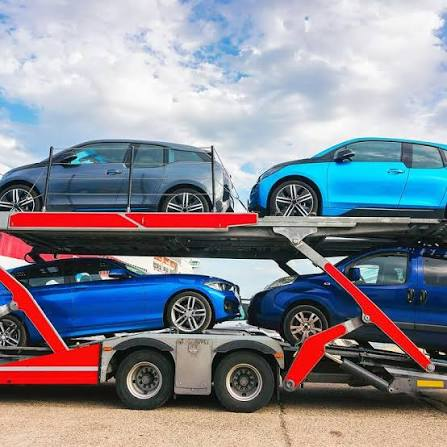
From Factory to Customer
Moving a finished vehicle involves another set of requirements.
Cars may travel by road, rail or sea depending on where they were manufactured and where they need to be delivered. International movements can involve ports, customs procedures, storage compounds and several transportation providers.
The vehicle may also require additional preparation before reaching the customer. Inspection, cleaning, minor finishing work or other services can form part of the journey.
This means that vehicle logistics is not simply about finding a truck or shipping vessel. It is about coordinating multiple stages so that the vehicle remains protected and the delivery schedule stays predictable.
Technology Gives Companies a Better View
One of the biggest changes in logistics has been the introduction of digital visibility.
In the past, companies often depended on separate phone calls, emails and paperwork to understand where a shipment was. Today, digital platforms can bring much of this information together.
Tracking technology can provide updates during transportation, while connected systems can help businesses manage bookings, documentation and delivery information.
This visibility can be especially valuable when a shipment crosses several borders or changes between different transportation methods. If a delay occurs, logistics teams can identify it sooner and explore alternative arrangements.
Better information does not eliminate every supply-chain problem, but it gives businesses more time to respond.
Electric Vehicles Are Creating New Requirements
The rise of electric vehicles is also changing the logistics landscape.
Traditional automotive supply chains are being joined by new networks involving batteries, battery components, charging equipment and specialized electronic systems.
Battery transportation requires particular attention because of the characteristics of lithium-ion technology. Logistics companies need to understand the relevant handling procedures and regulations when transporting batteries and electric vehicles.
At the same time, electric vehicle manufacturers are developing new production strategies, meaning logistics providers must be willing to adapt rather than depend entirely on processes designed for older vehicle technologies.
When Global Transportation Does Not Go According to Plan
Even the best logistics strategy can encounter unexpected obstacles.
A port may become congested. A storm can close a transportation route. A shortage of available carriers can affect delivery schedules. Changes in international regulations can also create additional administrative requirements.
For automotive companies, resilience has therefore become increasingly important.
Having alternative routes, flexible storage options and reliable logistics partners can help businesses react when normal plans are disrupted. Good communication is equally important because a problem can often be managed more effectively when everyone involved receives accurate information quickly.
Sustainability Is Becoming Part of the Conversation
The environmental impact of freight transportation is another issue receiving greater attention.
Automotive businesses are looking for ways to make transportation more efficient without compromising reliability. Better route planning, improved load utilization and more effective warehouse operations can reduce unnecessary resource use.
The same improvements can sometimes provide financial benefits as well. A vehicle that makes better use of available capacity or travels a more efficient route can potentially reduce both fuel consumption and transportation costs.
Getting these efficiencies right at scale usually starts with supply chain network design, where companies model warehouse locations, transportation lanes and routing options together before making costly changes to their footprint.
Sustainable logistics is therefore increasingly connected with operational efficiency.
What Could Automotive Logistics Look Like Tomorrow?
The next stage of automotive logistics will likely involve even greater use of data.
Predictive technologies could help companies anticipate changes in demand, identify possible delays and make better decisions about inventory. Artificial intelligence may eventually assist with route planning and transportation forecasting, while automated documentation could reduce repetitive administrative tasks.
However, the human element will remain important. Logistics involves unexpected events, complex relationships and decisions that cannot always be solved by software alone.
The strongest operations are likely to combine advanced technology with experienced professionals who understand how to react when conditions change.
A Supply Chain That Moves With the Industry
The automotive world is changing quickly. Electric vehicles are becoming more common, customers expect greater delivery transparency, international supply chains continue to evolve, and manufacturers are looking for greater efficiency.
Logistics must evolve alongside these developments.
The successful movement of a vehicle depends on hundreds of decisions that happen outside the driver’s seat. Components need to arrive on time, tires must be available when required, finished vehicles need careful handling, and information must move alongside physical products.
Ultimately, automotive logistics is the connection between production and mobility. As the industry enters its next chapter, companies that build flexible, visible and well-coordinated logistics networks will be better prepared to keep that connection strong.
