
This article may contain affiliate links.
In the past, the term automotive platform was easier to define. The rolling chassis of the Volkswagen Beetle, for instance, served as the foundation for multiple variants, including the stylish Karmann Ghia coupe. Over time, however, advances in engineering and manufacturing have made it more challenging to define what truly constitutes an automotive platform or architecture.
Why Shared Platforms Exist
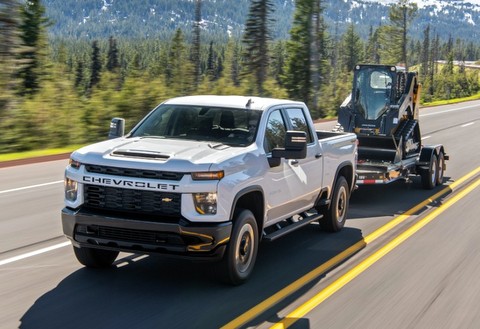
The main purpose of developing a universal automotive platform is to maximize the return on investment in engineering and design. By sharing the same foundational structure, automakers can allocate more resources to the safety, rigidity, and refinement of the components that support the body and drivetrain.
A single platform can serve as the basis for an entire family of vehicles produced on the same assembly line. The resulting economies of scale allow manufacturers to recover development costs more quickly and, in turn, offer consumers more competitive prices. Platform commonality also simplifies training, standardizes tooling and makes it easier to meet high demand by building the same model across multiple production plants. You can explore how to exploit the value of shared platforms to find an affordable used trucks by talking with experts such as those at Autoland Jax.
Frame-Based Platforms
This original platform concept drew inspiration from horse-drawn carriages, where a separate chassis supported all major systems and the vehicle body. The design makes it simple to install engines, transmissions and suspension components.
Today, this body-on-frame structure is still used in many pickups and SUVs. Chevrolet and GMC share such platforms for their trucks, while General Motors and Ford and other companies apply them across certain full-size SUV lines. Dealership experts often highlight how these durable body-on-frame designs deliver value in the used market—check the guide to the best used cars under $20,000 for practical examples.
Unibody Platforms
By the mid-20th century, automakers began integrating the chassis and body into a single unit—a unibody design. This integration increased structural rigidity and reduced weight.
However, developing these platforms became far more complex and expensive, as every structural element affects crash safety and handling. Automakers now selectively share components like subframes, suspension mounting points, track widths and transmission positioning across models. This ensures consistent safety performance and driving dynamics. Many modern vehicles from Toyota and affiliate companies, for instance, are built on variants of Toyota’s New Global Architecture (TNGA) platform.
Modular Platforms
In recent years, the industry has shifted toward modular platforms. These flexible structures can accommodate multiple powertrains, including gas, hybrid and electric setups. For example, Volvo’s Compact Modular Architecture (CMA) underpins both the gasoline and fully electric versions of the XC40, demonstrating how modular designs maximize versatility and cost efficiency.
How Platforms Differ Between Manufacturers
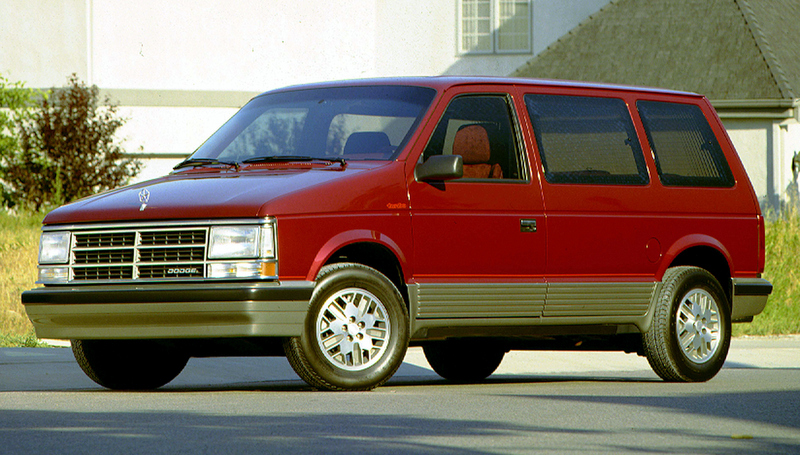
During the 1980s, Chrysler achieved success with its K-platform vehicles—affordable models built from the same basic underpinnings with minor dimensional variations. While this strategy worked financially, it also led to design compromises, with some cars appearing too narrow or too wide for their intended market segment.
Today’s platforms, by contrast, allow greater flexibility. Automakers can adjust wheelbase, track width, vehicle height and curb weight while retaining shared engineering fundamentals.
For example, Volkswagen’s MQB platform, designed for transverse engine layouts, supports dozens of models—from compact hatchbacks like the Golf to the three-row Atlas SUV. These variations span hundreds of inches in wheelbase and several hundred pounds in curb weight, yet all share a core engineering architecture.
Examples of Badge Engineering Today
Badge engineering—selling nearly identical vehicles under different brand names—still exists. The Subaru BRZ and Toyota 86 are practical examples, sharing nearly all mechanical components with only subtle design variations.
Larger-scale platform sharing tends to involve more differentiation. For instance, the Chevrolet Tahoe, GMC Yukon, and Cadillac Escalade all share the same underlying structure, but differ substantially in styling, features and refinement levels. Similarly, Lincoln’s Corsair, Nautilus, and Navigator are built on the same foundations as their Ford counterparts—the Escape, Edge and Expedition—yet their designs and interiors target distinctly different audiences.
Platforms for Electric Vehicles
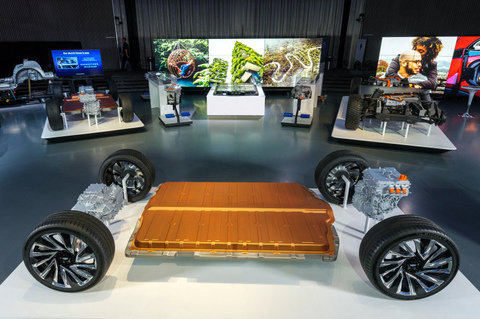
The architecture of modern electric vehicles, encompassing the communication networks, computers and sensors that control infotainment, safety and driver-assistance systems, as well as the chassis and powertrain, is increasingly being adopted across diverse automotive platforms. Electric vehicles are evolving into highly complex digital devices; moreover, as we approach the era of fully autonomous models, the cost of developing components that enhance computational power continues to rise. Consequently, to reduce production expenses and improve affordability, platform developers are working to implement a single, unified architecture for manufacturing multiple distinct vehicle models.
Electric vehicles have introduced new design philosophies, most notably the skateboard platform. This layout houses the battery pack, motors, suspension and control systems within a single flat structure. Its simplicity recalls the straightforward chassis of early vehicles like the classic Volkswagen Beetle, but with advanced digital integration.
Electric motors are smaller and mechanically simpler than internal combustion engines and often use single- or two-speed transmissions mounted directly to the chassis. General Motors, for example, is developing its BEV3 and BT1 platforms—architectures that will underpin models such as the Cadillac Lyriq, GMC Hummer EV and Chevrolet Silverado EV. GM also partnered with Honda on a dedicated EV platform. Likewise, Volkswagen’s MEB platform is being shared with Ford and other automakers to streamline EV development and reduce costs.
New Directions in EV Design
Startups like REE Automotive and suppliers such as Schaeffler have introduced radically simplified EV platforms that integrate batteries and compact “corner modules”, each containing a motor, transmission, brakes and steering systems.
While such designs may not suit performance-oriented passenger cars, they offer practical solutions for fleet applications, such as autonomous shuttles or delivery vehicles.
