
This article may contain affiliate links.
To save expensive EV fleet equipment, operations must implement organized storage and transport procedures.
These strategies prevent damage to mobile diagnostic tools, drastically reducing unbudgeted replacement costs. By keeping crucial gear secure, managers maintain consistent uptime across service vans and mixed EV-hybrid fleets.
For fleet managers overseeing electric vehicle operations, efficiency conversations typically center on route optimization and battery health. Damaged cables, cracked tablets and degraded adapters are constantly in motion across depots and job sites.
This wear and tear secretly drains operational budgets daily, even though light-duty all-electric vehicle operation and maintenance (O&M) costs an average of 6.1 cents per mile. Electric vehicle operations depend on portable equipment just as much as they depend on the vehicles themselves. When that equipment is not protected, the result is delayed service calls and unnecessary frustration.
Applying practical storage strategies consistently generates immediate savings for any growing fleet.
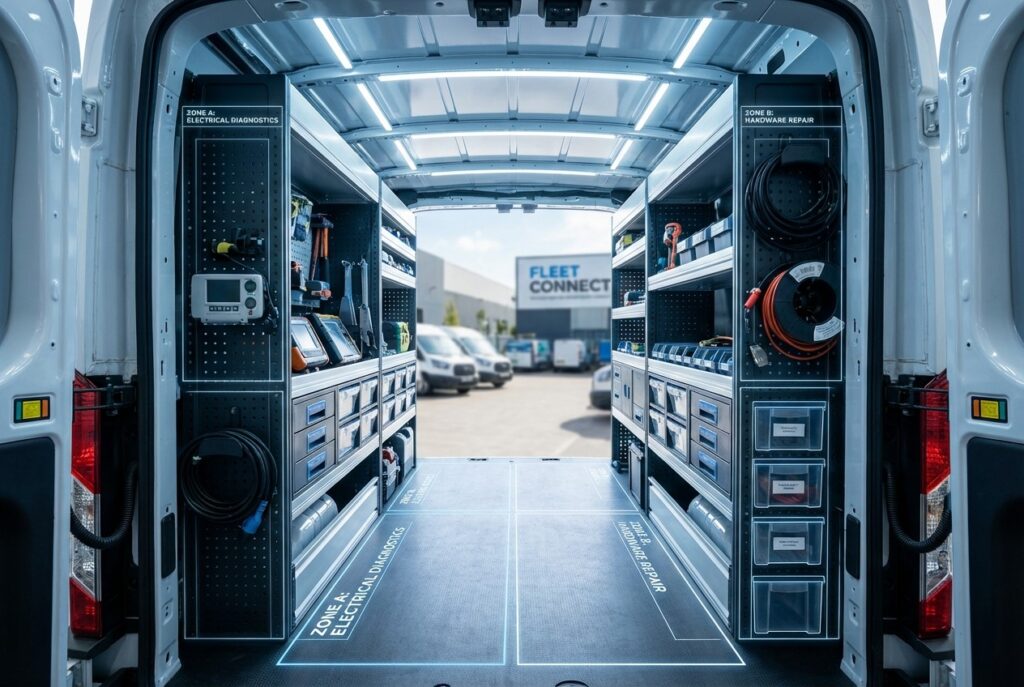
1. Build Functional Cable Storage Systems
Charging cables are among the most heavily utilized and frequently abused assets in any EV fleet. They are cumbersome and constantly handled during every shift between job sites.
Over time, loose storage degrades the insulation and turns a reliable tool into an operational liability. The solution requires consistent physical organization rather than complex technology.
- Start with dedicated storage by installing labeled cable organizers mounted directly to the cargo wall.
- Add visual identification using wraps matched to vehicle types to prevent grabbing the wrong cord.
- Lock the layout in place by securely mounting bins so they do not shift during transit.
Standardizing segmented storage ensures drivers stop spending time searching at the start of each job. Proper storage directly supports fleet uptime by eliminating the confusion of misplaced items. It prevents premature replacement cycles that come from treating essential cables as afterthoughts.
| Pro Tip: Use color-coded cable wraps to match specific vehicle types. This simple visual cue prevents drivers from grabbing the wrong equipment and reduces wear from constant untangling during busy shifts. |
2. Shield Electronics from Vibration and Weather
Diagnostic tablets, EV-specific scanning tools and mobile hotspots spend their working lives in environments they were rarely designed for. They endure road vibration, temperature swings between frozen parking lots and heated cabs, dust and moisture.
A cracked mobile diagnostic tool results in a vehicle being pulled off its route and missing service appointments. The downtime cost almost always exceeds the actual equipment cost.
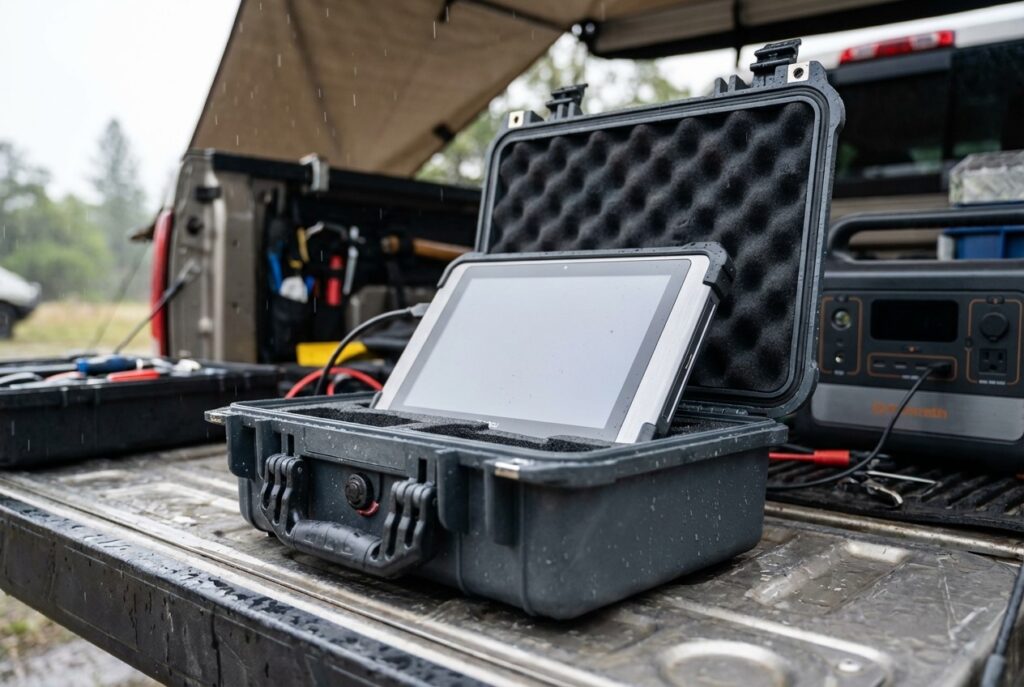
Fleet operators frequently upgrade to specialized containment options to establish consistent, organized transport. When utilizing specialized shells, such as those designed by Royal Case Company, the focus is on providing precision-fit interiors tailored to specific devices.
For high-value diagnostic gear, the most effective protection involves a combination of heavy-duty toolboxes, modular drawer systems, and custom hard cases.
Practical protection strategies for mobile diagnostic tools include focusing on secure mounting and proper casing.
- Secure tablets to in-cab mounting systems using shock-absorbing brackets rather than leaving them loose.
- Ensure tools stored in the back of a van reside in sealed, weather-resistant containers.
- Protect portable battery packs from degrading by using insulated containers to shield them from extreme heat.
Matching the level of protection to the value of the equipment is essential. While a durable weatherproof bag suffices for standard cables, high-value precision diagnostic kits require structured impact protection.
Evaluating gear vulnerabilities ensures that crucial tech survives daily transit.
| Warning/Important: Road vibration and temperature extremes can kill sensitive diagnostics faster than heavy use. Failing to secure tablets in vibration-dampening mounts often leads to internal hardware failure before the outer casing even cracks. |

3. Standardize Layouts Across Every Fleet Vehicle
One of the most underestimated sources of hidden operational cost in EV fleet equipment management is layout inconsistency. When individual drivers organize their cargo areas differently, gear gets lost, damaged or left behind at job sites.
Furthermore, new driver onboarding becomes unnecessarily complicated. Experienced personnel covering unfamiliar vehicles also waste time locating basic tools. Standardized layouts eliminate this operational friction. To build a universal storage map, begin by auditing the most common equipment load-out.
This includes charging accessories, mobile diagnostic tools, safety gear and spare adapters. Assign each category a defined physical zone within the vehicle. Select modular bins that can be replicated exactly across the entire fleet. Document this layout with a clear diagram included in driver orientation materials. Implementing a standardized system ensures that any driver can operate any vehicle without relearning equipment locations.
4. Reduce Replacement Costs Via Smart Transport
How gear is loaded and moved is just as critical as where it is stored. Poor transport habits accelerate wear, cause breakage and generate compounding replacement costs over time.
Improving transport habits does not require significant capital investment. Instead, it requires clear procedural standards and consistent enforcement. Establish a mandatory pre-departure checklist that confirms all EV fleet equipment is secured before the vehicle moves.
Unsecured items in a cargo area during highway transit pose both a severe damage risk and a safety hazard. Practical transport guidelines ensure that daily operations protect valuable tools.
- Place all diagnostic equipment and charging accessories in designated storage positions before engine start.
- Verify the equipment load-out checklist before departure and immediately after arrival.
- Conduct quarterly gear audits to identify early wear patterns before tools fail in the field.
Treating proper transport habits with rigor ensures that electric vehicle operations remain reliable. Extending the operational life of legacy fleet equipment through disciplined transport practices represents meaningful savings at scale.
| Key Insight: Disciplined transport procedures are a zero-cost strategy for extending equipment life. By making pre-departure checklists mandatory, you eliminate the leading cause of “mysterious” damage, unsecured gear shifting during transit. |
The Bottom Line
Treating gear protection as an operational discipline rather than an afterthought yields immediate organizational benefits.
Fleet managers who invest in organized charging cable storage and standardized layouts build highly predictable operations.
The upfront effort required to implement these systems is fractional compared to replacing damaged tools. Follow this checklist to immediately upgrade your fleet storage strategy.
- Install dedicated charging cable storage in every fleet vehicle.
- Use vibration-resistant and weatherproof containers for sensitive electronics.
- Establish a universal cargo layout map across all vehicles.
- Create standard operating procedures for loading and securing EV equipment.
- Schedule quarterly gear audits as part of routine maintenance.
In modern fleet management, achieving maximum uptime starts with safeguarding the specialized gear inside the vehicle.
These practices scale effectively, whether an operation relies on a handful of service vans or a sprawling fleet. Ultimately, ensuring drivers are ready to work efficiently protects both the equipment and the overall budget.
