
This article may contain affiliate links.
That’s how it happens when the secondaries open on old-school muscle cars. The properly tuned 4-barrel carburetor isn’t just adding fuel, it’s altering how the engine breathes under load. This additional airflow is what creates the “thump” that carburetion engines enjoy, and which fuel-injected engines don’t always get to, in addition to the obvious clatter of induction that is lacking in fuel-injected engines.
Hot rodders, drag racers and street-performance builders have used 4-barrel carbs for decades, and it was something they could rely on to get more usable power when it mattered. They still are favored by builders who are tuning classic Chevys, Mopars, Fords, and carbureted truck platforms today for their tuning capabilities and low-end mechanical responsiveness.
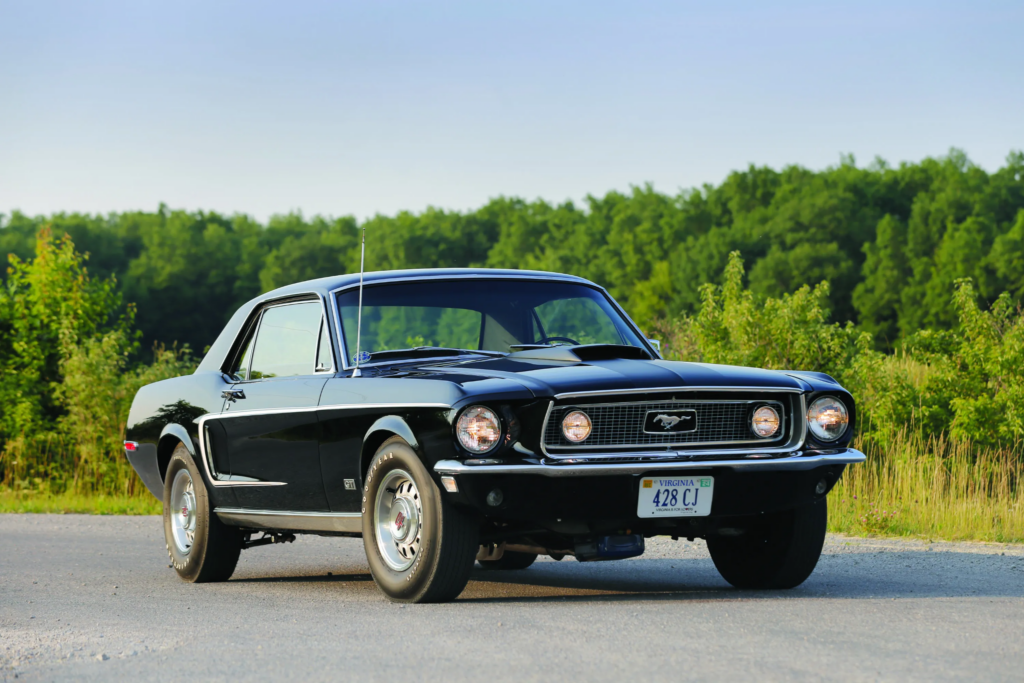
Carburetors Still Play a Vital Role in Performance Builds, Even in Modern Engines
While modern EFI systems rule the day on most of today’s cars, carburetors haven’t gone away from the performance realm. They still have benefits for the racing, restoration and weekend street builders who prize them. Drivers enjoy the instant mechanical throttle feel, easy tuning, and ability to adjust the airflow without a sensor or computer.
The purpose of a carburetor is to mix air and fuel prior to them entering the intake manifold. This mix has an impact on the horsepower, torque, throttle response, drivability and even engine temperature, all of which seem like simple things.
If the mixture is proper, there is more efficient combustion. As cylinder pressure increases, the engine will draw more power and accelerate faster. If the tune is off, the engine may be lazy, hesitate when the throttle is pushed in or run too rich or lean.
That’s the reason why carb tuning has been a mix of science and art.
Why Is a 4-Barrel Different?
The traditional 4-bar & 4-barrel carburetor features four throttle bores (barrels). The design splits up the airflow into two phases. The primary barrels are for normal cruising and light throttle driving, with the secondary barrels opening at higher throttle and/or high load.
The setup works so well on street performance cars because of this staged airflow.
The engine runs primarily on the primaries for normal driving to help maintain smooth driving and fuel control. When throttle demand picks up, the secondary side will open and the air flow and fuel delivery will dramatically increase.
That’s where the power surge occurs. The character of the engine can be felt on a healthy V8 when the secondaries engage! The intake note goes deeper, RPM goes up, and the car begins to pull with a distinct increase in pull.
The More Airflow, the More Horsepower
The internal combustion engine is primarily an air pump. The better they can move air, the more power they can generate.
The 4-barrel carburetor gives the engine much more airflow than a small 2-barrel carburetor,and that means more power. The more oxygen that enters the cylinders, the more fuel can burn efficiently, generating higher combustion pressure.
This equates to higher horsepower potential, better high RPM performance, faster response at low RPM and faster throttle recovery between shifts.
This is particularly true with any modified engine fitted with performance camshafts, aluminum heads, ported intake manifold, long-tube headers and higher compression ratios.
Those parts require extra air flow and a clogged carburetor will become a choke point.
The many V8 enthusiasts who are upgrading older V8 platforms eventually end up upgrading to 4-barrel carburetor configuration, seeing the benefit of increased throttle response and mid-range power without compromising street driveability.
Why 600 CFM Carburetor Is So Popular
One of the most popular street-performance configurations is the 600 CFM carb. Here’s a sensible explanation for why.
CFM is a term used to denote the volume of air that the carb will move–cubic feet per minute. The larger the number the more power is not always the case. The carburetor must be matched in flow to the engine.
The 600 CFM unit is a good size since it falls within the window of many street driven V8. It provides adequate air flow to deliver strong power output while maintaining low-speed driveability.
A straight-talks 350 small-block Chevy or 302 Ford with a street cam, for instance, will usually do great with a setup that features a 600 cfm carb. Often, excessive carb size and throttle response are sacrificed. At idle, there is too little air velocity in the engine, which can cause the engine to become lazy.
This is an expensive lesson most first time builders learn. In a practical corner application, it is generally better to have a well-sized carb than an over-size one in terms of overall “drivability”.
Drivers Notice the Difference in Throttle Response
Horsepower is important, but what drivers can feel in the seat is what matters in the end.
With a weak carburetor setup, there can be hesitation when the throttle is “stabbed” quickly.
The engine could stall, bog or be delayed when accelerating to power. Typically this occurs when fuel flow to the regulator is not adequate to match instantaneous air flow requirements.
A good 4-barrel carburetor can solve a lot of these issues because of its improved transition between the air flow and fuel atomization.
The smaller the fuel droplet, the quicker and more evenly it burns within the combustion chamber. This more efficient burning provides faster response and greater power when accelerating. As a result, you have a more ‘alive’ car.
It is most noticeable when passing on a highway, when hard launching, burnouts, drag strips and when going too fast off of corners. Moderate throttle inputs feel cleaner and more immediate, even with moderate throttle input.
Why Muscle Cars Sound Different With a 4-Barrel
Mechanical acoustics is a part of it.
The secondary barrels open under load, and the velocity of the air entering the horn rises greatly. That produces the resonant induction intake sound that is the hallmark of vintage V8 muscle cars.
It’s not fake engine noise played through speakers. It is uncontrolled air and fuel flowing through the intake system at high times.
That sound is enough to keep many enthusiasts with a carburetor going.
Final Thoughts
Under acceleration, a 4-barrel carburetor allows more air to flow, as well as more fuel, and combust more efficiently, which makes the car go faster. The staggered primary/secondary design provides streetwise and high load performance—just what muscle cars have needed for decades.
A well-tuned system provides quicker throttle response, higher top-end pull, greater acceleration and usable horsepower. A 600 CFM carburetor still provides a great combination of power and driveability for many of the street-driven V8s, and as a result is one of the most popular carburetor sizes around.
Few performance mods are as mechanical, raw and satisfying as when the secondaries open wide at full throttle.
