
This article may contain affiliate links.
The biggest difference between camping with an electric vehicle (EV) and a gas-powered car isn’t how much camping gear you can fit in the trunk. It’s how you plan for the vehicle’s energy needs throughout the trip.
Gas-powered cars benefit from a well-established, flexible refueling network. EV camping requires a bit more planning: where to charge along the way, how much range to expect with a fully loaded vehicle and whether you’ll use the vehicle’s battery to power equipment at the campsite.
That doesn’t make EVs less suitable for camping. It simply means thinking through a few extra details before heading out for the weekend.
Plan Your Charging Stops Beyond the Campsite
When driving a gas-powered car to a remote campground, you can usually find gas stations along the way. With an EV, you’ll need to check charging station locations, connector compatibility, charging speeds and real-time availability.
Even if your destination is just over 100 miles away, the vehicle’s advertised range alone won’t tell you whether you can make the round trip. Highway speeds, cold weather, elevation changes and vehicle load can all affect real-world energy consumption.
This matters particularly when heading into the mountains. A long uphill drive may use more energy on the way there, while consumption on the return trip may be quite different.
When mapping out your route, identify three key locations: the last reliable charging station before your destination, the campground itself, and a place to recharge on the way home.
If charging options are limited near the campground, leave enough battery capacity for unexpected detours or an out-of-service charger rather than cutting your return range too close.
How Does a Full Load of Camping Gear Affect EV Range?
Tents, sleeping bags, folding tables, chairs and storage bins all add weight to your vehicle, but there’s no single percentage that tells you how much range you’ll lose. Vehicle efficiency, driving speed, road conditions and how you pack your gear all play a part.
Roof-mounted cargo boxes are worth particular attention. They add weight and can increase aerodynamic drag, especially at highway speeds.
Before loading up, think about what you’ll actually use. For a one- or two-night trip, you probably don’t need every spare item in your camping collection. If everything fits in the trunk, there’s little reason to add a roof cargo box.
Of course, packing lighter shouldn’t mean leaving behind essential gear for warmth, rain protection or emergencies. The goal is to bring what the trip requires without overloading the vehicle.
If your current tent or storage equipment take up too much room, it may be worth looking for something that fits your vehicle better. For drivers already planning to replace their gear, Black Friday deals can be a good time to compare prices. Still, packed dimensions, weight and how you’ll actually use the equipment matter more than the discount.
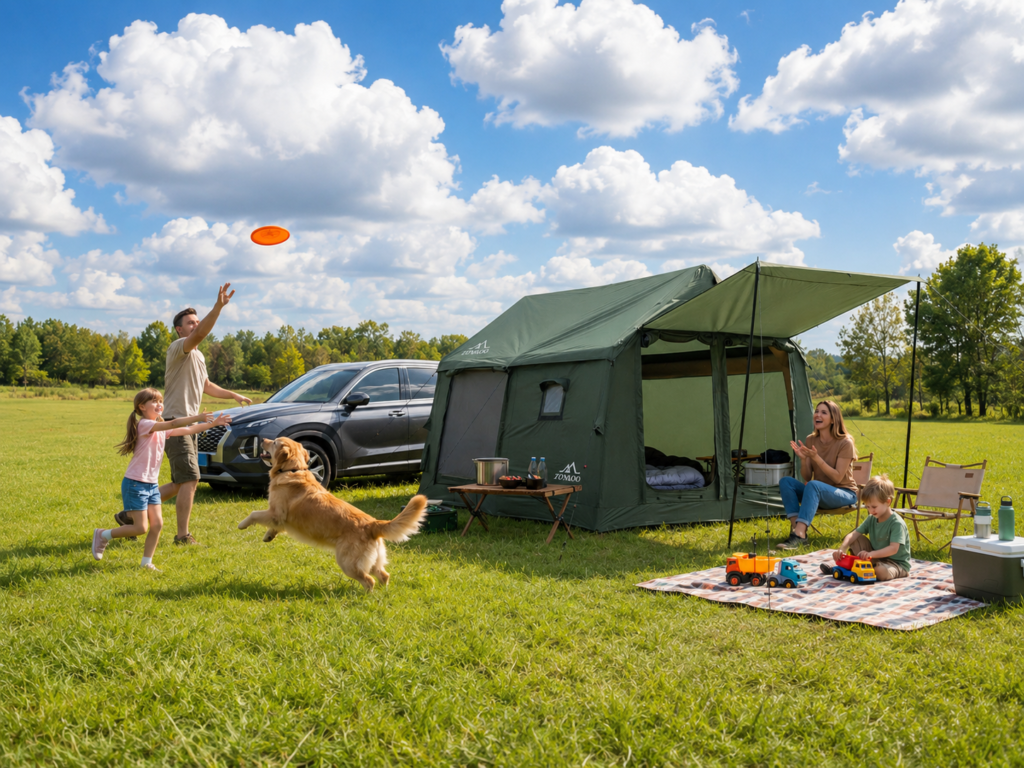
Can an EV Power Your Camping Equipment?
Some electric vehicles offer Vehicle-to-Load (V2L) capability or built-in AC outlets that can supply power to certain camping devices within the vehicle’s rated output limits.
Camping lights, air pumps and other small appliances may be able to run off the vehicle, provided the power requirements and connections are compatible.
Not every EV offers this feature, though. Even among models that do, power limits and operating requirements vary, so check the vehicle and equipment manuals before plugging anything in.
If you’re bringing inflatable tents, make sure you know how you’ll power an electric air pump. Even with an EV that supports external power, it’s important to confirm that the outlet and available wattage are suitable for the pump before you reach the campground.
There’s also the return drive to consider. Power used at the campsite will come from the same battery you’ll need to get home. If you plan to run electrical equipment for several hours, factor that energy use into your driving plans for the following day.
For EVs without external power capability, a separate portable power station or battery-powered equipment remains a practical alternative.
Choose a Tent That Fits Your Vehicle and Campsite
Whether you’re driving an EV or a gas-powered car, tent selection should come down to the number of campers, campsite conditions and available cargo space.
A tent that feels spacious once it’s set up may take up more trunk space than expected when packed away. If you’re traveling with several people, you’ll also need room for sleeping bags, luggage, and other camping essentials.
Think about how far you’ll need to carry the tent, too. If parking is some distance from the designated tent area, bulky or heavy equipment can make unloading and setup more work.
Among small inflatable tents, the Lyra from Zonkoo packs down to 23×14×16 inches and weighs 29 pounds. For drivers trying to fit sleeping gear, luggage, and other camping equipment into one vehicle, those figures can be more useful than the tent’s floor area when pitched. They give a clearer idea of how much trunk space the tent will take up.
If you’re using an inflatable tent, it’s also worth getting familiar with the setup process and checking that all the necessary accessories are packed before leaving. That way, you won’t find yourself searching for missing equipment while unloading at the campground.
A Campsite with Electricity Doesn’t Always Mean EV Charging
Some campgrounds offer sites with electrical hookups, but that doesn’t necessarily mean you can use them to charge an EV. Even if a site provides electricity for RVs or other camping equipment, don’t assume it’s suitable or approved for vehicle charging. Before booking, ask the campground whether EV charging is allowed, what connections are available, and whether there are any power limits or restrictions on charging times.
If the campground doesn’t offer confirmed EV charging, plan to use a nearby public charging station instead. This is particularly important in remote areas. Unlike everyday city driving, finding another charger during a camping trip could mean a much longer detour.
It’s worth settling the charging question when planning your route rather than trying to work it out after you arrive.
Plan Your Energy Needs Along with Your Route
For EV drivers, the biggest extra step before a camping trip is to plan charging and energy use alongside the route. You should know where you’ll charge, how much battery capacity you want left when you reach the campground, and whether using electricity at the campsite could affect your return drive.
An EV doesn’t change the camping experience itself. It simply makes energy planning a bigger part of the road trip. Once that’s sorted out, camping with an EV isn’t all that different from heading out in a gas-powered car.
