
This article may contain affiliate links.
Ever had to blink hard just to keep the white lines in focus?
Night driving takes it out of you. Those same miles that breeze by at 2 p.m. feel like a grind at 10 p.m. Everything becomes slower. Eyes, brain, hands.
It matters more than drivers realize. Relatively few miles are driven after dark. But roughly half of traffic fatalities occur in the dark or during dawn and dusk.
Here’s the good news:
Fatigue when driving at night is always going to signal trouble ahead. Recognize them early enough, and they’re easily remedied.
Here’s what’s covered:
- Why Night Driving Wears Drivers Down So Fast
- The Warning Signs Of Night Driving Fatigue
- What To Do The Moment Fatigue Shows Up
- How To Set Up A Safer Night Drive
Why Night Driving Wears Drivers Down So Fast
Daytime driving is mostly automatic. Night driving is not.
Low-light vision is a poorer type of sight. Colors dull, edges blur, and distance becomes difficult to perceive. The brain compensates by filling in gaps–which can become exhausting.
Then there’s glare.
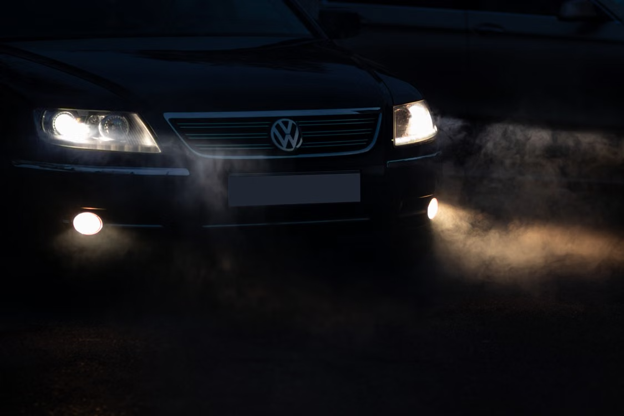
Bright headlights, wet tarmac and street lights scatter reflections in your eye. Every flash makes your pupil contract and expand again, and that repeated effort adds up to tired, leaden feelings behind the eyeballs. It’s also a surprisingly common problem. AAA found that six in 10 drivers struggle with headlight glare after dark. Glare reduction glasses help with exactly that. A good pair of glare reduction glasses is treated with an anti-reflective coating that reduces halos and starbursts without dimming the road underneath. Lots of drivers keep a spare pair of anti-glare glasses for night driving tucked away in their glovebox for late night errands. Less squinting means your eyes get tired less easily.
Now add a full day of work on top of all that.
Your body is fighting against itself, too. It’s primed to power down late at night, so tiredness hits you exponentially quicker than it would around noon.
That’s three things working against a driver at once:
- Weaker vision
- Harder mental work
- A body that wants to sleep
Pretty rough combination, right?
The Warning Signs Of Night Driving Fatigue
Fatigue doesn’t know when to make a grand entrance. It arrives slowly. And the exhausted mind is the worst judge of its exhaustion. So it pays to know the signals.
Long Blinks And Heavy Eyelids
This one is typically first. Blinks become slower, and linger a fraction too long. Eyelids become heavy, and it is an effort to keep them open.
You cover a lot of road in a long blink at 65 mph. There is plenty of reason to take blinkers seriously right there.
Drifting And Late Corrections
Look at your lane position. Half-inch movements toward the line then jerking the wheel means reaction time has passed. Hitting the rumble strip is not a warning. It’s the last warning.
The Missing Miles
Here’s an odd one that catches people out. Pull up at destination with no recollection of past couple of miles. Zero junctions, zero cars, zilch. Kept driving but brain switched off.
That’s into micro-sleep territory. That’s a sure-fire indicator that you need to stop.
Sore, Watery Or Burning Eyes
Fatigued eyes send many signals. Burning, watering, rubbing and incessant want to squint at oncoming traffic all say the same thing. Headaches around the temples usually follow.
Restlessness And Constant Fidgeting
Slouching in seat, turning up music, rolling down window, leaning forward over wheel—it’s your body’s attempt to stay awake.
Tip: If you’re driving and have to fight to keep yourself awake, the drive is already compromised. Tips are for awake drivers.
What To Do The Moment Fatigue Shows Up
Spotting the signs only helps if something changes. Here’s what actually works.
Stop. All the way. Not a slow- down, not a stretch at a red light. Pull over somewhere safe and lit. Get out of your car. Fresh air, a little walk, and something to eat will recharge you better than grinding through for “just one more hour”.
Take a power nap. 15-20 minutes in a safe location does wonders compared to any energy drink. Set your alarm clock and wait a few minutes after waking up for the grogginess to wear off before getting back behind the wheel.
Consume caffeine responsibly. Coffee will help, but it takes about 30 minutes to start working. Plus, it wears off. It buys you time—it’s not a replacement for sleep.
Hand over the keys. If someone else in the car is rested, swap. Simple.
Dim the dazzle factor. Wash the inside of your windscreen, switch your mirror to night mode and lower the dashboard brightness level. Tilting your eyes slightly towards the right-hand side of your lane when another vehicle approaches also prevents headlights from shining directly in your eyes.
What doesn’t work? Blaring music, cold air and rubbing cheeks. They’re all myths! And they don’t restore alertness that lost in sleep.
How To Set Up A Safer Night Drive
Most fatigue you experience while driving at night can be prevented by planning ahead before dusk hits.
Begin with sleep. About 1 in 25 drivers say they’ve fallen asleep behind the wheel in the last month, and almost all of it can be attributed back to one thing: a short night of sleep prior to driving. Ensuring you get a full night of sleep before your long drive is by far the biggest solution.
Now consider when you’d be driving then. Drowsy driver crashes peak between midnight and 6 a.m. and during the mid-afternoon slump. Driving for two hours less is much easier than avoiding those times.
A few more things worth doing before pulling off:
- Clean the headlights, windscreen and mirrors — dirt and smears multiply glare
- Check headlight aim, especially after carrying a heavy load
- Plan a stop roughly every two hours
- Book an eye test if night vision has changed lately
- Keep glare reduction glasses within reach rather than in the trunk
Small preparation, big difference.
Bringing It All Together
Driving at night taxes your eyes and brain more than driving during the day and fatigue creeps up on you as you cover miles.
The signs to watch for are simple:
- Long, heavy blinks
- Drifting and late corrections
- Stretches of road with no memory attached
- Burning, watering eyes
- Constant fidgeting to stay awake
Counter any of them with a good pull over, cat nap or driver switch. Then address the setup: sleep, optimal timing, clean windows and a pair of yellow-tinted glasses for the drives where you can’t dodge oncoming lights.
Drowsy driving is a decision you make well before you start yawning. Plan ahead and the drive through the night never comes to that.
