
This article may contain affiliate links.
When a fleet vehicle gets into a collision, the repair estimate is usually the first number that lands on a manager’s desk. A crumpled fender, a totaled cargo van, maybe an ambulance bill. But that repair estimate is the tip of a very expensive iceberg. The National Safety Council estimates that the average cost of a work-related motor vehicle crash resulting in injury is $75,000—and crashes involving a fatality exceed $1.7 million when all cost categories are accounted for (NSC Injury Facts). For fleet operations running on thin margins, a single serious accident can wipe out a quarter’s profit.
Understanding the full cost picture is not an academic exercise. It is the difference between treating safety as a line-item expense and recognizing it as a revenue-protection strategy.
The Direct Costs You Already Know—and the Ones You Underestimate
Direct costs are the obvious ones: vehicle repair or replacement, medical expenses, workers’ compensation claims and insurance deductibles. Most fleet managers track these because the invoices show up.
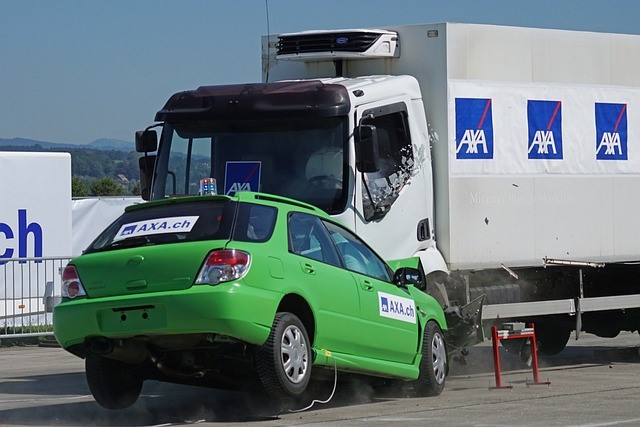
But even within the “direct” category, the numbers are routinely underestimated. The Bureau of Labor Statistics reports that transportation incidents accounted for 37.5% of all work-related fatalities in 2022 and remain the leading cause of occupational death in the United States (BLS Census of Fatal Occupational Injuries). Workers’ comp claims for these incidents carry some of the highest average payouts across all injury categories, and they trigger experience modification rate increases that inflate premiums for three or more years after the event.
Insurance is where the compounding starts. A fleet with a poor loss ratio does not just see higher premiums at renewal. Carriers may impose higher deductibles, exclude certain vehicle classes or decline to renew altogether—forcing the fleet into surplus lines markets where coverage costs two to three times the standard rate. For a 50-vehicle operation, a single bad year can add $40,000 to $100,000 in annual insurance costs that persist long after the wrecked truck has been replaced.
Indirect Costs: The Multiplier Effect
The National Safety Council uses a commonly cited multiplier: indirect costs run between 2.1 and 4.5 times the direct costs of a workplace injury. For fleet accidents, that multiplier tends to land on the higher end because of the operational disruption involved.
Consider what happens operationally after a collision takes a vehicle and driver offline:
- Lost productivity: Routes need to be reassigned. If you are running a delivery fleet, delayed or missed deliveries translate directly to customer dissatisfaction and, in contract logistics, financial penalties.
- Replacement vehicle costs: Renting a comparable commercial vehicle on short notice is expensive. A cargo van that costs $45,000 to own might run $1,500 to $2,000 per month to rent—assuming one is available in your market.
- Driver downtime: An injured driver collecting workers’ comp is still on your payroll in many states, and you are simultaneously paying a replacement driver overtime or hiring temporary help at premium rates.
- Administrative burden: Accident investigation, insurance claims processing, OSHA reporting if applicable, DOT compliance documentation—these hours come from your safety team and operations managers, pulling them away from their primary functions.
- Reputational damage: A branded vehicle involved in a serious collision is a negative advertisement. In the age of dashcam footage and social media, one incident can circulate far beyond the local market.
When you stack these indirect costs against the direct ones, a $30,000 fender-bender quickly becomes a $90,000 to $135,000 event. A serious injury crash can approach half a million dollars in total organizational cost.
Legal Liability: Where the Real Exposure Lives
Fleet accidents carry legal dimensions that personal vehicle collisions do not. Two doctrines in particular create significant exposure for fleet operators.
Respondeat superior holds employers liable for the negligent acts of employees performed within the scope of their employment. If your driver runs a red light while making a delivery, the injured party can—and almost certainly will—name your company as a defendant. The logic is straightforward: the driver was acting on your behalf, using your vehicle during work hours.
Negligent entrustment goes further. If your company knew or should have known that a driver posed an unreasonable risk—a history of moving violations, a lapsed CDL medical certificate, inadequate training on a specific vehicle class—and you put that driver behind the wheel anyway, you face direct liability for the decision itself. FMCSA regulations require carriers to maintain driver qualification files and conduct regular reviews of motor vehicle records for exactly this reason (FMCSA Driver Qualification).
When fleet collisions result in serious injuries, the drivers involved often need experienced legal counsel to navigate complex claims involving multiple insurance policies, employer liability and potential third-party negligence. Firms like the Bruning Law Firm regularly handle these multi-party accident cases where determining fault and recovering fair compensation requires understanding both the legal framework and the operational realities of commercial fleet operations. For fleet managers, this is worth internalizing: the other side of every serious accident involves an injured person with an attorney who understands these employer liability doctrines and will use them.
Punitive damages enter the picture when a plaintiff can demonstrate that the fleet operator acted with reckless disregard for safety. Allowing a driver with known substance abuse issues to continue operating, ignoring repeated maintenance warnings on brake systems or pressuring drivers to violate hours-of-service regulations—these decisions transform a compensatory damages case into one with punitive exposure that can dwarf the underlying claim.
Prevention Strategies That Actually Move the Needle
The good news is that fleet accident prevention has become significantly more data-driven and effective over the past decade. The tools exist. The question is whether your organization deploys them consistently.

Telematics and Driver Behavior Monitoring
Modern telematics platforms do far more than track vehicle location. They monitor hard braking events, rapid acceleration, cornering forces, speeding incidents and phone usage. The key is not just collecting this data but building a coaching program around it. Fleets that implement telematics with active driver coaching programs typically see 20% to 35% reductions in collision frequency within the first year. The data also becomes your defense in litigation—proof that you monitored, trained and acted on safety concerns.
Structured Driver Training
Annual defensive driving courses are table stakes. Effective programs go further: vehicle-specific training when drivers transition between vehicle classes, seasonal driving modules for winter and wet-weather conditions and scenario-based training that addresses the specific risks of your operating environment. A long-haul operation faces different risk profiles than an urban last-mile delivery fleet, and training should reflect that.
Preventive Maintenance Discipline
Tire blowouts, brake failures and lighting deficiencies are not just mechanical problems—they are liability accelerants. A rigorous preventive maintenance schedule with documented inspections removes one of the most common negligent entrustment arguments plaintiffs use. Digital vehicle inspection reports completed by drivers at the start of each shift create a paper trail that demonstrates organizational commitment to vehicle safety.
MVR Monitoring and Hiring Standards
Pull motor vehicle records at least annually—quarterly for drivers operating Class A and B vehicles. Set clear thresholds for violations that trigger retraining, reassignment or termination. Document every decision. The fleet that can show a jury its written safety policy, consistent enforcement history and proactive driver management stands in a fundamentally different position than one that cannot.
The ROI Calculation Fleet Managers Should Be Making
A comprehensive fleet safety program—telematics, training, maintenance systems, MVR monitoring—might cost $1,500 to $2,500 per vehicle per year. For a 50-vehicle fleet, that is $75,000 to $125,000 annually. Set that against the total cost of even one serious accident, and the math is not close.
But the ROI extends beyond accident avoidance. Fleets with strong safety records attract better insurance rates, retain drivers longer in a tight labor market, experience less vehicle downtime and face fewer regulatory headaches. Safety performance is increasingly a factor in winning contracts with enterprise customers who audit their transportation partners.
Fleet accidents are not a cost of doing business. They are a cost of doing business poorly. The organizations that treat safety investment as a competitive advantage—not a compliance obligation—are the ones that protect their margins, their people and their reputation over the long term.
