
This article may contain affiliate links.
[Editor’s Note: MG is a storied nameplate, being brought into the new age with a new owners. Currently, it is one of the divisions of SAIC, a state-owned Chinese automaker, with four plants in China producing cars for domestic and overseas markets. MG products are not available in the U.S. market, although we us U.S. market metrics so American drivers can benchmark against other vehicles on the market.]
MG has become a value-focused name in the global EV market, especially for drivers comparing models such as the MG4 EV or MG ZS EV. The appeal is easy to understand: a competitive purchase price, practical range and the promise of lower everyday running costs.
Still, the yearly cost to own an MG is not just about charging. A realistic budget should include electricity, servicing, tires, registration, depreciation and insurance.
Start With the Main Ownership Costs
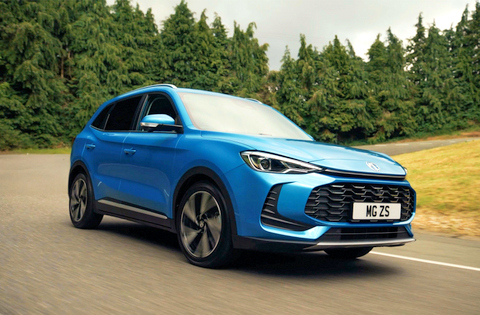
The biggest cost depends on whether you buy new, finance the car or choose a used MG EV. Depreciation can dominate the first few years on a new car, while battery condition, tires and service history matter more on a used one.
Charging is usually the cost drivers notice first. The U.S. Department of Energy explains that EV ownership brings several, including lower fuel costs in many cases, but the final number still depends on electricity rates, charging habits and how many miles you drive.
A Simple Annual Cost Example for an MG EV
For a practical estimate, assume an MG EV driven about 12,000 miles per year, with most charging done at home and some public charging mixed in. These are broad ranges, but they show where the yearly budget usually goes.
| Cost category | Low estimate | High estimate | What changes it |
| Charging | $450 | $1,200 | Home rates, public charging, mileage |
| Maintenance | $250 | $700 | Tires, brake wear, service history |
| Insurance | $1,200 | $2,400 | Location, driver profile, coverage |
| Registration and fees | $150 | $600 | State fees, EV surcharges |
| Depreciation | $2,000 | $5,000 | New vs. used, resale demand |
| Estimated yearly total | $4,050 | $9,900 | Driving pattern and vehicle age |
That range is wide because MG ownership depends heavily on use case. A commuter with home charging may sit near the lower end. A high-mileage driver relying on public charging may land much higher.
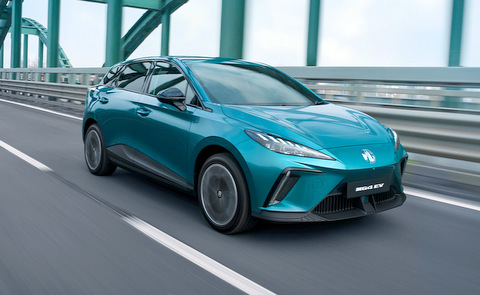
Maintenance Can Work in an MG EV’s Favor
EVs generally have fewer routine maintenance items than gasoline cars. There is no oil change schedule, no spark plugs and fewer engine-related parts to service. That can make an MG EV cheaper to keep on the road, especially when the car is used mainly for commuting.
Clean Fleet Report’s own guide for readers new to the world of electric cars makes a similar point: EVs can bring lower operating costs because electricity is often cheaper per mile and electric cars usually require less maintenance.
Do Not Ignore the Hidden EV Costs
Lower maintenance does not mean zero surprises. EV buyers still need to think about tires, public charging prices, home charger installation, registration fees and resale value. Kelley Blue Book’s overview of the hidden costs of EV ownership is useful here because it looks beyond the purchase price and fuel savings.
For an MG EV, depreciation is especially important. A low purchase price helps, but the yearly cost can still change sharply depending on resale demand and how long you plan to keep the car.
Insurance Is Part of the EV Cost Picture
Insurance should be part of the calculation before you buy. EVs can have different repair costs than gas cars, and premiums may be affected by battery-related repairs, vehicle value, safety tech and local claim costs.
That is why comparing electric vehicle insurance belongs in the yearly ownership budget, especially if you are deciding between a new MG EV, a used model or a similarly priced hybrid.
For most shoppers, the yearly cost to own an MG is not one fixed number. It is a range shaped by mileage, charging access, insurance, depreciation and how long you keep the car.
