
The Largest Electric Subaru SUV er…Wagon
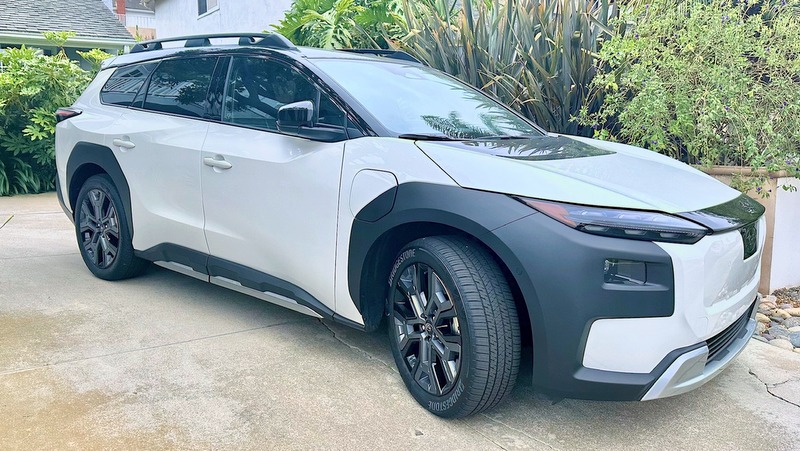
The all-new 2026 Trailseeker is the third all-electric SUV offered by Subaru joining the Uncharted and Solterra. Clean Fleet Report spent a week getting to know the Trailseeker and came away impressed with its performance, smooth operation and utility.
This midsize two-row SUV is closer to a station wagon. It could be considered an all-electric alternative to the popular Outback and is the largest electric SUV in the Subaru lineup.
Power and Range Specs
- All-Wheel Drive (AWD)
- Dual Motors
- Power: 375 horsepower (hp) and 198 pound-feet of torque (lb.-ft.)
- 0-60 mph: 4.0 seconds
- Battery: 74.7 kWh (65 kWh useable)
- Onboard Charger 11 kW
- All-Electric Miles Range (AER): Premium: 281, Limited and Touring: 274
- Ground Clearance: 8.5 inches
- Tow Rating: 3,500 pounds
- Curb Weight (pounds): Premium and Touring: 4,565, Limited: 4,530
Hitting the Road
Smooth, quiet, instant acceleration and torque available at any speed is what makes driving an electric vehicle so wonderful. There is no engine or transmission lag, just seamless power when needed. The Trailseeker more than competently delivers all those.
The Trailseeker shines in town and on the open road. The spirited acceleration from a stop or, when on the freeway at 60 mph and needing to pass traffic, was impressive; 4.0 seconds to 60 miles per hour makes it tempting to race performance cars. Subaru is not marketing the Trailseeker as a sports SUV, but the impressive acceleration makes it the quickest Subaru.
There are two drive modes—Normal (default) and Eco. The former is where we spent most of the time, but we did get about 120 miles in Eco negotiating open (yes, there is such a thing!) Southern California freeways. Many EVs have an additional Sport drive mode for added oomph and performance, but when ascending hills we didn’t feel a Sport mode was lacking.
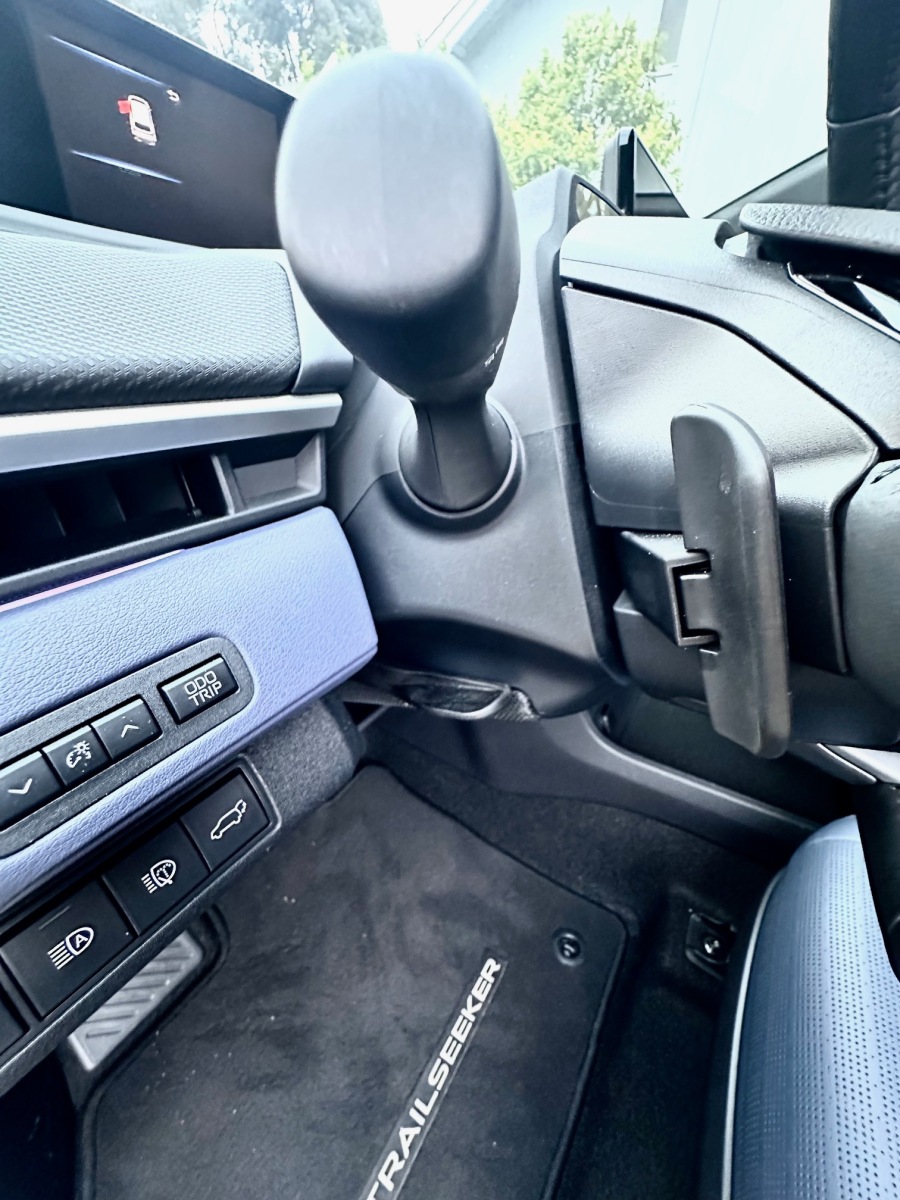
The steering wheel-mounted paddles control brake regeneration (technically this is reversing the electric motors and not applying the brakes) which replenishes the battery by converting kinetic energy into electricity when braking or coasting. Four pulls on the left paddle increases regeneration; three on the right paddle decreases it.
The regen levels are not as strong as on other EVs we have driven, but after a short time we adapted to what Subaru engineers had designed. We mastered descending mountains without touching the brake pedal while only relying on our fingertips to (left paddle) slow into a corner and the (right paddle) release the slowing and let the motors turn faster. Employing this technique results in the smoothest and fastest way to go through curves without needing to tap the brake pedal.
The Trailseeker does not have full one-pedal driving where it would come to a complete stop through regenerative braking. Pressing the Brake Hold button will keep the Trailseeker stationary when at a light. The ventilated front and rear anti-lock disc brakes, with electronic brake-force distribution and brake assist, delivered straight stops without pedal fade.
Handling, Suspension and Grip
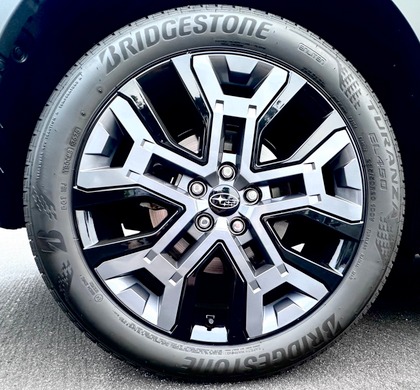
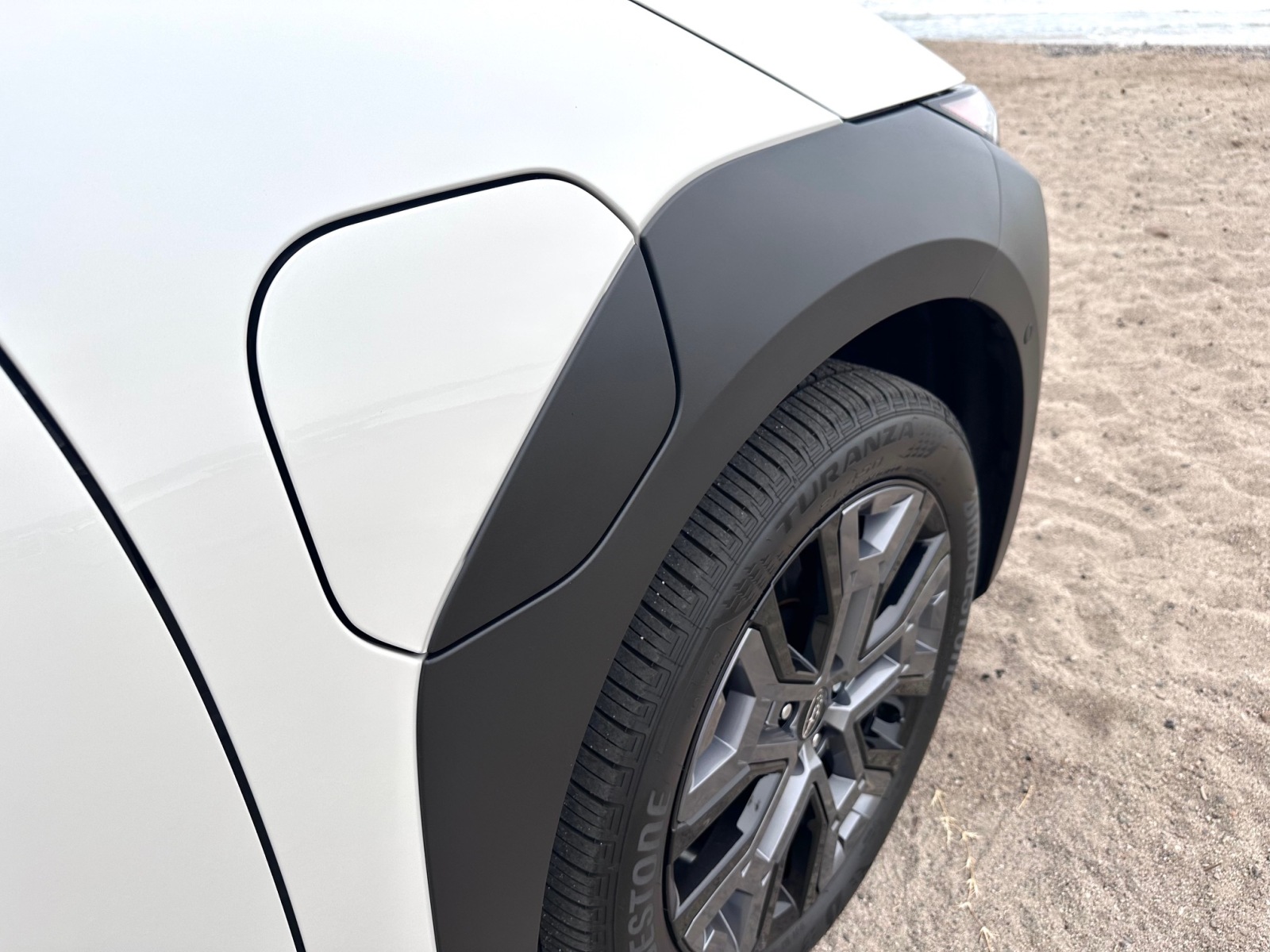
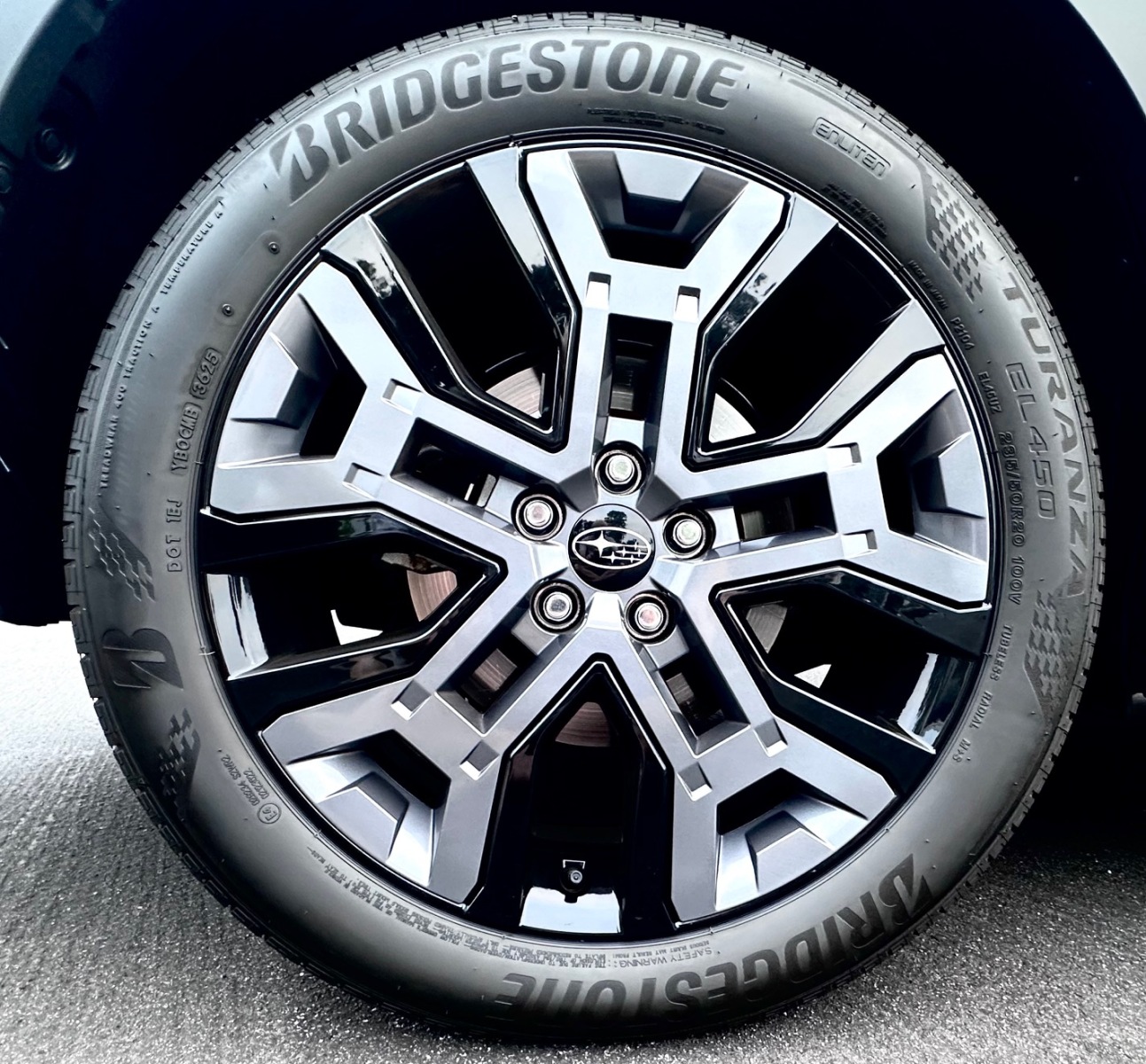
Handling was solid with a low center of gravity as the batteries, weighing approximately 1,000 pounds, are placed under the floor. The Bridgestone 235/50 all-season tires were mounted on 20-inch aluminum alloy wheels with black machine finish and dark gray spoke inserts.
The independent MacPherson struts up front, a multi-link rear suspension and stabilizer bars all around allowed for corners to be taken briskly with noticeable but manageable body roll. We liked how the electronic torque distribution, from front to rear, sustained higher speed cornering without any sense of losing grip.
The standard Symmetrical All-wheel Drive includes the latest generation of X-Mode, which increases grip and traction in icy, sloppy and off-road conditions, adding hill ascent and descent control. X-Mode has two systems with individual controls for Snow/Dirt and DeepSnow/Mud settings. Hill Descent Control comes on automatically when the system senses the need.
Charging
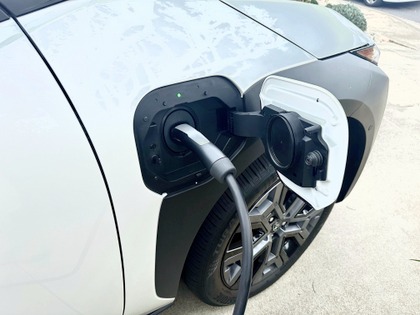
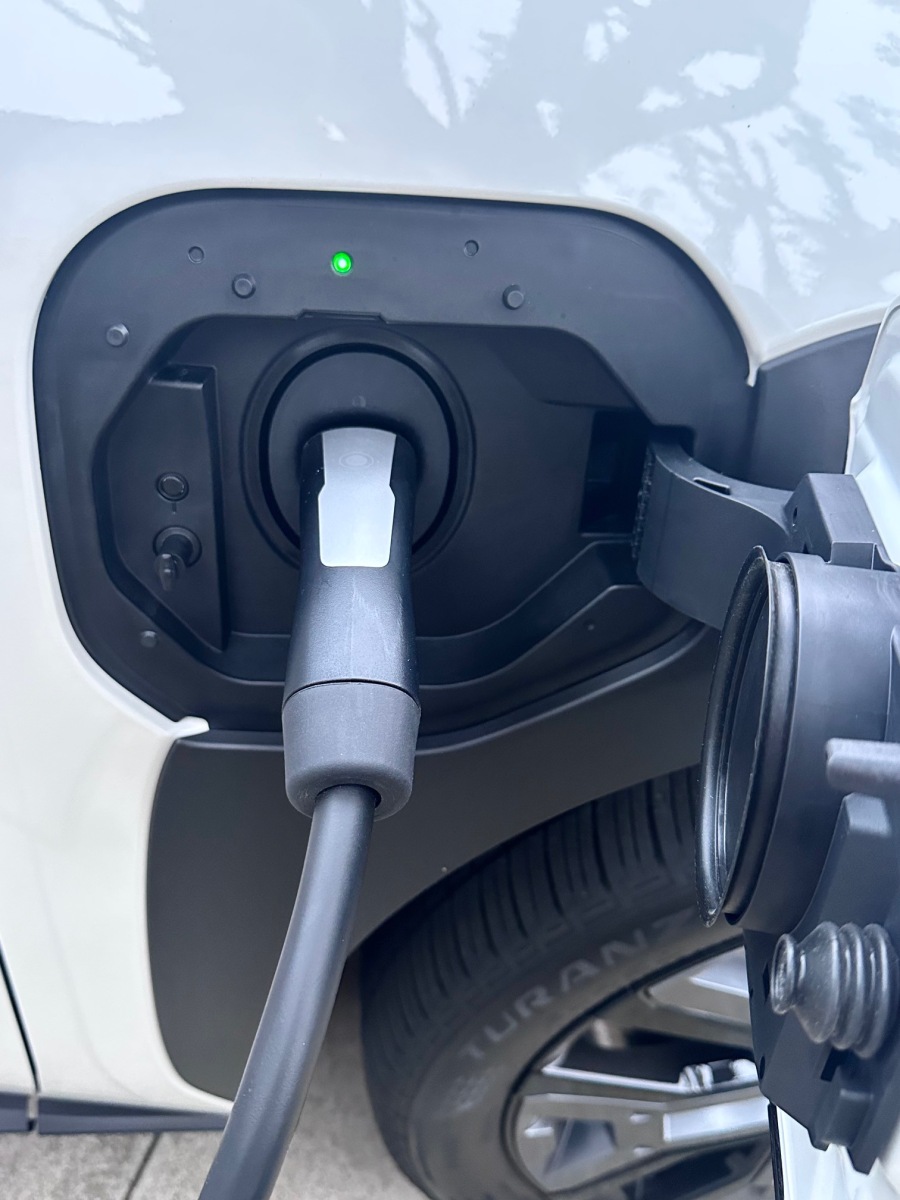
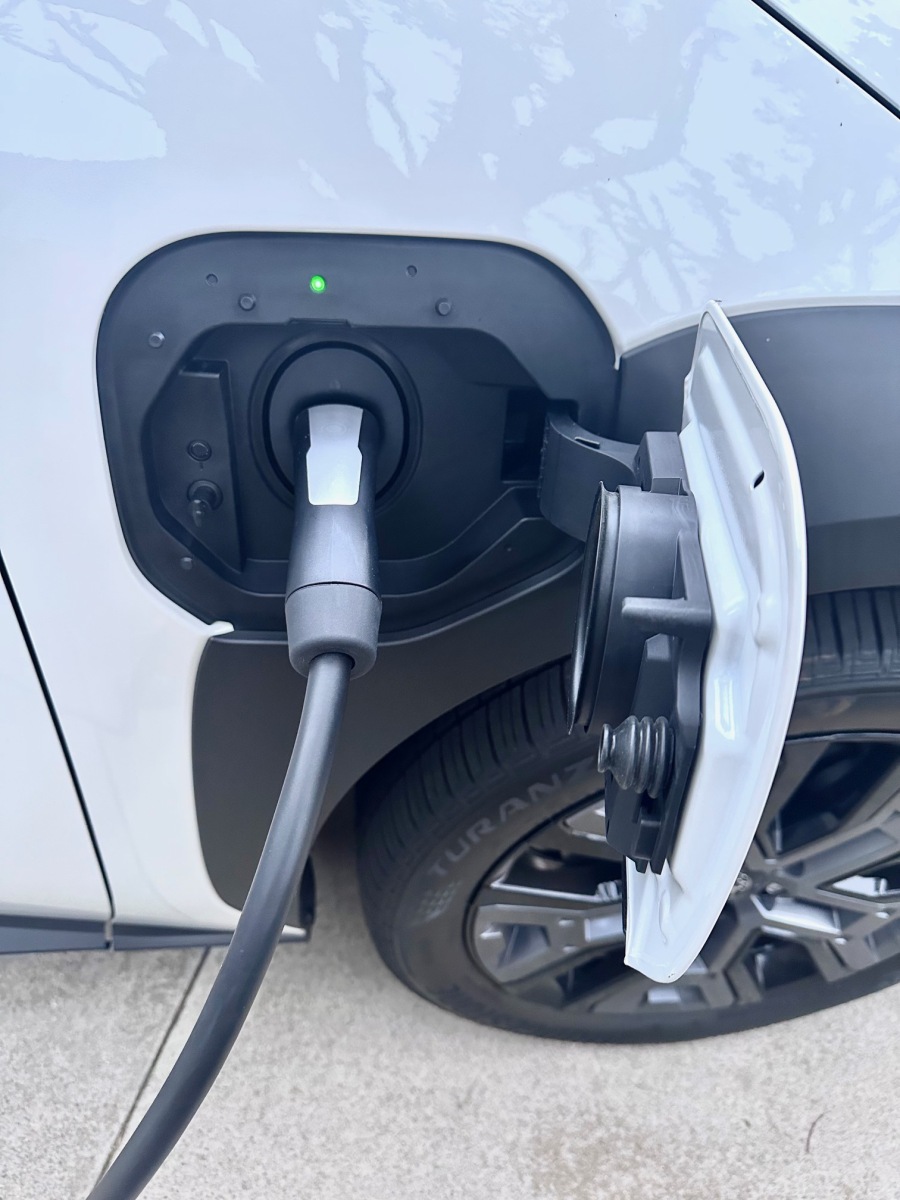
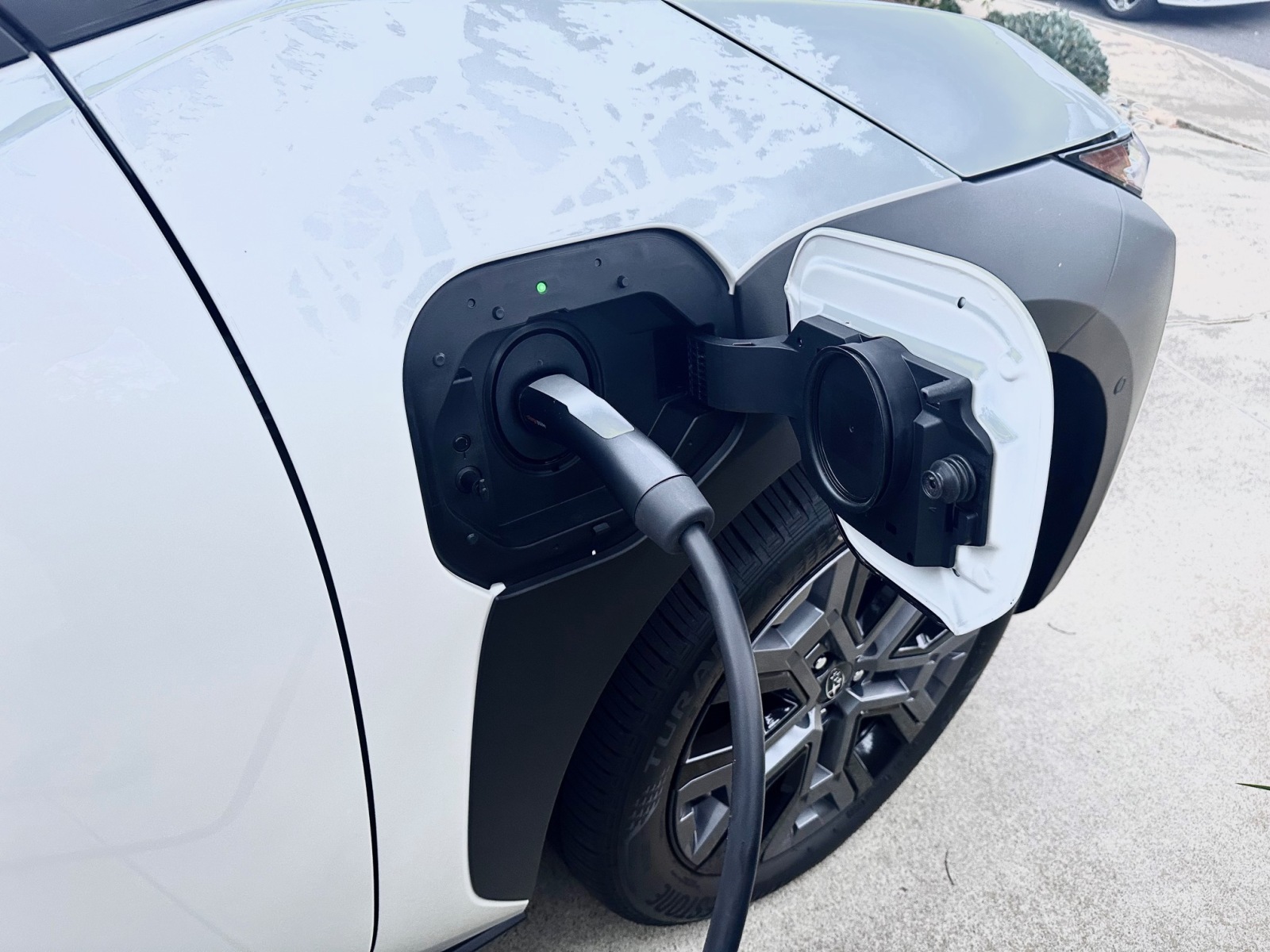
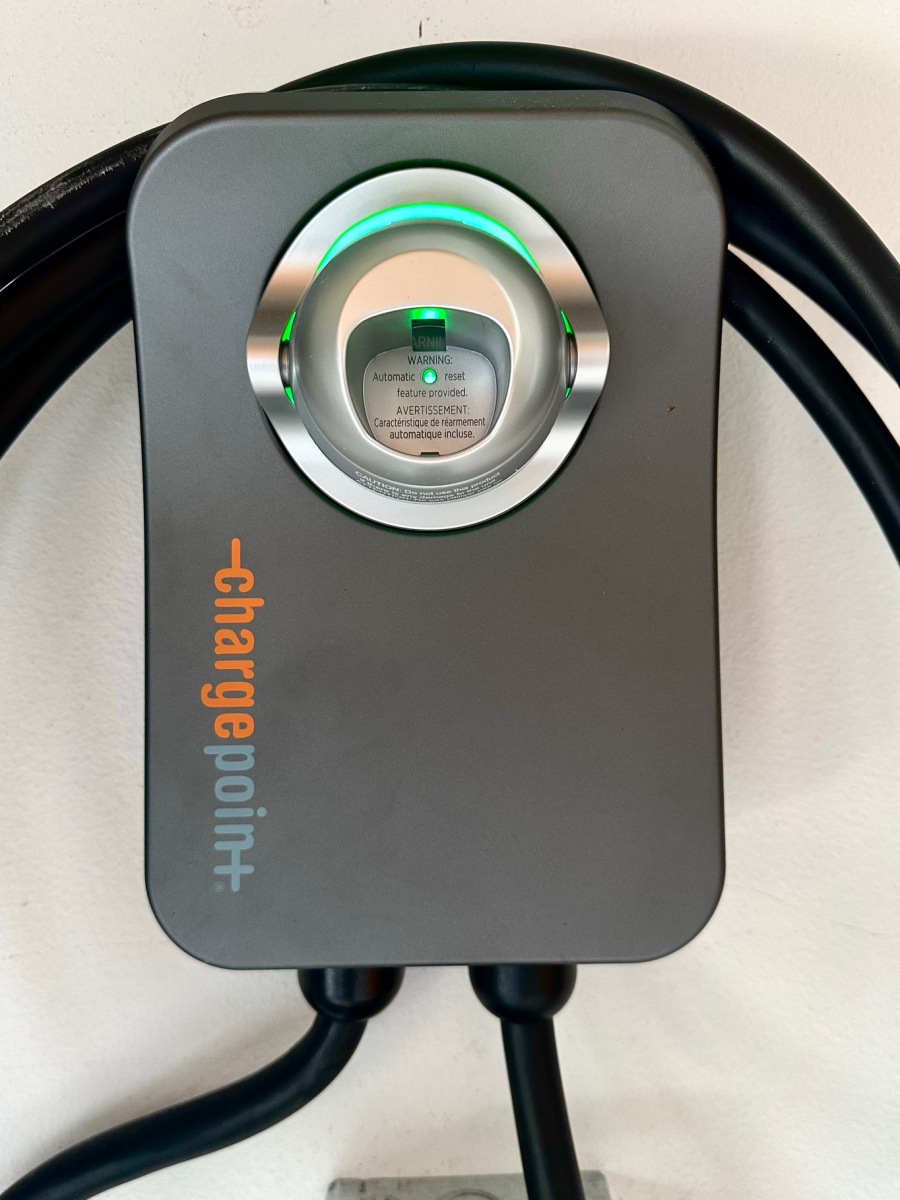
The Trailseeker comes with a pre-conditioner that brings the battery to an optimum charging temperature when DC fast charging. The battery can be trickle charged with a 120V common wall plug, but expect replenish times to be long and slow. The best bet for owners will be to install a Level 2 240V home charger, such as the ChargePoint Home Flex charger we use, that will deliver a full charge in about seven hours.
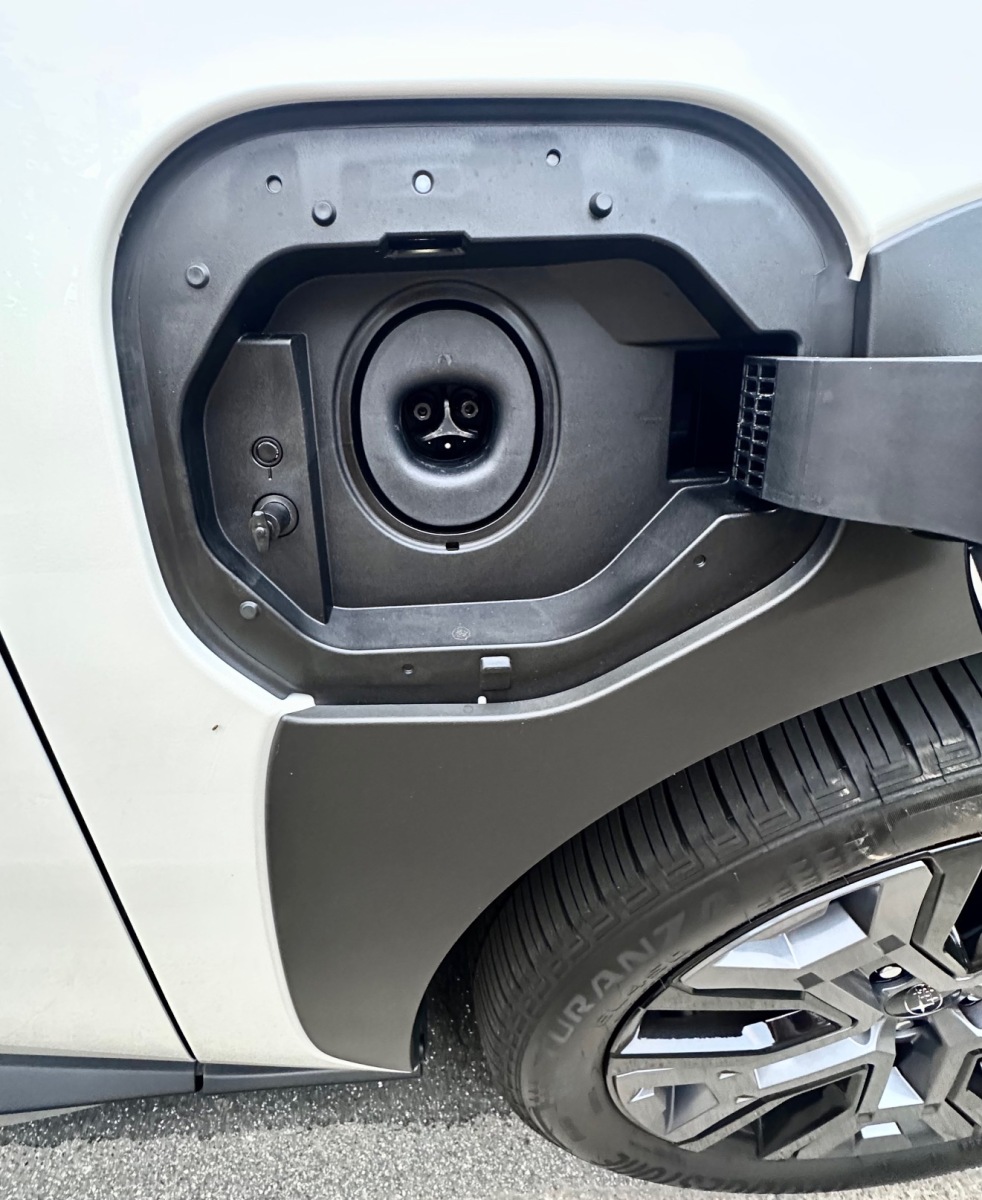
The standard North American Charging System (NACS) charging port provides access to thousands of high-speed Tesla Supercharger stations nationwide. DC fast charging, at a 150 kW maximum, will go from 10-80% battery capacity in around 30 minutes.
New for 2026, the Trailseeker has Plug & Charge, which allows automatic identification, authentication and authorization at selected charging networks, reducing the need for multiple mobile charging applications. Plug & Charge is accessed through the Subaru App.
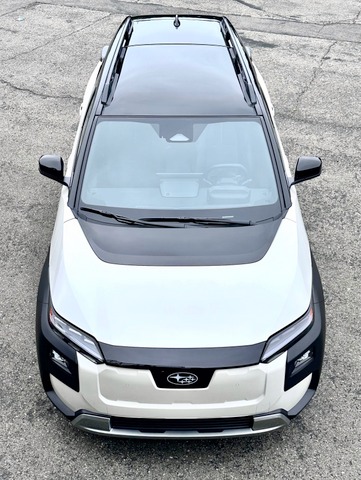
Contemporary Exterior
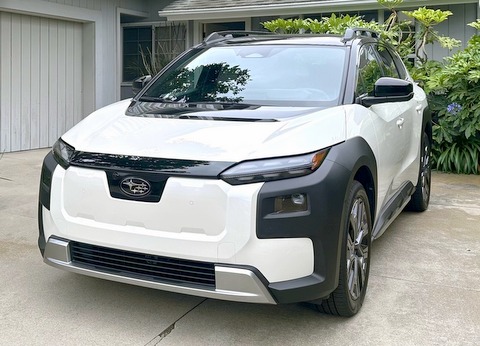
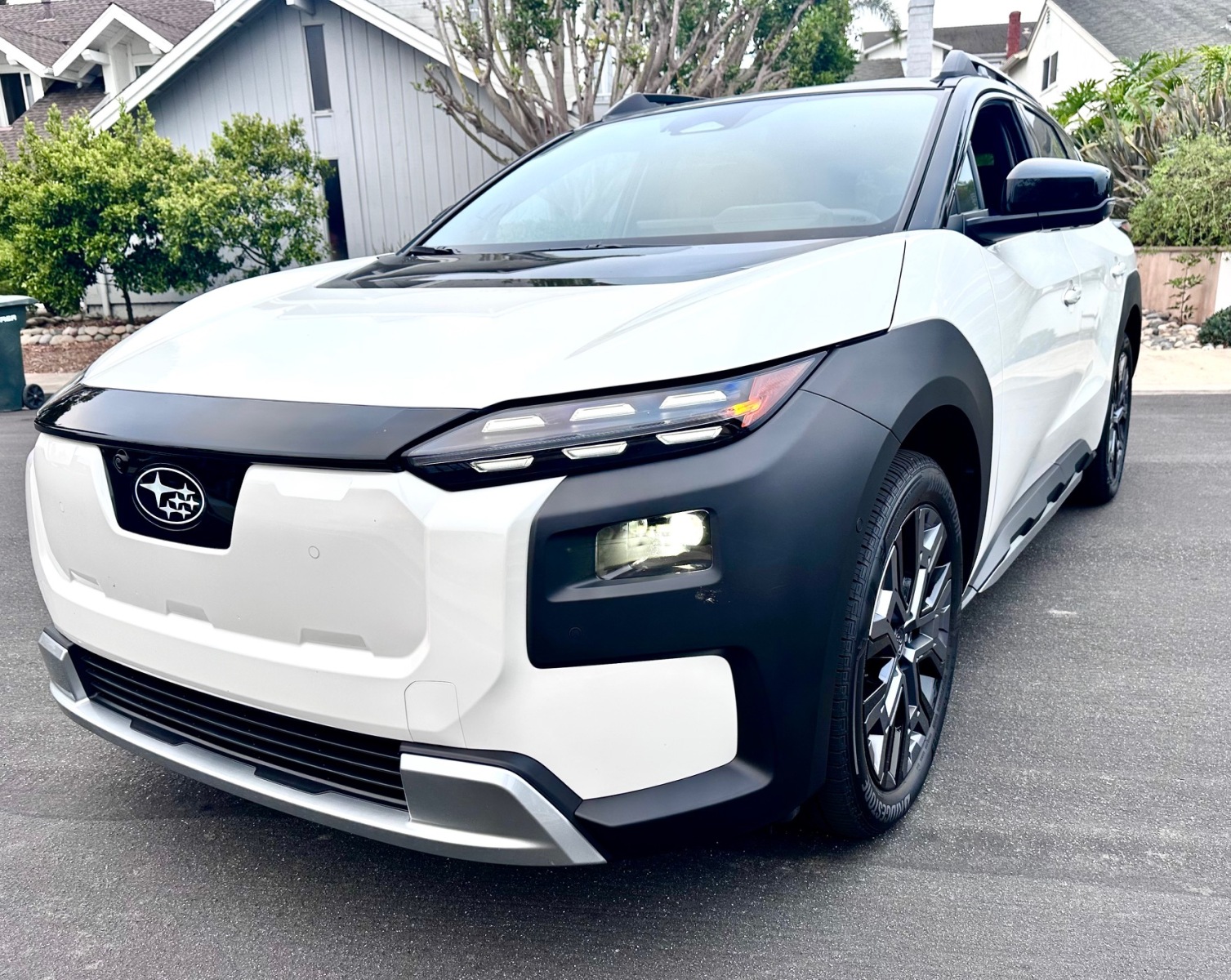
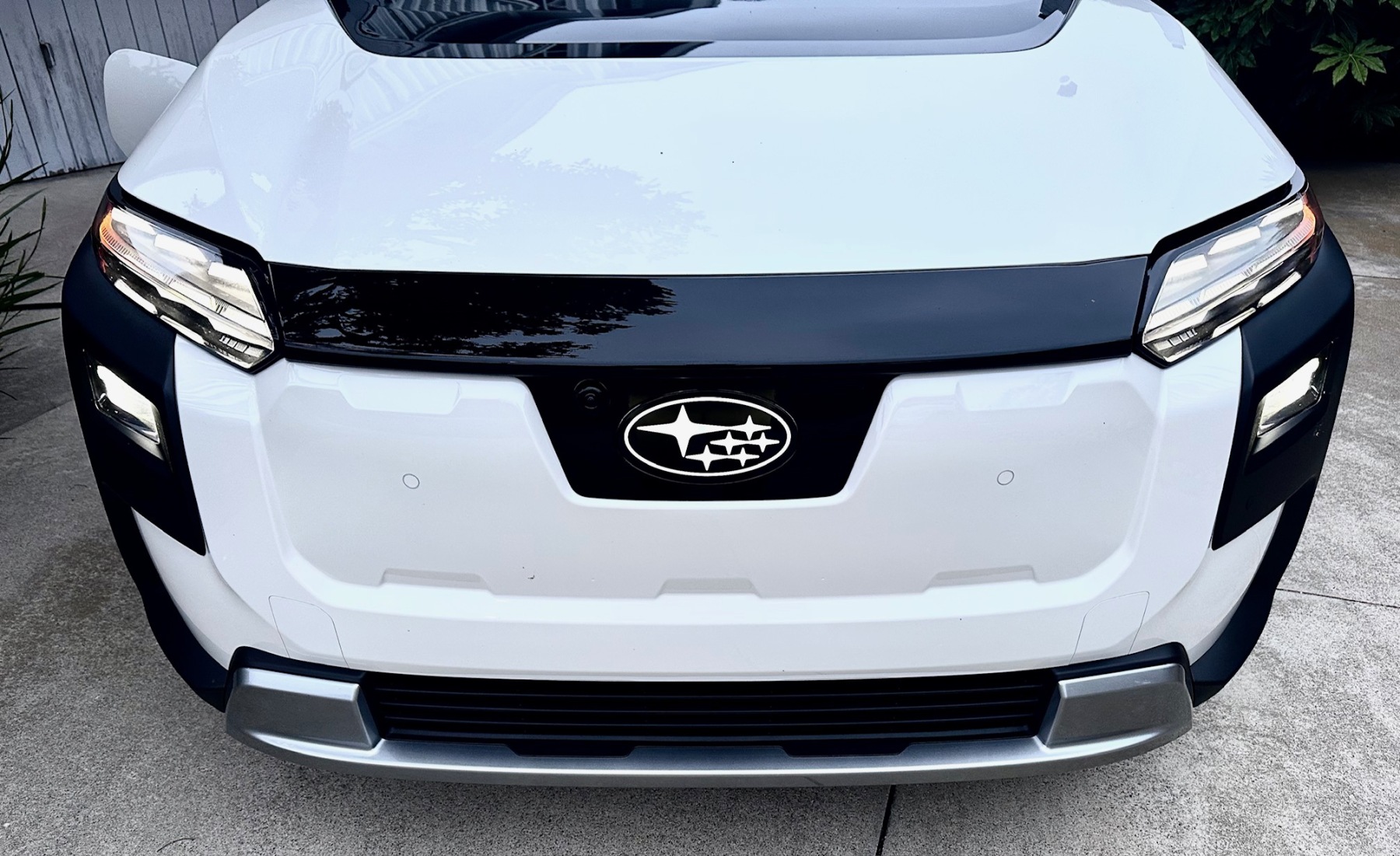
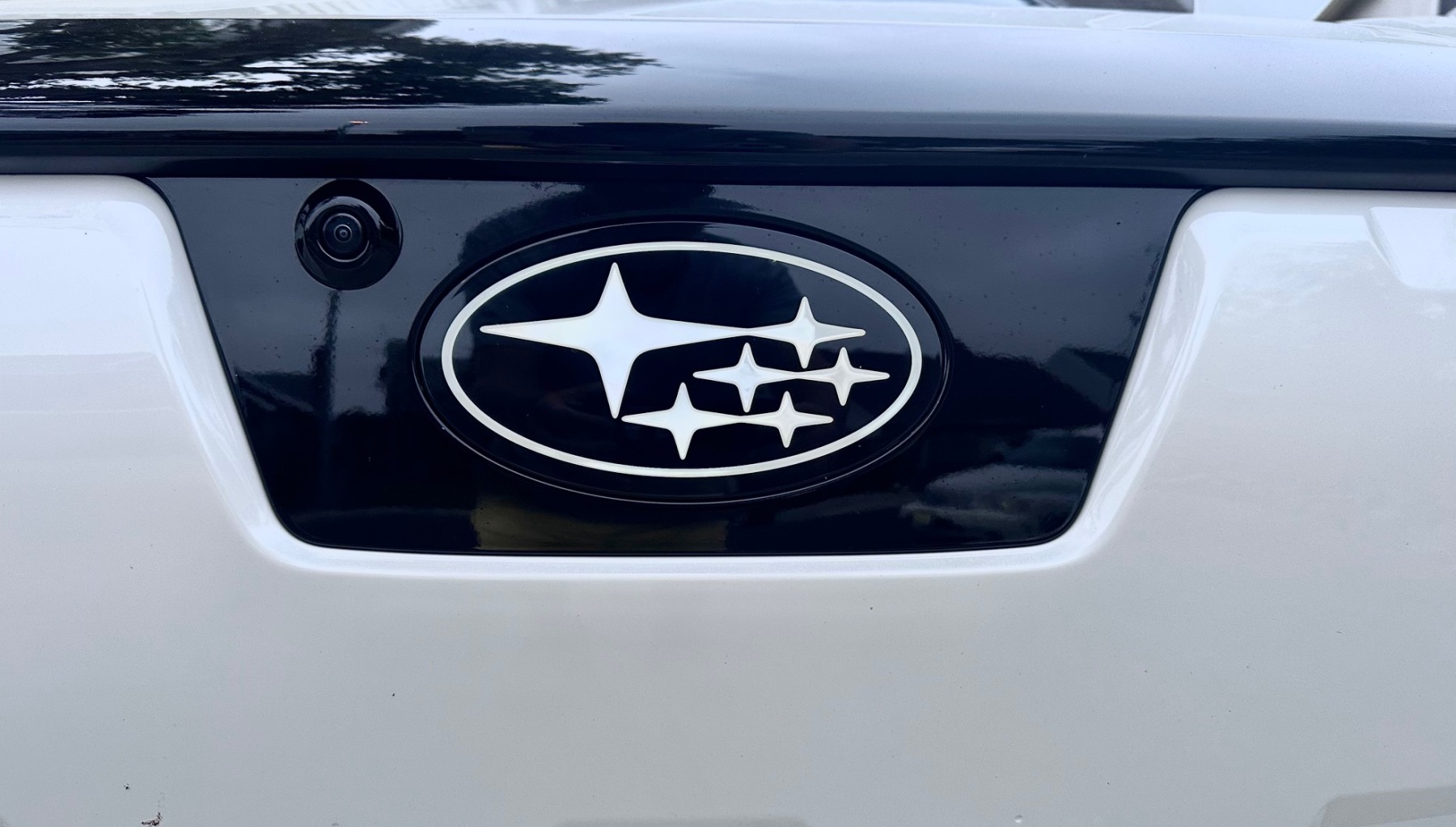
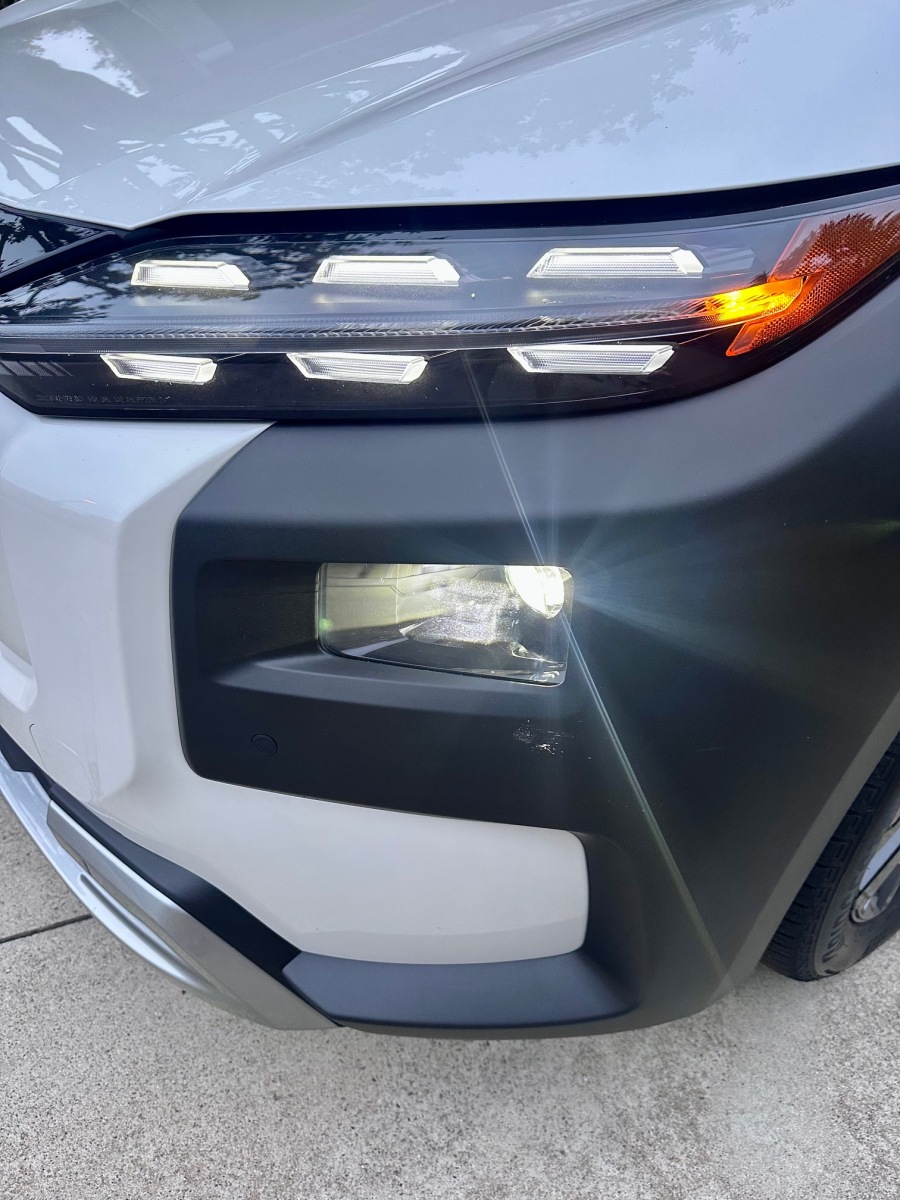
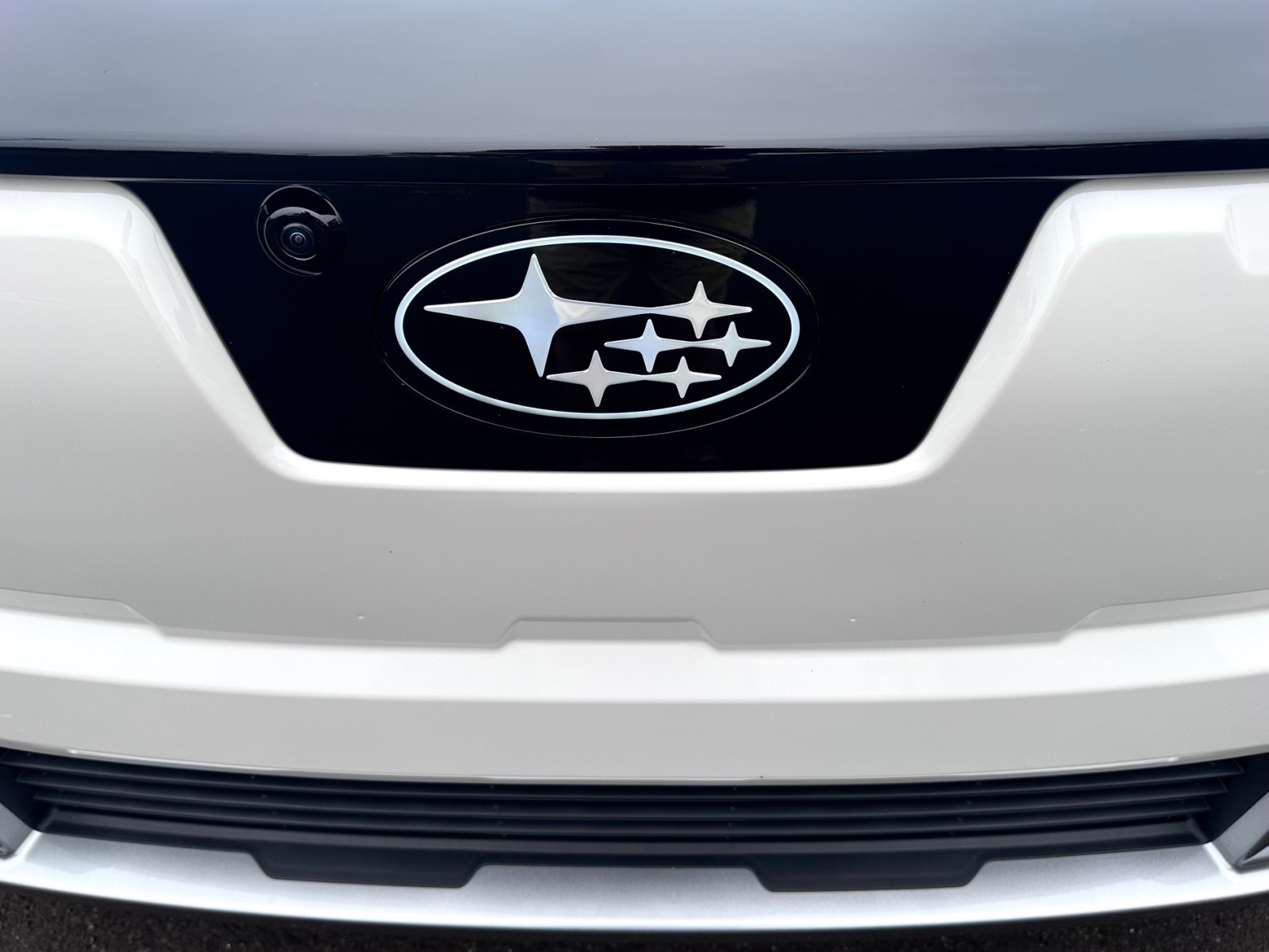
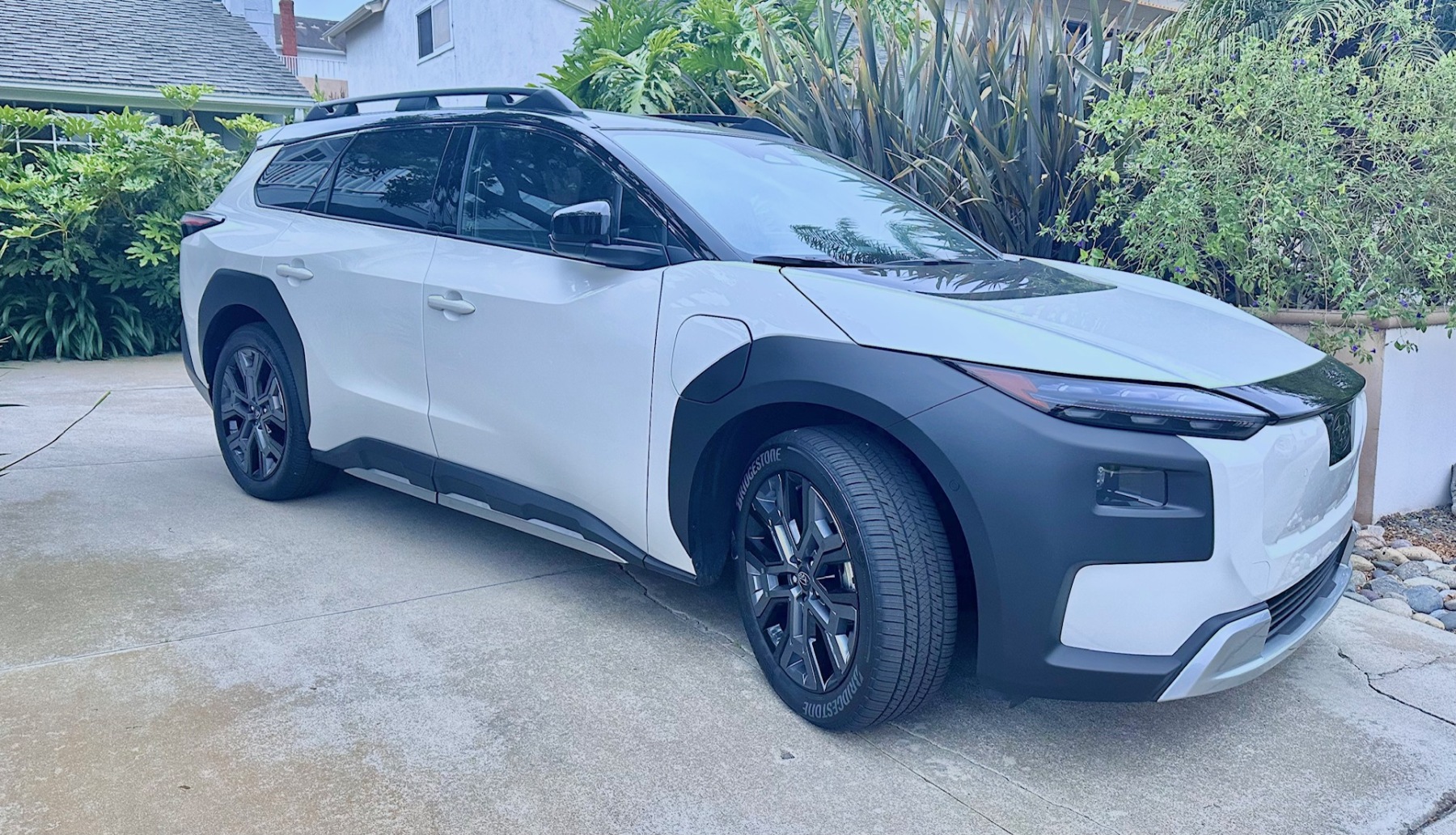
The flat nose (with the six-star illuminated logo) has a curved bumper corners with a slim grille. Narrow multi-LED projector head and daytime running lights complete the look. Black over-fender and lower body cladding gives the Trailseeker protection when off-roading.
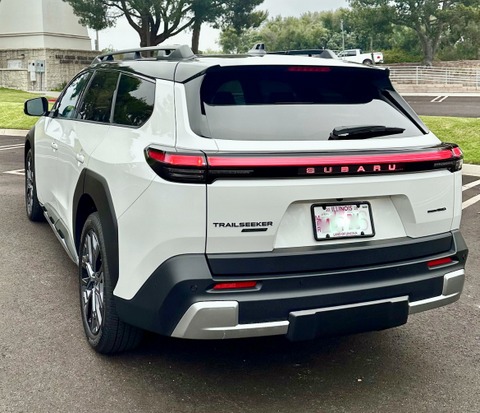
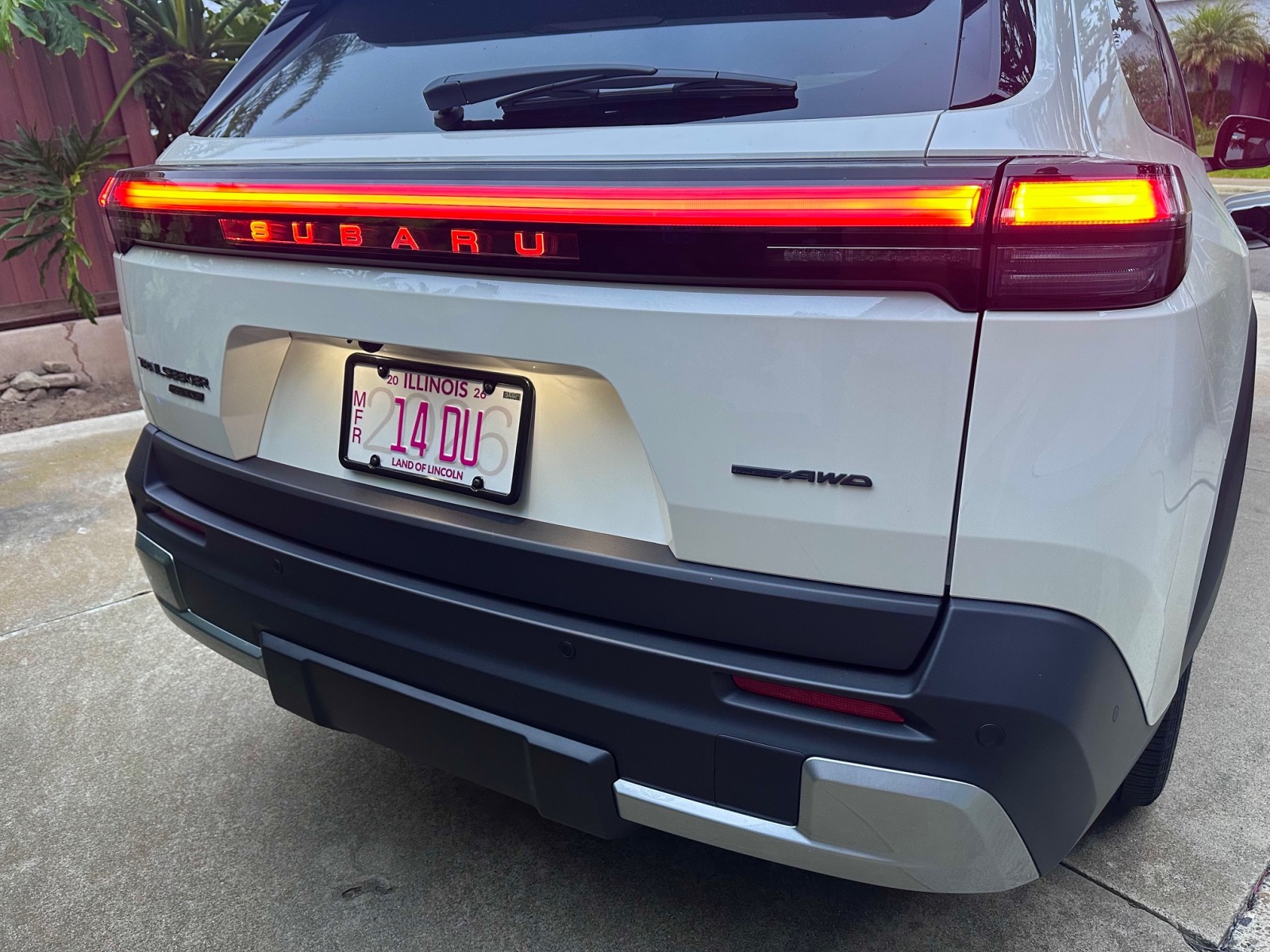
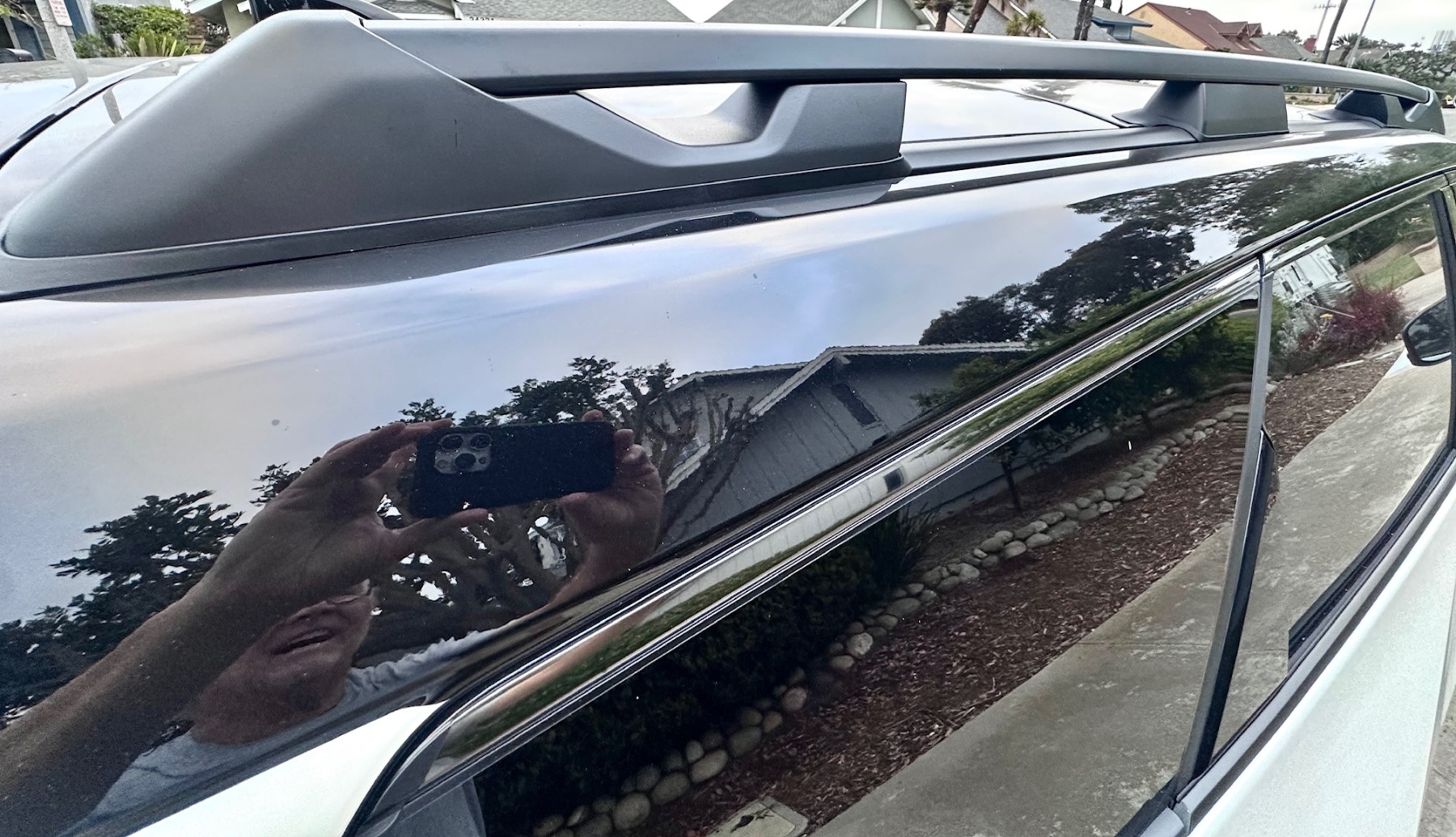
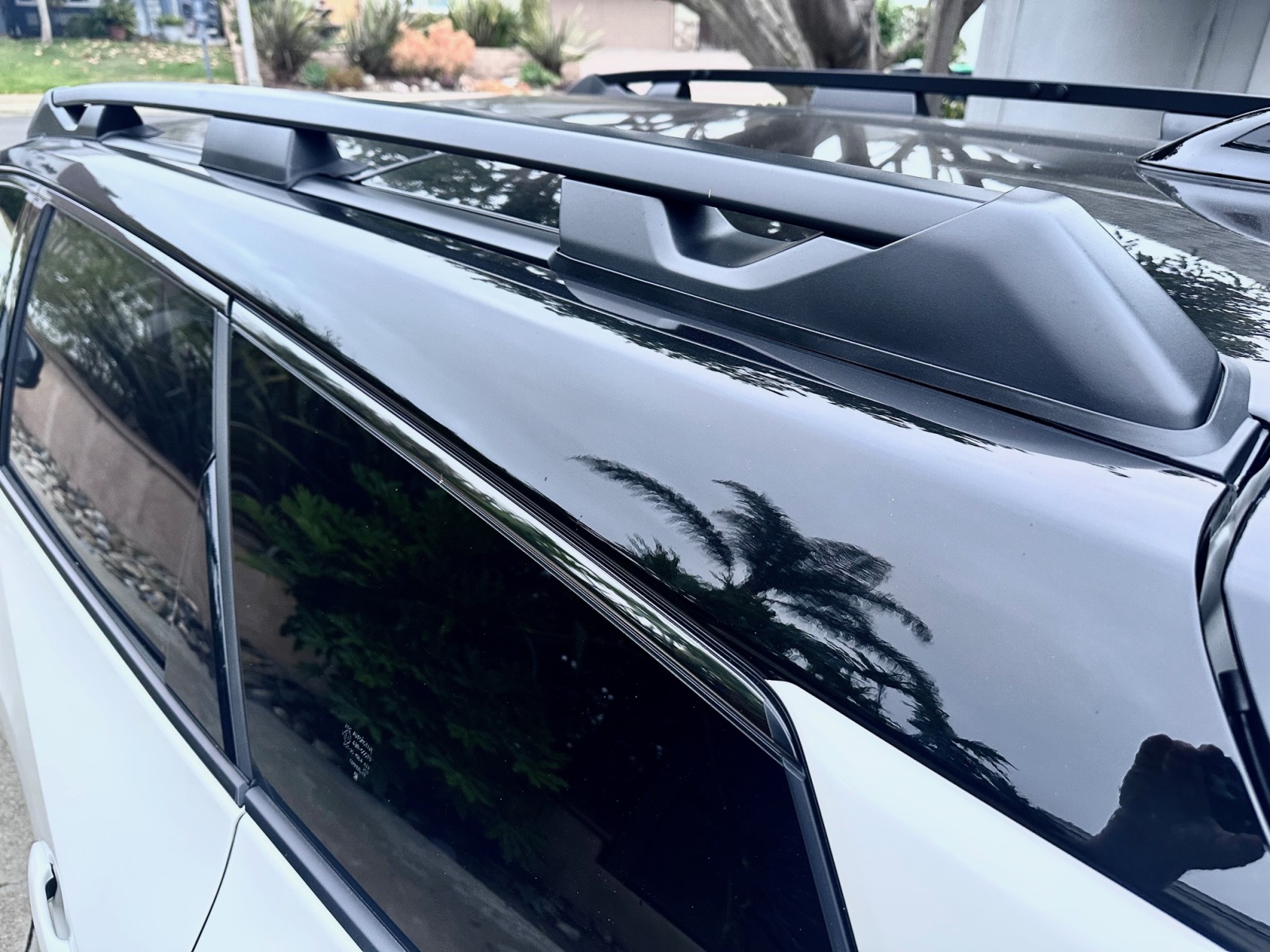
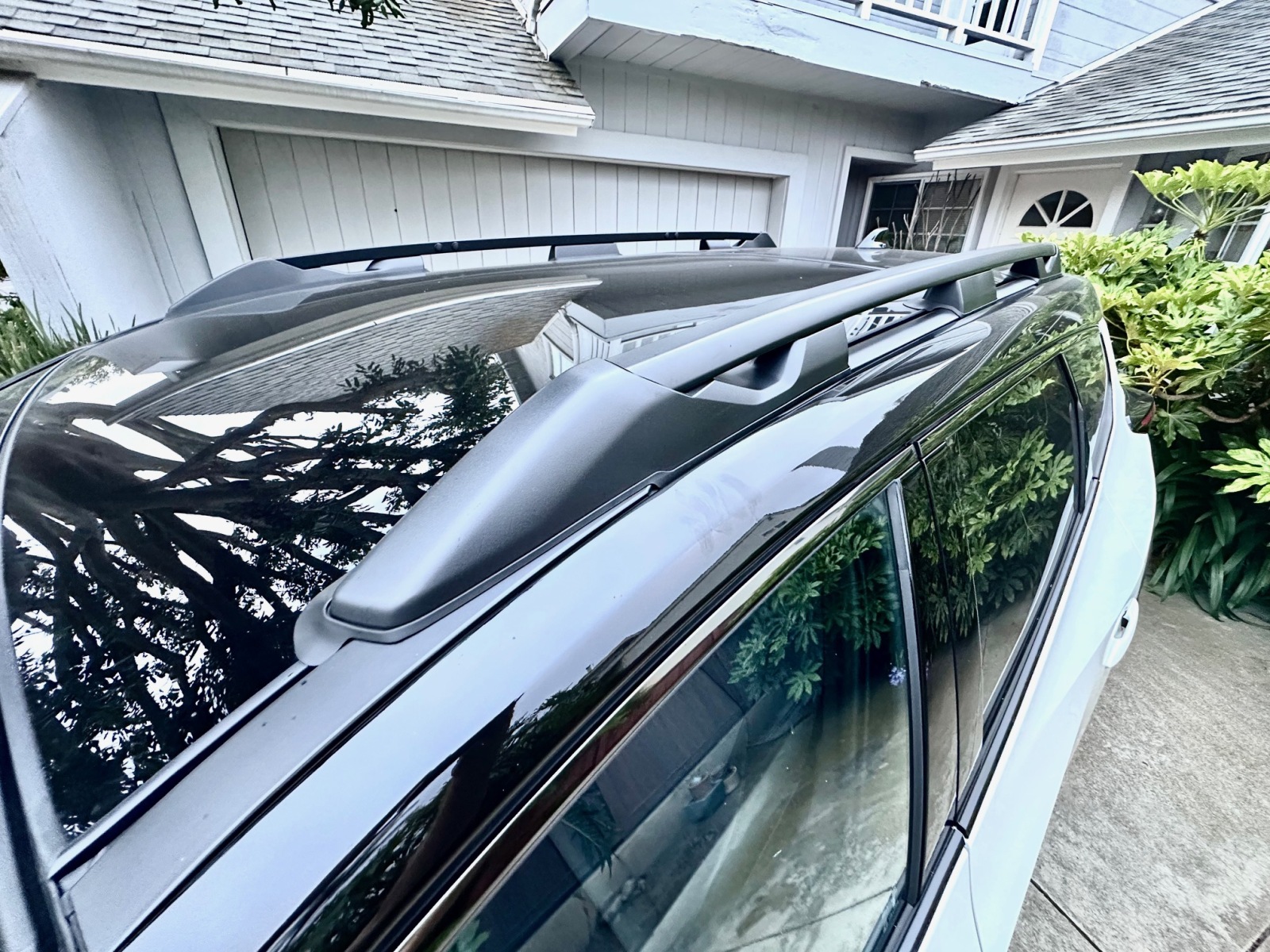
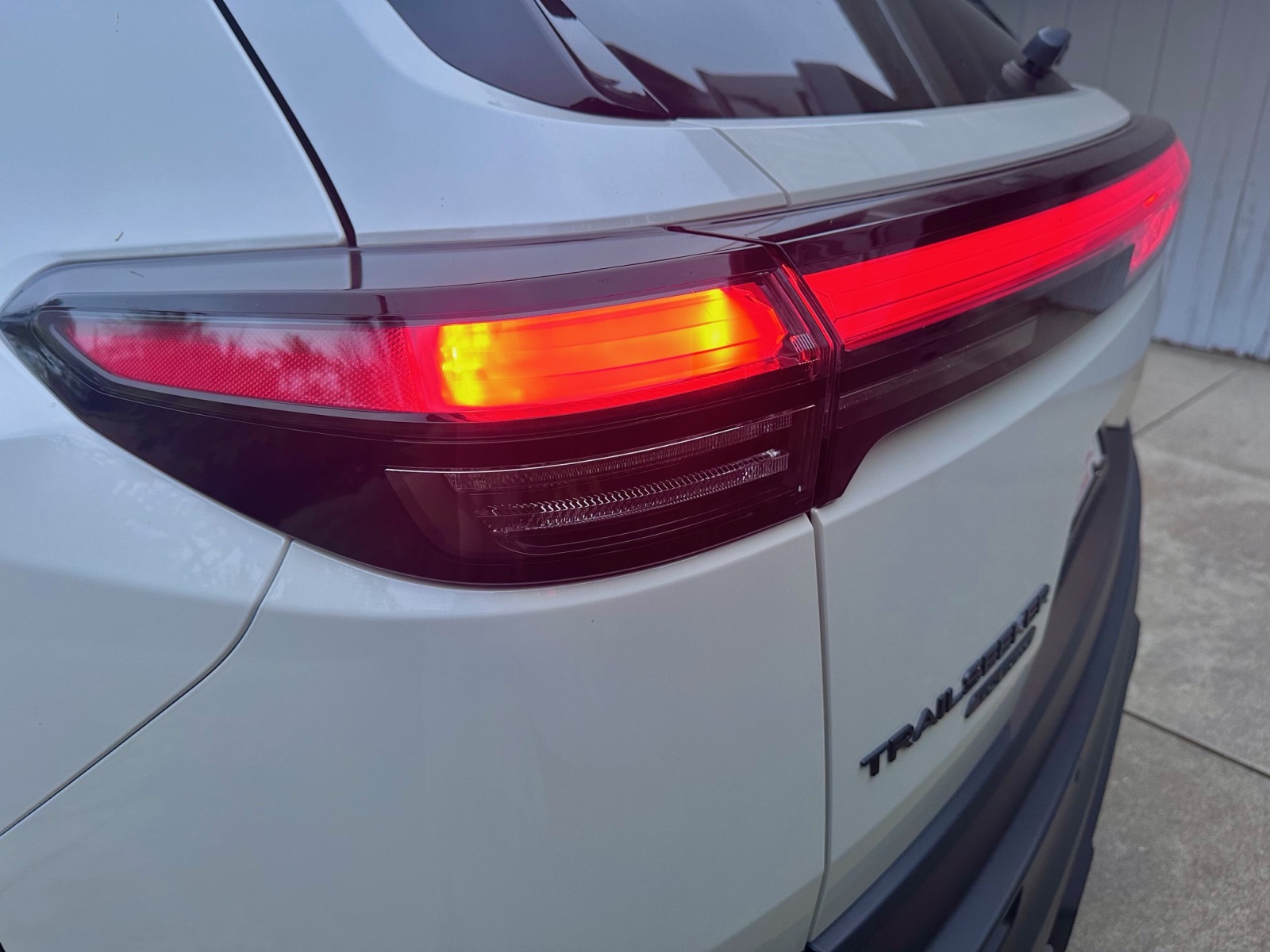
The front and rear overhangs are short, with high profile ladder-type roof rails framing the optional power panoramic glass roof. The power lift gate has a visor, wiper and narrow LED tail lights, with a connecting light bar strip. A classy and up-class element would have been to tuck the rear window wiper under the visor. The roof racks can handle 220 pounds when fully packed and driving down the road, then 700 pounds when parked, making it able to support two people in a roof-top tent.
Color choices at no additional cost are Brilliant Bronze Metallic, Crystal Black Silica, Magnetite Gray Metallic, Sapphire Blue Pearl and, like ours, Crystal White Pearl. There is a $395 premium for Daybreak Blue Pearl and $495 for Crystal White Pearl Two Tone.
Comfortable, Roomy and Basic Interior
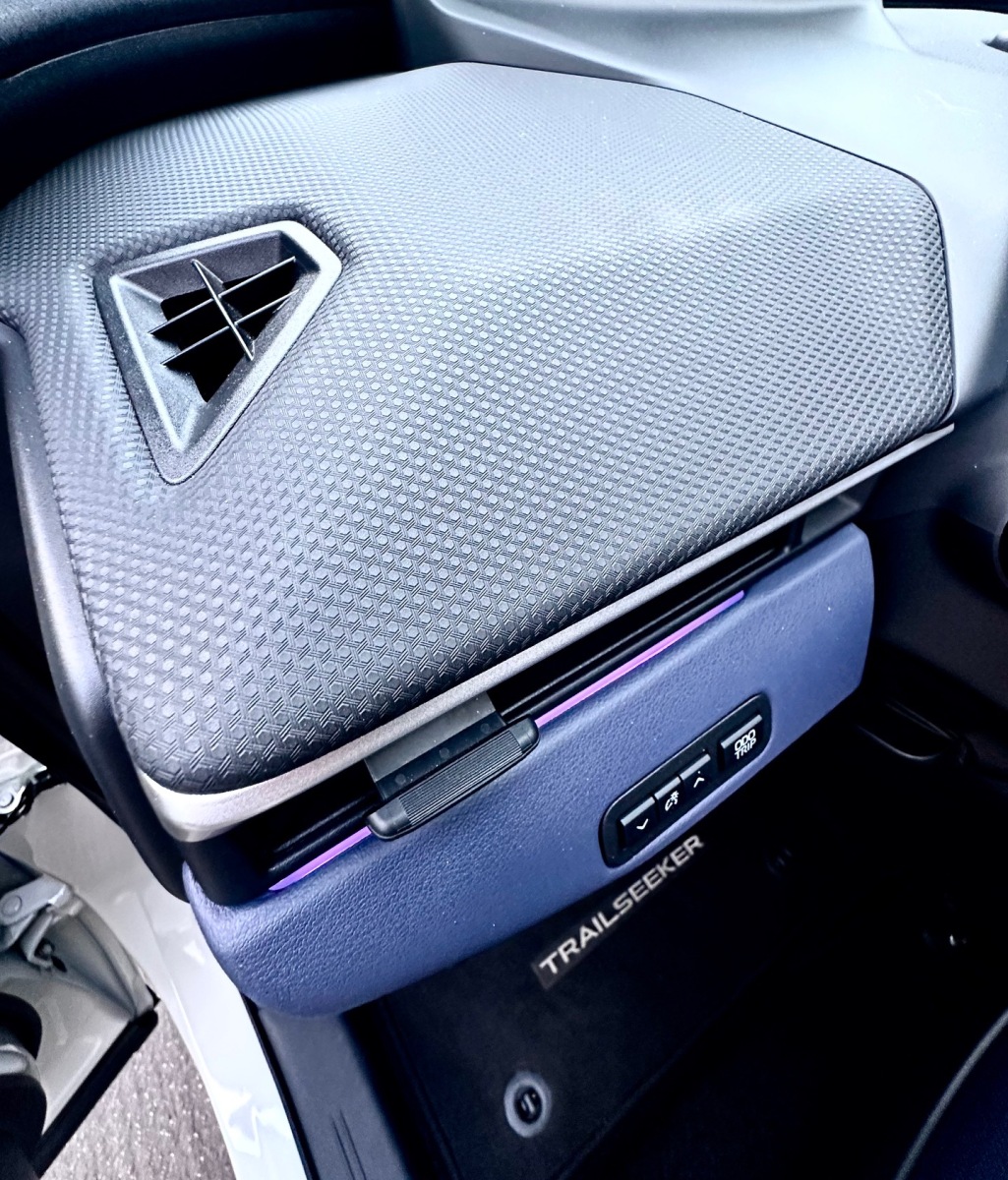
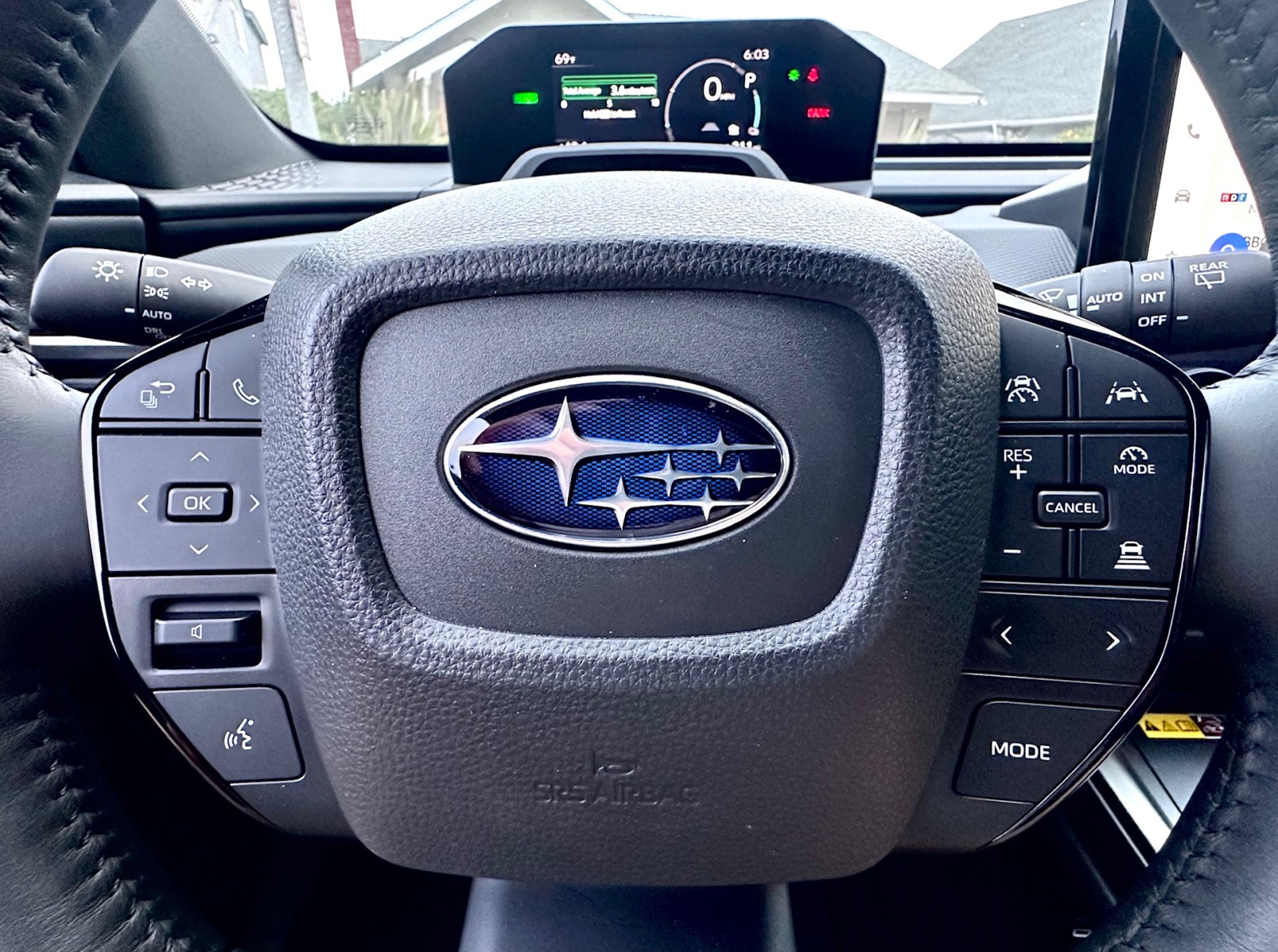
Driver visibility is very good with thin A-pillars, a sloping hood and a sound-insulating windshield and side windows. Soft and hard surfaces blend well together. A big thanks to Subaru for the restrained use of gloss piano black. The padded center armrest opens for small item storage and complements the storage area under the center console. The “squarecircle” steering wheel is easily adaptable with the flat top making it easier to see the instrument display screen.
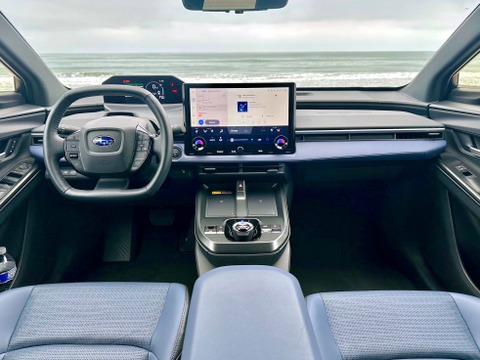
The front seats are supportive with our Trailseeker Touring having the $300 optional gray leather-trimmed upholstery. The driver gets 10-way heated and ventilated, power-adjustable seats with lumbar and memory. The outbound reclining rear seats are heated and the front passengers get radiant leg warmers that replace the glovebox on the Touring trim.
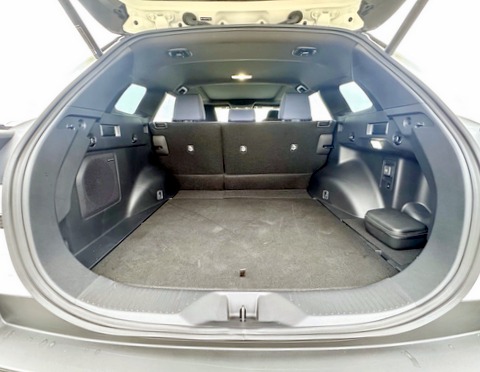
Cargo room goes from 31.3 cu. ft. with the rear 60:60 folding seat upright to 71.8 cu. ft. with the seat laid flat.
The Touring trim has a multimedia system with a 14.0-inch touchscreen for the 800-watt, 11-speaker Harmon Kardon audio set-up that includes a subwoofer and amplifier. Sounds come from SiriusXM (120-day trial), AM/FM radio or wireless Apple CarPlay and Android Auto connections. USB-C ports, a 1,500-watt AC outlet, 12V outlet in the cargo area and dual wireless phone chargers are standard. The Wi-Fi connection is through an AT&T Wi-Fi hot spot
Convenience
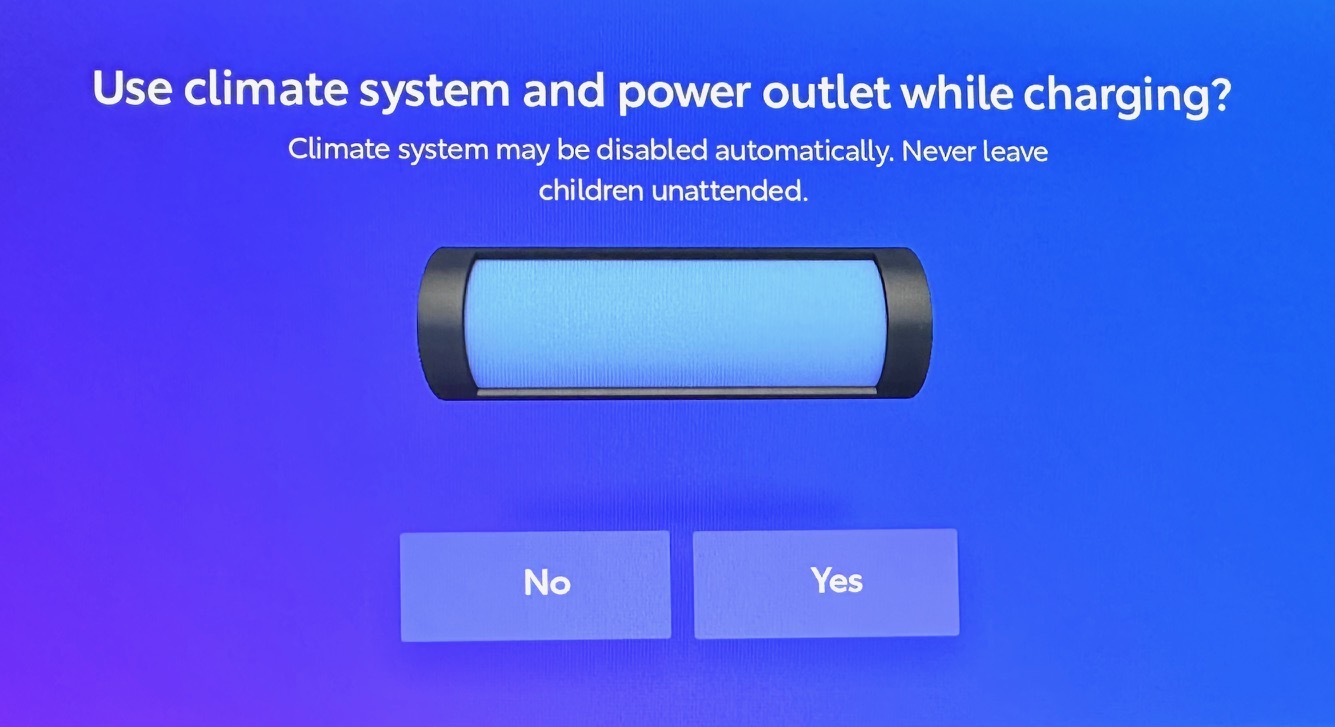
Also on the Trailseeker are a voice-activated dual zone automatic climate system with dust and pollen filters, rear passenger vents, power door locks and windows with auto up/down. There is a digital key, tilt and telescoping steering column, soft touch dash and armrests, rain sensing windshield wipers, color-adjustable ambient lighting and an auto-dimming digital rear view mirror with Homelink.
Safety and Convenience
The Trailseeker comes with active and passive advanced driver assist systems (ADAS) that is part of the EyeSight system. EyeSight allows for hands-off driving for short periods of time and will remind you with a “Keep Hands On The Wheel” warning popping-up on the instrument display screen. Subaru doesn’t use grip sensors in the steering wheel like many of the other EVs we have tested but relies on steering wheel inputs. EyeSight isn’t the most sophisticated driver-assist system we have used.
Safety technology includes nine airbags, advanced adaptive cruise control, automatic pre-collision braking and throttle management, emergency stop assist, and lane departure warning. In the case of an accident or other emergency, the Starlink Connected Services feature will place a call to emergency services.
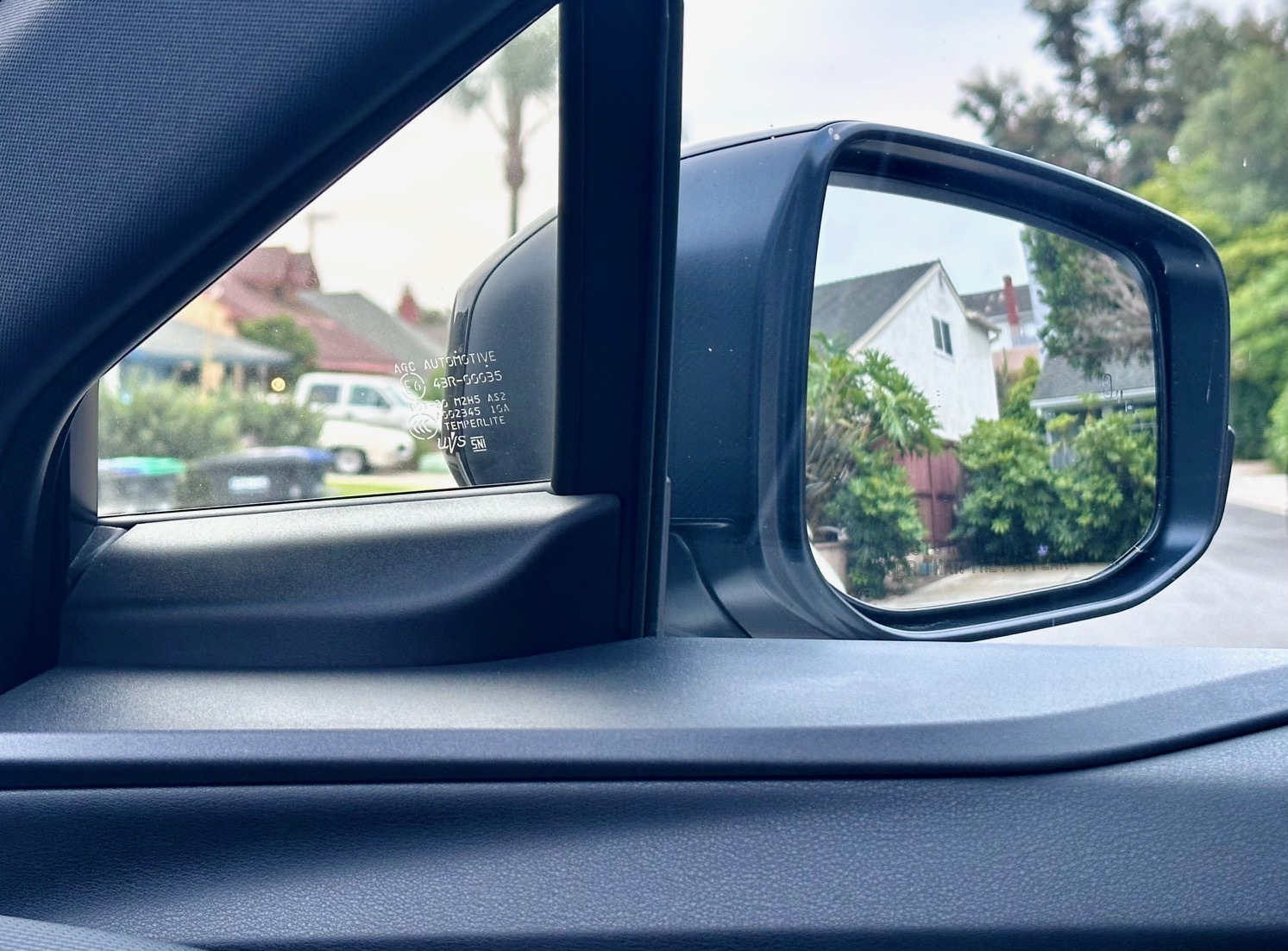
Safety features also include blind spot monitoring with lane change assist, a 360-degree camera and Safety Exit Alert that notifies occupants, before exiting the vehicle, of obstacles and pedestrians with an audible and visual warning.
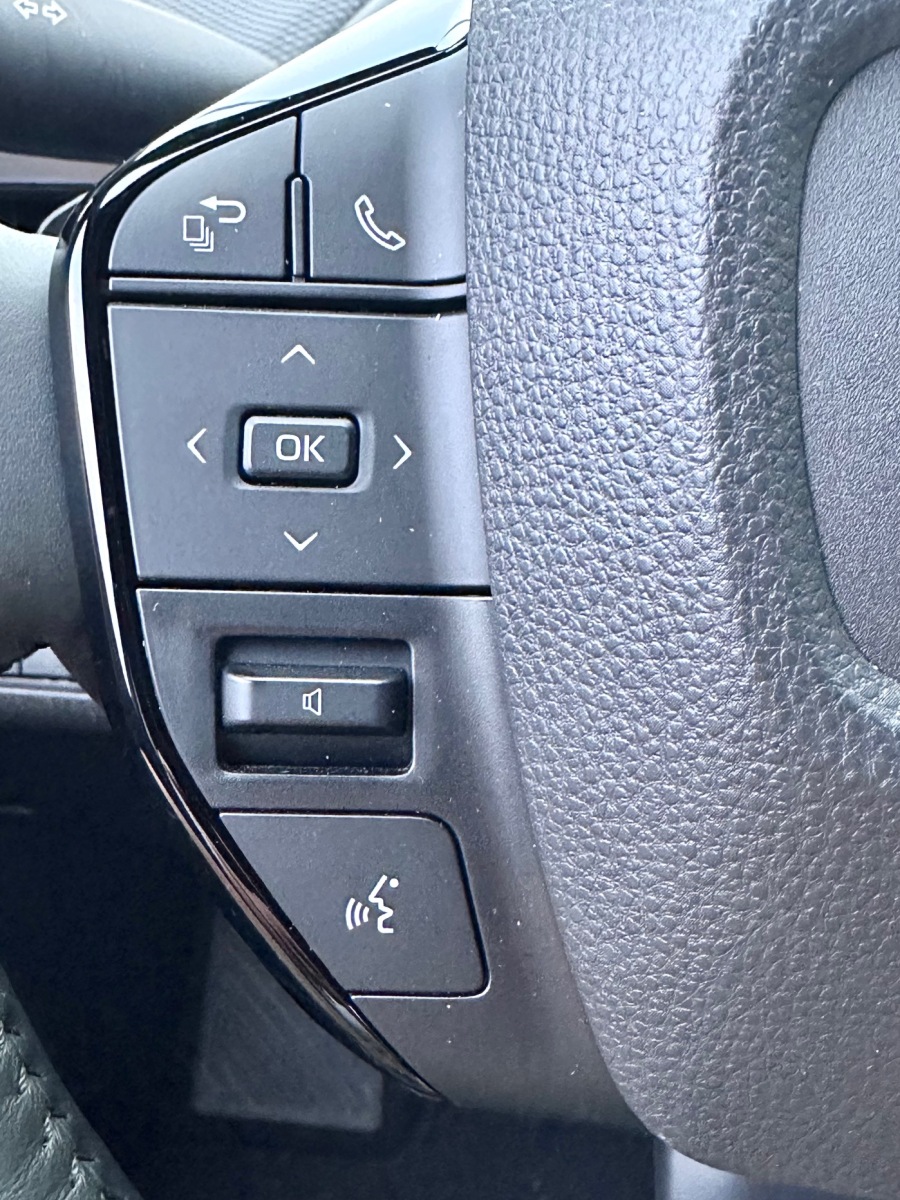
Additional convenience features include a rear vision camera, push button start/stop, remote keyless entry, electric power steering, steering wheel with audio and Bluetooth control switches, tire pressure monitoring system, a spare tire and 4-wheel anti-lock disc brakes.
Pricing
Prices include the $1,450 Destination and Delivery fee.
| Premium | $41,445 |
| Limited | $45,445 |
| Touring | $48,005 |
| Touring Leather | $48,335 |
Warranties
| Battery | Eight years/100,000 miles |
| Comprehensive | Three years/36,000 miles |
| Powertrain | Five years/60,000 miles |
| Corrosion Perforation | Five year/Unlimited miles |
| Complimentary Maintenance | Two years/25,000 miles |
| Roadside Assistance | Two years/25,000 miles |
Observations: 2026 Subaru Trailseeker Touring EV
The number of Subaru electrified models now totals three—the Solterra, Uncharted and Trailseeker. This is to be applauded for a brand that had none just a few years ago. It is also worth props in the current climate of tariff whims as it is hard enough for an auto manufacturer to forecast consumer interest in a specific type of vehicle without external forces creating havoc in their planning process. Subaru got substantial help from its partner (part-owner) Toyota as major development work on all three EVs was done by Toyota with Subaru input. Toyota’s sister cars to the Subaru trio (parallel to the listing above) are the BZ (and BZ Woodland), CH-R and Highlander.
The Trailseeker was designed with the American driver in mind offering efficiency, handling, performance and its light environmental footprint. The range, all-wheel drive, NACS and utility are all excellent. The 3,500-pound tow rating is nice but remember, hauling a heavy trailer as-well-as stacking canoes and hanging bicycles off the tail will cut into the all-electric driving range. The static roof rating of 700 pounds means two adults can sleep up-top in a roof tent.
A miss though, especially for a vehicle that will be used for road trips, is the lack of route planning in the navigation. All EV owners that drive further than their local area will come to rely on this feature. The navigation will find in real time, using GPS, the nearest charging stations and suggest where to stop based on your driving speed and battery charge. A work-around is using Apple CarPlay and Apple Maps but Subaru should add this feature to their native navigation.
The 2026 Subaru Trailseeker is appealing in many ways and should be on your shopping list when visiting your local Subaru dealer.
Make sure to opt-in to the Clean Fleet Report newsletter (top right of page) to be notified of all new stories and vehicle reviews. Story by John Faulkner. Photos by John Faulkner and Subaru.

Looks like Subaru has struck a nice balance between everyday practicality and EV performance. The focus on AWD capability makes this one worth watching.
Subaru (with some help from Toyota) seems to have the right touch when it comes to EVs. The Solterra is still one of our favorite EVs. –ed.