
This article may contain affiliate links.
Electric vehicles have earned strong crash-test scores, and their occupants tend to walk away from collisions in good shape. The people in the other car are a different story.
The reason is mass. Battery packs are heavy, and the weight gap between EVs and the cars they share the road with is growing.
How Big Is the Gap?
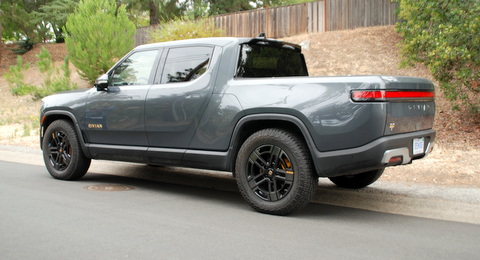
When the Insurance Institute for Highway Safety crash-tested its first EV, a 2011 Nissan Leaf, it weighed 3,339 pounds. In a March 2023 report, IIHS noted that many current EVs top 6,000 pounds. The GMC Hummer EV comes in at about 9,500 pounds, and the Rivian R1T pickup at about 7,000. A typical gas car or SUV weighs 3,000 to 4,000 pounds.
National Transportation Safety Board Chair Jennifer Homendy raised the same concern in a January 2023 speech to the Transportation Research Board. She pointed out that the Hummer EV’s battery alone weighs roughly 2,900 pounds, about as much as a compact sedan, and that the Ford F-150 Lightning runs 2,000 to 3,000 pounds heavier than its gas counterpart.
What the Crash Data Shows
A 2026 Tinbergen Institute discussion paper by economists Junjie Lin, Cheng Keat Tang and Jos van Ommeren looked at more than 300,000 two-vehicle collisions in California. The authors found that EVs are typically about 20% heavier than comparable gas vehicles. Driving an EV cut the driver’s risk of serious injury or death by 18%. For occupants of the other vehicle, the risk rose by 13%, an effect the authors attribute almost entirely to weight.
Physics explains it. In a collision, the heavier vehicle keeps more of its momentum and pushes the lighter one backward, so the people in the smaller car absorb more force. Extra mass also adds stopping distance, which matters for pedestrians and cyclists.
What Changes After a Crash
Weight does not change who is at fault. Fault still turns on speed, attention, following distance and right of way. What weight changes is the damage. A rear-end tap that would mean a bumper repair between two compact cars can mean a neck or back injury when a 7,000-pound pickup is doing the tapping.
That has practical consequences for anyone hit by a heavier vehicle:
- Get a medical evaluation even if you feel fine. Soft-tissue injuries often show up a day or two later, and a gap in treatment is a common reason insurers push back.
- Photograph both vehicles and note the make and model of the other car. Vehicle weight can help explain why a low-speed crash caused real injuries.
- Check your own policy limits. Higher repair and medical costs mean minimum coverage runs out faster, which makes uninsured and underinsured motorist coverage more valuable.
Most states use some form of comparative fault, so a driver who was partly to blame may still recover a reduced amount, while others bar recovery past a set threshold. The rules, deadlines and insurance requirements vary widely, and anyone weighing car accident claims should check how they apply where the crash happened.
What Comes Next
IIHS has suggested several fixes: more front-end crush space on heavy vehicles to protect occupants of lighter ones, automatic emergency braking that detects pedestrians and cyclists, and speed limits that account for the growing weight mix on the road. None of that changes the car in your driveway today. Leaving more following distance, especially in a heavy EV, still does.
This article is general information, not legal advice. Laws vary by state and by the facts of each crash.
