
“I won’t own a hybrid because I don’t want to plug-in my car!”
You can’t believe the things we read and hear coming from “experts” about electrified vehicles. This happens so often you would think there is a news source or political party writing a script for uninformed and ignorant people to blindly repeat. The most patient person would be sent over the edge!
A vehicle with any form of electrification should have increased fuel efficiency and produce the least emissions of comparable cars, trucks and SUVs on the road. There is no reason why all cars can’t have a hybrid engine. Period. While an all-electric car, truck or SUV may not fit the needs of all drivers, one of these could work for the vast majority of drivers.
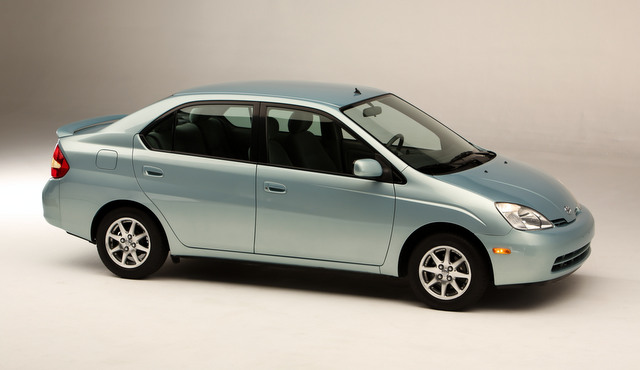
Electrification 101
- Electrification is the overall term for a vehicle that uses electricity, partially or completely, to propel it down the road.
Electrified vehicles include mild hybrid, full hybrid, plug-in hybrid, battery electric, range extended electric and hydrogen electric.
- Some electrified vehicles use a plug, but not all of them.
- Cars without a plug run and operate the same as those using only a gasoline engine.
- Cars with a plug offer a wide range of benefits for almost all drivers.
- Cars with a plug are not right for everyone, usually based on where you live.
- The total cost of ownership of an electrified vehicle is less than one using gasoline.
Let’s take a look at the options for increased fuel economy and having a lighter environmental footprint. In alphabetical order.
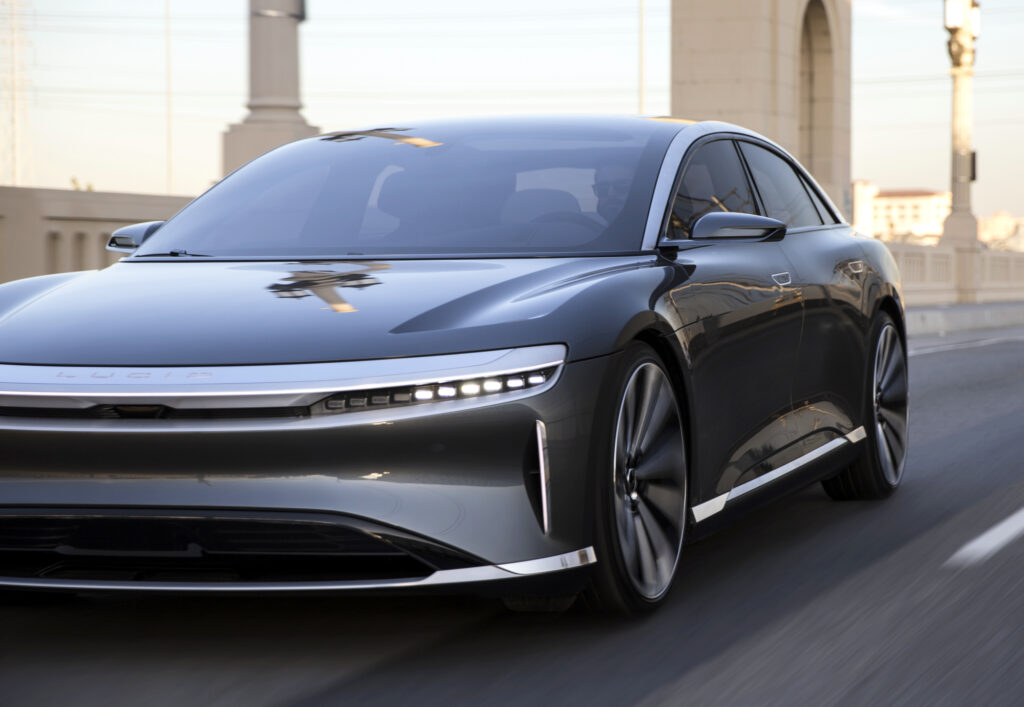
Battery Electric Vehicle (BEV)
Battery electric vehicles (BEV or EV) have made great technological strides in the past few years of faster charging, longer driving range, more efficiency, cheaper batteries and increased power. Since the Nissan Leaf debuted in 2010, EVs have come a long way to being a viable propulsion source for many drivers. Sales of EVs continue to increase every year with a wide range of models to fit different lifestyles.
An EV has a large onboard battery that stores electricity and is primarily recharged from a public or home charging station. Depending on the size of the battery and the charging speed, it can take 15 minutes to several hours to charge a vehicle to 80% of its driving range.
“Range Anxiety” is commonly cited as a reason people would not own an EV. Way back in 2010, that first Leaf maxed-out at 107 miles, so people fearing running low on electricity was valid. Most EVs in 2026 get 230+ miles of all-electric driving range with several 300+ and the Lucid Air topping the list at 512 miles. These all-electric driving ranges are more than sufficient for everyday commuting and extended errands.
The public charging infrastructure was non-existent when the Leaf came on the scene. The past 17 years have seen significant growth in vehicle range, public charging availability and charging speed, making range anxiety for the vast majority of drivers a non-issue.
Currrently in the U.S. EVs are offered from Audi, BMW, Cadillac, Chevrolet, Dodge, Fiat, Ford, Genesis, GMC, Hyundai, Jeep, Kia, Lexus, Lucid, Maserati, Mercedes-Benz, Mini, Nissan, Polestar, Porsche, Ram, Rivian, Rolls-Royce, Subaru, Tesla, Toyota, VinFast, Volkswagen and Volvo. Worldwide there are dozens of additional companies offering EVs.
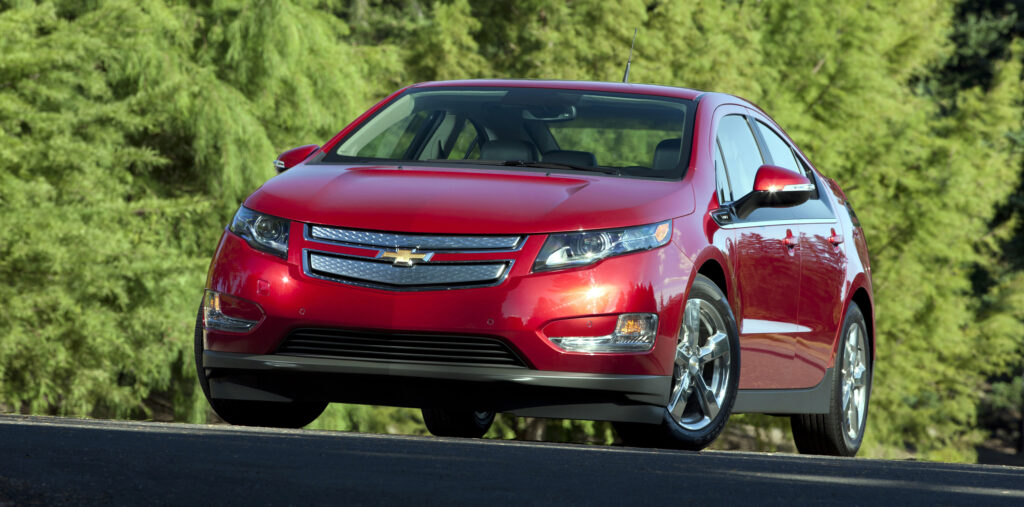
Extended Range Electric Vehicle (EREV)
An extended range electric vehicle (EREV) has a small gasoline engine powering a generator to charge a battery. The electricity in the battery powers one or two electric motors to drive either two or four wheels. The gasoline engine has no mechanical connection to the wheels; its sole purpose is to recharge the battery. Most EREVs can be plugged-in to recharge the battery.
The benefits of an EREV are the distances it can travel, having a lighter environmental footprint than and being more cost-efficient than a gasoline-only car. In addition, it can rely on the more extensive gas refueling network to extend its range.
Currently in the United States only Ram sells an EREV. The new car company Scout is planning to offer one in 2027. One of the best-know EREVs was the Chevrolet Volt (2011-19), although it was not a true EREV because the gas engine could propel the car at times.
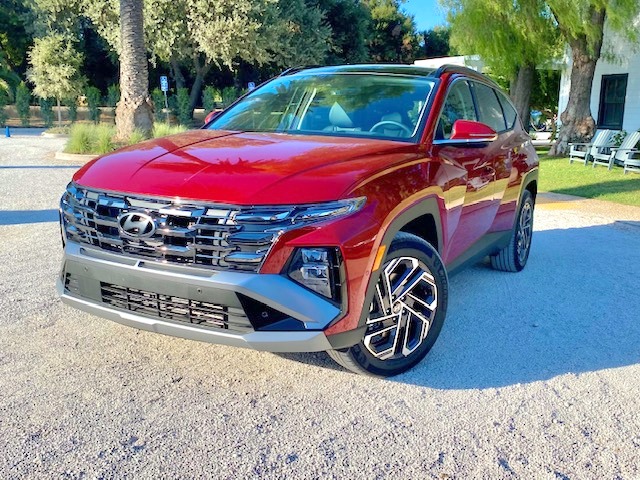
Hybrid Electric Vehicle (HEV)
The most common type of hybrid power plant is a hybrid electric vehicle (HEV). A hybrid vehicle combines a gasoline engine with an electric motor. They can run separately or simultaneously, improving performance, fuel efficiency and tailpipe emissions.
Driving a hybrid is no different than a gasoline-powered vehicle so there is no learning curve or extra operational steps. Just get in and go. However, hybrid drivers often find they can modify their driving style to take advantage of regenerative braking and other features of the hybrid system to maximize fuel economy
The hybrid benefit is significant with increased fuel economy that directly impacts your fuel budget. Getting 35-50 miles per gallon in hybrid versus 16-25 mpg in a gasoline-powered vehicle means less money out of your pocket and fewer stops at the gas station. An HEV also has regenerative braking where kinetic energy is converted into electricity when slowing or coasting and then returned to the battery.
Many manufacturers offer a hybrid car, truck or SUV. Toyota is the largest worldwide seller of hybrid vehicles, hitting the 15 million mark at the beginning of 2026. Other brands currently selling hybrids in the USA include Audi, BMW, Ford, Honda, Hyundai, Kia, Mazda, Mercedes-Benz, Porsche, Subaru and Volvo.
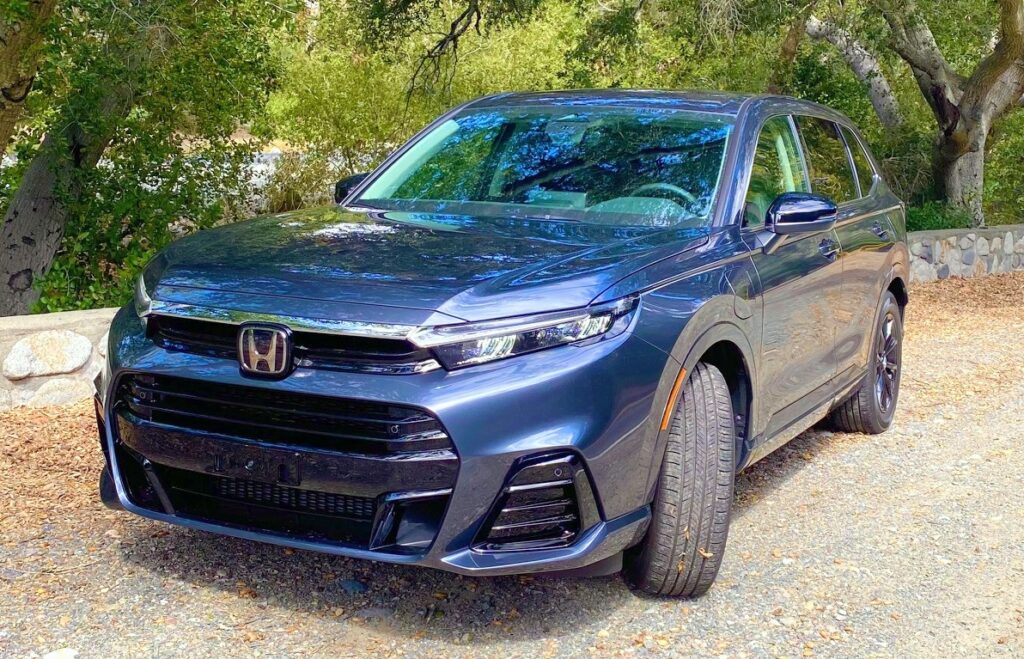
Hydrogen Fuel Cell Electric Vehicle (HFCEV or FCEV)
The rarest of all electrified vehicles are those powered by hydrogen. The most common and abundant element in the universe, hydrogen carries atomic number 1.
A hydrogen fuel cell electric vehicle (FCEV) is more efficient than a conventional gasoline internal combustion engine vehicle and produces no harmful tailpipe pollutants, only emitting water vapor and warm air. FCEVs take 3-5 minutes to refuel (about the same time as a gasoline vehicle) with compressed hydrogen gas and have a driving range of about 300 miles on a typical storage set-up.
The hydrogen, stored in high-pressure tanks inside the vehicle, is converted into electricity by combining air for a chemical reaction inside a fuel cell stack. The produced electricity powers one or two electric motors that drive the wheels. The quiet and seamless process takes place quietly under the hood. An FCEV is driven like any other car, but has performance characteristics similar to an EV.
So why is this technology not more widely used? Simple: cost and availability.
The Honda CR-V e:FCEV, Hyundai Nexo and Toyota Mirai are the three fuel cell electric vehicles for sale in the United States, but only in California, the only location with a refueling network. The 2026 cost of hydrogen at the pump is $30 per kilogram (kg) which is significantly more than a gallon of gasoline. And the price has been higher at times.
The next concern is hydrogen availability. There are 56 fueling stations in California (where the above models are sold) concentrated in major markets. With a driving range of 300 miles the 54 stations sounds sufficient, but many of them are off-line due to a lack of hydrogen due to production delays (a check on the Hydrogen Fuel Cell Partnership website this week showed only 31 of the 56 available). The Partnership indicates that additional stations in construction, permitting, proposed or funded stages would bring the total number of stations to 106.
Unlike a battery electric vehicle a hydrogen electric vehicle can carry a very small battery and does not store a significant amount of electricity to power the car. Several transit companies run fuel cell buses and Hyundai is also running several prototype hydrogen fuel cell semi trucks in California and elsewhere in the world.
Mild Hybrid (MHEV)
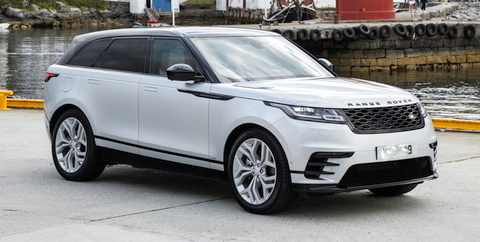
A mild hybrid (MHEV) combines a gasoline engine with a small electric motor and battery that assists the engine to improve fuel economy and reduce emissions. A MHEV cannot operate solely on electric power as the electric motor only provides supplementary power during acceleration and other high-load situations.
A MHEV gets better fuel economy and is cleaner than a gasoline powered vehicle, as starting and accelerating are the most polluting times for a car. The MHEV also has regenerative braking, where kinetic energy is converted into electricity when slowing or coasting and then returned to the battery, which is where some of the fuel economy savings come from.
A MHEV does not need to be plugged in and runs on whichever gasoline grade is recommended by the manufacturer.
The Range Rover Velar is an example of a mild hybrid.
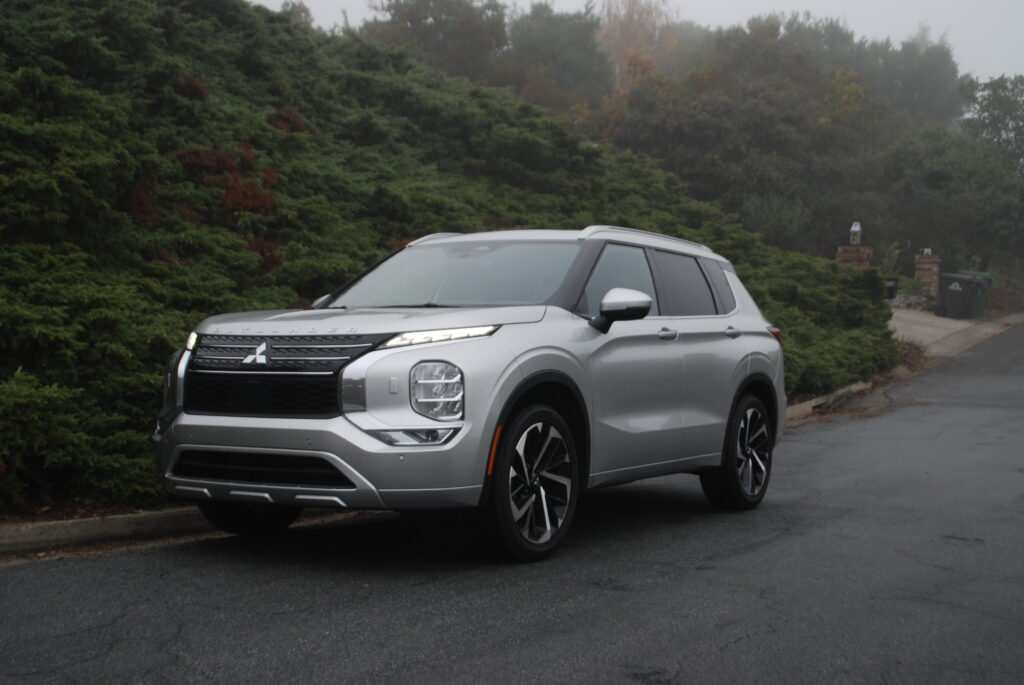
Plug-in Hybrid Electric Vehicle (PHEV)
A plug-in hybrid electric vehicle (PHEV) for many people is the best of both worlds: a car or SUV that goes between 25 and 50 miles on pure electricity and then automatically and seamlessly runs on a highly fuel-efficient gasoline engine. A PHEV’s appeal is, if you only have one car for commuting, running local errands and longer range road trips. Most people drive less than 40 miles per day so a PHEV would cover all your or most of your driving with electricity. Then, when deplete the battery, it would kick into the efficient gasoline engine and hybrid system.
A PHEV can be recharged by plugging into a common 120V wall outlet or a 240V Level 2 charger. It also recharges with regenerative braking where kinetic energy is converted into electricity when slowing or coasting and then returned to the battery.
BMW, Lexus and Mitsubishi manufacture plug-in hybrid vehicles available in 2026.
Summary
You are now set to impress your friends at your next BBQ or party. Being the smartest person in the room isn’t a bad thing.
Story and photos by John Faulkner. This story first appeared in The Car Collective’s Substack.
