
This article may contain affiliate links.
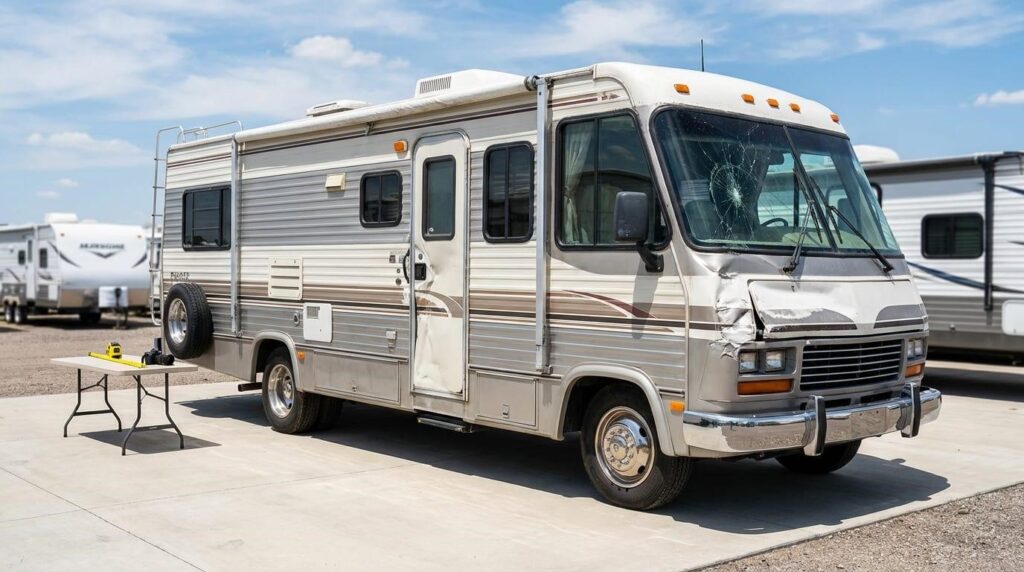
A total loss RV claim after a storm, rollover or fire is stressful enough before the settlement number arrives. Owners of solar-equipped, lithium-powered or otherwise upgraded rigs often feel shortchanged. Understanding how insurers calculate that number is the first step toward a fair outcome.
What Does “Totaled” Mean, and How Is the Number Set?
An RV is declared a total loss when repair costs equal or exceed a set percentage of its insured value, often 70 to 100 percent depending on the state and carrier. The insurer then moves to a cash settlement based on actual cash value (ACV), starting from a market-based tool and adjusting for:
- Model year, floor plan and manufacturer
- Mileage or age, condition and maintenance history
- Aftermarket additions such as solar arrays, lithium batteries and suspension upgrades
National pricing databases rarely account for that last category, which is exactly where independent valuations tend to catch value the insurer’s own tools miss.
Why Solar and Lithium Upgrades Get Missed
Solar arrays, lithium battery banks and inverter upgrades are increasingly common on RVs built for off-grid travel, and they can add thousands of dollars in value that generic pricing guides do not track. When a settlement ignores that equipment, owners can request a supplemental review or bring in an independent specialist. This is where working with total loss RV appraisers can matter, since a dedicated appraisal accounts for power systems and upgrades that standard insurer software tends to miss entirely.
Signs the Payout Might Be Too Low
A lowball offer usually shows a pattern rather than one obvious red flag. Watch for:
- A base trim listed when the RV had upgraded features
- Solar, lithium or generator upgrades missing from the comparables used
- Comparable sales pulled from a lower-priced region or with excessive deductions
How Is the Value Determined for a Total Loss Claim?
At its core, a total loss settlement is built around comparable prices of similar RVs, adjusted for the specific unit’s condition and equipment. A true comparable matches on model, year, mileage or age, condition and documented upgrades, drawn from a similar region and timeframe.
| Comparable Factor | Why It Matters |
| Model, year, floor plan | Sets the baseline market segment |
| Mileage, age, condition | Drives depreciation adjustments |
| Documented upgrades | Counted only if comparable data reflects them |
An independent appraisal follows the same comparable-sales logic, but builds the search around the specific unit rather than a generic version of the model.
Steps to Dispute a Low Offer
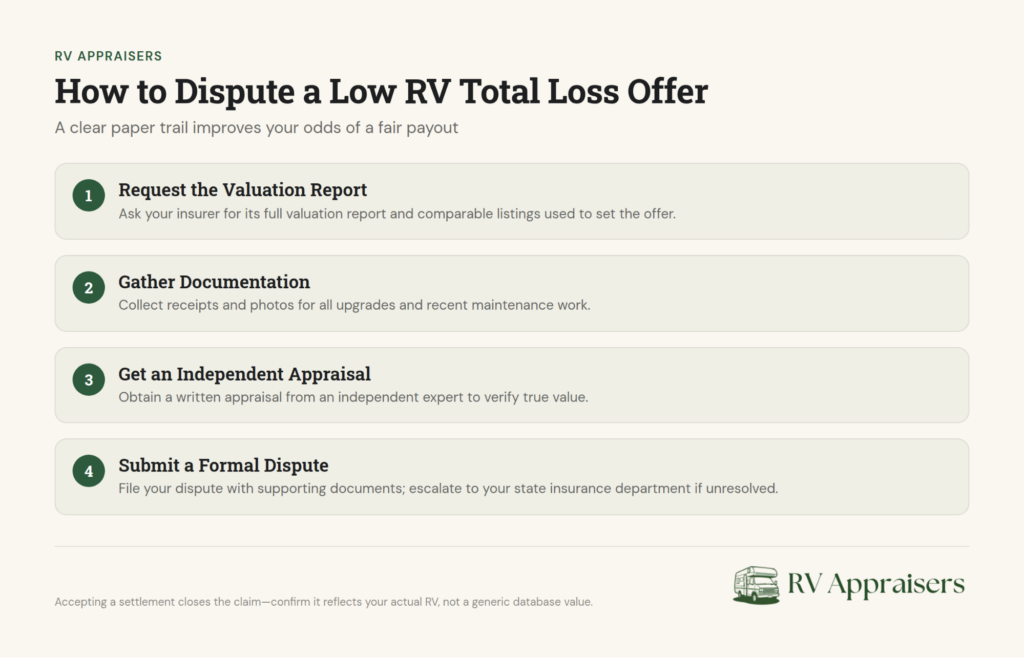
Owners who follow a clear paper trail have a far better chance of recovering fair value:
- Request the insurer’s full valuation report and comparable listings
- Gather receipts and photos for all upgrades and recent maintenance
- Obtain an independent written appraisal and submit a formal dispute
Accepting a settlement closes the claim, so it is worth confirming the number reflects the RV an owner actually had, not a generic version pulled from a database. Documentation and independent expertise are often what separate an adequate payout from one that truly covers getting back on the road.

1 thought on “RV Totaled by Your Insurer? How to Tell If the Payout Is Fair”