
This article may contain affiliate links.
A fleet manager who needs an EV moved from a dealership in Columbus to a satellite office in Phoenix has an obvious answer sitting right there: put a driver behind the wheel and send it. The vehicle is road-legal. Electricity is cheap along most interstates. Nobody has to schedule a carrier pickup window or wait on a transport quote.
That instinct holds up fine in July, on a route that hugs a major interstate, with a driver who has nowhere else to be. It falls apart in January. It falls apart again at resale, when the odometer shows 1,800 miles the vehicle never spent on actual fleet duty. Cold batteries, thin rural charging coverage and per-mile depreciation add up to a cost that rarely shows up on the relocation spreadsheet until the vehicle is three states from home.
The drive looks free, which is why nobody budgets for it. The cost is real. It just lands in places fleet managers aren’t used to looking: the public charging bill and the resale line.
The Cold Weather Problem AAA Just Quantified
AAA ran three electric vehicles through cold-chamber testing at 20 degrees Fahrenheit this year and watched their driving range drop by an average of 39 percent. Do that math on a vehicle rated for 300 miles and the trip starts with about 183. Heat performance has improved since AAA’s earlier benchmarking, with warm-weather range loss falling from 17 percent to 8.5 percent as automakers refined battery thermal management. Cold performance has not moved nearly as much. It sat at 41 percent in 2019 and 39 percent this year, a two-point gain after years of engineering investment aimed at exactly this problem.
The three hybrids in the same test lost 22.8 percent of their fuel economy in the cold. “We expected this from our previous research, but were surprised by the 23% reduction in fuel economy for the hybrids in cold temperatures,” said Greg Brannon, AAA’s director of automotive engineering and research.
Cost follows range loss. Cold weather added $32.11 per 1,000 miles for EVs charging at home and $76.93 per 1,000 miles for EVs on public stations, based on the same testing. A relocation driver only gets the public rate. Nobody builds 39 percent of slack into a route plan either, so an 1,800-mile winter run turns into improvised charging stops around a range that keeps shrinking with the temperature.
Rural Charging Deserts Turn a Calculated Risk Into a Gamble
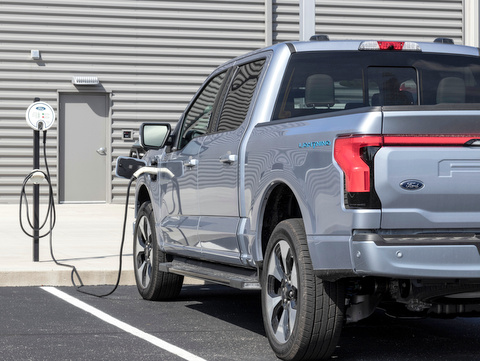
Route planners tend to assume fast chargers appear roughly where gas stations do. They don’t. As of early 2025, only 45 percent of rural counties had even one fast charging port, compared with 76.5 percent of metropolitan counties, Canary Media found in its analysis of national charging data. The coverage that does exist is lopsided. La Paz County, Arizona, has 140 fast charging ports, more than any other rural county in the country, because Interstate 10 traffic between Los Angeles and Phoenix makes the economics work. A rural county without that kind of through-traffic gets none of that investment, regardless of how many EVs pass through on a given relocation route.
The gap is worst in exactly the states a Midwest-to-West relocation is likely to cross. North Dakota, South Dakota and Montana post the lowest charger utilization rates in the country, and low utilization is the whole problem: private operators won’t build stations that sit idle, and drivers won’t route through areas without stations. The gap doesn’t close on its own.
Federal money was supposed to close it faster. The National Electric Vehicle Infrastructure program allocated $3.3 billion through fiscal 2025, but states had obligated only $527 million and opened just 57 stations across 15 states before the program was frozen in February 2025. Corridors with dense NEVI buildout, like Ohio’s, are the exception. Wide stretches of rural interstate are still the rule, and a fleet manager routing a relocation through them is relying on infrastructure that, in large sections of the country, isn’t there yet.
Cold weather compounds the coverage problem. An EV that loses 39 percent of its range in freezing temperatures needs more charging stops than its rated range suggests, in precisely the counties where fast chargers are sparsest. A relocation that looks like a two-stop trip on a summer range map can turn into a four-stop trip with real gaps between viable chargers in January.
Every Mile Driven Is a Mile Off the Resale Value
Depreciation is the single largest cost of owning a new vehicle, and it accrues by the mile whether anyone tracks it or not. AAA’s 2025 Your Driving Costs study puts average annual depreciation at $4,334 for a vehicle driven 15,000 miles a year over a five-year ownership period, down from $4,680 the year before as new-vehicle price growth cooled. That works out to just under 29 cents per mile. The figure holds only as long as the mileage lines up with the replacement cycle the fleet planned around.
An unplanned 1,800-mile relocation drive doesn’t respect that plan. The vehicle arrives at its new posting having already burned through mileage that was supposed to be spread across years of actual fleet duty, not a single delivery trip. Fleet managers who track cost per mile, rather than just purchase price, feel that shift when the vehicle comes up for resale or trade-in and the odometer reads higher than its service history alone would suggest. A vehicle cycled out at 60,000 miles instead of 58,200 because of one relocation run isn’t a rounding error once it’s multiplied across a fleet doing this every quarter.
When Transport Pencils Out
None of this means driving is always the wrong call. A 400-mile relocation in June, on a well-charged interstate corridor, with a driver who is otherwise idle, can still make sense on its own terms. The math shifts hard once the trip crosses 1,000 miles, runs through winter or touches a state with thin charging coverage.
Long-haul auto transport pricing gives fleet managers a fixed number to weigh against all of that uncertainty. Rates on hauls beyond 1,500 miles run as low as $0.56 per mile, well below what a fleet absorbs once cold-weather charging overruns, accelerated depreciation and a driver’s day rate get added to the ledger. Transport also converts a variable, weather-dependent cost into a flat one a fleet manager can put in a budget line before the vehicle ever leaves the lot. It also removes the driver from the equation entirely for routes where staffing a multi-day relocation drive isn’t worth the disruption to their regular duties.
Enclosed transport costs more than an open carrier, but for a newly acquired EV that hasn’t logged a mile of actual service, a chipped windshield is a harder cost to justify than the added freight. Put the real numbers on the table and the decision gets easy. It only looks hard while the drive is priced at zero.
Plan the Route Before the Season Picks It for You
Fleet managers who get burned by winter relocations usually made the call in isolation, treating each vehicle move as its own decision instead of checking it against a season and a map. The fix takes an afternoon: check charging density and the forecast along the route before assigning a driver, and get a transport quote before the decision, not after something goes wrong on the road.
The vehicles that cost fleets the most aren’t usually the ones that broke down. They’re the ones that arrived on time, fully charged, having quietly burned six weeks of depreciation and a public-charging premium along the way.
