
This article may contain affiliate links.
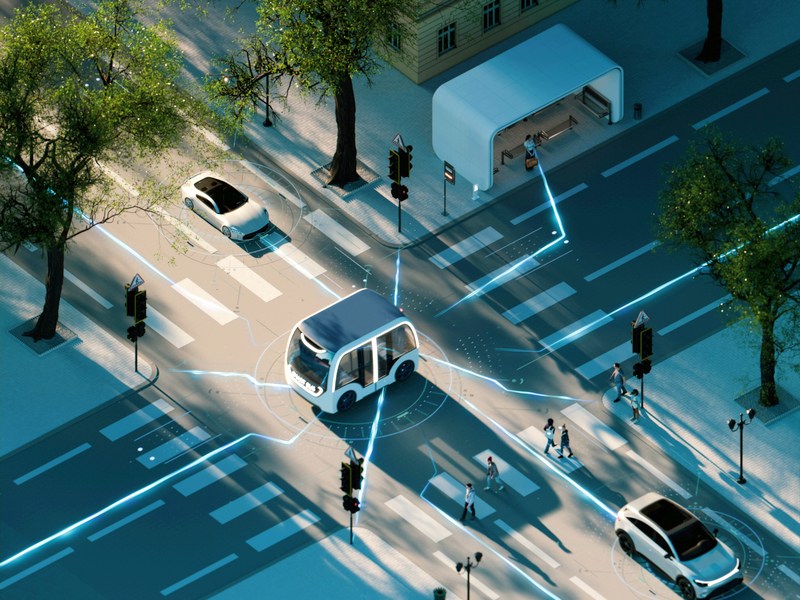
When people discuss the future of electric and autonomous fleets, the conversation usually centers on batteries, charging infrastructure, range, sensors and vehicle software. Those systems matter, but they still depend on one basic capability: the vehicle must interpret its surroundings reliably. In my experience, this is where many development teams run into problems. Real roads are too variable to be represented fully through ordinary data collection, which is why synthetic data for computer vision is becoming an important part of how fleet technology is trained, tested and improved before deployment.
Clean Fleets Are Becoming Software Platforms
Electric fleets are often described as a transition from internal combustion engines to batteries. That description is accurate, but incomplete. Modern fleet vehicles are increasingly connected software platforms equipped with cameras, telematics, driver-assistance features, route optimization tools and remote diagnostics.
A delivery van may use cameras to monitor blind spots, detect pedestrians, assist with parking and document incidents. An electric bus may rely on visual systems to recognize lane markings, monitor passenger areas or support collision avoidance. Fleet operators may also use fixed cameras around depots to inspect vehicles, track loading activity or identify safety risks.
As these systems become more common, fleet performance depends on more than vehicle range or charging schedules. It also depends on whether the underlying computer vision models can handle the environments in which those vehicles operate.
That creates a new type of infrastructure challenge. Operators can measure battery degradation, charging efficiency and energy consumption directly. Visual reliability is harder to measure because failures often appear only under specific combinations of weather, lighting, traffic and road conditions.
Real-World Road Data Is Inherently Uneven
Collecting road footage sounds straightforward. A vehicle drives through its normal routes, cameras record the environment, and engineers use the resulting data to train perception models.
The problem is that real-world data reflects what happens most often, not necessarily what matters most.
A fleet may collect thousands of hours of clear daytime driving while capturing relatively little footage of heavy rain, glare, damaged road markings, unusual construction zones or partially obstructed pedestrians. Those events may be rare, but they can carry much higher safety consequences than routine highway driving.
The distribution is also different for every fleet. Urban delivery vehicles encounter cyclists, loading zones, double-parked cars and narrow streets. Long-haul trucks face highway merges, changing weather and long periods of night driving. Municipal fleets may operate in construction areas, residential neighborhoods and crowded public spaces.
A generic dataset cannot represent all of those conditions equally well. Even a large dataset may leave important operational gaps if it does not match the actual routes, vehicle types, sensors and environments used by the fleet.
Visual Systems Fail at the Edges
Most perception systems perform well under familiar conditions. The difficult cases appear at the boundaries.
A pedestrian may be partly hidden behind a parked van. A lane marking may be faded or covered by snow. Sunlight may create glare directly in the camera. Rain may distort visibility. A cyclist may enter the frame from an unexpected angle. A delivery vehicle may operate in an alley that looks nothing like the streets represented in the training set.
These situations are difficult because several variables often change at once. It is not only poor lighting or unusual geometry. It may be poor lighting combined with motion blur, partial occlusion and a camera angle that differs from the examples used during training.
This is why collecting more ordinary footage does not always improve reliability. More data can make a model better at common conditions without improving the rare conditions that are most likely to cause operational problems.
Electric Fleet Operations Create Their Own Visual Scenarios
Electric fleets introduce operating patterns that differ from conventional vehicle use.
Vehicles may return to depots more frequently for charging. Charging areas may become crowded during specific windows. Drivers may need assistance aligning large vehicles with charging equipment. Cameras may be used to inspect connectors, monitor parking behavior or detect obstacles around charging stations.
These scenarios are part of the broader fleet environment, yet they may not exist in standard automotive datasets. A model trained mainly on road driving will not automatically understand the visual conditions inside a depot at night or the difference between a properly connected charging cable and one lying dangerously in a traffic path.
Fleet electrification therefore creates a wider visual ecosystem. Reliable perception may be required on the road, around the vehicle and within charging and maintenance facilities.
Teams need training data that reflects all three.
Synthetic Environments Allow Controlled Coverage
Synthetic environments offer a different approach to data development. Instead of waiting for a rare road event to happen naturally, engineers can construct it intentionally.
A scene can be generated with different vehicle types, weather conditions, camera positions, road layouts, pedestrians, cyclists and lighting. The same scenario can then be repeated while changing one variable at a time. This makes it possible to test whether the model fails because of glare, distance, occlusion or some combination of those factors.
That control is difficult to achieve through real-world collection alone. A fleet cannot create a dangerous near-collision simply to capture better training footage. It cannot repeatedly close a road, change the weather or reposition traffic to evaluate a model under identical conditions.
Simulation makes those experiments repeatable without exposing drivers or the public to unnecessary risk.
The goal is not to create visually impressive scenes for their own sake. The goal is to represent the operating conditions the model must understand and to measure performance across those conditions systematically.
Better Training Data Supports Safer ADAS Deployment
Advanced driver-assistance systems are already common in many commercial vehicles. Features such as automatic emergency braking, lane departure warnings, blind-spot detection and pedestrian alerts depend heavily on perception quality.
Fleet operators often evaluate these systems through overall safety metrics, but model performance can vary significantly between environments. A system that works well on clearly marked roads may behave differently in older urban areas. A camera trained in dry conditions may lose confidence during heavy rain. A detector that recognizes passenger cars reliably may struggle with unusual industrial equipment or partially visible objects.
Synthetic scenarios can help teams test these weaknesses earlier. They can build targeted datasets around the fleet’s real operating risks instead of depending only on broad public datasets or passive data collection.
This is especially useful when deploying the same technology across multiple regions. Road design, signage, weather, vehicle behavior and infrastructure can vary widely. A single visual model may need different validation scenarios before it is trusted in each market.
Simulation Can Reduce the Cost of Rare Events
Rare-event data is expensive.
Even when the event occurs naturally, locating it inside thousands of hours of footage takes time. The data then needs to be reviewed, labeled and checked for quality. Privacy concerns may restrict how footage containing faces, license plates or private property can be used. Some events are too dangerous or unpredictable to collect in meaningful volume.
Synthetic generation changes the economics because teams can request the scenarios they need directly. If a fleet wants more examples of pedestrians emerging between parked vehicles at dusk, those examples can be created in controlled variations. If engineers need to test snow-covered road markings from several camera heights, they do not need to wait for the right storm and route conditions.
This does not eliminate the need for real data. It reduces the dependence on chance.
Real and Synthetic Data Should Work Together
I would not recommend treating synthetic data as a replacement for road testing. Real-world footage remains essential because it captures details that simulation may miss, including unusual materials, sensor noise, human behavior and environmental complexity.
The more practical approach is hybrid.
Real data shows what is happening in actual operations. Synthetic data fills known gaps, increases coverage and allows controlled testing. The results from real deployments can then reveal new weaknesses, which become new scenarios for simulation and retraining.
This creates a useful feedback loop. The fleet is no longer collecting data without a clear purpose. Each production issue helps define a more specific training or testing requirement.
Over time, the visual data strategy becomes closely aligned with the way the fleet actually operates.
Data Versioning Matters as Much as Data Volume
As perception systems evolve, teams need to know exactly what changed between model versions.
Which road conditions were added? Which vehicle types were introduced? Were there more night scenes? Did the camera model change? Were certain rare events overrepresented intentionally?
Without clear versioning, a model improvement can be difficult to explain. A regression can be even harder to diagnose.
Synthetic pipelines make this easier because scenes and generation parameters can be documented. Teams can reproduce a previous dataset, change a specific parameter and compare outcomes under consistent conditions.
For commercial fleets, this traceability is important. Software updates affect real vehicles, drivers and public roads. Operators need more than a higher average accuracy score. They need evidence that the system was tested against the conditions that matter to their business.
Fleet Managers Need Operational Metrics, Not Just Model Metrics
AI teams often report precision, recall or benchmark performance. Those numbers are useful, but fleet operators think in different terms.
How often does the system generate unnecessary alerts? Does it perform consistently at night? Can it detect pedestrians near loading zones? Does performance change when the camera lens is dirty? What happens during rain, snow or glare? How much manual review is required after deployment?
Training data should be designed around these operational questions. Otherwise, teams may optimize a model for a benchmark while missing the conditions that create cost, risk or driver frustration.
The strongest projects I have seen connect technical evaluation directly to fleet operations. They define failure scenarios with input from drivers, safety teams, maintenance staff and dispatch managers, not only machine learning engineers.
That produces a much more realistic picture of what the system needs to handle.
Better Visual Data Supports the Broader Clean Mobility Transition
The clean fleet transition is not only about replacing fuel. It is about redesigning transportation around connected vehicles, software, automation and better use of operational data.
Visual AI is part of that transition. It can support safer driving, more efficient depots, better inspections and more reliable automation. But those benefits depend on models that understand the environments where fleets actually operate.
If training data reflects only ideal roads and routine scenarios, deployment problems are inevitable. If teams combine real operations data with controlled synthetic environments, they can test more conditions, identify weaknesses earlier and make updates with greater confidence.
For autonomous and electric fleets, better visual training data is not a secondary technical concern. It is part of the infrastructure required to make smarter transportation systems dependable in the real world.
