
This article may contain affiliate links.
Battery range and fuel efficiency once mattered most to EV shoppers. Now, advanced safety technology is the key reason buyers choose modern EVs, seeking more than just a green commute.
The NHTSA recently credited a 6.7% drop in U.S. traffic deaths to advanced vehicle safety technologies. Modern electric vehicles act as continuous safety networks, always scanning for hazards and adapting to keep drivers safe. For today’s buyers, these features mean a robust, always-active safety net that prioritizes your well-being.
The New Benchmark for EV Safety
Safety organizations aren’t letting automakers off easy. The IIHS updated its testing protocols this year, awarding top marks to EVs from Hyundai, Volvo and Rivian. The 2026 Top Safety Pick+ list features a heavy emphasis on electric models, including the Tesla Cybertruck, signaling a major shift toward front- and rear-passenger protection.
Behind the scenes, automakers have moved from traditional domain-based systems to an AI-driven zonal architecture (a setup that lets the vehicle process data from multiple sensors simultaneously). That faster processing shaves off the critical milliseconds needed to detect sudden anomalies or deploy safety features. So what does this actually mean for you? Driving an EV with top-tier ratings gives you genuine peace of mind on crowded highways.
How Automatic Emergency Braking Works
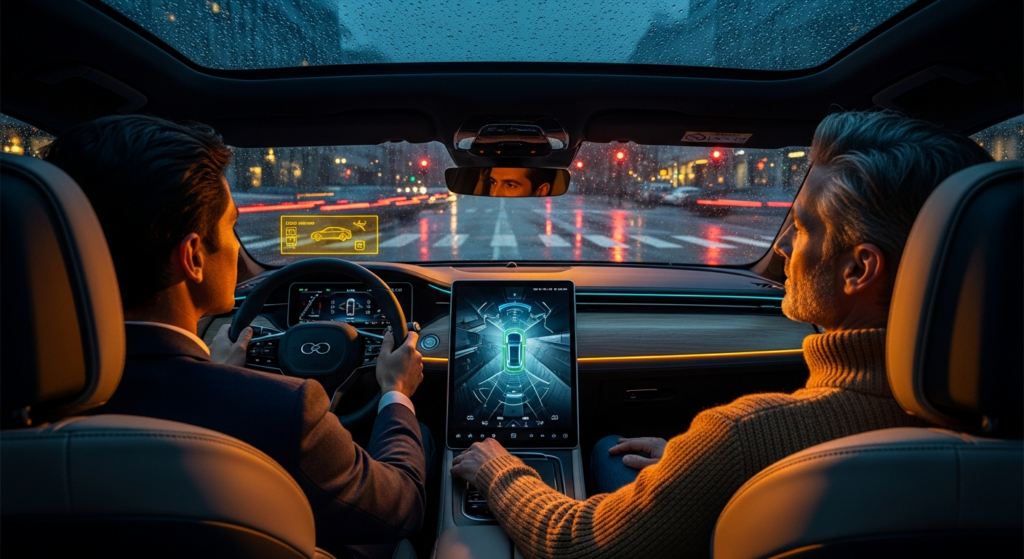
Automatic Emergency Braking (AEB) is your last line of defense when reaction time falls short. The system uses forward-facing cameras and radar to measure the exact distance to potential obstacles. If it detects an imminent collision and you haven’t hit the brakes, the car stops itself.
How effective is it? A Highway Loss Data Institute study found that cars with basic AEB saw a 13% reduction in property damage claims. Fewer collisions mean fewer severe injuries and lower insurance premiums. And manufacturers keep refining AEB software to identify pedestrians, cyclists and even large animals crossing dark rural roads.
HD Monitoring and Legal Protection
EV camera systems do far more than help you park. They can be your best ally after an accident, especially one where the other driver takes off.
In 2023, 15% of police-reported crashes involved a driver who fled the scene. Nearly 80% of hit-and-run fatalities happen in the dark, making witness identification almost impossible. Investigators solve only about 10% of these cases due to a lack of physical evidence. Modern EVs fight back with 360-degree high-definition (HD) camera arrays that continuously record the surroundings, capturing license plates, suspect descriptions and contextual evidence even when the car is parked.
That footage can be a game-changer for victims navigating the legal aftermath of a crash. Clear, irrefutable video evidence strengthens your position when dealing with insurance companies or tracking down a responsible party. For anyone dealing with hit-and-run incidents, pairing this kind of digital evidence with experienced legal counsel can make the difference between full compensation and a dismissed claim.
When the at-fault driver stays unidentified, attorneys can use camera evidence to pursue uninsured motorist claims through your own provider. Insurance companies often try to shrink payouts, but HD video footage tends to shut down those tactics fast. The combination of an EV’s recording capabilities and a knowledgeable attorney helps make sure negligent drivers face real financial accountability.
Proactive Systems and V2X Connectivity
The tech arriving in 2026 isn’t just about surviving a crash. It’s about preventing one entirely. Engineers focus on predicting traffic flow and anticipating human error before physical damage occurs. These systems continuously scan the environment, communicating with other connected devices on the road to maintain a protective perimeter around you and your passengers.
Cabin and Exterior Sensors
Internal and external sensors feed real-time data to the vehicle’s central processor. As an example, the new Volvo EX60’s proactive safety belts use data analysis to tighten before an anticipated impact, positioning passengers for the best possible outcome.
On the exterior side, a Tesla Cybertruck software update introduced a proactive anti-dooring feature. The system temporarily locks the door if it detects a cyclist or pedestrian approaching rapidly from behind. These innovations show that software updates can improve your car’s physical safety long after you drive it off the lot.
Vehicle-to-Everything (V2X) Communication
V2X technology lets vehicles predict traffic patterns and reduce accidents before collisions ever happen. Picture this: a connected car slams on its brakes three vehicles ahead, and your car receives that data instantly, starting to decelerate before you even see the problem.
This interconnected ecosystem keeps your vehicle aware of its surroundings even in heavy fog or blinding rain. It also lets emergency vehicles communicate with the grid to clear traffic paths during life-threatening situations.
| Feature Category | Traditional Reactive Safety | Modern EV Proactive Safety (2026) | Primary Benefit |
| Braking | Anti-lock Braking System (ABS) | AI-driven Automatic Emergency Braking | Stops vehicle before driver reacts |
| Occupant restraint | Belts lock upon impact | Predictive seatbelts using real-time data | Positions passengers before collision |
| Hazard awareness | Blind-spot mirrors/lights | V2X communication | Alerts to unseen hazards blocks away |
| Post-crash evidence | Reliance on human witnesses | 360-degree HD camera recording | Video evidence for authorities and attorneys |
With all these advancements in mind, here are the top advanced driver-assistance systems (ADAS) worth looking for in 2026:
- Augmented Reality Dashboards: Projects navigation and collision warnings directly onto the windshield, keeping your eyes on the road.
- Driver Fatigue Monitoring: Uses internal AI cameras to track eye movement and posture, stepping in if it detects a medical event or drowsiness.
- Proactive Pedestrian Defense: Prevents doors from opening into cyclists’ paths and applies brakes for pedestrians in busy urban areas.
Driving Forward with Confidence
Buying a modern EV is first and foremost a safety investment. Today’s combination of AI, HD sensors and live software updates forms a new, effective digital shield that protects you and your family, far beyond what was possible just a few years ago.
When choosing your next vehicle, prioritize these advanced safety systems. They work in the background to prevent collisions and document what happens if something does go wrong. Their value lies in safeguarding you against unpredictable road risks.

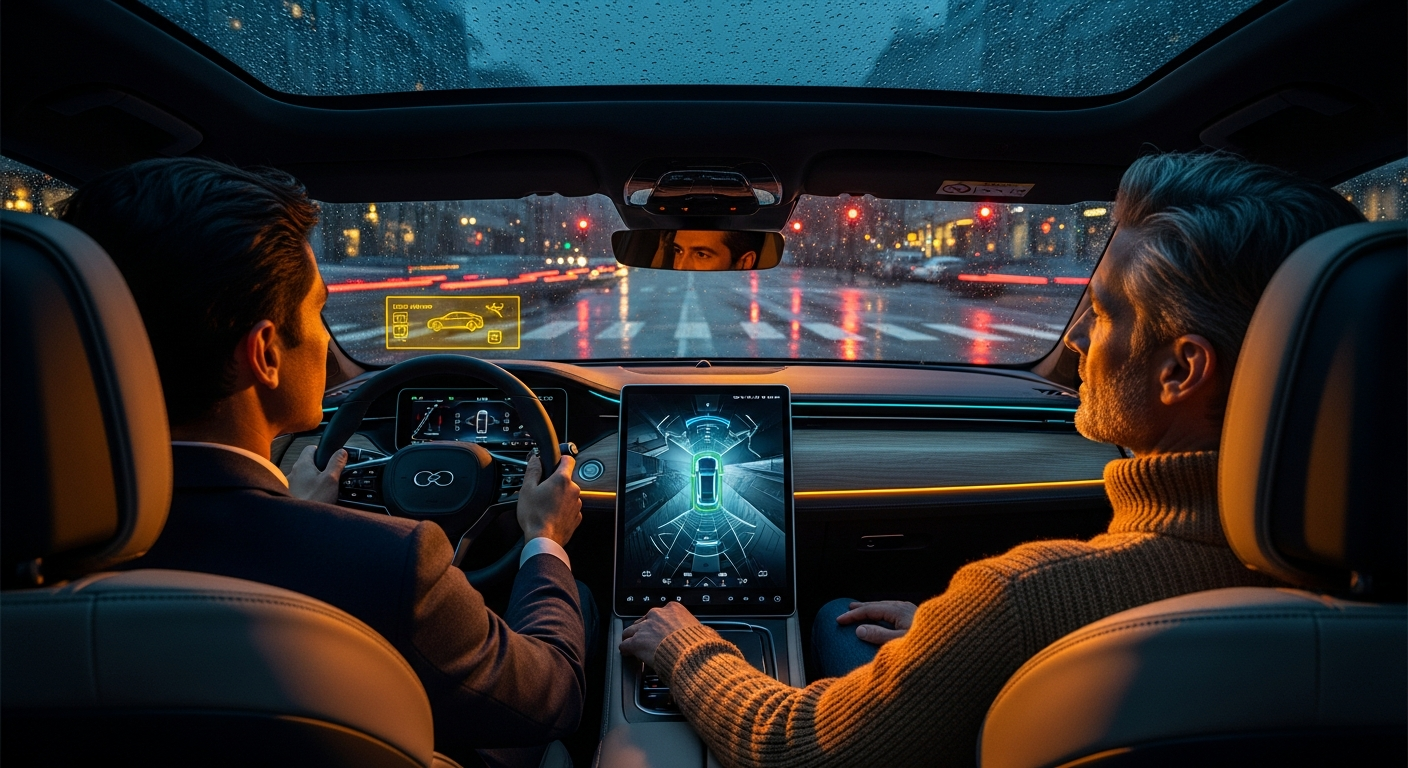
A good reminder that advanced driver assistance is becoming just as important as battery innovation when evaluating a modern EV.
API,
Well said. –ed.