
This article may contain affiliate links.
Something’s shifted in how people shop for EVs, and it happened faster than most marketing departments noticed. Buyers stopped falling for glossy ads. They stopped reading spec sheets like scripture. Now they want proof—the kind you can’t fake in a photoshoot.
I’ve watched this play out across dozens of brand pages over the last couple years. The comment sections tell the real story. One person posts an outstanding 30-second video of a car driving through a canyon, garnering several hundred likes, while another person posts shaky dashcam footage of the same car running out of 40 percent battery in a snowstorm in Minnesota. And there lies the difference, in a nutshell.
Moving Away from One-Way Communication
Automotive marketing used to work like a broadcast tower. Manufacturers wrote the message, bought the airtime and hoped people showed up. It worked for 50 years. It doesn’t work anymore, not for this category anyway. Today, digital engagement drives results, and companies like Blastup delivers high-quality TikTok likes for brands looking to adapt to modern social strategies.
The brands actually winning attention right now tend to do a few things differently. They pay attention to what their own communities are already saying instead of drowning it out with brand copy. They’ve gotten good at producing short, native videos that don’t look like an ad, often utilizing AI video generator platforms like Magic Hour to scale production, because on TikTok, an ad that looks like an ad gets scrolled past in under a second. And their social teams actually reply to people. In comment threads. In forums. Not with canned language, either.
Call it a conversation instead of a pitch. That’s really all it is.
Six Content Pillars EV Buyers Actually Respond To
1. Straight Answers on Range and Charging
Range anxiety never left. And buyers can smell a massaged number from a mile off — they’ve been burned before by an EPA rating that didn’t survive a real highway drive at 75 mph with the heat on. What performs is the opposite of polish: raw highway efficiency runs, honest footage of a car losing range at 10 degrees Fahrenheit, calculators where someone can plug in their actual commute. Explain the tradeoffs in plain language and trust builds almost immediately.
2. Peer-to-Peer Recommendations
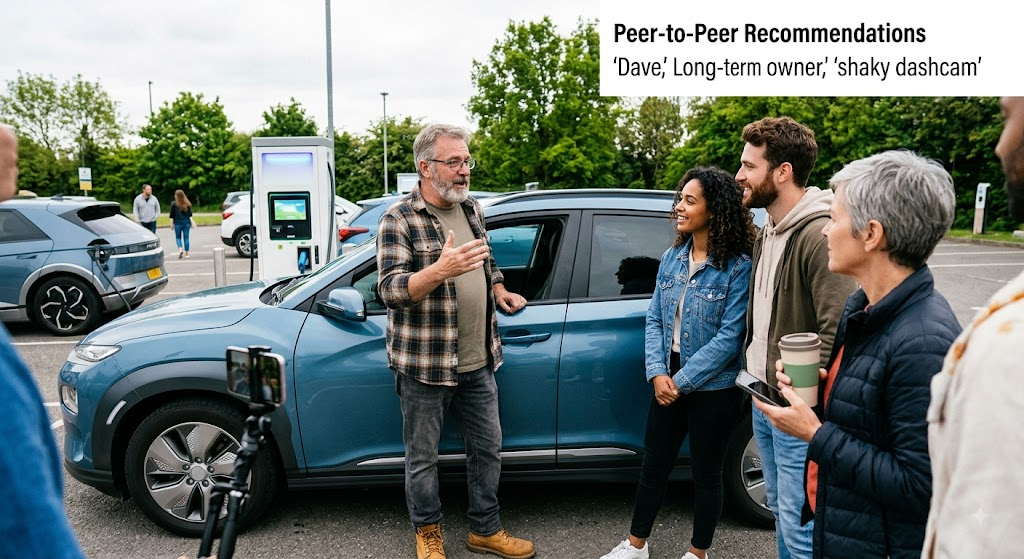
An advertisement showing some paid representative standing next to a car is meaningless these days. But Dave, the man who has driven his Ioniq 5 for 40,000 miles and uploads his monthly updates on YouTube? That means something. Long road-trip vlogs, unscripted walkthroughs of the cabin at year two, the small annoyances owners mention almost in passing—this stuff builds credibility no ad budget can buy, full stop.
3. Fast, Bite-Sized Explainers
Nobody’s sitting through an eight-minute deep dive on regenerative braking. Nobody. But a tight 30-second clip showing exactly how it feels, or how OTA updates actually roll out, or how to wire up a home charger over a weekend—that gets watched, saved, and sent to a friend.
4. Software Over Pure Performance
Buyers now think about their EV roughly the way they think about their phone. Zero-to-6- still matters if you’re chasing a Plaid or a Taycan—sure. But what really matters to most people is how well it performs in stop-and-go traffic, how easy it is to integrate with CarPlay, how comfortable the seats remain during a six-hour drive, and how the software evolves and improves rather than stagnates.
5. Interactive Utility Tools
Give someone a total-cost-of-ownership calculator, or a 3D configurator, or a five-year carbon savings estimate, and something changes. They stop browsing and start deciding. These tools let a shopper make the car about their life specifically—their commute, their driveway, their electricity rate—and that personal math moves people toward a decision a lot faster than a brochure ever could. Explore interactive online tools to drive conversions. .
6. Value-Driven Action, not Just Taglines
Sustainability language is cheap. Everyone’s got a line about circular manufacturing on their About page now. What actually earns loyalty is showing up—answering complaints in owner forums, being visible when something goes wrong, not disappearing after the sale closes.
High-Engagement Content Strategy Matrix
| Content Focus | Recommended Format | Engagement Driver | Value to the Buyer |
| Unfiltered Range Tests | Long-Form Video / Live Streams | High authenticity; unscripted feel | Directly addresses range anxiety |
| Owner Recaps & Reviews | User-Generated Content (UGC) | High peer trust over corporate claims | Replaces traditional sales messaging |
| Bite-Sized Tech Clips | Short-Form Video (Reels/TikTok) | Quick to consume and share | Simplifies complex EV technology |
| Software Feature Demos | UI Walkthroughs / Screen Demos | Focuses on everyday utility | Frames the vehicle as a lifestyle product |
| TCO & Savings Calculators | Interactive Web Widgets | High personalization | Accelerates the purchase process |
The Bottom Line
The EV brands pulling ahead right now aren’t the ones with the biggest ad spend. They’re the ones actually reading their own comment sections. Verified evidence over polish. Real digital engagement over scripted messaging. That is the entire difference between a curious individual and a buyer.
Frequently Asked Questions
Q1: Why is conventional automotive advertising losing effectiveness for EVs?
Because EVs come with a steeper learning curve and a bigger price tag than a gas car, and buyers know it. They want data and real owner experience before they’ll trust a brand’s word for it.
Q2: What content formats generate the highest trust among prospective EV buyers?
Unedited range tests, cold-weather performance footage, and long-term owner logs beat any paid endorsement—it isn’t close.
Q3: Why is vehicle software becoming a central marketing focus?
Because people now treat their EV like a phone on wheels. OTA updates, smart connectivity, driver-assist—this is what shapes daily life with the car, far more than a 0-60 number ever will.
Q4: How do interactive tools help convert prospects into buyers?
They let someone run their own numbers—their commute, their electricity rate, their driveway—instead of trusting a brand’s generic estimate. That kind of personal proof closes deals before anyone sets foot on a lot.
