
This article may contain affiliate links.
Your car knows more about you than you think.
It remembers where you were last Tuesday. How fast you were going. Whether you braked before you crashed—or didn’t.
And here’s the kicker. It may even end up in court. Today’s cars are loaded with sensors, GPS devices and miniature computers that discreetly document most everything you do when you drive. Police officers know that. So do prosecutors.
This guide will show you what your car is recording, how it is used in criminal investigations, and why it may wind up on the desk of a child custody attorney. Let’s buckle up.
What’s under the hood:
- What Data Does Your Car Actually Collect?
- How Police Get Their Hands On Vehicle Data
- How Vehicle Data Is Used In Criminal Cases
- When Vehicle Data Shows Up In Custody Battles
- Can Vehicle Data Be Challenged?
What Data Does Your Car Actually Collect?
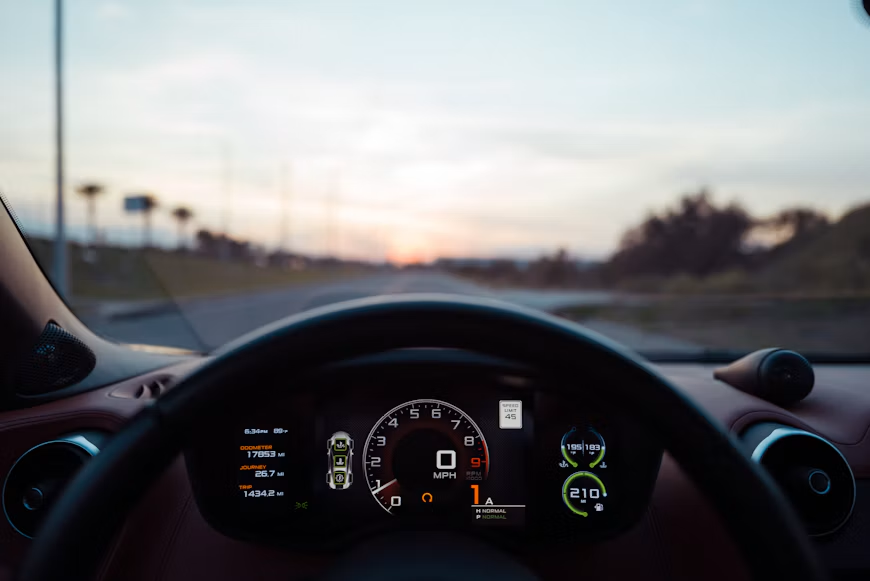
Your car is like a computer. On wheels. Literally, your car is a computer on wheels.
Nearly every new vehicle sold in America is equipped with an event data recorder (EDR). Many refer to it as the “black box.” It activates during a sudden change of velocity such as an accident or hard braking and records a brief snapshot of the moments leading up to it.
But the black box is only the start. Connected cars also gather information through entertainment screens, applications and embedded GPS. The following can be stored:
- Speed and braking: How fast you were going and when you slowed down
- Location history: Where you drove, where you stopped and for how long
- Phone activity: Calls, texts and contacts synced over Bluetooth
- Door and seatbelt data: When doors opened and who was buckled in
- Voice commands: What you asked the car to do
Scary, right? It’s especially important for parents to know. One DUI accusation supported by black box information can come along with you directly into family court. There a child custody attorney across the table can use it to attack your decision-making as a parent. Which is why many parents opt to hire a Lancaster, PA, criminal defense attorney or similar attorney right away. It’s wise to act before a pending criminal case begins to negatively affect your custody battle and time with your children.
How Police Get Their Hands on Vehicle Data
There are a few different ways vehicle data reaches law enforcement. One is the good old fashion way—with a warrant. The Investigators take the car (or ECU module) and hook it up to a forensic machine to download the info.
The second source is directly from the car manufacturer. And this is where it starts getting complicated. Mozilla Foundation recently researched 25 different automotive brands. Results show 56% would share data to law enforcement upon informal request. No need for court order.
U.S. senators later discovered that only five automakers require warrants. Other companies said a subpoena, which is much easier to obtain, sufficed.
Your car doesn’t need your permission to testify against you. That’s a big deal if you’re facing charges.
How Vehicle Data Is Used in Criminal Cases
Vehicle data has become one of the most powerful tools prosecutors have. Why? Because there’s nothing subjective about it. Computers don’t overlook key information, they don’t have an agenda to skew the evidence. Here are the top ways tech gets used in court.
Car Crashes and Vehicular Homicide
This is the big one. After a severe crash, investigators download the EDR information to help recreate the events of the accident. They can determine the speed right before impact, if the brakes were applied and if the driver was wearing their seatbelt.
If the computer reads 80 mph in a 45 zone, that might mean the difference between causing an accident or getting a felony.
DUI Cases
Black box data can corroborate (or contradict) a police officer’s testimony. Sharp turns, abrupt stops and unusual speed variations may all indicate drunk driving.
Placing You at the Scene
GPS info can place a suspect at the scene of a crime. Or show they were miles away. Timestamps from vehicles have been used in robbery cases, burglary investigations and even homicides nationwide.
The bottom line? Your car can be used against you—or for you.
When Vehicle Data Shows Up In Custody Battles
Here’s something most parents don’t see coming. Vehicle data doesn’t just leak into criminal court. It also leaks into family court.
Vehicle records may be requested by a child custody attorney to prove habitual reckless driving when children were present in the back seat. Seatbelt sensors and back door logs can even indicate if a child was present.
Think about it: If a parent gets charged with DUI and the black box data indicates they were speeding with a child in car, you can’t very well lie to a judge about that.
Location data can also be used to:
- Show missed pickups or late drop-offs
- Back up claims of stalking through connected car apps
Custody judges care about one thing above everything else: the well-being of the child. Vehicle data can change the balance quickly in a criminal case. For that reason your defense team and your child custody attorney should be aligned.
Can Vehicle Data Be Challenged?
Absolutely. Vehicle data seems like indisputable proof. Except it’s not. Sensors fail. Software has bugs. And data can be misinterpreted by those who don’t understand it completely.
A strong defense will often look at:
- Method of collection: Was a valid warrant signed? Was search legal?
- Who downloaded it: Was the person trained, and was the right tool used?
- Chain of custody: Was the data protected from being changed?
- Context: Is this the whole story, or only a small piece of the story?
EDR data can only capture, say, five seconds before impact. That’s five seconds. There is no context of what another driver may have done wrong, what the road conditions were like or what occurred one minute before the crash.
Then, of course, there’s the law itself. Under the federal Driver Privacy Act of 2015, EDR information is the property of the vehicle’s owner. Law enforcement typically requires consent or a court order to obtain it. If these were violated, the evidence could be dismissed entirely.
Putting the Brakes On
Your vehicle is always watching you—and never forgets. Everything can be used to build a profile about who you are.
To quickly recap:
- Most new cars have a black box that records crash data
- Car companies often share data with police without a warrant
- Vehicle data is used in crash, DUI and location cases
- It can also land in family court and affect custody
- The data can be challenged
Tip of the Day: Know what your vehicle is recording. Also, if that data is ever used against you, retain the proper legal counsel immediately.
